Depression doesn't always look the same in everyone. While we've made huge strides in understanding mental health, there's still a gap when it comes to recognizing how depression shows up differently in men. Too often, the symptoms of depression in men get brushed off as stress, fatigue, or just "being moody." But there's more to the story. Men experience depression just as frequently as anyone else, yet they're less likely to seek help, partly because the warning signs can look completely different from what we typically expect.
The Hidden Face of Male Depression
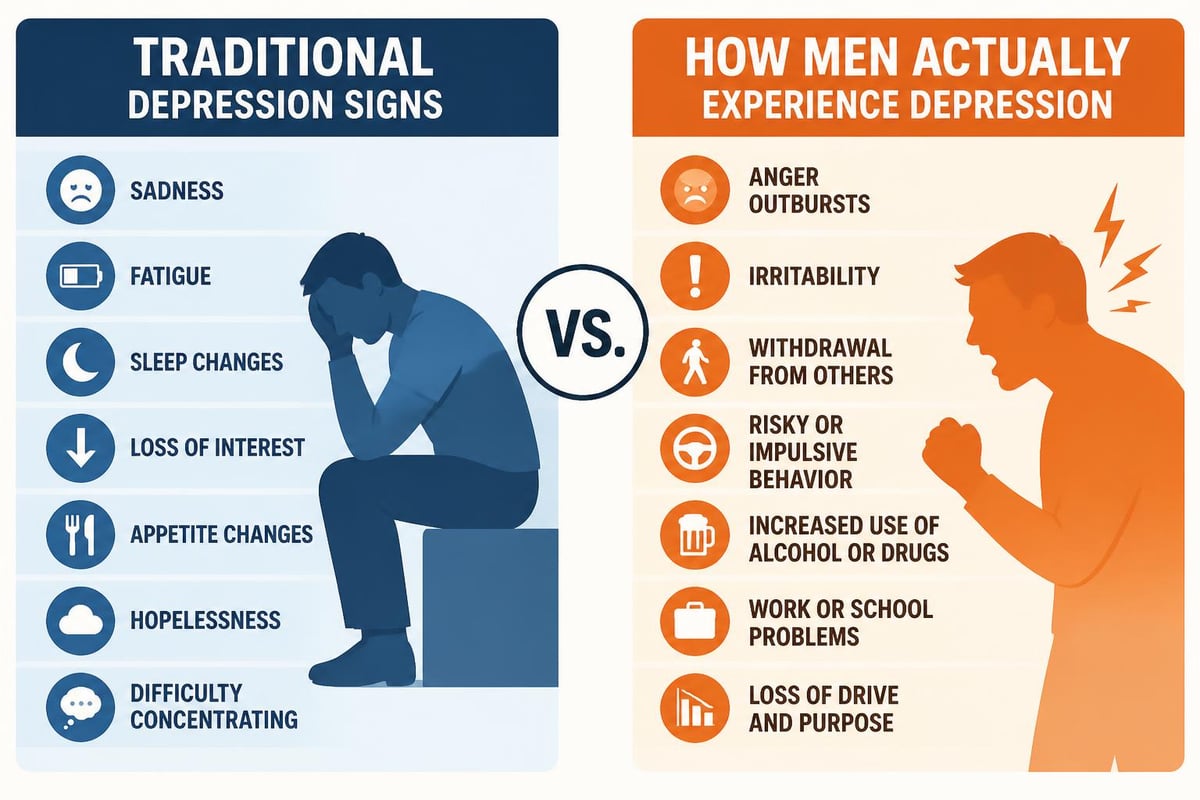
When you think about depression, sadness probably comes to mind first. But here's the thing: men often don't present with the classic "feeling sad" symptom. Instead, symptoms of depression in men frequently show up as anger, irritability, and even aggressive behavior.
This matters because if you're looking for tears, you might miss the rage. Men dealing with depression may become:
- Short-tempered with family members or coworkers
- Easily frustrated by minor inconveniences
- Prone to angry outbursts that seem disproportionate
- Hostile or defensive when questioned about their well-being
These aren't character flaws. They're legitimate signs that something deeper is going on emotionally.
Physical Symptoms That Men Shouldn't Ignore
Depression isn't just in your head. It affects your whole body, and men are particularly likely to experience physical complaints when dealing with depression.
Common Physical Manifestations
| Physical Symptom | How It Appears |
|---|---|
| Sleep disturbances | Insomnia or sleeping too much |
| Digestive issues | Stomach pain, cramps, constipation |
| Chronic pain | Back pain, headaches, muscle aches |
| Chest tightness | Unexplained pressure or discomfort |
| Fatigue | Constant exhaustion despite rest |
| Changes in appetite | Significant weight loss or gain |
Many men visit their doctor for these physical symptoms without realizing they're connected to their mental health. If you've been dealing with unexplained physical issues that don't respond to treatment, it's worth exploring whether depression might be the underlying cause. Psychotherapy for depression can address both the emotional and physical aspects of these symptoms.
Behavioral Red Flags
The symptoms of depression in men often manifest through changes in behavior rather than mood. This is where things get tricky because men may mask their depression with activities that seem productive or even positive on the surface.
Watch for these behavioral patterns:
- Workaholism: Using excessive work hours to avoid feelings or family
- Substance use: Increased drinking, drug use, or relying on substances to cope
- Reckless behavior: Taking unnecessary risks, dangerous driving, or impulsive decisions
- Social withdrawal: Pulling away from friends, family, and previously enjoyed activities
- Escapism: Spending excessive time on video games, sports, or other distractions
One of the most concerning behavioral symptoms is that men experiencing depression are significantly more likely to die by suicide than women, yet they're less likely to seek help or even acknowledge they're struggling.
Cognitive and Emotional Changes
Depression messes with your brain's ability to function normally. Men might notice they're having trouble with everyday mental tasks that used to come easily.
Mental and Emotional Symptoms
Men dealing with depression often experience:
- Difficulty concentrating or making decisions
- Memory problems or forgetfulness
- Feeling empty or numb rather than sad
- Loss of interest in sex or intimacy
- Feelings of worthlessness or excessive guilt
- Persistent negative thoughts about themselves or their future
These cognitive symptoms can seriously impact work performance and relationships. The therapeutic approaches used at mental health clinics can help address these thinking patterns through evidence-based methods like CBT and DBT.
Why Men Don't Seek Help
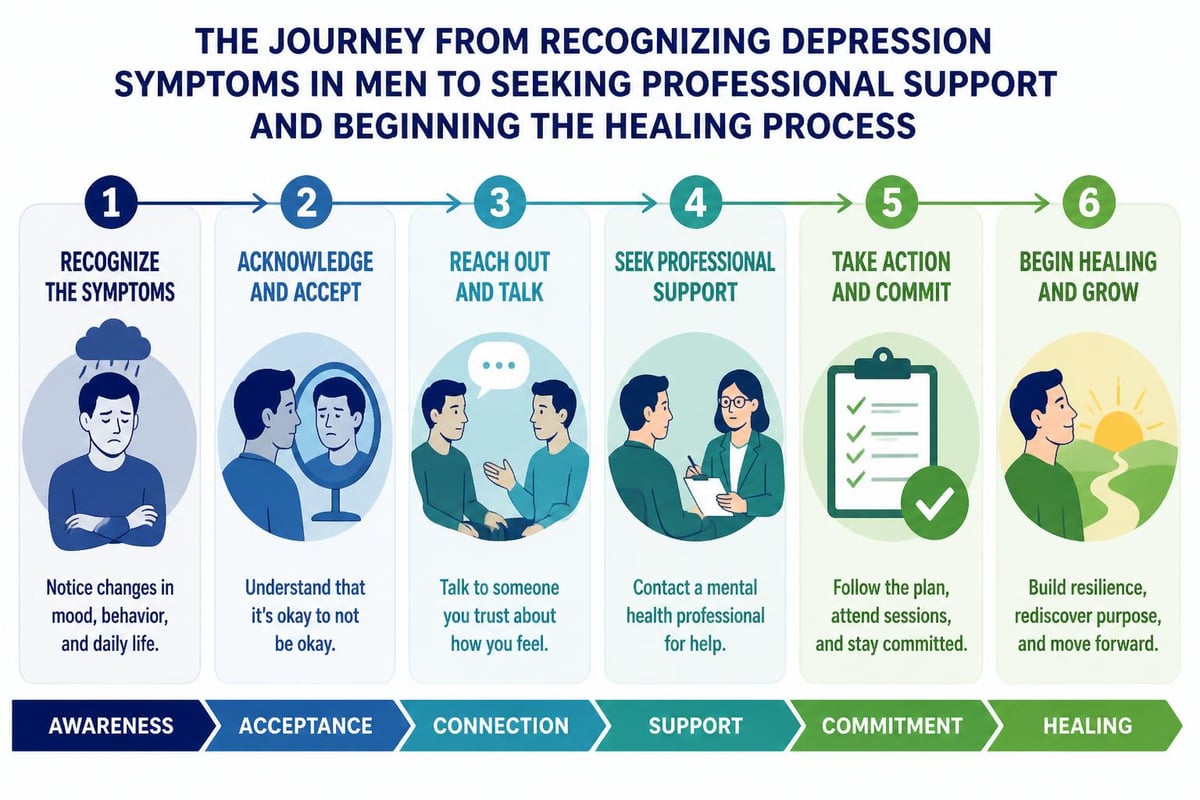
There's a cultural component we can't ignore. Traditional ideas about masculinity often discourage men from expressing vulnerability or admitting they're struggling emotionally. Phrases like "man up" or "tough it out" create an environment where reaching out for help feels like weakness.
But here's the reality: Recognizing you need support and actually getting it is one of the strongest things you can do. Depression is a medical condition, not a personal failure. You wouldn't hesitate to see a doctor for a broken leg, and your mental health deserves the same priority.
Men might avoid seeking help because they:
- Fear being judged or seen as weak
- Don't recognize their symptoms as depression
- Believe they should handle it themselves
- Worry about the stigma from family or coworkers
- Think therapy "isn't for people like me"
Finding the right support can make all the difference. Services that specialize in men's mental health understand these unique challenges and create a safe, judgment-free space for healing.
Risk Factors and Who's Most Vulnerable
Certain situations and life circumstances can increase the likelihood of experiencing symptoms of depression in men. Understanding these risk factors can help with early recognition.
Major risk factors include:
- Family history of depression or mental illness
- Significant life stressors (job loss, divorce, financial problems)
- Chronic health conditions or pain
- History of trauma or abuse
- Substance use disorders
- Social isolation or lack of support network
- Major life transitions (retirement, becoming a father, aging)
If you're dealing with multiple risk factors, paying attention to changes in your mood, behavior, and physical health becomes even more important. Early intervention can prevent symptoms from becoming more severe.
When to Reach Out for Support
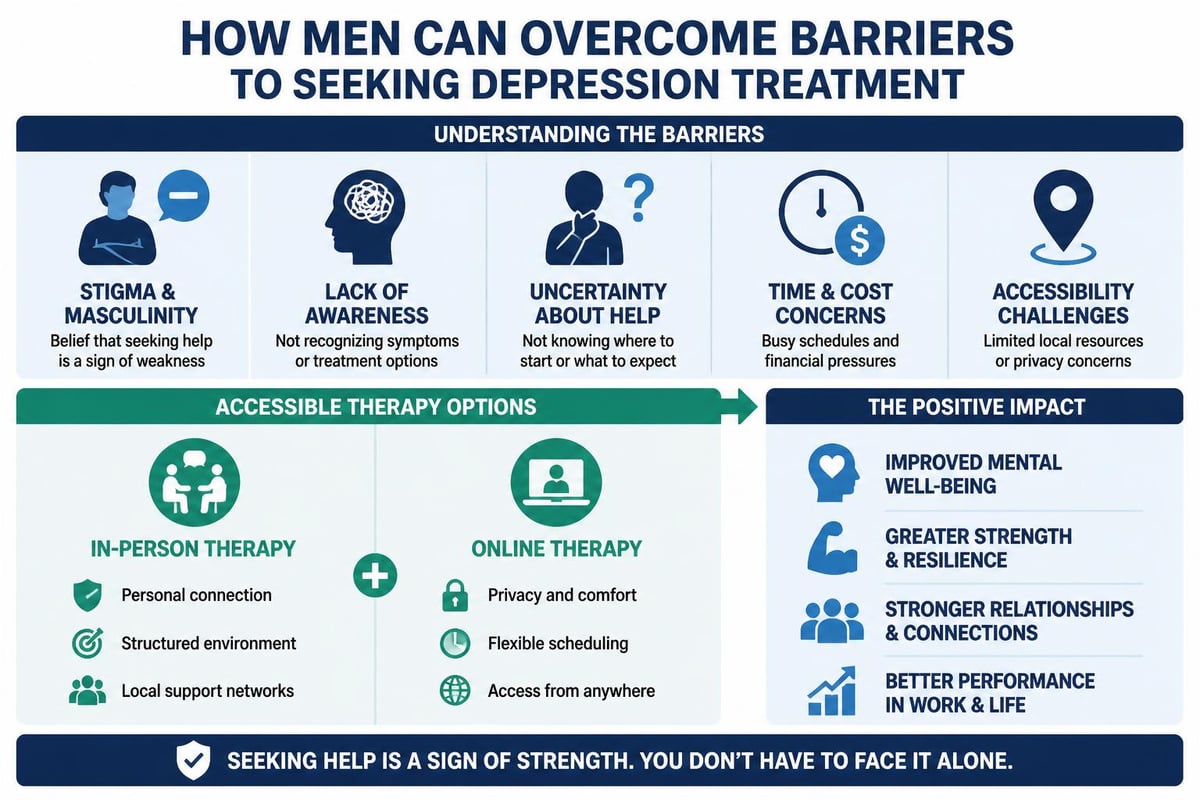
You don't need to be in crisis to deserve help. If you've noticed several of these symptoms lasting more than two weeks, or if they're interfering with your daily life, work, or relationships, it's time to talk to someone.
Finding a therapist for anxiety and depression doesn't have to be complicated. Many clinics now offer both in-person sessions and online therapy options across Ontario, making support more accessible than ever.
Getting Started
The first step is often the hardest, but it gets easier from there:
- Talk to your family doctor about what you're experiencing
- Research therapists who specialize in men's mental health
- Consider trauma-informed and culturally responsive care that addresses your specific needs
- Ask about evidence-based approaches like CBT, DBT, or EMDR
- Don't give up if the first therapist isn't the right fit
Remember that seeking counselling for anxiety and depression is a sign of self-awareness and strength, not weakness. The symptoms of depression in men are real, they're treatable, and you don't have to face them alone.
Recognizing symptoms of depression in men is the crucial first step toward healing and recovery. Whether you're noticing these signs in yourself or someone you care about, reaching out for professional support can make a profound difference in quality of life and overall wellbeing. Théla Psychotherapy Clinic offers specialized, trauma-informed care for men dealing with depression, available both in-person in Markham and online throughout Ontario, providing a safe space to address these challenges with evidence-based therapeutic approaches tailored to your unique needs.

Bonny Li
Contact Me