Finding the right path to mental wellness can feel overwhelming, especially when you're faced with so many different therapeutic approaches. You've probably heard acronyms like CBT, DBT, or EMDR tossed around, but what do they actually mean for your healing journey? Understanding the various methods available helps you make informed decisions about your mental health care and sets realistic expectations for what therapy can offer. Whether you're dealing with anxiety, trauma, relationship challenges, or simply seeking personal growth, there's a therapeutic approach designed to meet you where you are.
What Are Therapeutic Approaches and Why Do They Matter?
Therapeutic approaches are structured frameworks that guide how therapists work with clients to address mental health concerns. Think of them as different roadmaps to the same destination: your wellbeing.
Five major counseling theories form the foundation of modern psychotherapy, each offering unique perspectives on human behavior and healing. These frameworks aren't just academic concepts. They directly influence how your therapist listens, responds, and helps you work through challenges.
The importance of matching the right approach to your needs includes:
- Better treatment outcomes and faster progress
- Increased engagement and motivation in therapy
- Stronger therapeutic alliance with your counselor
- More personalized care that respects your unique background
At Théla Psychotherapy Clinic, therapists draw from multiple evidence-based frameworks to create customized treatment plans. This flexibility ensures you're not forced into a one-size-fits-all solution.
Cognitive and Behavioral Therapeutic Approaches
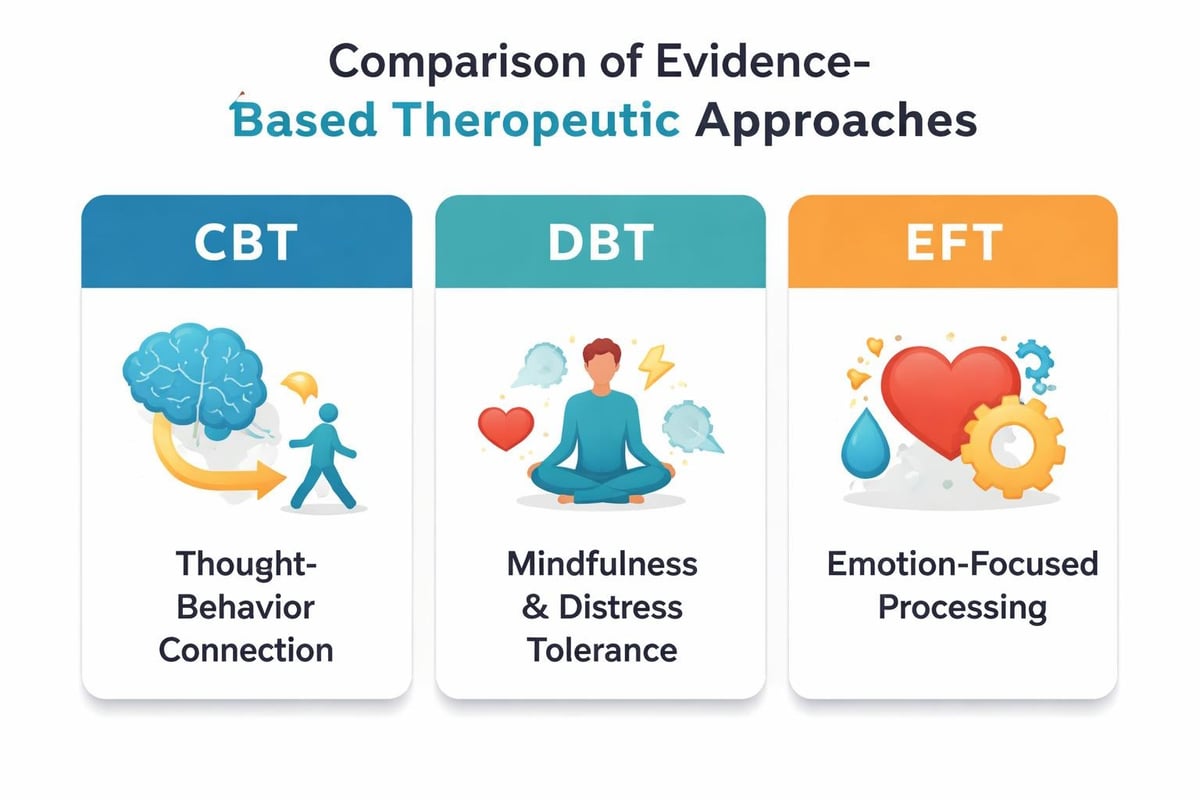
Cognitive Behavioral Therapy (CBT) remains one of the most researched and widely practiced methods. Evidence-based therapeutic approaches like CBT focus on the connection between thoughts, feelings, and behaviors.
How CBT Works in Practice
CBT helps you identify unhelpful thought patterns and replace them with more balanced perspectives. If you struggle with anxiety, your therapist might help you challenge catastrophic thinking. When you catch yourself thinking "Everything will go wrong," you learn to examine the evidence and develop more realistic thoughts.
The process typically involves:
- Identifying triggering situations
- Recognizing automatic negative thoughts
- Challenging cognitive distortions
- Practicing new behavioral responses
- Building long-term coping strategies
Our guide to CBT therapy explores how this approach works specifically for Ontario residents seeking practical mental health tools.
Dialectical Behavior Therapy: Skills for Emotional Regulation
DBT, originally developed for borderline personality disorder, has proven effective for various conditions. This approach combines cognitive-behavioral techniques with mindfulness practices. You'll learn four core skill sets: mindfulness, distress tolerance, emotion regulation, and interpersonal effectiveness.
| DBT Skill Module | Primary Focus | Example Application |
|---|---|---|
| Mindfulness | Present-moment awareness | Observing emotions without judgment |
| Distress Tolerance | Crisis survival | Using TIPP skills during panic |
| Emotion Regulation | Understanding feelings | Identifying and naming emotions accurately |
| Interpersonal Effectiveness | Healthy relationships | Setting boundaries with DEAR MAN |
For those dealing with emotional dysregulation, DBT offers concrete tools you can practice between sessions.
Emotion-Focused and Trauma-Informed Therapeutic Approaches
Emotionally Focused Therapy (EFT) takes a different angle, emphasizing the importance of emotional experience in healing. According to research on psychotherapeutic approaches, EFT shows particularly strong results for couples therapy and attachment-related issues.
Rather than just changing thoughts or behaviors, EFT helps you access, process, and transform emotional experiences. Your therapist creates a safe space where you can explore feelings you might have been avoiding for years.
EMDR for Trauma Processing
Eye Movement Desensitization and Reprocessing (EMDR) represents one of the most innovative therapeutic approaches for trauma. This method uses bilateral stimulation-typically eye movements-to help your brain reprocess traumatic memories.
What makes EMDR unique:
- Doesn't require detailed verbal description of trauma
- Often produces results faster than traditional talk therapy
- Addresses the physiological component of trauma
- Effective for PTSD, phobias, and complex trauma
If you're considering this method, our guide to preparing for EMDR therapy walks you through what to expect.
Humanistic and Integrative Approaches
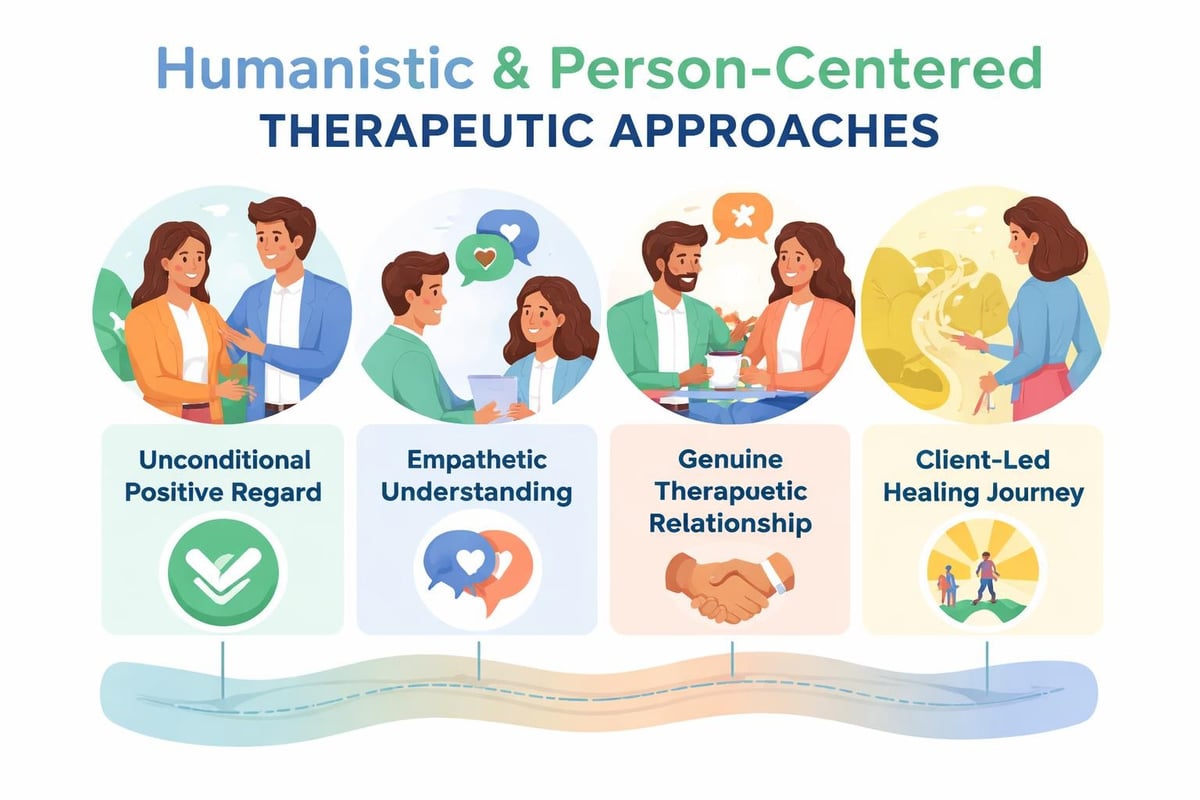
Humanistic therapies view people as inherently capable of growth and self-actualization. Person-centered therapy, developed by Carl Rogers, trusts your inner wisdom to guide the healing process.
Your therapist's role becomes less about directing and more about creating conditions for growth through unconditional positive regard, empathy, and authenticity. This approach works beautifully for people who feel disconnected from themselves or struggle with self-worth.
The Power of Integration
Most effective therapists don't stick rigidly to one method. Integrative therapeutic approaches blend techniques from multiple frameworks based on your specific needs. You might use CBT skills for anxiety management while also processing attachment wounds through EFT.
The therapeutic services at clinics increasingly reflect this integrative philosophy, recognizing that your mental health journey doesn't fit neatly into one category.
Choosing the Right Approach for Your Journey
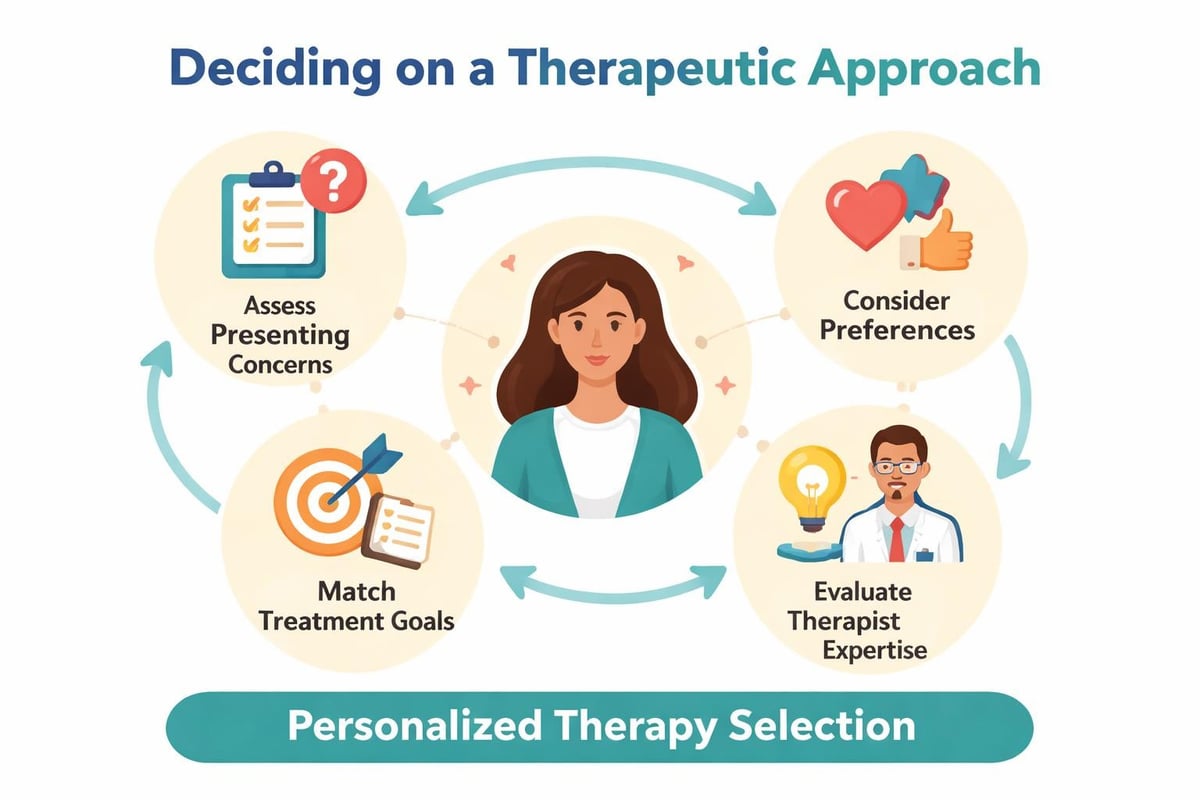
So how do you decide which therapeutic approaches make sense for you? Start by considering what you're hoping to address. Different approaches suit different concerns.
Match your needs to approaches:
- Anxiety and panic: CBT, DBT, or mindfulness-based approaches
- Relationship issues: EFT, Gottman Method, or attachment-based therapy
- Trauma and PTSD: EMDR, trauma-focused CBT, or somatic approaches
- Depression: CBT, behavioral activation, or interpersonal therapy
- Personality patterns: DBT, schema therapy, or psychodynamic approaches
Your personal preferences matter too. Some people thrive with structured, homework-based methods like CBT. Others need the emotional depth of psychodynamic or humanistic approaches.
Cultural Responsiveness in Therapeutic Approaches
Effective therapy must acknowledge your cultural background, identity, and lived experiences. Culturally responsive therapeutic approaches adapt traditional methods to honor diverse perspectives, values, and healing traditions.
This means your therapist should:
- Recognize how culture shapes mental health experiences
- Adapt interventions to align with your values
- Address systemic factors affecting your wellbeing
- Respect alternative healing practices alongside therapy
For those seeking therapeutic support, finding a therapist who practices cultural humility makes an enormous difference in treatment outcomes.
Specialized Therapeutic Approaches for Specific Populations
Certain populations benefit from specialized adaptations of therapeutic approaches. Children and teens, for example, need developmentally appropriate methods. ADHD in children and teens requires approaches that incorporate play, creative expression, and family involvement.
Similarly, couples communication challenges call for relationship-focused methods like the Gottman Method or EFT for couples. These specialized approaches address the unique dynamics of romantic partnerships.
Even innovative methods like canine support therapy represent therapeutic approaches that work alongside traditional methods, especially for clients who find connection through animal-assisted interventions.
Understanding therapeutic approaches empowers you to be an active participant in your healing journey rather than a passive recipient of treatment. The most effective therapy happens when you find the right match between method, therapist, and your unique needs. Théla Psychotherapy Clinic offers trauma-informed, culturally responsive care using evidence-based therapeutic approaches including CBT, DBT, EFT, and EMDR, tailored to your specific situation. Whether you're in Markham or anywhere across Ontario, their team creates a safe space where you can explore which approach feels right for your path forward.

Bonny Li
Contact Me
.jpg)