If you've ever felt stuck in the same arguments with your partner, repeating patterns that leave both of you frustrated and disconnected, you're not alone. Many couples find themselves caught in cycles where the harder they try to communicate, the further apart they drift. That's where eft relationship therapy comes in-a powerful, research-backed approach that gets to the heart of what really drives relationship distress. Instead of just teaching communication skills or conflict resolution tricks, EFT focuses on the emotional bonds between partners and helps rebuild secure attachment.
What Makes EFT Relationship Therapy Different
Emotionally Focused Therapy stands apart from other couples counseling approaches because it targets the emotional patterns underlying relationship problems. Developed by Dr. Sue Johnson in the 1980s, EFT is grounded in attachment science, which shows that humans are wired for connection and that our primary relationships shape our emotional well-being.
Rather than viewing conflict as the problem, eft relationship therapy sees disconnection as the real issue. When couples fight about dishes, finances, or parenting, they're often really struggling with deeper questions: "Are you there for me?" "Do I matter to you?" "Can I count on you when I need you?"
The Three Stages of EFT
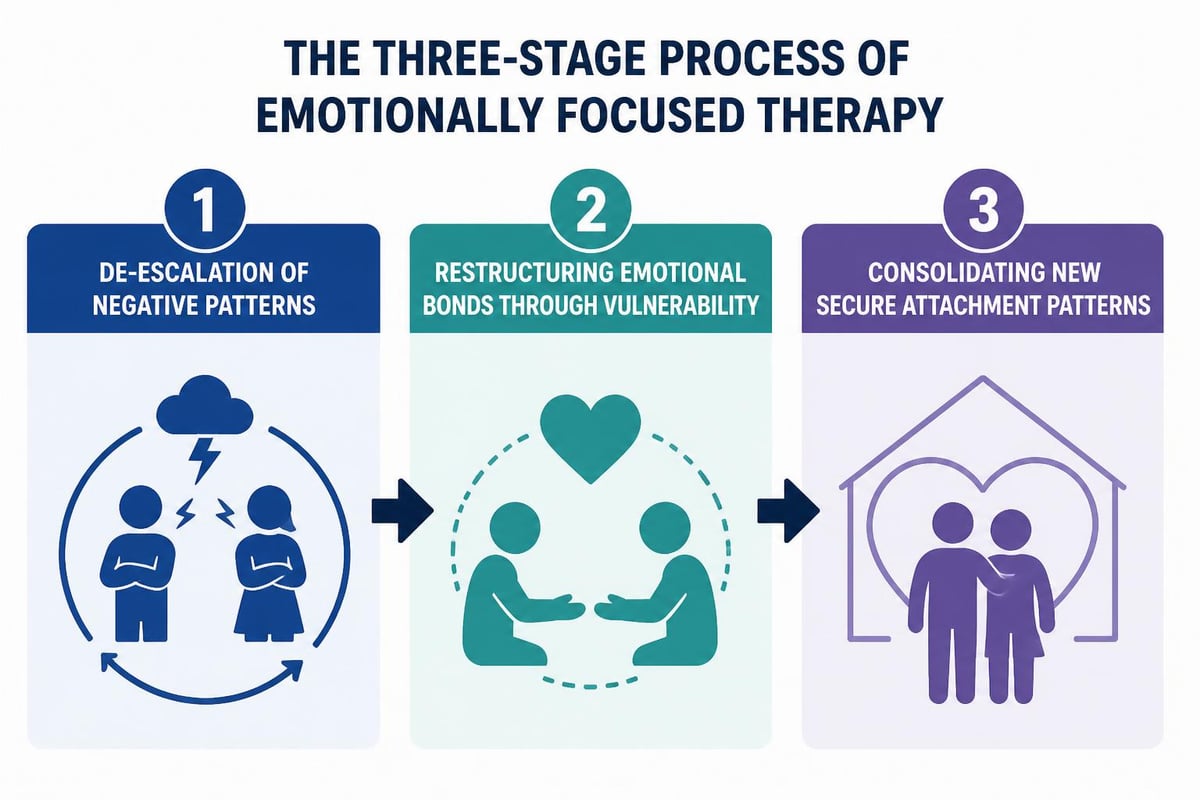
EFT follows a structured process that typically unfolds over 8-20 sessions. Here's how the journey looks:
Stage One: De-escalation
- Identifying negative interaction patterns
- Understanding emotional triggers
- Recognizing how each partner contributes to the cycle
- Creating safety to explore vulnerable feelings
Stage Two: Restructuring the Bond
- Expressing underlying attachment needs
- Responding to your partner's needs with empathy
- Creating new positive interactions
- Building trust through emotional responsiveness
Stage Three: Consolidation
- Practicing new patterns in daily life
- Addressing old problems with new skills
- Strengthening the secure bond
- Planning for future challenges
How EFT Addresses Your Attachment Needs
We all have fundamental emotional needs in relationships-to feel safe, valued, and loved. When these needs aren't met, we develop protective strategies that often push our partners further away. Understanding these attachment dynamics is crucial to healing relationship distress.
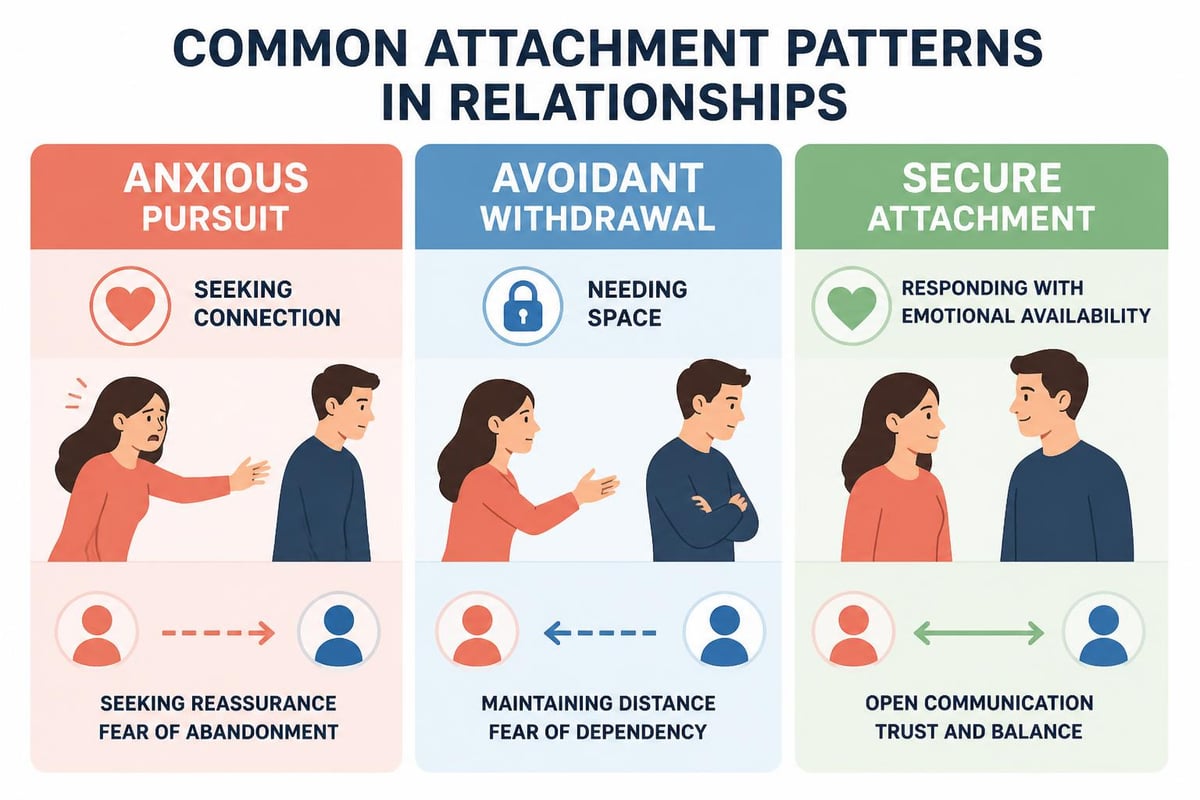
Some people respond to disconnection by pursuing-calling repeatedly, asking for reassurance, or initiating difficult conversations. Others withdraw-shutting down emotionally, avoiding conflict, or seeking space. Neither response is wrong, but when these patterns interact, they create what EFT therapists call the "pursue-withdraw cycle."
| Pursuer Response | Withdrawer Response | The Cycle Result |
|---|---|---|
| Seeks connection through talking | Needs space to process | More pursuit leads to more withdrawal |
| Interprets withdrawal as rejection | Feels overwhelmed by pursuit | Both feel misunderstood and alone |
| Becomes more anxious and critical | Becomes more defensive and distant | Disconnection deepens over time |
Through eft relationship therapy, couples learn to recognize these patterns without blame. Your therapist helps you understand that both responses are attempts to protect yourself from pain-they're just not working anymore.
The Evidence Behind EFT's Effectiveness
If you're considering therapy, you want to know it actually works. The good news? Research consistently shows that EFT is highly effective for improving relationship satisfaction and creating lasting change.
Studies show that 70-75% of couples move from distress to recovery through EFT, and approximately 90% show significant improvement. Even better, these gains tend to stick-follow-up research shows couples maintain their improvements years after completing therapy.
What makes EFT particularly powerful is its focus on changing emotional experiences, not just behaviors. When you feel truly understood by your partner and confident in their emotional responsiveness, you naturally interact differently. The therapeutic process creates new emotional experiences that rewire your relationship patterns at a deep level.
Who Benefits Most from EFT
While originally developed for couples, eft relationship therapy has expanded to help various relationships:
- Married couples facing communication breakdowns
- Partners navigating infidelity recovery
- LGBTQ+ couples seeking affirming therapy
- Families healing from trauma or conflict
- Individuals exploring relationship patterns in their lives
At Théla Psychotherapy Clinic, therapists integrate EFT with other evidence-based approaches to meet each client's unique needs, whether you're working through specific trauma or building healthier relationship skills.
What to Expect in Your EFT Sessions
Starting therapy can feel vulnerable, especially when your relationship is already strained. Here's what typically happens in eft relationship therapy sessions so you know what to expect.
Your therapist will first meet with you individually or as a couple to understand your relationship history, current struggles, and goals. They'll help you identify the negative cycle that keeps you stuck and show you how each partner's reactions make sense given their emotional needs.
As therapy progresses, sessions become more focused on slowing down moments of disconnection and exploring the softer feelings beneath defensive reactions. Your therapist might ask questions like "What happens inside you when your partner says that?" or "What are you most afraid of in this moment?"
This isn't about blame or finding out who's right-it's about understanding the emotions driving your reactions. When both partners can share their vulnerabilities and respond to each other's needs, the relationship transforms from a source of pain to a source of comfort.
Finding the Right EFT Therapist
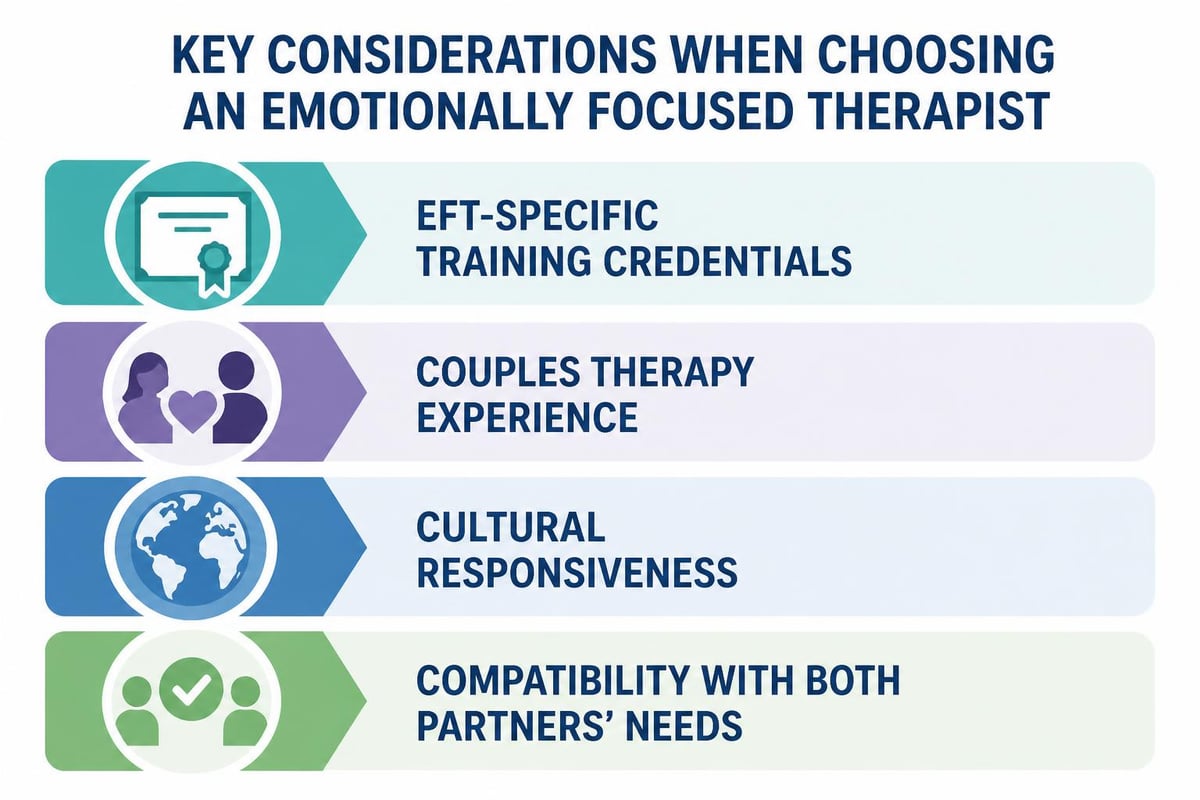
Not all couples therapists are trained in EFT, so it's worth asking about their specific credentials and approach. Look for therapists who have completed EFT training through recognized programs and who can explain how they'll work with your specific situation.
When seeking relationship help in 2026, consider whether you prefer in-person or online sessions. Both formats can be effective for EFT, though some couples appreciate the convenience and privacy of virtual therapy, especially in Ontario where weather and distance can be factors.
You'll also want a therapist who creates a safe, non-judgmental environment where both partners feel heard. Culturally responsive care matters too-your therapist should understand and respect your unique background, values, and relationship context.
Moving Beyond Surface-Level Solutions
Traditional couples counseling often focuses on teaching communication techniques or negotiating compromises. While these skills can help, they don't address why couples struggle in the first place. Eft relationship therapy digs deeper, recognizing that most relationship problems stem from unmet attachment needs rather than poor communication skills.
Think about it: you probably already know how to use "I statements" or listen actively. The challenge isn't knowledge-it's what happens when you're flooded with emotion, feeling rejected or abandoned, and your brain goes into fight-or-flight mode. In those moments, no communication technique in the world helps.
EFT works because it changes those emotional responses at their source. When you truly trust that your partner is there for you, you naturally become more open, responsive, and willing to work through difficulties together. The defensive reactions fade because you no longer need them-you feel secure.
Common Questions About EFT
How long does EFT take? Most couples complete EFT in 8-20 sessions, though the exact timeline depends on your specific situation and how deeply entrenched your negative patterns are.
Does EFT work if only one partner is motivated? While having both partners engaged helps, EFT can create positive changes even when one person is initially hesitant. As the therapy progresses and safety increases, reluctant partners often become more willing to engage.
Can EFT help if we've already tried other therapy? Absolutely. Many couples find success with EFT after other approaches haven't worked, precisely because it targets emotional bonds rather than just surface behaviors.
Is EFT appropriate for all couples? EFT is highly effective for most relationship difficulties, though it may not be suitable for relationships with active abuse or severe substance use issues that need to be addressed first.
For those exploring different therapeutic approaches, understanding how EFT differs from CBT, DBT, or other modalities can help you make an informed choice about what's right for your relationship.
EFT relationship therapy offers hope for couples who feel stuck in painful patterns, providing a clear path toward secure attachment and emotional connection. The journey requires vulnerability and courage, but the rewards-a relationship where both partners feel truly seen, valued, and safe-make it worthwhile. If you're ready to transform your relationship through evidence-based, compassionate care, the experienced therapists at Théla Psychotherapy Clinic are here to guide you, offering both in-person sessions in Markham and online therapy throughout Ontario.

Bonny Li
Contact Me
.jpg)