Discovering infidelity in your relationship can feel like the ground has shifted beneath your feet. Everything you thought you knew suddenly feels uncertain, and the pain can be overwhelming. But here's something important to know: many couples do recover from infidelity, and couples therapy after infidelity plays a crucial role in that healing journey. Whether you're the person who was hurt or the one who strayed, deciding to pursue therapy together is a brave first step toward understanding what happened and potentially rebuilding your relationship.
Why Couples Seek Therapy After Betrayal
When infidelity rocks a relationship, it's not just about the physical act. It shatters trust, brings up questions about the relationship's foundation, and leaves both partners feeling lost. That's where professional guidance becomes invaluable.
Many couples come to therapy because they're stuck in painful patterns. One partner might be demanding answers constantly while the other withdraws, or both might feel overwhelmed by emotions they don't know how to process. Research on couples therapy outcomes shows that structured therapeutic intervention significantly improves recovery rates compared to couples who try to work through infidelity alone.
What Happens in the First Sessions
Walking into that first therapy appointment takes courage. You're probably feeling anxious, uncertain, and maybe even hopeful. The initial sessions focus on creating safety and establishing ground rules for the therapeutic process.
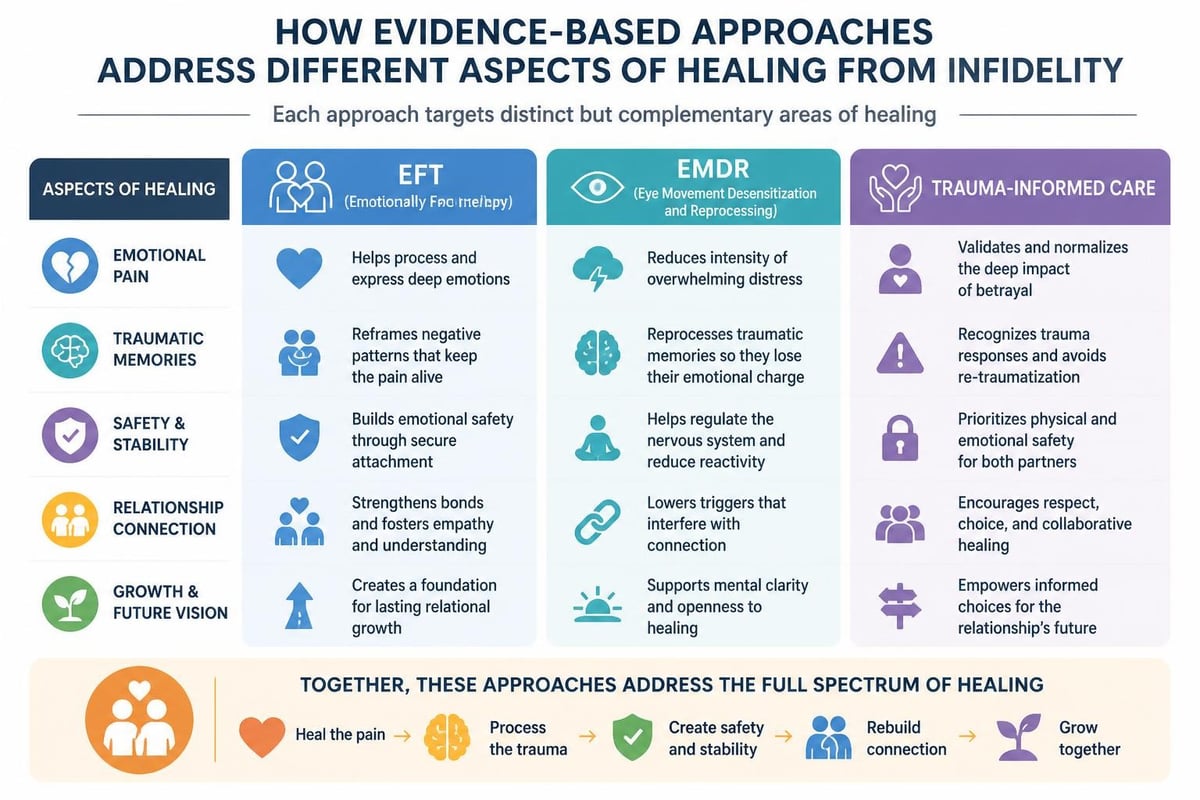
Your therapist will help both of you express what you're experiencing without things escalating into destructive arguments. This is crucial because emotions run incredibly high after betrayal. At Théla Psychotherapy Clinic, therapists use evidence-based approaches like Emotionally Focused Therapy (EFT) to help couples navigate these difficult conversations.
In early sessions, you can expect:
- Assessment of the relationship history and current crisis
- Establishing communication guidelines
- Creating a safe space for emotional expression
- Discussion of therapy goals and expectations
- Initial work on emotional regulation
The Recovery Process: What to Expect
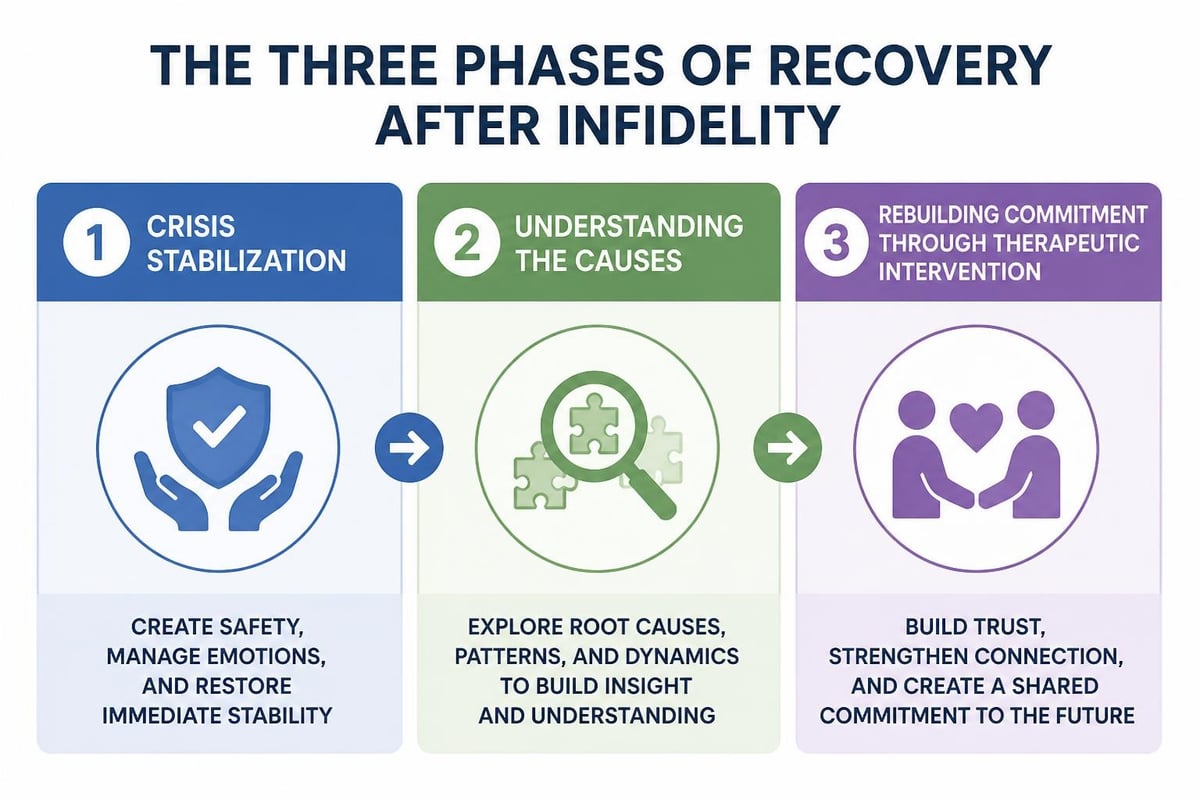
Couples therapy after infidelity isn't a quick fix. It's a journey with distinct phases, each building on the last. Understanding these stages helps you recognize progress even when things feel difficult.
The phases of recovery in couples therapy typically include crisis management, deeper exploration of relationship issues, and rebuilding. Think of it like healing a physical wound-you need to stop the bleeding first, then treat the underlying injury, and finally strengthen what's been damaged.
The Questions Everyone Asks
Can our relationship really survive this?
Yes, it absolutely can. While infidelity changes a relationship forever, many couples report their bond becomes stronger after working through betrayal. The key is commitment from both partners to do the hard work.
How long does therapy take?
There's no universal timeline. Some couples need several months, others work in therapy for a year or more. The important thing isn't rushing through-it's doing the work thoroughly.
| Recovery Phase | Typical Duration | Main Focus |
|---|---|---|
| Crisis Stabilization | 4-8 weeks | Managing intense emotions, establishing safety |
| Understanding | 2-4 months | Exploring underlying issues, improving communication |
| Rebuilding | 4-6 months | Restoring trust, creating new relationship patterns |
Building Trust Again: The Hardest Part
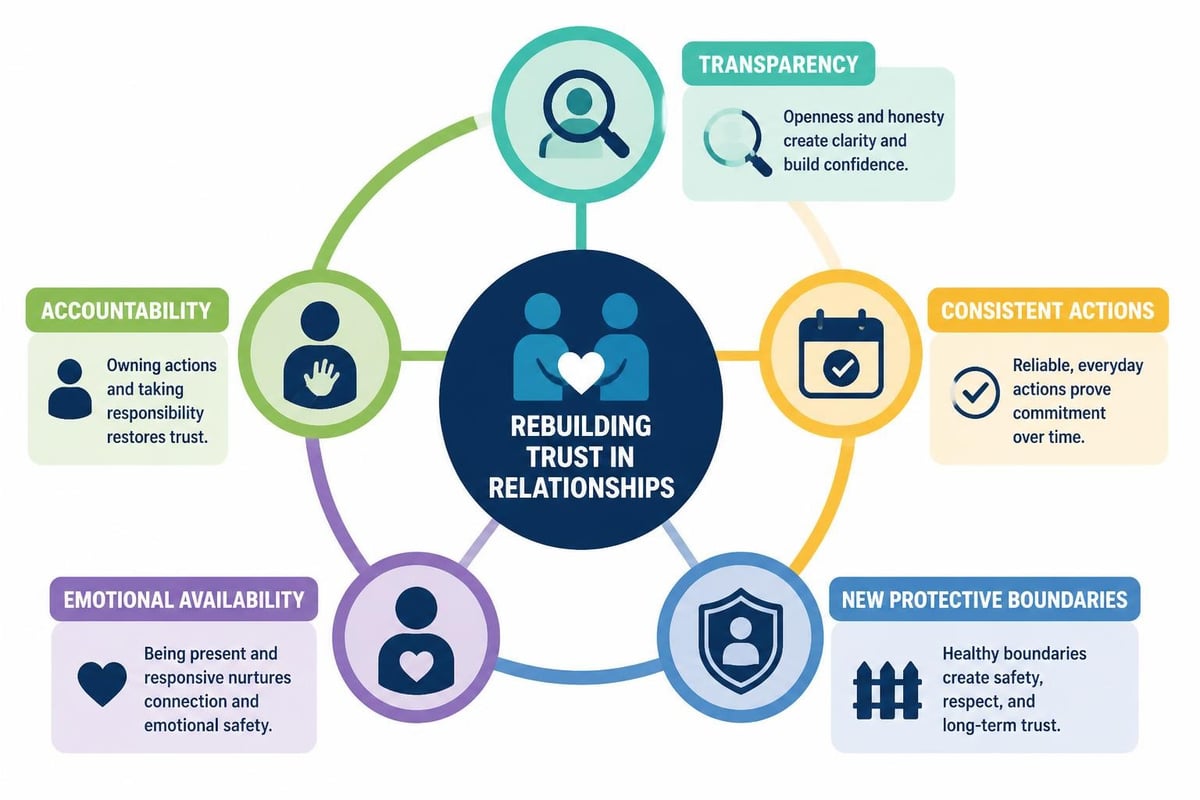
Let's be honest-rebuilding trust after infidelity is incredibly challenging. It requires transparency, patience, and consistent effort from the partner who had the affair. The betrayed partner needs time to heal, and that timeline can't be rushed.
Trust isn't rebuilt through grand gestures. It happens through small, consistent actions over time. Your therapist will help establish what transparency looks like for your relationship and how to handle setbacks when trust feels shaky again.
Essential elements for rebuilding trust include:
- Complete honesty about the affair and willingness to answer questions
- Accountability through actions, not just words
- Patience with the healing process from both partners
- New boundaries that make both people feel secure
- Consistent follow-through on commitments
Understanding Why It Happened
One of the most valuable aspects of couples therapy after infidelity is exploring the "why" behind the betrayal. This isn't about excusing the affair-the person who had the affair made a choice and owns that responsibility. However, understanding contributing factors helps prevent future betrayals and addresses relationship issues that may have existed before the infidelity.
Maybe emotional needs weren't being communicated. Perhaps the relationship had grown distant over time. Sometimes individual issues like low self-esteem or unresolved trauma play a role. Understanding the therapeutic process helps couples dig into these complex dynamics safely.
The Role of Individual Work
Interestingly, successful couples therapy after infidelity often involves individual work too. The betrayed partner may need support processing trauma responses. The partner who had the affair typically benefits from exploring their own patterns and choices.
At Théla Psychotherapy Clinic, therapists recognize that couples counselling works best when integrated with individual healing. This dual approach addresses both relationship dynamics and personal growth.
Communication Patterns That Heal
Learning new ways to communicate might be the most practical skill you gain from therapy. After infidelity, old communication patterns often become toxic-either too accusatory or too withdrawn to be helpful.
Your therapist will teach you how to express hurt without attacking, how to listen when your partner shares pain you've caused, and how to validate emotions even when you disagree. These skills serve you far beyond healing from infidelity-they transform how you connect moving forward.
| Destructive Pattern | Healing Alternative |
|---|---|
| "You always lie to me!" | "I'm struggling to trust right now and need reassurance" |
| Shutting down when questioned | "I feel overwhelmed but want to answer-can we take a brief break?" |
| Checking phone constantly | "I'm feeling anxious. Can we talk about what would help me feel secure?" |
Real couples who've repaired their relationship after an affair often credit learning these communication tools as pivotal to their recovery.
Finding the Right Therapist
Not every therapist is trained in helping couples heal from infidelity. You want someone who specializes in this work and uses evidence-based approaches. EFT couples therapy has particularly strong research support for infidelity recovery.
When searching for support, ask potential therapists about their experience with infidelity cases, their therapeutic approach, and their philosophy about relationship recovery. You should both feel comfortable with your therapist-if you don't, it's okay to find someone else.
Making the Decision Together
Choosing couples therapy after infidelity is a joint decision that signals hope for the relationship. Both partners need to commit to the process, even when sessions bring up difficult emotions. Some days you'll feel encouraged by progress; other days you'll wonder if you're getting anywhere.
That's normal. Healing isn't linear. The important thing is showing up, doing the work, and staying committed to the process. Whether you ultimately decide to stay together or part ways, therapy provides tools for understanding what happened and moving forward healthier than before.
Recovering from infidelity is one of the hardest challenges a relationship can face, but with professional support and mutual commitment, healing is possible. The trauma-informed, evidence-based approach at Théla Psychotherapy Clinic provides couples in Ontario with the specialized support needed to navigate this difficult journey-whether through in-person sessions in Markham or virtually across the province, experienced therapists are ready to help you find your path forward together.

Bonny Li
Contact Me
.jpg)