If you've ever felt trapped in a cycle of worry, racing thoughts, or physical tension that just won't quit, you're not alone. Anxiety affects millions of people across Ontario and beyond, but here's the good news: cognitive behavioral therapy for anxiety has become one of the most researched and effective treatments available today. Unlike traditional talk therapy that focuses mainly on exploring your past, CBT gives you practical tools to change how you think and respond to anxiety right now. Whether you're dealing with generalized anxiety, social fears, panic attacks, or specific phobias, understanding how this approach works can be your first step toward relief.
What Makes CBT Different from Other Therapies
Cognitive behavioral therapy stands out because it's action-oriented and time-limited. You're not just talking about your problems; you're actively learning skills to manage them.
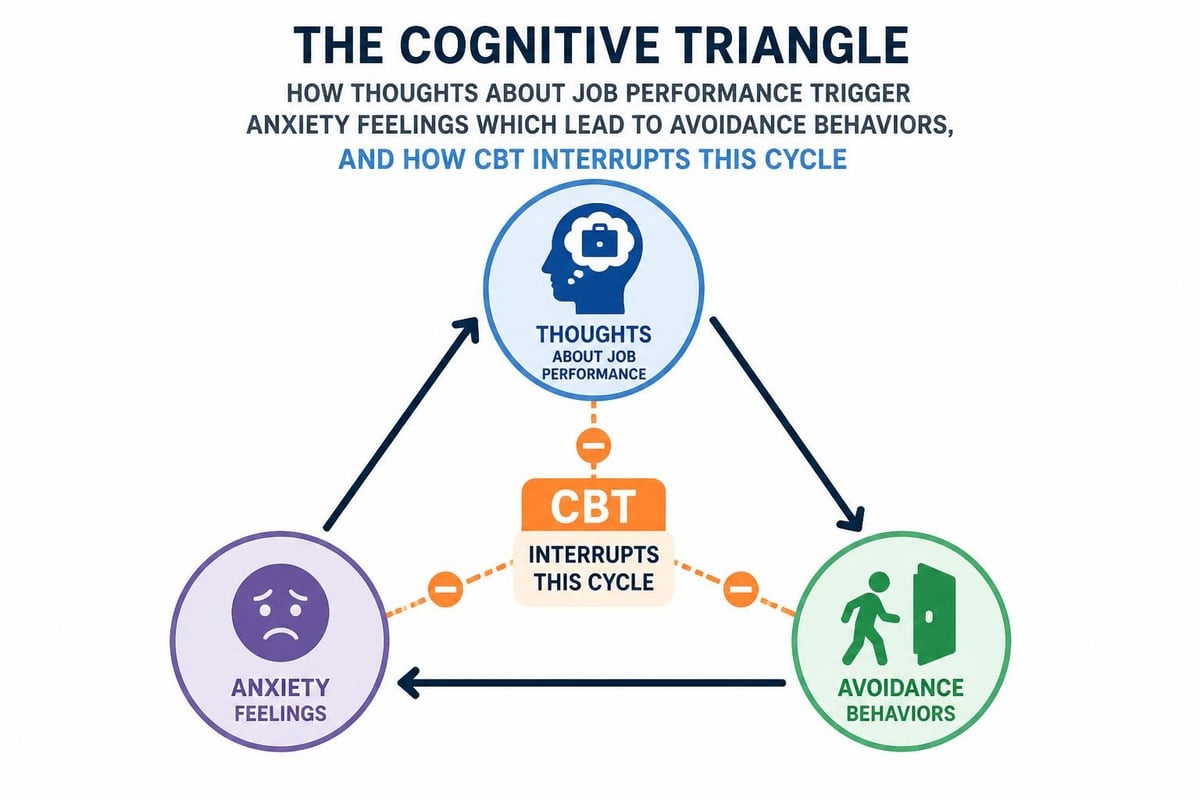
The foundation of CBT rests on a simple but powerful idea: your thoughts, feelings, and behaviors are all connected. When you change one part of this triangle, the others shift too. Research shows that CBT interventions consistently help people with anxiety and stress-related disorders by targeting these connections directly.
The Thought-Feeling-Behavior Connection
Here's how it typically works in real life:
- Thought: "I'm going to mess up this presentation and everyone will think I'm incompetent"
- Feeling: Intense anxiety, racing heart, sweating
- Behavior: Avoiding the presentation or rushing through it nervously
CBT helps you identify these patterns and interrupt them. Instead of accepting anxious thoughts as facts, you learn to question them and develop more balanced perspectives.
Core Techniques Used in CBT Sessions
When you start cognitive behavioral therapy for anxiety at clinics like Théla Psychotherapy Clinic, your therapist will introduce several evidence-based techniques tailored to your specific needs.
Cognitive restructuring is usually the first tool you'll learn. This involves identifying distorted thinking patterns (like catastrophizing or all-or-nothing thinking) and replacing them with more realistic thoughts. You might keep a thought record between sessions, tracking situations that trigger anxiety and the thoughts that follow.
Exposure therapy gradually introduces you to feared situations in a safe, controlled way. If you have social anxiety, for example, you might start by making eye contact with a stranger, then progress to asking someone for directions, and eventually work up to larger social interactions.
| CBT Technique | What It Does | Example Application |
|---|---|---|
| Cognitive Restructuring | Challenges negative thoughts | Examining evidence for/against anxious beliefs |
| Exposure Therapy | Reduces fear through gradual contact | Facing avoided situations step-by-step |
| Relaxation Training | Manages physical anxiety symptoms | Deep breathing, progressive muscle relaxation |
| Behavioral Activation | Increases positive activities | Scheduling enjoyable or meaningful tasks |
Homework and Practice Between Sessions
Unlike some therapeutic approaches, CBT involves significant work outside your weekly sessions. Your therapist might ask you to practice relaxation techniques daily, complete thought records, or gradually face feared situations.
This homework isn't busywork. It's where the real change happens. The core concepts of CBT emphasize that sustained practice helps rewire your brain's automatic responses to anxiety triggers.
What to Expect During Treatment
Most people start seeing improvements within 8-16 sessions, though this varies depending on your specific challenges and commitment to the process. The therapeutic approaches used at specialized clinics often combine CBT with other evidence-based methods for comprehensive care.
Your First Few Sessions
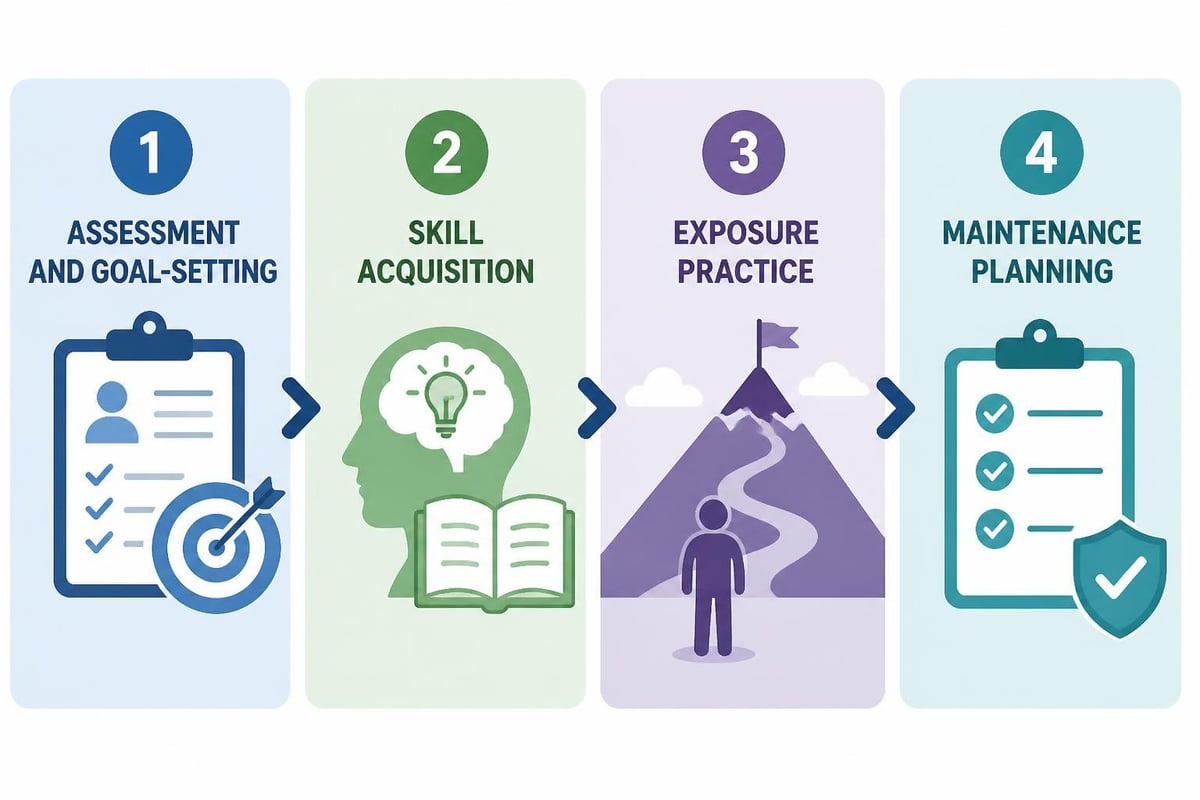
Initially, your therapist will conduct a thorough assessment. You'll discuss your anxiety symptoms, triggers, and how anxiety impacts your daily life. Together, you'll set specific, measurable goals. Maybe you want to attend social events without overwhelming dread, or perhaps you need to manage work stress without panic attacks.
The middle phase focuses on skill-building. You'll learn to:
- Recognize your unique anxiety triggers
- Identify and challenge anxious thoughts
- Use relaxation techniques when physical symptoms arise
- Gradually face avoided situations
- Develop long-term coping strategies
Later sessions shift toward maintaining your progress and preventing relapse. You'll create a personalized plan for handling future anxiety spikes.
CBT Variations for Different Anxiety Types
Not all anxiety looks the same, and cognitive behavioral therapy for anxiety adapts to meet different needs. Clinical practice guidelines provide specific recommendations for applying CBT across various anxiety disorders.
Social anxiety often requires extensive work on social cognition and exposure to social situations. You might practice conversations, public speaking, or eating in front of others.
Panic disorder focuses heavily on interoceptive exposure (deliberately triggering physical sensations like rapid heartbeat) to help you become less afraid of your body's anxiety signals.
Generalized anxiety disorder emphasizes worry management techniques, including scheduling specific "worry time" and learning to tolerate uncertainty.
Group vs. Individual CBT
Both formats work well. Group CBT for anxiety offers the added benefit of peer support and normalized experiences. You realize you're not alone in your struggles.
Individual therapy, like the personalized services offered throughout Ontario, allows deeper customization to your specific situation and may feel more comfortable if you have severe social anxiety.
Combining CBT with Other Treatments
Cognitive behavioral therapy for anxiety often works alongside other interventions for optimal results. Many people benefit from combining CBT with medication, especially during the initial phases of treatment when anxiety is most intense.
At comprehensive clinics, you might also access complementary approaches:
- DBT skills for emotion regulation (particularly helpful if you have areas of concern beyond anxiety)
- EMDR if trauma contributes to your anxiety
- Mindfulness practices to strengthen present-moment awareness
- Lifestyle modifications including sleep hygiene, exercise, and nutrition
The evidence-based approach means your treatment plan evolves based on what's actually working for you, not just theoretical preferences.
Modern Innovations in CBT Delivery
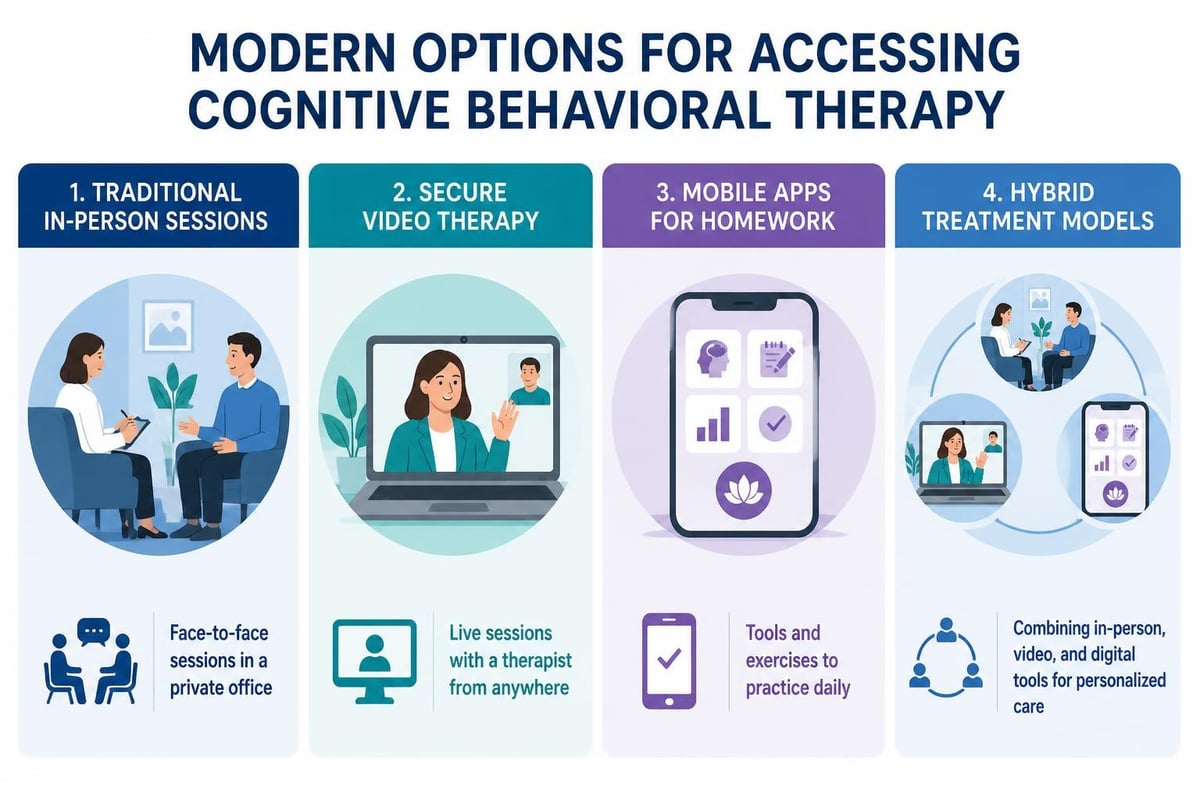
Technology is expanding access to cognitive behavioral therapy for anxiety in exciting ways. In 2026, you don't necessarily need to travel to a physical office for effective treatment.
Online CBT has proven just as effective as in-person sessions for many people. Clinics now offer virtual therapy across Ontario, making specialized care accessible regardless of your location. This flexibility matters if you live in rural areas or have mobility challenges.
Recent research even explores AI-assisted CBT delivery, though human therapists remain essential for complex cases and personalized care. These tools might supplement therapy but shouldn't replace the therapeutic relationship.
Self-Help CBT Resources
Between sessions, many people use CBT workbooks, apps, and online programs. While these can't replace professional therapy, they reinforce what you're learning. Your therapist might recommend specific resources that align with your treatment goals.
Making CBT Work for You
Success with cognitive behavioral therapy for anxiety requires active participation. You get out what you put in. Here's what helps most people succeed:
Be honest about your symptoms, even when it feels uncomfortable. Your therapist can't help with problems they don't know about.
Complete homework assignments consistently. The practice between sessions builds the neural pathways that reduce anxiety over time.
Communicate when something isn't working. Therapy should be collaborative. If a technique feels wrong or homework seems impossible, speak up so your therapist can adjust the approach.
Give it time before deciding if CBT is right for you. Some techniques feel awkward at first. Real change typically emerges after several weeks of consistent practice.
Cultural Considerations in CBT
Effective therapy acknowledges your whole identity. Culturally responsive CBT adapts traditional techniques to respect your background, values, and lived experiences.
For instance, some cultures emphasize family interdependence over individual autonomy. A skilled therapist will frame cognitive work in ways that honor those values rather than imposing Western individualism. Trauma-informed and culturally responsive care recognizes these nuances.
Similarly, neurodivergent individuals might need modified CBT approaches that account for different processing styles and sensory sensitivities. The best therapists customize treatment rather than applying a one-size-fits-all model.
Cognitive behavioral therapy for anxiety offers proven, practical strategies to break free from worry and fear that limit your life. With consistent practice and professional guidance, you can develop lasting skills to manage anxiety effectively. If you're ready to take that first step toward relief, Théla Psychotherapy Clinic provides evidence-based CBT and other therapeutic approaches both in-person in Markham and online throughout Ontario, with trauma-informed care tailored to your unique needs.

Bonny Li
Contact Me
.jpg)