You've been feeling off lately. Maybe you're more tired than usual, or things that once brought you joy just don't anymore. Maybe a friend suggested you talk to someone, or you're just wondering if what you're experiencing is something more than a rough patch. This is where depression screening comes in, and it's way less intimidating than you might think. Think of it as a check-up for your mental health, a tool that helps both you and healthcare professionals understand what's going on beneath the surface.
What Actually Happens During Depression Screening
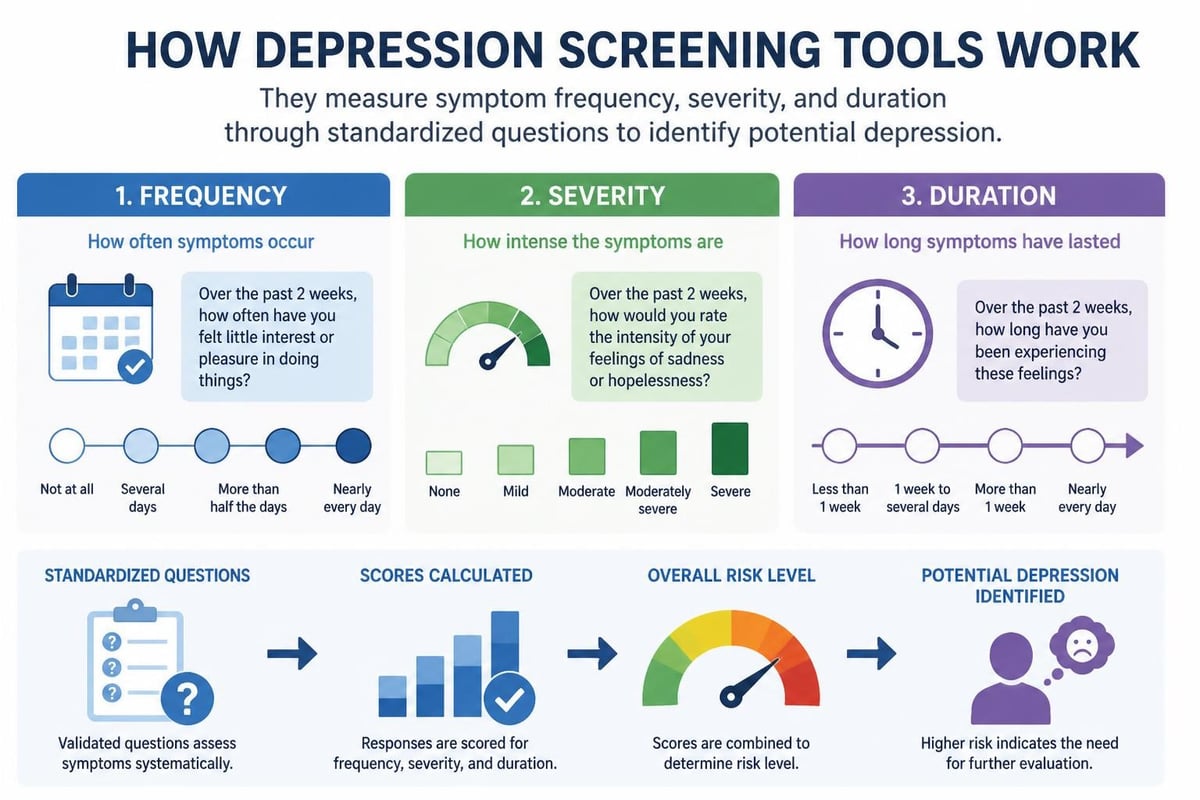
Depression screening isn't some mysterious process with complicated medical equipment. It's usually a straightforward questionnaire or conversation that explores how you've been feeling, thinking, and functioning in your daily life. MedlinePlus offers a comprehensive explanation of what these screenings involve and why they're such an important first step.
The screening typically takes place during a regular healthcare visit, at a mental health clinic, or even online. You'll answer questions about your mood, energy levels, sleep patterns, appetite, and ability to concentrate. No one's judging your answers. The goal is to get an honest snapshot of your mental health so you can get the right support.
Common Screening Tools Healthcare Providers Use
Several standardized tools help professionals assess depression symptoms. Here's what you might encounter:
| Screening Tool | Best For | Number of Questions |
|---|---|---|
| PHQ-9 | General adult screening | 9 questions |
| BDI (Beck Depression Inventory) | Detailed symptom assessment | 21 questions |
| GDS (Geriatric Depression Scale) | Older adults (65+) | 15-30 questions |
| Edinburgh Postnatal | Postpartum depression | 10 questions |
The PHQ-9 is one of the most widely used screening tools. It asks you to rate how often you've experienced certain symptoms over the past two weeks. Healthline provides an overview of common depression screening tools, including how each one functions and what makes them effective.
Why Regular Depression Screening Matters
Early detection changes everything. When depression is identified early, treatment tends to be more effective, and people often experience better outcomes. Think of it like catching a small leak before it becomes a flood.
Depression screening is particularly important during life transitions or stressful periods. Starting a new job, going through a breakup, dealing with chronic illness, or experiencing grief can all trigger depressive episodes. At Théla Psychotherapy Clinic, the trauma-informed approach recognizes that these life events impact everyone differently.
Regular screenings help you:
- Track changes in your mental health over time
- Identify patterns you might not notice on your own
- Start conversations with healthcare providers about support options
- Reduce the stigma around mental health check-ins
What Your Results Actually Mean
Screening results typically fall into categories: minimal or no depression, mild, moderate, moderately severe, or severe depression. But here's the thing: these results are a starting point, not a diagnosis. A high score doesn't automatically mean you have clinical depression, and a low score doesn't mean your struggles aren't valid.
Medical News Today compares various depression screening tools and explains how professionals interpret the results to guide next steps. If your screening suggests you might be experiencing depression, your healthcare provider will typically follow up with a more comprehensive clinical interview.
Beyond the Questionnaire: What Comes Next
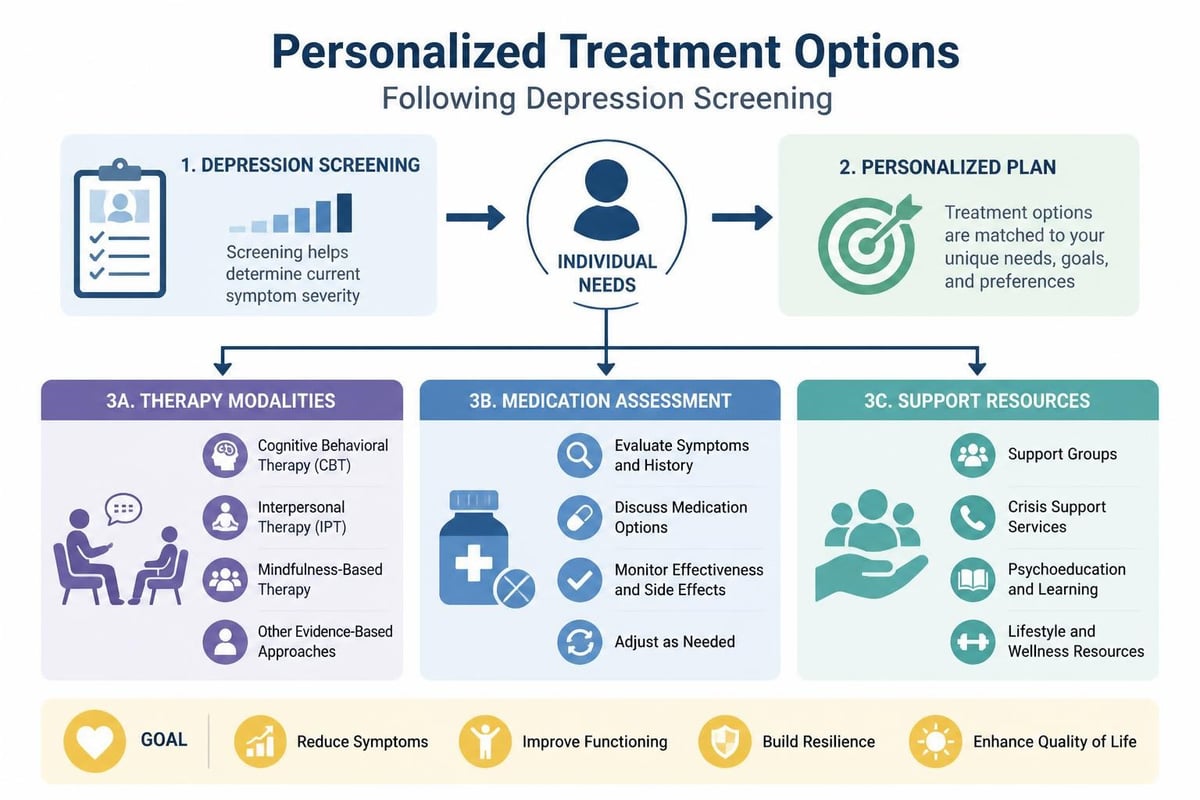
Once you've completed a depression screening, the real support begins. This is where you and your healthcare provider discuss what the results mean for you specifically and what options are available.
Treatment options might include:
- Individual therapy (CBT, DBT, or other evidence-based approaches)
- Medication consultation with a psychiatrist
- Lifestyle modifications and self-care strategies
- Support groups or community resources
- Combination approaches tailored to your needs
The therapeutic approaches used at specialized clinics vary based on your unique situation. Some people respond well to cognitive behavioral therapy, while others benefit more from emotionally focused therapy or EMDR for trauma-related depression.
Choosing the Right Screening Tool for Your Situation
Not all depression screenings are created equal, and that's actually a good thing. Healthcare providers select appropriate screening tools based on factors like your age, cultural background, specific circumstances (like pregnancy), and the setting where you're receiving care.
For example, the Edinburgh Postnatal Depression Scale was specifically designed to screen for postpartum depression and asks questions relevant to new mothers. The Geriatric Depression Scale, on the other hand, uses language and scenarios more applicable to older adults.
Making Depression Screening Work for You
Here's the honest truth: the screening is only as helpful as the information you provide. Being open and honest about your symptoms, even when it feels uncomfortable, gives you the best chance of getting appropriate support.
Before your screening, consider:
- How long you've been experiencing symptoms
- What's changed in your life recently
- Whether symptoms interfere with work, relationships, or daily activities
- Any previous mental health experiences or family history
If you're nervous about the screening process, that's completely normal. You can bring a trusted friend or family member for support, ask questions about anything you don't understand, and take breaks if you need them. The professionals conducting screenings at places offering psychotherapy for depression are trained to create safe, non-judgmental spaces for these conversations.
Online vs. In-Person Screening Options
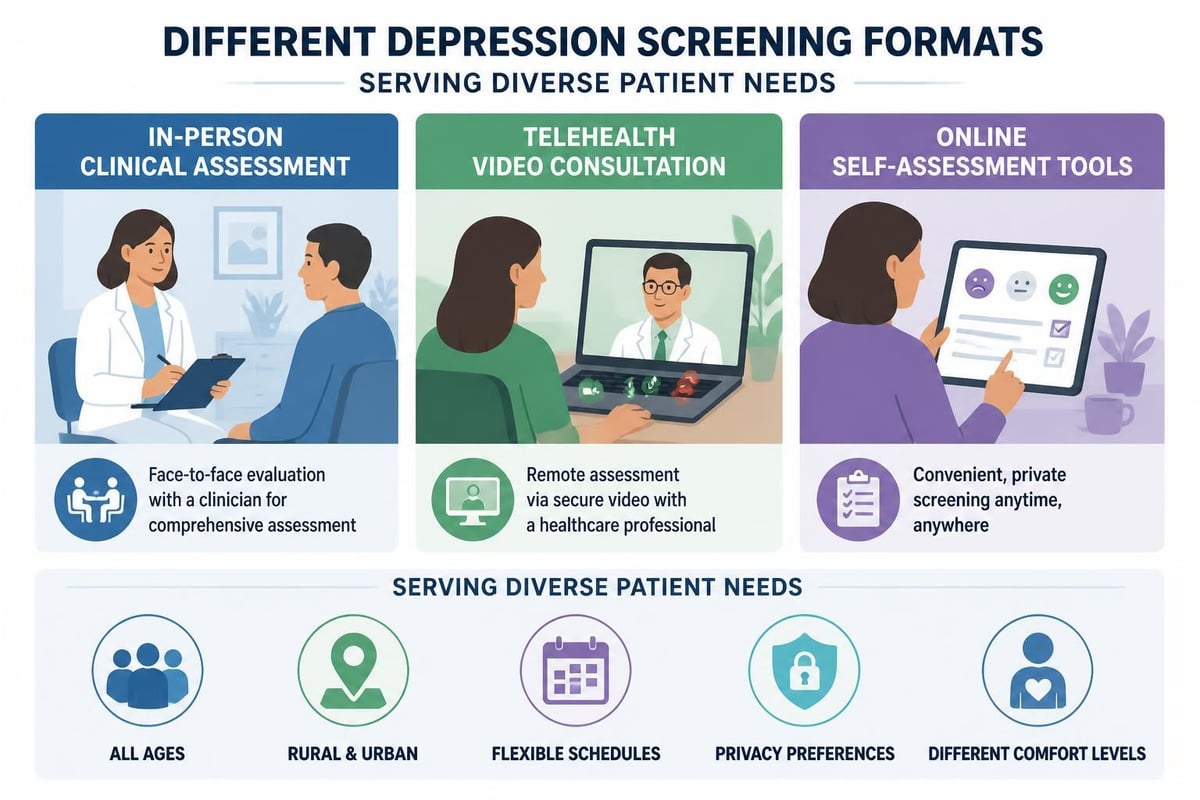
In 2026, you've got more options than ever for depression screening. While in-person screenings remain the gold standard, telehealth and online tools have made mental health assessment more accessible, especially for people in rural areas or those with mobility challenges.
Research into conversational AI for depression screening shows how technology is evolving to make these assessments more engaging and accurate. However, online self-assessments should always be followed up with a professional evaluation.
| Screening Type | Advantages | Considerations |
|---|---|---|
| In-Person | Personal connection, immediate follow-up | Requires travel, scheduling |
| Telehealth | Convenient, accessible | Requires reliable internet |
| Self-Assessment Online | Anonymous, immediate | Not diagnostic, needs professional follow-up |
Your Mental Health Deserves Attention
Depression screening isn't about labeling yourself or admitting defeat. It's about taking your mental health as seriously as your physical health. Just like you'd get your blood pressure checked or your eyes examined, checking in on your emotional wellbeing is a responsible form of self-care.
If you're supporting someone else through this process, remember that your role is to encourage and support, not to interpret results or push treatment. Offer to help them find resources, attend appointments if they want company, or simply listen without judgment. The areas of concern that bring people to therapy are diverse, and everyone's journey looks different.
Remember that depression screening is a tool, not a destination. It opens doors to understanding yourself better and accessing support that can genuinely improve your quality of life. Whether you're in Ontario or anywhere else, mental health resources are more available now than ever before, and asking for help is always a sign of strength, not weakness.
Depression screening is a straightforward, valuable tool that can be the first step toward feeling like yourself again. If your screening suggests you might benefit from support, know that evidence-based, compassionate care is available. Théla Psychotherapy Clinic offers trauma-informed therapy both in-person in Markham and online across Ontario, using approaches like CBT, DBT, and EMDR tailored to your unique needs. Taking that first step toward support can make all the difference in your mental health journey.

Bonny Li
Contact Me
.jpg)