
Depression can feel like you're walking through life with weights strapped to your ankles. Everything takes more effort, and even the simplest tasks can seem overwhelming. But here's the good news: psychotherapy for depression has been proven to work, and it's not just about talking through your feelings. It's about rewiring thought patterns, building coping skills, and creating real, lasting change in how you experience life.
What Makes Psychotherapy Effective for Depression
When you're dealing with depression, your brain chemistry isn't the only thing that needs attention. The way you think, relate to others, and respond to stress all play massive roles in how depression affects you. That's where psychotherapy comes in as a powerful treatment option.
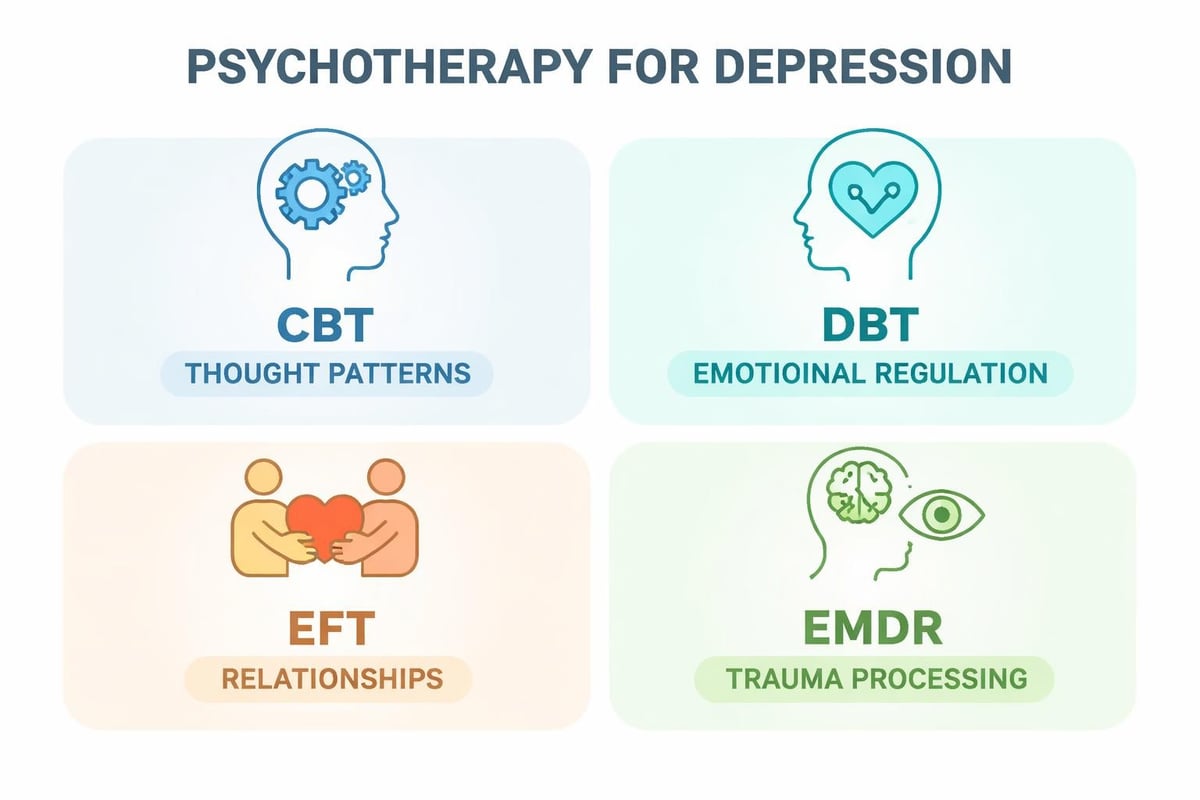
Different therapeutic approaches target different aspects of depression:
- Cognitive Behavioral Therapy (CBT) helps you identify and change negative thought patterns
- Dialectical Behavior Therapy (DBT) teaches emotional regulation and distress tolerance
- Emotionally Focused Therapy (EFT) addresses relationship patterns that fuel depression
- Eye Movement Desensitization and Reprocessing (EMDR) processes trauma that may underlie depressive symptoms
The therapeutic services at Théla incorporate all these evidence-based approaches, tailoring treatment to what you actually need rather than using a one-size-fits-all method.
How Different Therapy Approaches Work
Cognitive Behavioral Therapy (CBT)
CBT is probably the most researched form of psychotherapy for depression. It works on the premise that your thoughts, feelings, and behaviors are all connected. When you're depressed, you might think "I'm worthless" or "Nothing ever works out for me." CBT helps you challenge these thoughts and replace them with more balanced, realistic ones.
Here's what a typical CBT process looks like:
- Identify negative thought patterns (automatic thoughts)
- Examine the evidence for and against these thoughts
- Develop more balanced alternative thoughts
- Practice new behavioral responses
- Build skills to prevent future depressive episodes
Research shows that psychological treatments for depression can be as effective as medication for many people, and the benefits often last longer because you're learning skills you can use for life.
Dialectical Behavior Therapy (DBT)
Originally developed for borderline personality disorder, DBT has become incredibly effective for depression, especially when emotional dysregulation is part of the picture. It combines acceptance and change strategies, teaching you how to sit with uncomfortable emotions while also developing skills to manage them better.
DBT focuses on four key areas:
- Mindfulness (staying present)
- Distress tolerance (getting through crises)
- Emotion regulation (managing intense feelings)
- Interpersonal effectiveness (communicating your needs)
Trauma-Informed Approaches
Sometimes depression has roots in past trauma. That's where approaches like EMDR come in. This method helps your brain process traumatic memories that might be keeping you stuck in depression. It's not about reliving the trauma-it's about helping your brain file those memories away properly so they stop affecting your present.
What to Expect in Your Therapy Journey
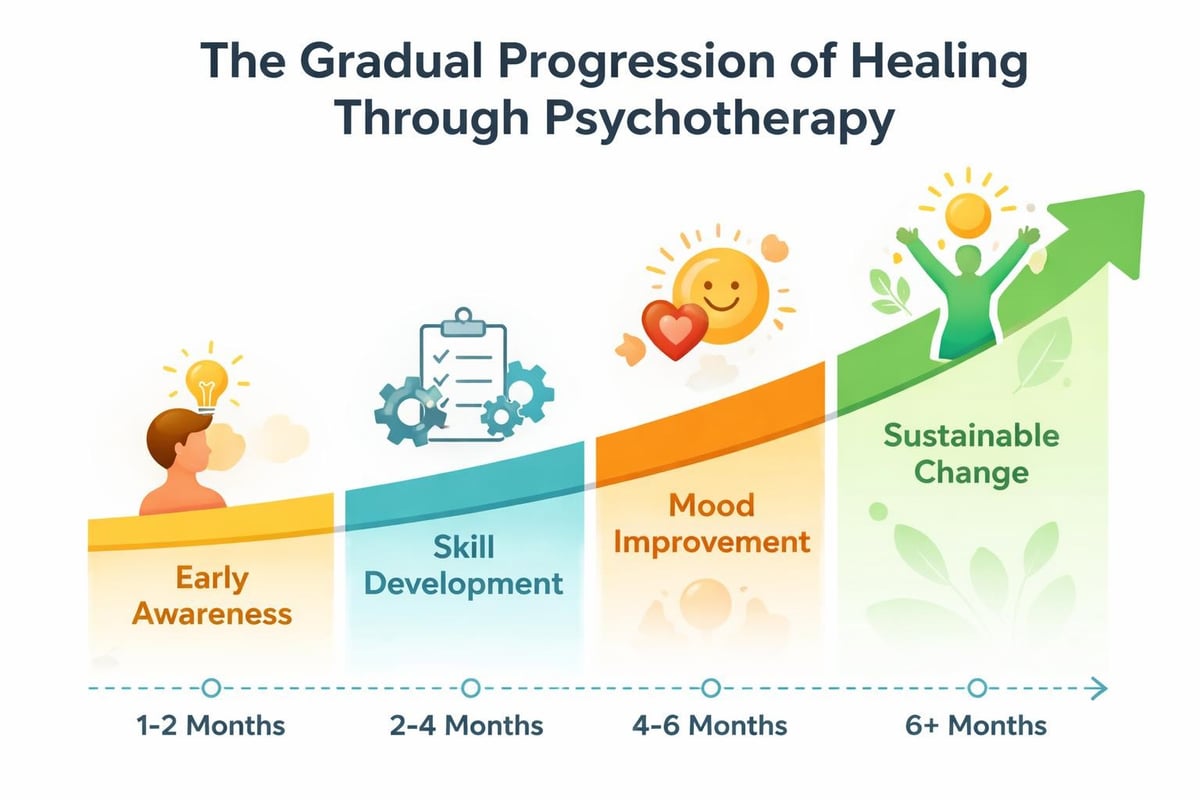
Starting psychotherapy for depression isn't like flipping a light switch. It's more like gradually adjusting a dimmer until the room feels brighter. Most people start noticing small changes within the first few weeks, but significant improvement typically takes a few months.
| Timeline | What You Might Notice |
|---|---|
| Weeks 1-3 | Feeling heard, understanding your patterns |
| Weeks 4-8 | Small behavioral changes, moments of clarity |
| Weeks 9-16 | Improved mood regulation, better coping skills |
| 4+ months | Sustained changes, prevention strategies in place |
Your therapist will work with you to set realistic goals and track your progress. Some sessions might feel tough-you're doing real work here-but that's often when the most growth happens. The culturally responsive care approach ensures your unique background and experiences are honored throughout the process.
Combining Therapy with Other Support
Psychotherapy for depression works best when it's part of a comprehensive approach to wellness. That doesn't mean you need to do everything at once, but considering these complementary strategies can boost your results:
Lifestyle factors that support therapy:
- Regular sleep schedule (even when it's hard)
- Movement or exercise (doesn't have to be intense)
- Social connection (even small interactions count)
- Nutrition (consistent meals, limiting alcohol)
Some people benefit from combining therapy with medication, especially for major depressive disorder. This isn't an either/or situation-medication can help stabilize your mood enough to engage fully in therapy work.
Interestingly, innovative approaches like canine support therapy can also complement traditional talk therapy. Animals have a unique way of helping people feel safe and connected, which can make the therapeutic process more accessible.
Finding the Right Therapeutic Fit
Not all therapy relationships work out perfectly from the start, and that's okay. The fit between you and your therapist matters just as much as their credentials. You want someone who understands your specific challenges and creates a space where you feel safe to be vulnerable.
When you're looking for support, consider these factors:
- Specialization: Does the therapist have experience with depression and your specific concerns?
- Approach: Do their therapeutic methods align with what you're looking for?
- Accessibility: Can you meet in person, or do you need online therapy options?
- Cultural competence: Will they understand your cultural background and identity?
- Practical considerations: Does insurance coverage or payment options work for you?
Research on current and future directions in psychotherapy emphasizes the importance of tailoring treatment to individual needs rather than applying generic protocols.
Key factors in matching with a therapist including specialization, approach compatibility, accessibility options, cultural understanding, and practical considerations for depression treatment
Beyond Traditional Talk Therapy
While traditional psychotherapy for depression remains incredibly effective, the field continues to evolve. Trauma-informed care recognizes that past experiences shape how you respond to treatment. This means your therapist considers not just your current symptoms but also your history and what makes you feel safe.
For organizations looking to support employee mental health, programs like Noomii Leadership Coaching offer evidence-based solutions that address workplace stressors and leadership challenges that can contribute to depression. When workplace culture improves, individual mental health often follows.
The integration of behavioral theories with newer approaches creates more comprehensive treatment options. You're not just changing thoughts or just changing behaviors-you're addressing the whole picture of what maintains your depression.
When Standard Treatment Isn't Enough
Sometimes the first approach doesn't give you the relief you need. That's not a failure-it's information. Treatment-resistant depression is a real thing, and it simply means you need a different strategy or combination of approaches.
If you've been in therapy before and didn't get the results you wanted, consider:
- Trying a different therapeutic modality
- Working with a specialist in complex depression
- Exploring intensive therapy programs
- Combining different treatment approaches
The key is not giving up. The right approach is out there, and sometimes it takes a few tries to find it.
Psychotherapy for depression offers real hope and proven strategies for healing, whether you're dealing with mild symptoms or more severe challenges. The journey isn't always linear, but with the right support and evidence-based approaches, you can develop the skills and insights needed to feel better and build resilience for the future. If you're ready to start your healing journey with trauma-informed, culturally responsive care, Théla Psychotherapy Clinic offers both in-person services in Markham and online therapy throughout Ontario, tailoring treatment approaches like CBT, DBT, EFT, and EMDR to your unique needs.

Bonny Li
Contact Me
.jpg)

