Let's be honest - relationships are hard work. Whether you've been together for six months or sixteen years, every partnership hits rough patches. Maybe you're fighting more than you used to, or perhaps the silence between you feels heavier than any argument. The good news? Recognizing you need relationship help is the first step toward building something stronger. You're not giving up by seeking support. You're choosing to invest in what matters.
Why Most Couples Wait Too Long
Here's something that might surprise you: the average couple waits six years before seeking relationship help. Six years! That's a lot of built-up resentment, misunderstandings, and patterns that get harder to break.
We put off getting support for all sorts of reasons. Maybe you think your problems aren't "serious enough" yet. Or you're worried about what family or friends might think. Some people assume that needing help means their relationship is failing, when actually it means the opposite - you care enough to fight for it.
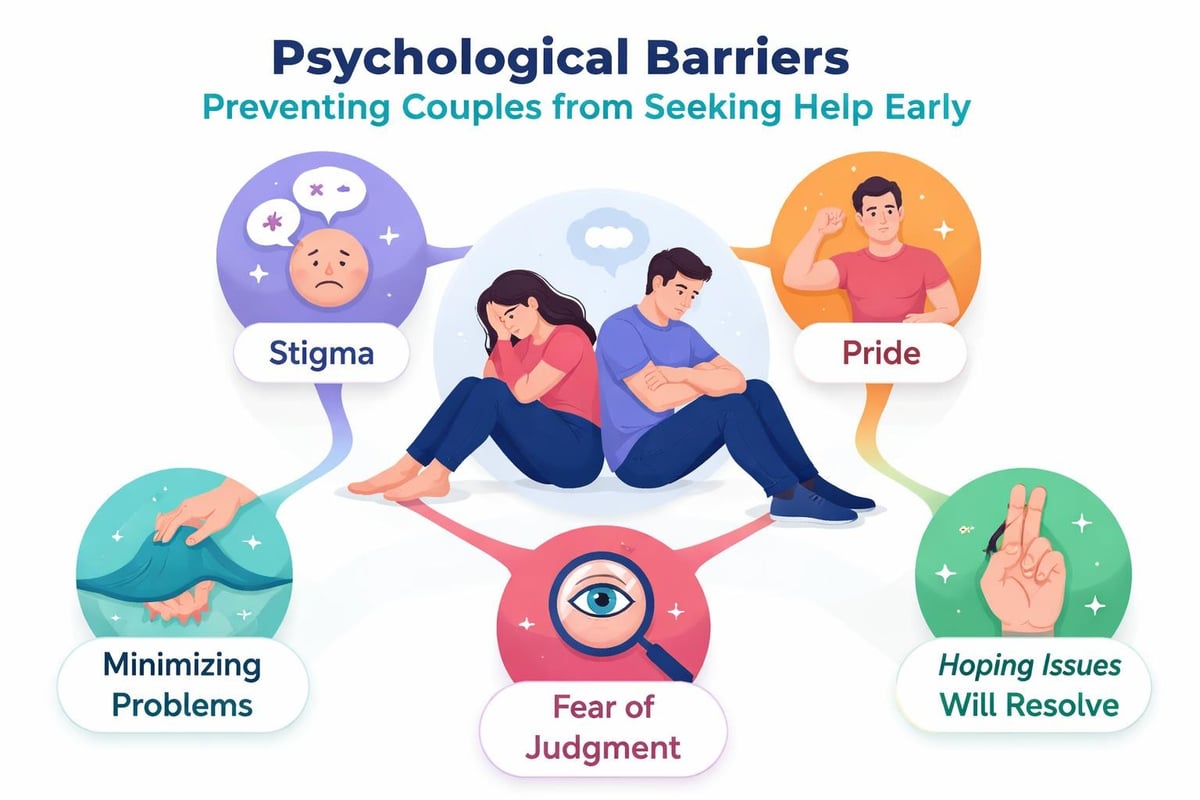
Common reasons people delay:
- Hoping things will get better on their own
- Fear of what they might discover in therapy
- Financial concerns about the cost
- Not knowing where to start
- One partner being resistant to the idea
The American Psychological Association provides comprehensive resources on how early intervention can prevent small issues from becoming relationship-ending problems.
Signs You Could Benefit From Professional Support
You don't need to wait until things are falling apart to get relationship help. In fact, some of the healthiest couples work with therapists to maintain their connection and navigate life transitions together.
Communication Has Broken Down
When every conversation turns into an argument - or worse, when you've stopped talking about important things altogether - that's a red flag. You might notice you're having the same fight over and over, just with different details. Or maybe one of you has checked out emotionally, offering only one-word responses and avoiding eye contact.
Trust Issues Keep Surfacing
Whether it's due to past infidelity, broken promises, or just a general sense that something's off, trust issues poison everything. You find yourself checking their phone, questioning their whereabouts, or feeling anxious when they're not around.
Life Changes Are Creating Distance
Major transitions test even strong relationships. Moving in together, having kids, career changes, loss of a loved one - these moments require you to renegotiate your partnership, and that's not always easy to do alone.
| Situation | How It Impacts Relationships | What Help Looks Like |
|---|---|---|
| New baby | Sleep deprivation, role changes, less intimacy | Learning to co-parent, maintaining connection |
| Career stress | Less quality time, financial pressure, emotional exhaustion | Balancing work-life priorities, stress management |
| Illness or loss | Grief, caregiver burden, fear of future | Processing emotions together, building resilience |
| Empty nest | Identity shifts, too much togetherness, rediscovering each other | Creating new shared goals, rekindling romance |
The National Institute of Mental Health discusses how mental health challenges affect family dynamics and relationships at every stage.
What Actually Works in Relationship Help
Not all relationship help is created equal. You've probably heard advice from well-meaning friends or read generic tips online. But what does research actually say works?
The Gottman Institute offers research-based insights showing that successful couples share specific patterns: they turn toward each other rather than away, they manage conflict without contempt, and they maintain a deep friendship alongside their romance.
Evidence-based approaches that make a difference:
- Emotionally Focused Therapy (EFT) - Helps you understand the emotional patterns driving your conflicts
- Cognitive Behavioral Therapy (CBT) - Addresses thought patterns that create relationship stress
- Gottman Method - Teaches specific skills for communication and conflict resolution
- Narrative Therapy - Helps you rewrite the story of your relationship together
At Théla Psychotherapy Clinic, these approaches are tailored to each couple's unique needs, cultural background, and relationship goals.
Taking the First Step
Okay, so you've decided you need relationship help. Now what?
Starting the Conversation With Your Partner
This can feel intimidating, especially if your partner hasn't mentioned therapy. Pick a calm moment (not during or right after a fight) and use "I" statements. Instead of "You never listen to me," try "I feel unheard sometimes, and I think talking to someone together could help us connect better."
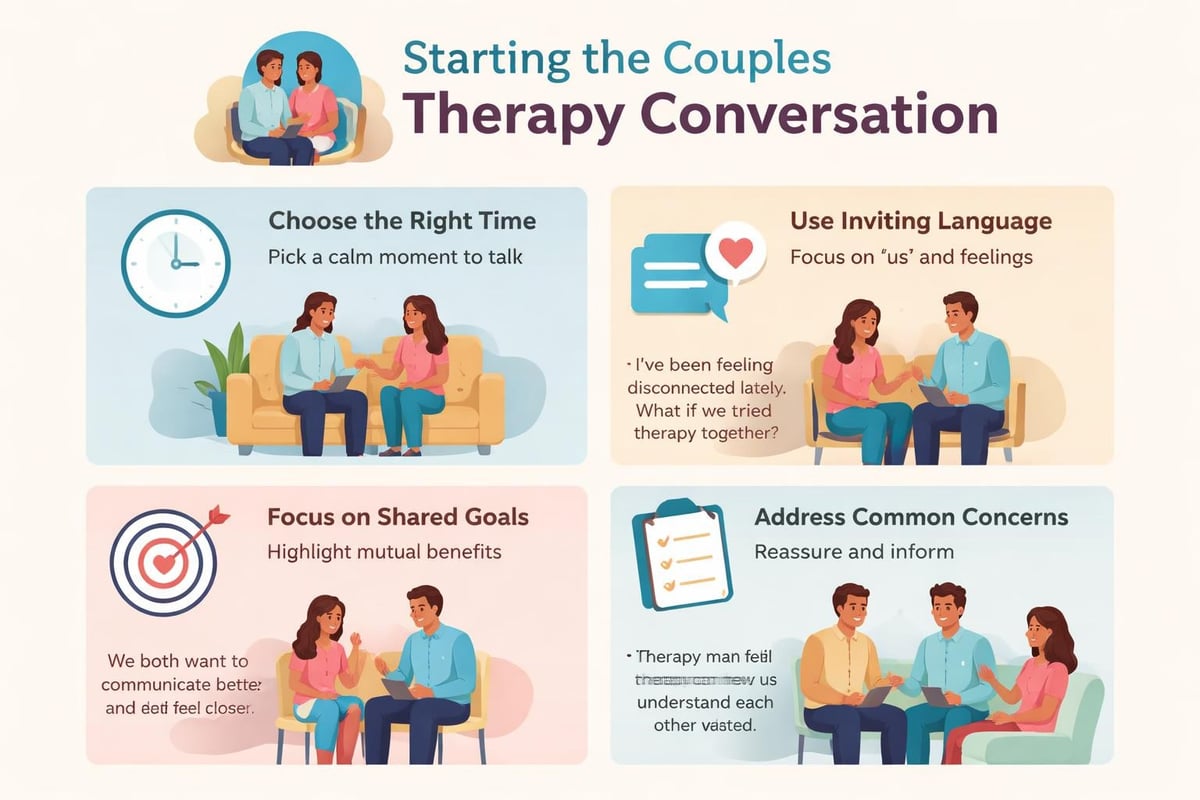
Some partners worry that suggesting therapy means you're about to leave. Reassure them that you're invested in making things work - that's exactly why you want support.
Finding the Right Therapist
Not every therapist will be the right fit for your relationship. Look for someone with specific training in couples work, not just individual therapy. Psychology Today provides an overview of different relationship therapy approaches and what to look for in a qualified professional.
Questions to ask potential therapists:
- What's your experience with couples in similar situations?
- What approach or methods do you typically use?
- How do you handle it when one partner is more reluctant?
- What's your availability and session format (in-person or online)?
If you're in Ontario, couples counseling at Théla offers both in-person sessions in Markham and online options across the province.
What to Expect in Your Sessions
Your first session will likely focus on understanding your relationship history, current challenges, and what you hope to achieve. Don't worry if it feels awkward at first - that's completely normal.
Most couples attend weekly sessions initially, then space them out as things improve. Some people see changes within a few weeks, while others need several months. It depends on how long issues have been building and how committed both partners are to the work.
Between Sessions
Here's the thing about relationship help - the real work happens outside the therapy room. Your therapist will probably give you exercises or suggest new ways of communicating. Actually doing these things (even when it feels silly or uncomfortable) is what creates lasting change.
| Week | Focus Area | Homework Examples |
|---|---|---|
| 1-2 | Assessment and goal-setting | Tracking conflict patterns, identifying triggers |
| 3-6 | Communication skills | Daily check-ins, active listening exercises |
| 7-10 | Rebuilding connection | Weekly date nights, appreciation sharing |
| 11+ | Maintaining progress | Implementing new patterns, preventing relapse |
When Individual Therapy Helps Too
Sometimes the issues in your relationship connect to personal stuff you're carrying. Past trauma, anxiety, depression, or attachment patterns developed in childhood can all show up in how you relate to your partner.
There's no shame in doing both individual and couples work. In fact, many therapists recommend it. Working on yourself makes you a better partner, and understanding your own triggers helps you show up differently in conflicts.
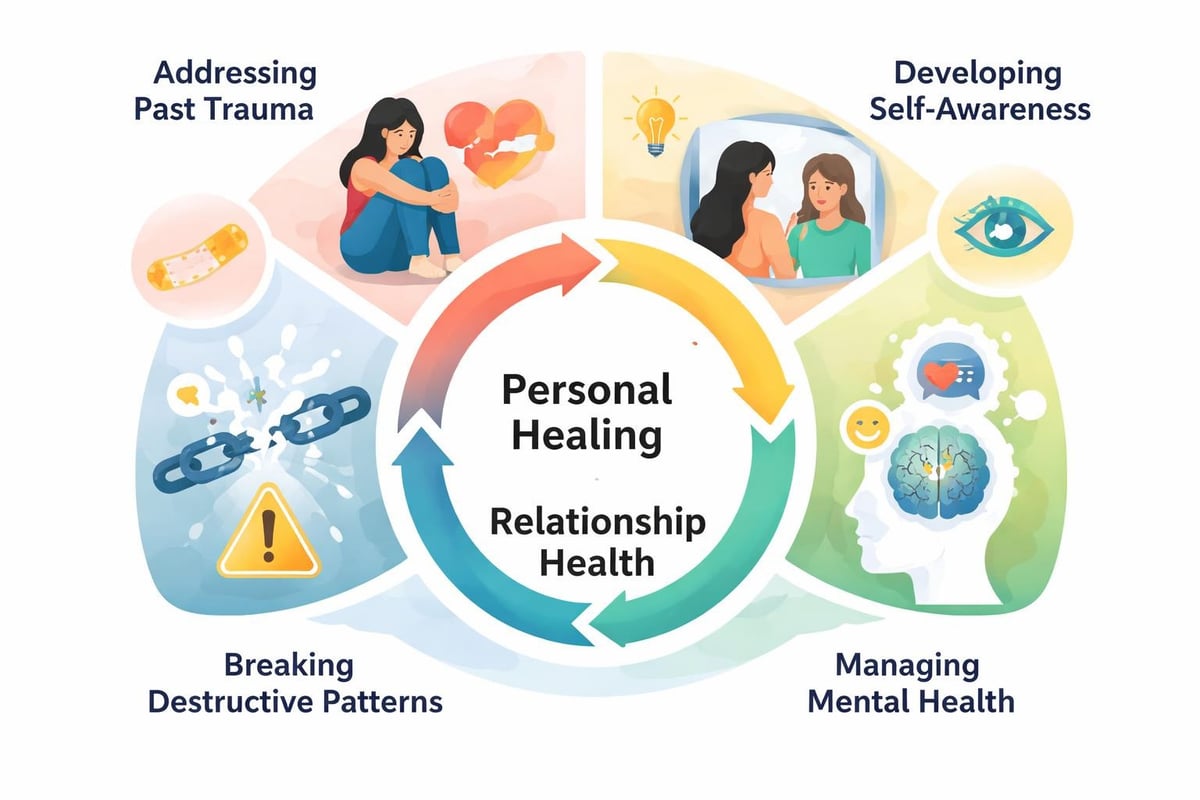
The Modern Love section of The New York Times features countless stories of how personal growth transformed relationships, showing that sometimes the best relationship help starts with looking inward.
Making It Work Long-Term
Getting relationship help isn't a one-and-done fix. It's about building skills and patterns that last. The couples who see the most benefit from therapy are those who view it as an investment, not a crisis intervention.
Ways to maintain your progress:
- Schedule regular check-ins with each other (not just when things go wrong)
- Return to therapy during stressful periods or transitions
- Keep practicing the communication tools you've learned
- Celebrate small improvements instead of waiting for perfection
Some couples come back for "tune-up" sessions once or twice a year, especially during predictable stress points like holidays or anniversaries of difficult events. That's not a sign of failure - it's smart maintenance.
Seeking relationship help shows strength, not weakness. Whether you're dealing with constant conflict, growing apart, or just want to deepen your connection, professional support can give you tools and insights that transform your partnership. Théla Psychotherapy Clinic offers trauma-informed, culturally responsive couples counseling both in-person in Markham and online throughout Ontario, using evidence-based approaches tailored to your unique relationship. You don't have to figure this out alone - reach out and start building the relationship you both deserve.

Bonny Li
Contact Me
.jpg)