Family dynamics can be complicated, messy, and sometimes downright overwhelming. Whether you're dealing with communication breakdowns between parents and teens, conflicts over parenting approaches, or tensions with extended family members, you're definitely not alone. Family relationship counselling offers a supportive space where everyone can work together to build healthier patterns, understand each other better, and actually enjoy spending time together again.
What Makes Family Relationship Counselling Different
Unlike individual therapy where the focus is on one person's healing journey, family relationship counselling brings everyone to the table. It's about understanding how each person's actions affect the whole family system.
Think of your family like a mobile, those hanging art pieces where everything's balanced. When one part moves, everything else shifts too. A therapist helps you see these patterns and figure out how to create more stability together.
Who Benefits From This Type of Therapy
You might think family counselling is only for families in crisis, but that's not true at all. Here's who can benefit:
- Families navigating major life transitions (divorce, remarriage, moving, loss)
- Parents struggling with conflicting approaches to raising kids
- Teens and parents who can't seem to communicate without fighting
- Extended families dealing with boundary issues or generational conflicts
- Blended families working to create new family dynamics
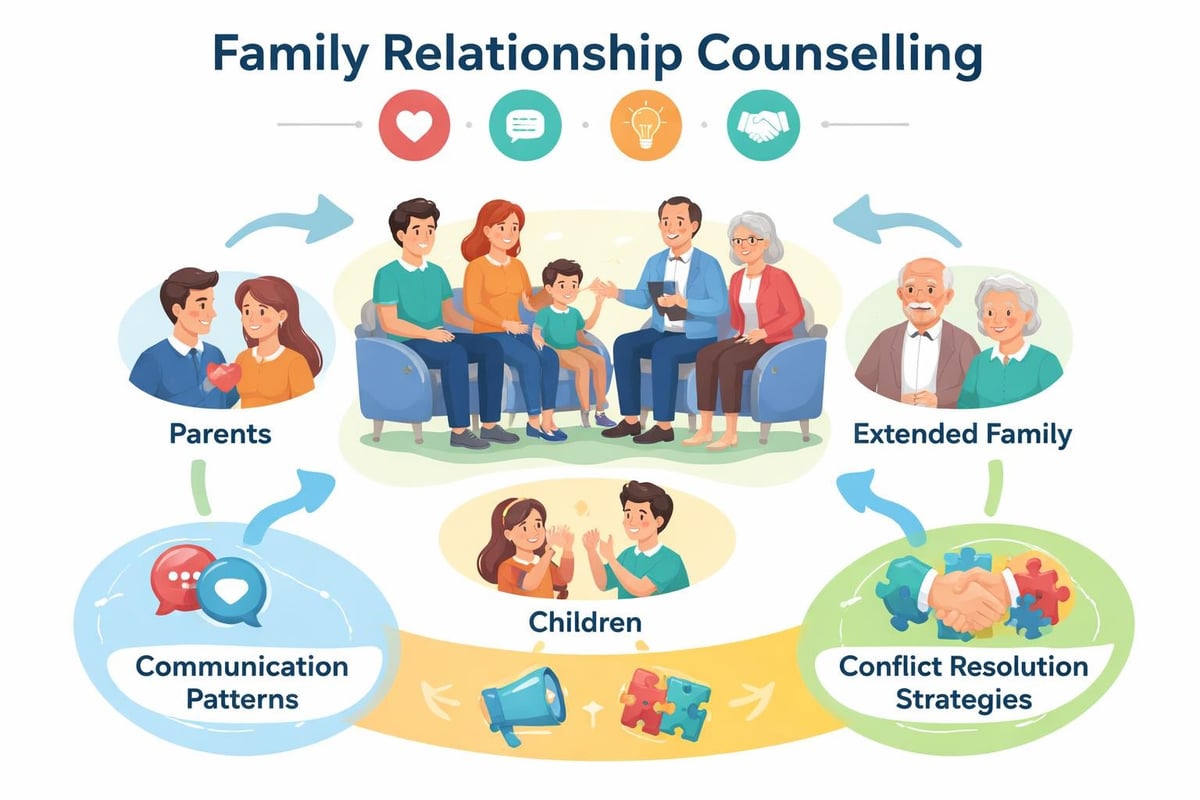
The common areas therapists support often include these family-related challenges, and addressing them early prevents bigger issues down the road.
Understanding How Parenting Styles Impact Family Dynamics
One of the biggest sources of family conflict? Different parenting styles. When one parent is more authoritative while the other leans permissive, kids can feel confused and parents can feel undermined.
Research shows that parenting styles significantly impact children's emotional well-being, affecting everything from their anxiety levels to their ability to form healthy relationships later in life. Family relationship counselling helps parents recognize their natural tendencies and find common ground.
| Parenting Style | Characteristics | Impact on Family |
|---|---|---|
| Authoritative | Clear boundaries with warmth and flexibility | Generally positive, creates secure attachments |
| Authoritarian | Strict rules, less emotional warmth | Can create tension and rebellion in teens |
| Permissive | Few boundaries, highly nurturing | May lead to behavioral issues and power struggles |
| Uninvolved | Low demands, low responsiveness | Often results in family disconnection |
When conflicting parenting styles create tension, a therapist can help parents understand each other's backgrounds and fears, then develop a unified approach that works for their unique family.
The Actual Process: What Happens in Sessions
So what does family relationship counselling actually look like? You're not going to sit in a circle singing kumbaya, that's for sure.
First sessions usually involve the therapist getting to know everyone individually and as a unit. They'll ask about family history, current challenges, and what you're hoping to achieve. The goal isn't to assign blame but to understand patterns.
Common Techniques Therapists Use
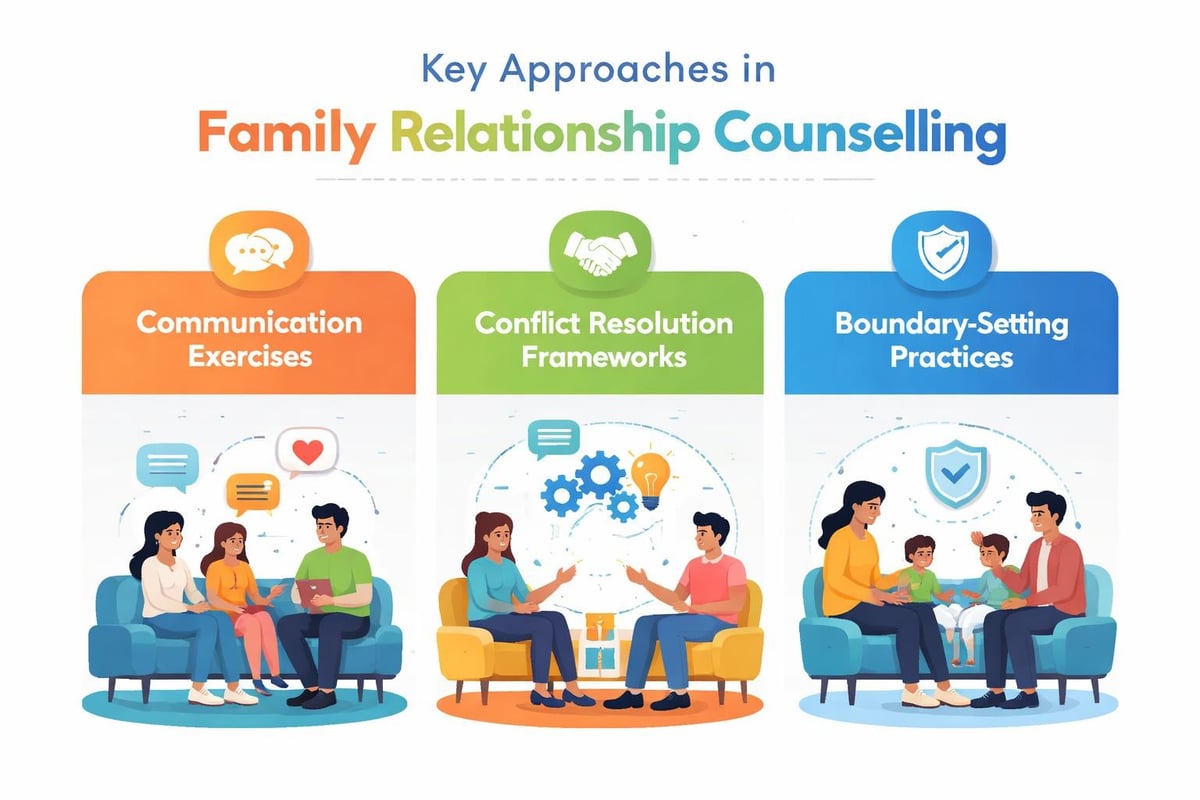
- Communication skill-building: Learning to really listen instead of just waiting for your turn to talk
- Role-playing exercises: Practicing difficult conversations in a safe environment
- Boundary setting: Understanding and respecting each person's needs and limits
- Emotional regulation: Managing big feelings without letting them control your reactions
- Problem-solving frameworks: Creating strategies the whole family agrees on
Navigating parenting styles in family therapy requires therapists to balance multiple perspectives while keeping the children's wellbeing at the center of decision-making.
Addressing Specific Family Challenges
Every family faces different struggles. Maybe you're parenting a neurodivergent child and feeling overwhelmed by the unique challenges that brings. Or perhaps you're dealing with the aftermath of trauma that's affecting multiple generations.
Family relationship counselling adapts to your specific situation. For families with teens struggling with ADHD, sessions might focus on creating routines everyone can actually stick to. For blended families, the work might center on building trust and establishing new traditions.
When Kids Are Struggling With Mental Health
Sometimes family relationship counselling runs parallel to individual therapy for a child or teen. If your teenager is dealing with anxiety or ADHD in teens, family sessions help everyone understand how to support them effectively.
The approach is always trauma-informed and culturally responsive, recognizing that families come in all shapes, sizes, and cultural backgrounds.
Making Family Relationship Counselling Work
Here's the thing about family therapy: it only works if everyone's willing to show up honestly. That doesn't mean you need to be perfect or have all the answers. It means being open to hearing perspectives you might not agree with and being willing to try new approaches.
Between sessions, you'll typically have homework. Yeah, I know, homework sounds awful, but these are usually simple practices like:
- Setting aside 15 minutes daily for family check-ins
- Trying new communication techniques
- Implementing agreed-upon boundaries
- Practicing active listening exercises
The various therapeutic services available can be tailored to include both family sessions and individual support as needed, creating a comprehensive treatment plan.
Cultural Considerations and Finding the Right Fit
Not every therapist is going to be the right match for your family, and that's okay. Cultural background, communication styles, and values all matter when you're choosing someone to guide your family through difficult conversations.
Look for therapists who understand your cultural context and respect your family's values. Understanding authoritative parenting across different cultural frameworks, for example, requires nuance and sensitivity.
Many families also benefit from therapists who can work with different parenting approaches without imposing a one-size-fits-all solution. The best family relationship counselling honors your family's unique identity while helping you build healthier patterns.
Practical Steps to Get Started
Ready to explore family relationship counselling? Here's how to begin:
- Talk with your family: Explain why you think therapy could help (without blaming anyone)
- Research therapists: Look for professionals with family therapy specialization and cultural competence
- Schedule a consultation: Many therapists offer initial calls to see if it's a good fit
- Set realistic expectations: Change takes time, and progress isn't always linear
- Commit to the process: Regular attendance and honest participation make the biggest difference
For families concerned about cost, exploring options like an affordable therapy program can make treatment more accessible.
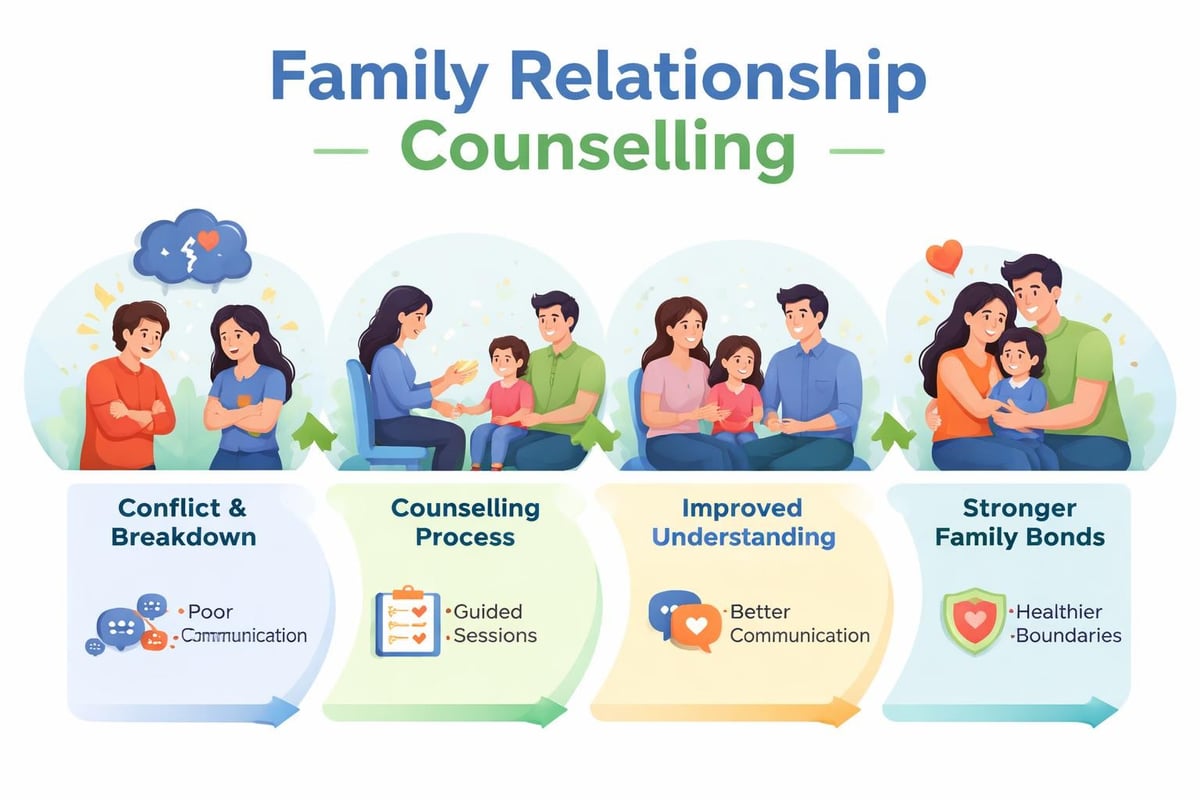
Family relationship counselling isn't about fixing what's broken; it's about building something stronger together. When families learn to communicate openly, respect boundaries, and understand each other's perspectives, the whole family dynamic shifts toward something healthier and more connected. If you're ready to strengthen your family relationships and create lasting positive change, Théla Psychotherapy Clinic offers trauma-informed, culturally responsive family therapy both in-person in Markham and online across Ontario, with therapists who understand that every family's journey is unique.

Bonny Li
Contact Me