Living with attention challenges as an adult can feel like trying to juggle while running on a treadmill. You're constantly dropping balls, feeling overwhelmed, and wondering why everything seems harder for you than for everyone else. For many adults, these struggles aren't just personality quirks or bad habits. They're signs of untreated ADHD in adults, a condition that affects millions but often goes unrecognized well into adulthood. According to statistics from the CDC, ADHD affects a significant portion of the adult population, yet many people continue living without diagnosis or support.
What Untreated ADHD Actually Looks Like
When we think about ADHD, we often picture hyperactive kids who can't sit still in class. But untreated ADHD in adults looks completely different. You might be the person who's chronically late despite your best intentions, who starts ten projects but finishes none, or who struggles to maintain focus during important meetings even when you desperately want to pay attention.
The Daily Reality
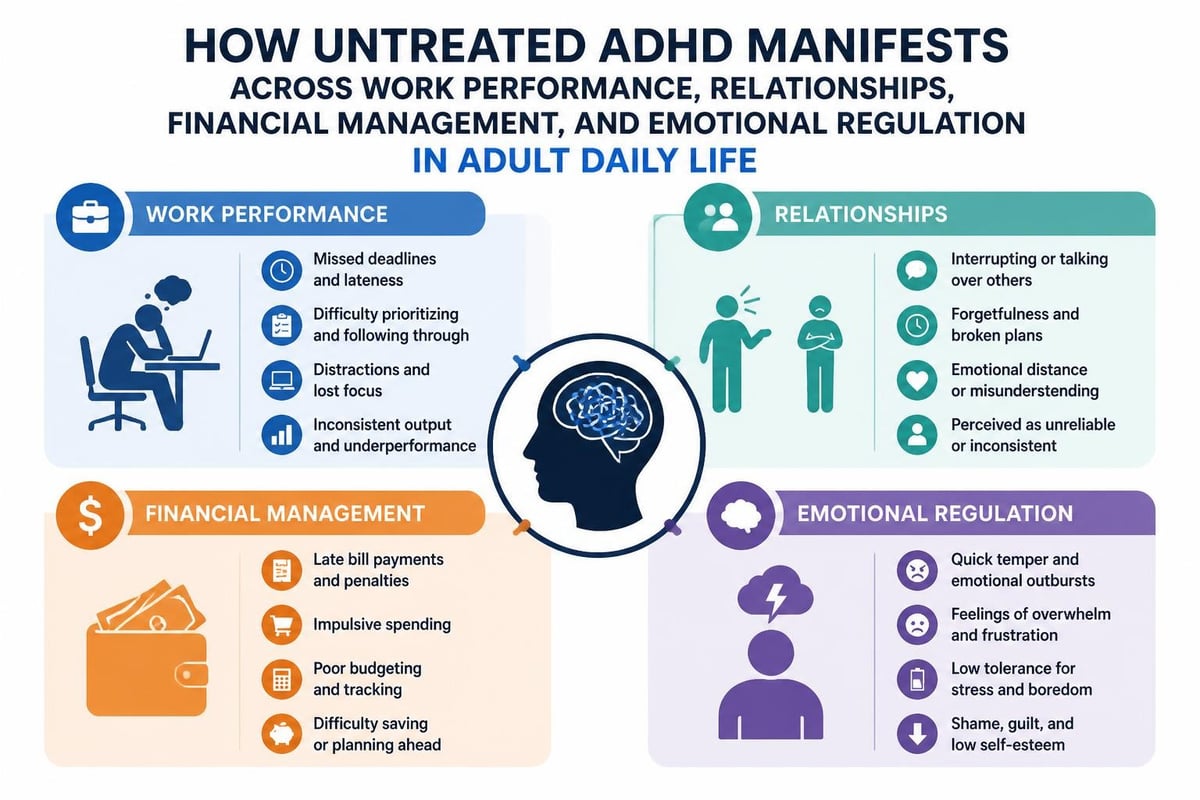
Adults dealing with unmanaged ADHD symptoms face unique challenges that ripple through every area of their lives:
- Work performance issues including missed deadlines, disorganization, and difficulty prioritizing tasks
- Relationship struggles stemming from forgotten commitments, emotional dysregulation, and seeming inattentiveness
- Financial problems due to impulsive spending, unpaid bills, and poor planning
- Mental health complications like anxiety, depression, and low self-esteem
The consequences of untreated ADHD extend beyond simple inconvenience. They can fundamentally alter your life trajectory, affecting career advancement, relationship stability, and overall quality of life.
The Hidden Costs Nobody Talks About
Here's what many people don't realize: untreated ADHD in adults doesn't just make life harder. It compounds over time, creating a cascade of secondary issues that can feel overwhelming.
Mental Health Complications
The relationship between ADHD and mental health is complex and bidirectional. When you're constantly struggling to meet expectations, forgetting important things, and feeling like you're failing at "basic" adult tasks, it takes a serious toll.
| Mental Health Impact | How It Manifests |
|---|---|
| Depression | Chronic feelings of failure, hopelessness about change |
| Anxiety | Constant worry about forgotten tasks, fear of judgment |
| Low Self-Worth | Internalized belief that you're lazy or incompetent |
| Relationship Strain | Partners feeling neglected, friends drifting away |
Research shows that untreated ADHD carries significant risks across different life stages, with adults facing particular challenges in maintaining stable employment and relationships.
The Career Impact
Your professional life might be where untreated ADHD in adults hits hardest. You're smart and capable, but somehow you can't seem to get organized. You miss emails, forget meetings, or struggle to complete reports on time. Colleagues might see you as unreliable, when really you're working twice as hard just to keep up.
Many adults with ADHD develop coping mechanisms that work for years until suddenly they don't. You get promoted into a role with more complexity, or you become a parent and can no longer rely on your old systems. That's when everything starts falling apart, and you might finally realize there's something more going on.
Why Adults Slip Through the Cracks
One major reason untreated ADHD in adults remains so common is that many people were never diagnosed as children. Maybe you grew up in the '80s or '90s when ADHD awareness was limited. Maybe you were the quiet daydreamer rather than the disruptive kid, so nobody noticed. Or perhaps you were bright enough to compensate for years before adult responsibilities became overwhelming.
Gender also plays a significant role. Studies have found that women with ADHD often present differently than men, leading to underdiagnosis and misdiagnosis. Women are more likely to internalize symptoms, developing anxiety and depression that mask the underlying ADHD.
Getting the Right Support Makes All the Difference
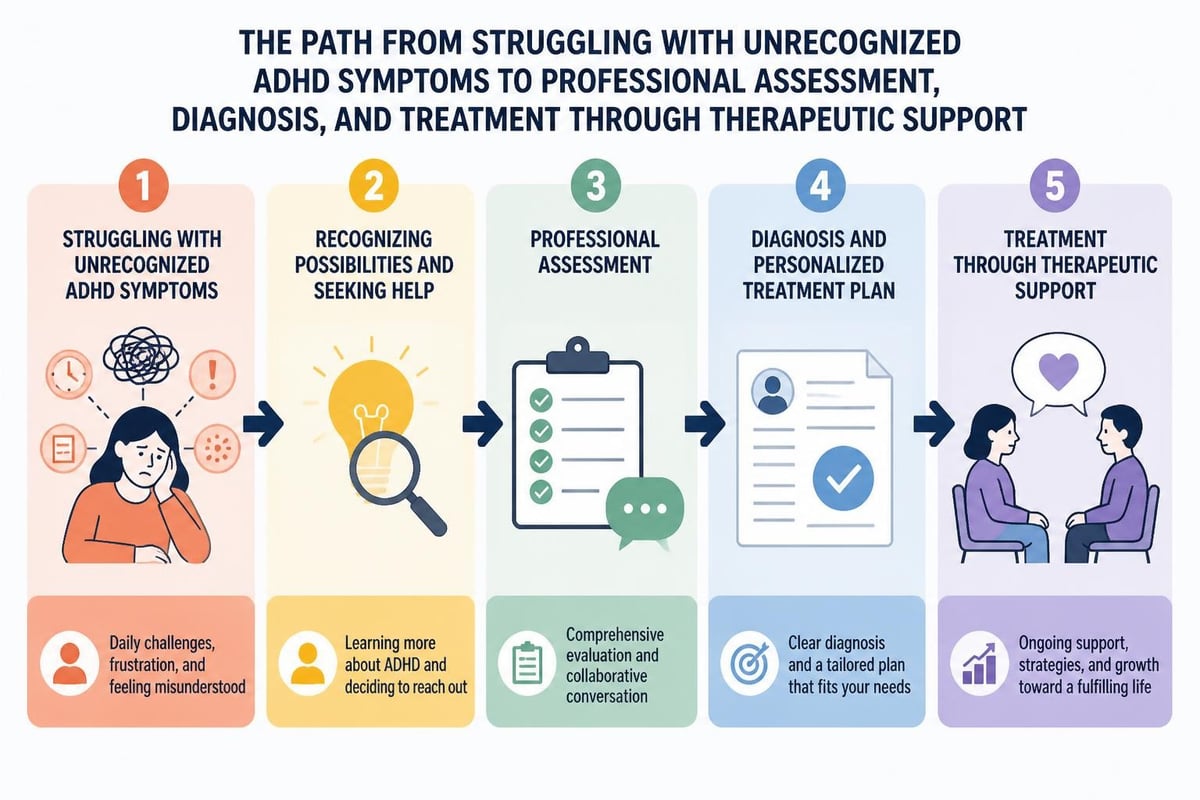
If you're reading this and recognizing yourself, there's genuinely good news. Understanding that you might have ADHD isn't the end of something-it's the beginning of actually getting help that works.
Evidence-Based Approaches That Work
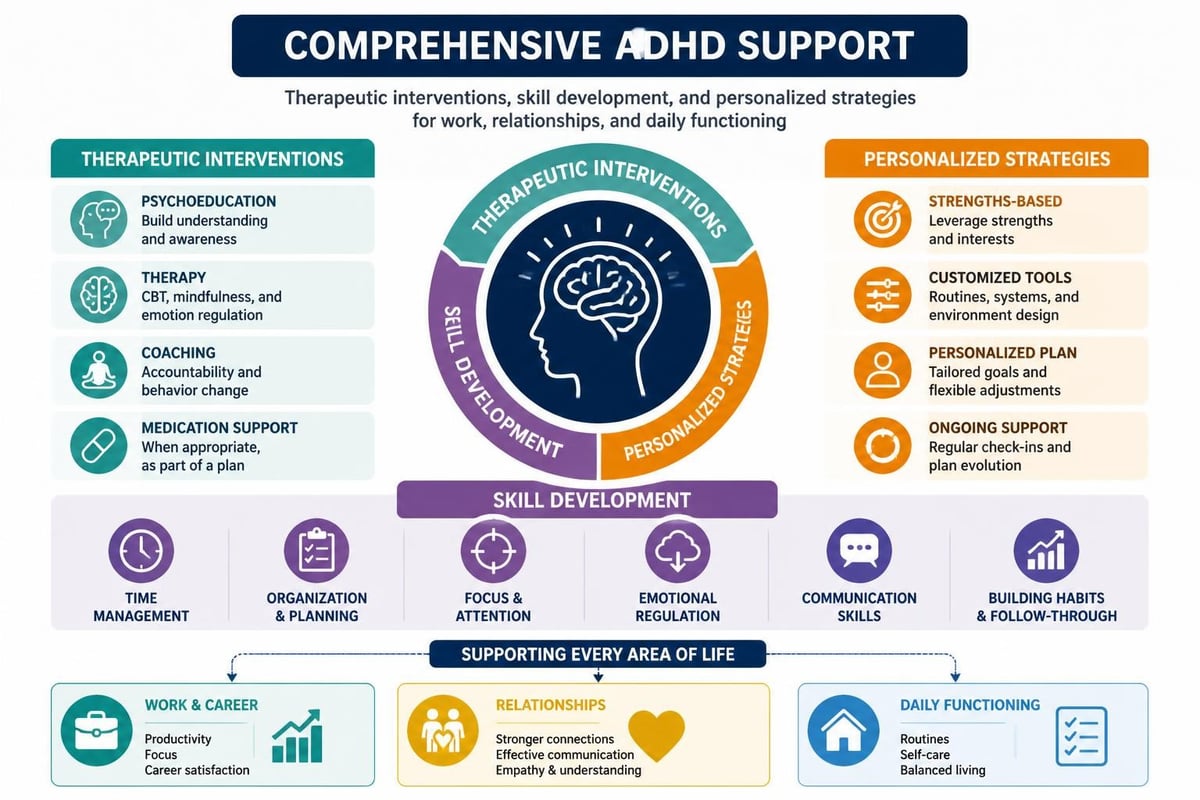
The right therapeutic support can transform your experience of daily life. At facilities offering comprehensive therapy services, clinicians use evidence-based approaches specifically designed to address ADHD challenges:
- Cognitive Behavioral Therapy (CBT) helps you identify and change unhelpful thought patterns and behaviors
- Dialectical Behavior Therapy (DBT) teaches emotional regulation and distress tolerance skills
- Skills training focuses on practical strategies for organization, time management, and task completion
- Trauma-informed care addresses any past experiences of failure or criticism
Current data shows that adults with ADHD who receive appropriate treatment and support see significant improvements across multiple life domains.
Building Your Support System
Treatment for untreated ADHD in adults isn't one-size-fits-all. Some people benefit from medication, others from therapy alone, and many find the best results come from combining approaches. The key is working with professionals who understand adult ADHD and can create a personalized plan.
Working with a therapist who specializes in ADHD support means you'll get more than just general advice. You'll receive targeted strategies for your specific challenges, whether that's managing workplace demands, improving relationships, or finally getting your finances under control.
Taking the First Step Forward
Recognizing that you might be dealing with untreated ADHD in adults can feel overwhelming. Maybe you're thinking about all the years you struggled unnecessarily, or worrying about what comes next. That's completely normal.
What to Do Right Now
Here's what taking action actually looks like:
- Get assessed by a qualified professional who specializes in adult ADHD
- Be honest about your struggles without minimizing or exaggerating
- Ask questions about different treatment options and what might work for your lifestyle
- Connect with others who understand what you're experiencing
Remember that seeking help isn't admitting defeat. It's choosing to stop fighting harder when you could be fighting smarter. Many adults find that individual therapy provides the personalized attention needed to develop effective coping strategies.
Living Well With ADHD
The narrative around untreated ADHD in adults often focuses on what's wrong or broken. But here's a different perspective: your ADHD brain isn't defective. It's wired differently, and with the right support, those differences can become strengths.
People with ADHD often excel at creative thinking, crisis management, and hyperfocusing on topics they're passionate about. The goal isn't to "fix" you but to help you work with your brain rather than against it. When you understand how your mind works and have strategies that actually fit your neurology, everything changes.
Through trauma-informed and culturally responsive care, you can develop a healthier relationship with yourself while building practical skills that make daily life more manageable.
Understanding and addressing untreated ADHD in adults can genuinely transform your relationship with work, loved ones, and yourself. The struggles you've faced aren't character flaws-they're symptoms of a manageable condition that responds well to the right support. Whether you're seeking help for yourself or someone you care about, Théla Psychotherapy Clinic offers neurodivergent-affirming therapy using evidence-based approaches like CBT and DBT, available both in-person in Markham and online across Ontario. Taking that first step toward assessment and support could be the beginning of finally working with your brain instead of fighting against it.

Bonny Li
Contact Me
.jpg)