Living with ADHD can feel like you're constantly trying to catch up with a world that moves at a different speed. Whether you're an adult who's just been diagnosed, a parent supporting a child, or someone who's been navigating ADHD for years, finding the right adhd support makes all the difference. The good news? There's more understanding, more resources, and more effective approaches available in 2026 than ever before. Let's explore what comprehensive support actually looks like and how you can access it.
What Quality ADHD Support Actually Includes
Real adhd support isn't just about managing symptoms or trying harder to focus. It's about understanding how your brain works and building systems that actually work with it, not against it.
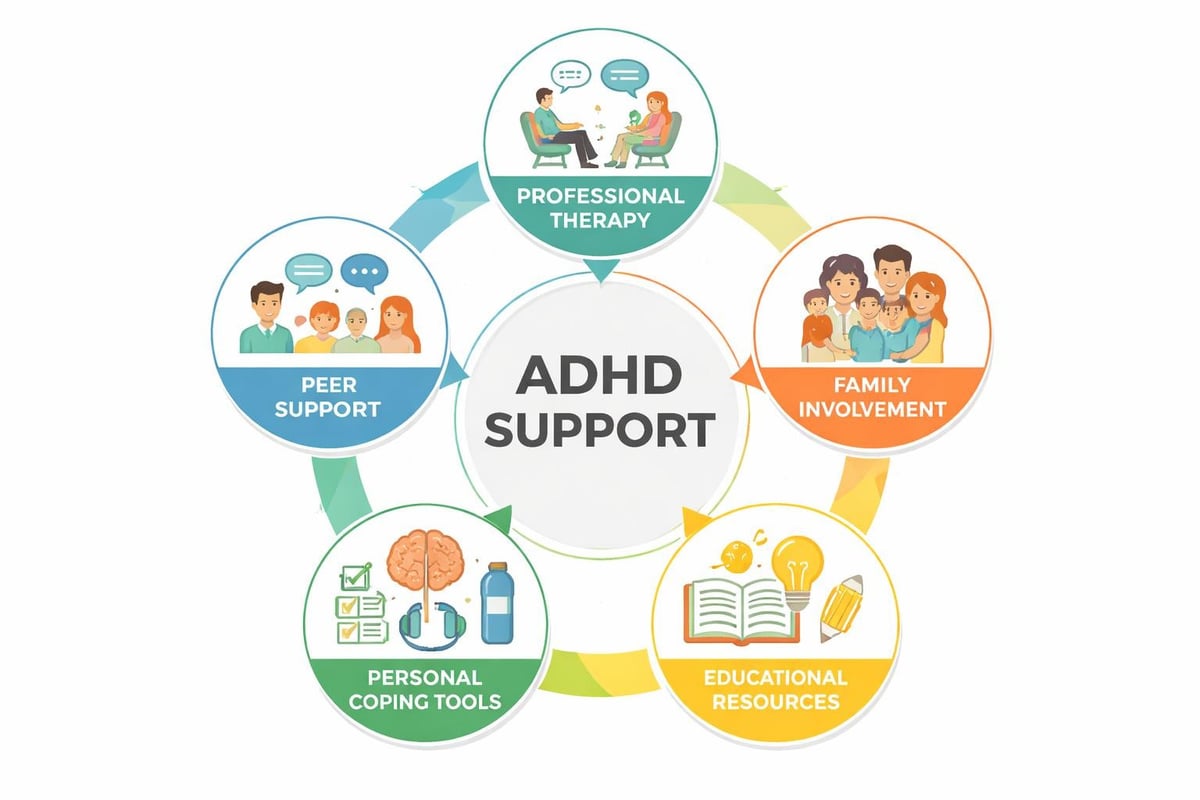
Effective support typically includes:
- Professional therapeutic interventions tailored to ADHD
- Practical strategies for daily life management
- Emotional regulation tools and techniques
- Community connection and peer understanding
- Family education and involvement
The comprehensive therapeutic services available today recognize that ADHD affects every aspect of life, from relationships to work performance to self-esteem. That's why a multi-faceted approach tends to work best.
Therapeutic Approaches That Work
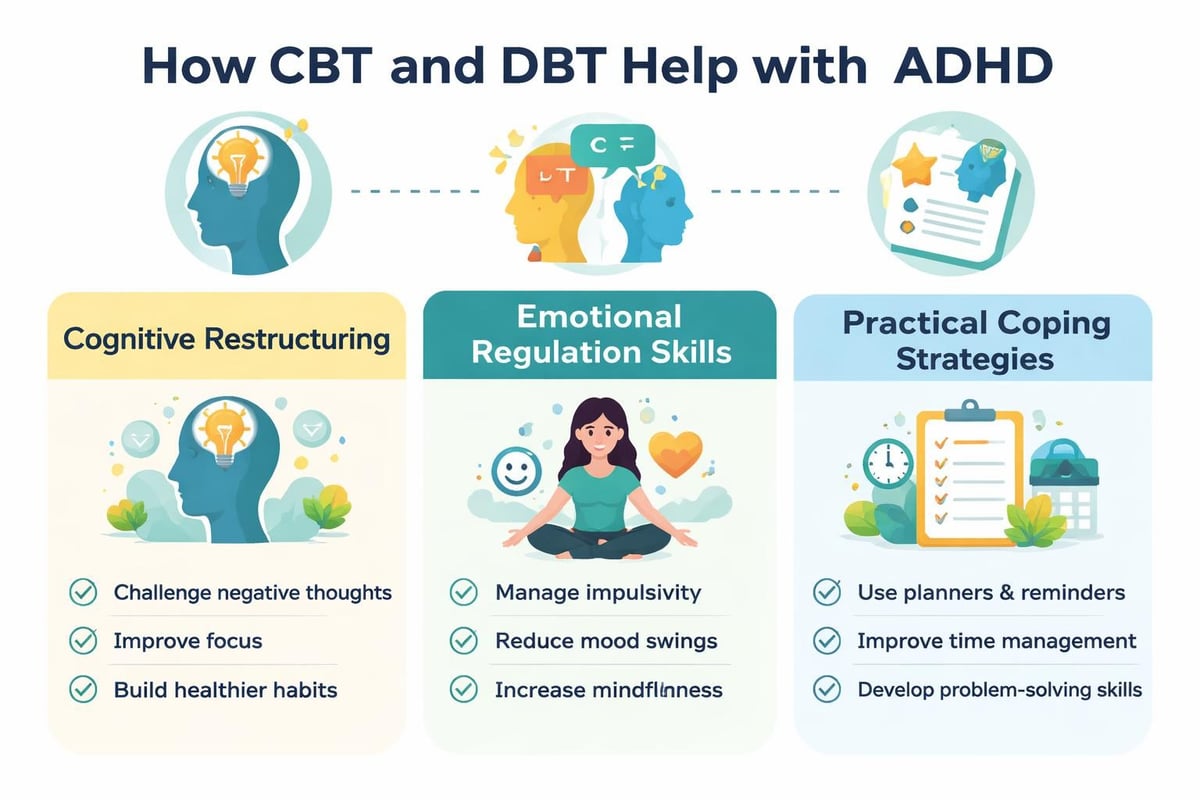
Evidence-based therapy can be transformative for ADHD. Cognitive Behavioral Therapy (CBT) helps you identify thought patterns that make things harder and develop practical coping strategies. CBT therapy is particularly effective for addressing the anxiety and low self-esteem that often accompany ADHD.
Dialectical Behavior Therapy (DBT) offers skills in emotional regulation, distress tolerance, and interpersonal effectiveness. These are exactly the areas where many people with ADHD struggle most.
| Therapy Type | Primary Focus | Key Benefits for ADHD |
|---|---|---|
| CBT | Thought patterns and behaviors | Reduces anxiety, builds coping skills |
| DBT | Emotional regulation | Improves impulse control, relationship skills |
| EFT | Emotional processing | Addresses trauma, builds resilience |
| EMDR | Trauma resolution | Heals past experiences affecting present |
Building Your Support Network
You can't do this alone, and you shouldn't have to. Building a strong support network is crucial for long-term success with ADHD.
Your network might include:
- Mental health professionals who specialize in ADHD
- Family members who understand your challenges
- Friends or partners who can offer accountability
- Support groups with others who get it
- Online communities for connection and resources
Organizations like CHADD provide evidence-based resources and connect you with others who understand the ADHD experience. They're one of the leading advocacy groups working to improve lives through education and support.
Finding an ADHD therapist near you who truly understands neurodivergence can change everything. Look for professionals who use trauma-informed, culturally responsive approaches that honor your unique brain wiring.
Practical Strategies for Daily Life
Therapy is essential, but you also need tools you can use every single day. These strategies aren't about "fixing" yourself but about working with how your brain naturally operates.
Organization and Time Management
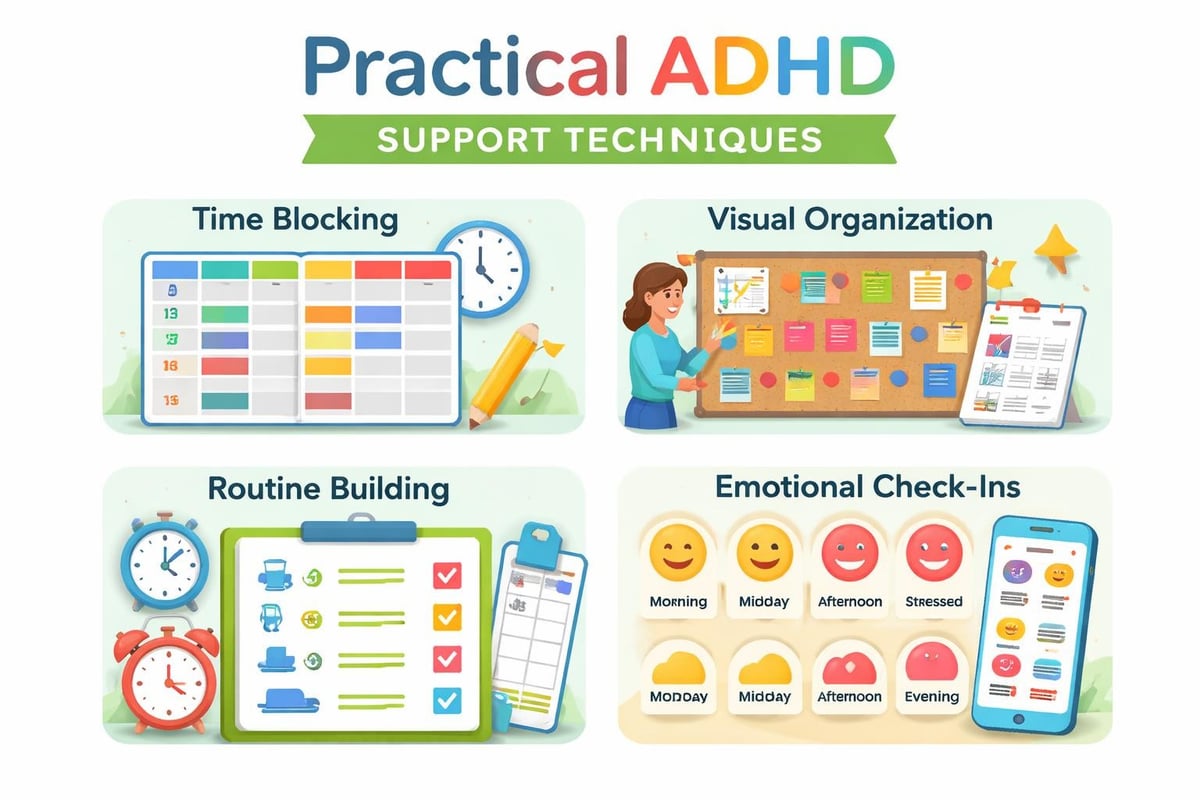
- Use visual reminders and timers everywhere
- Break tasks into smaller, manageable chunks
- Create routines that become automatic
- Use apps and technology as external memory
- Build in buffer time for transitions
Emotional Regulation Techniques
ADHD often comes with intense emotions that can feel overwhelming. Learning to recognize, name, and manage these feelings is crucial. Understanding anxiety that often accompanies ADHD helps you develop targeted coping strategies.
Resources Worth Exploring
The internet is full of ADHD information, but not all of it is helpful. Here are some genuinely valuable resources to explore.
Healthline's ADHD Resource Guide offers comprehensive information on nonprofit organizations, support groups, and educational materials. It's a great starting point if you're feeling overwhelmed about where to begin.
For adults specifically, understanding how ADHD actually feels and what genuinely helps can validate your experience and point you toward effective strategies.
Parents will find ADDitude Magazine's resources particularly helpful for understanding how to support their children while managing their own stress and concerns.
When Additional Support Is Needed
Sometimes ADHD comes with other challenges that need attention too. Many people experience anxiety, depression, or relationship difficulties alongside their ADHD symptoms.
| Co-occurring Challenge | How It Interacts with ADHD | Support Approach |
|---|---|---|
| Anxiety | Worsens focus, increases avoidance | Combined therapy addressing both |
| Depression | Reduces motivation, energy | Mood-focused interventions |
| Relationship issues | Communication breakdowns | Couples therapy, skills training |
| Trauma | Compounds emotional dysregulation | Trauma-informed ADHD treatment |
Parenting a neurodivergent child requires extra support for the whole family. Kids with ADHD thrive when their parents have access to guidance and their own therapeutic support.
The CDC provides free materials for families, teachers, and healthcare providers, including fact sheets and videos that help everyone understand ADHD better.
Making Support Accessible and Affordable
Cost shouldn't be a barrier to getting the adhd support you need. Many clinics offer affordable therapy programs and work with insurance providers to make treatment accessible.
Options for affordable support:
- Sliding scale therapy fees
- Insurance coverage through extended health benefits
- Online therapy sessions that reduce travel costs
- Group therapy as a cost-effective option
- Community resources and support groups
Check whether your provider offers direct billing to your insurance company, which can make the process much simpler and more affordable.
Finding What Works for You
There's no one-size-fits-all approach to ADHD support. What works beautifully for someone else might not click for you, and that's completely okay. The goal is to experiment, stay curious, and build a personalized toolkit of strategies and supports.
Remember that seeking help isn't a sign of weakness. It's actually the smartest thing you can do. ADHD is a neurological difference that responds well to the right combination of therapy, strategies, and support. You deserve to feel capable, confident, and connected in your life.
Give yourself permission to try different approaches, to have setbacks, and to celebrate the small wins. Progress isn't linear, and some days will be harder than others. That's part of the journey, not a sign that you're failing.
Living well with ADHD is absolutely possible with the right support system in place. Whether you need help developing coping strategies, processing emotions, or understanding how ADHD affects your relationships, professional guidance makes a real difference. Théla Psychotherapy Clinic offers trauma-informed, evidence-based therapy for ADHD using approaches like CBT and DBT, with sessions available both in-person in Markham and online throughout Ontario. Reach out today to start building the support system you deserve.

Bonny Li
Contact Me
.jpg)