What Is Relationship Anxiety?
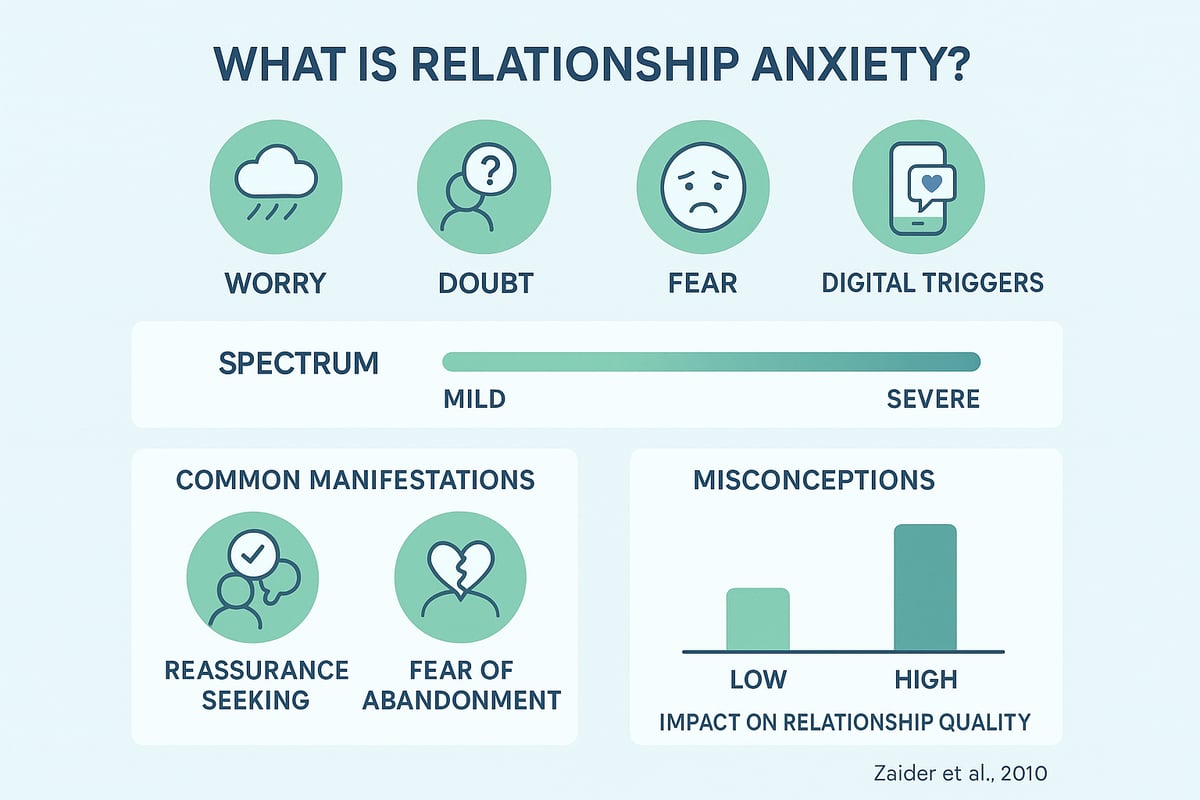
Relationship anxiety is that persistent worry, doubt, or fear that creeps in when you're getting close to someone. Unlike everyday nerves, the anxiety of relationships sticks around, making you question your partner's feelings or your own worth in the relationship.
What sets relationship anxiety apart from general anxiety disorders is its focus on romantic connections. You might find yourself needing constant reassurance, fearing abandonment, or overthinking every text and social media post. In 2026, these worries are even more common, thanks to nonstop digital communication and shifting social norms. Research shows anxiety disorders can lead to greater interpersonal distress and lower relationship quality (Zaider et al., 2010). For more on managing these challenges, check out Overcoming Anxiety in Relationships.
Relationship anxiety exists on a spectrum. It can be mild unease or spiral into overwhelming fear. Some people think the anxiety of relationships means their love is doomed, but that's a myth. Anyone can experience this, no matter their background or relationship type.
-
Common misconceptions:
-
It only happens in unhealthy relationships
-
It means you're not with the right person
-
It can't be managed or improved
-
If you recognize these patterns, you're not alone. Relationship anxiety is way more common than people realize.
Causes and Contributing Factors in 2026
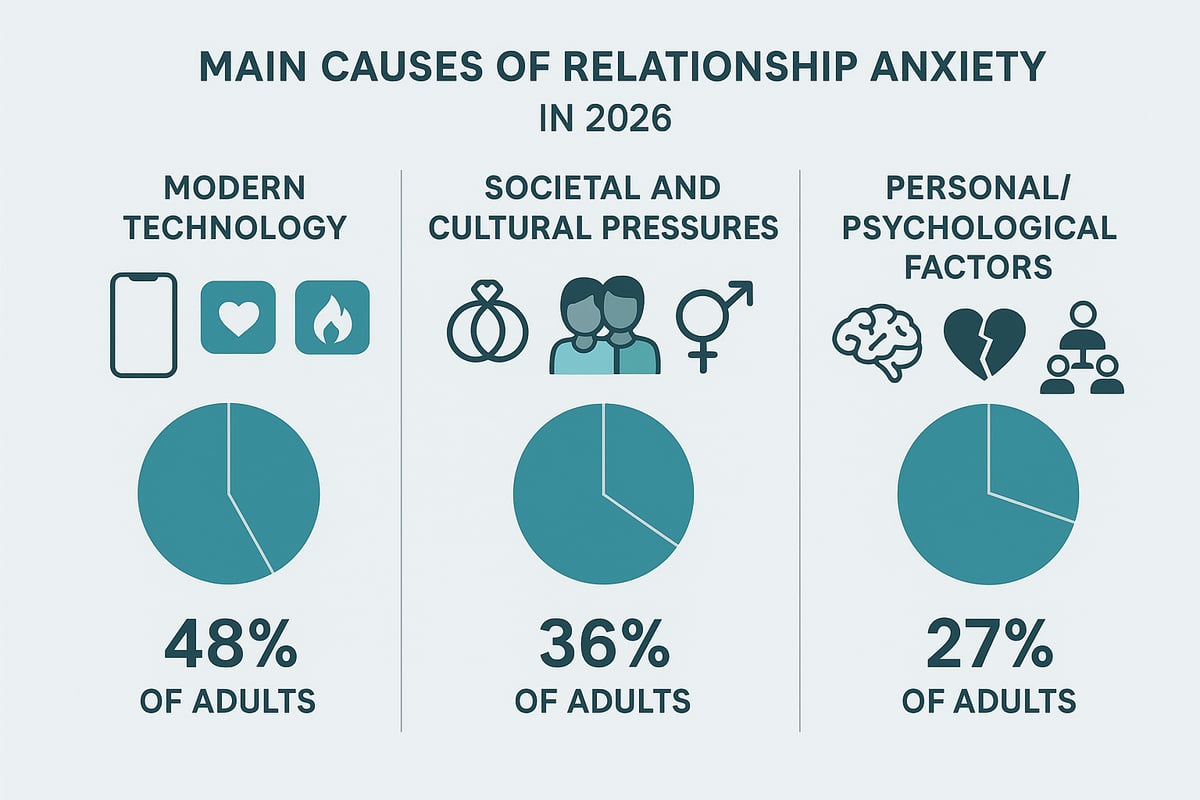
In 2026, the anxiety of relationships is shaped by a mix of technology, cultural shifts, and our personal histories. Let’s break down how these forces are making things more complicated for couples today.
The Role of Modern Technology
Tech is changing how we connect, but it’s also fueling the anxiety of relationships. Social media can spark trust issues, especially when you see your partner interacting with others online. Dating apps create “choice overload,” making people wonder if there’s always someone better out there. Digital surveillance, like tracking locations or checking messages, adds pressure and privacy concerns. Plus, we’re constantly exposed to “perfect” couples online, making real relationships feel lacking. For more on this digital shift, check out "Technology is Taking Over Our Love Lives". It’s clear that online trends are deeply shaping the anxiety of relationships today.
Societal and Cultural Pressures
Evolving ideas about marriage, commitment, and gender roles are changing expectations. There’s a push to have the “ideal” relationship, which can make anyone doubt themselves. In some cultures, talking about relationship struggles is still taboo, so people hide their worries. For those in multicultural relationships, studies show higher rates of anxiety of relationships due to clashing family traditions or beliefs. The pressure to keep up appearances or please everyone adds another layer of stress. All these factors can quietly build up, making relationship anxiety more common.
Personal and Psychological Factors
Our upbringing and past experiences can shape how we handle the anxiety of relationships. Attachment styles—like being anxious or avoidant—play a big role in how secure we feel with a partner. If someone’s had tough breakups or trauma in the past, those fears can pop up in current relationships. Co-occurring mental health issues, such as depression or ADHD, can make everything feel heavier. Even family dynamics, like watching parents argue, can influence adult relationship fears. It’s a reminder that everyone brings their own emotional history to the table.
Signs and Symptoms of Relationship Anxiety
Spotting the anxiety of relationships isn't always easy, but there are clear signs you can look out for. Many folks find themselves constantly seeking reassurance from their partner, asking questions like "Do you still love me?" or "Are we okay?" That need for confirmation can become a daily habit.
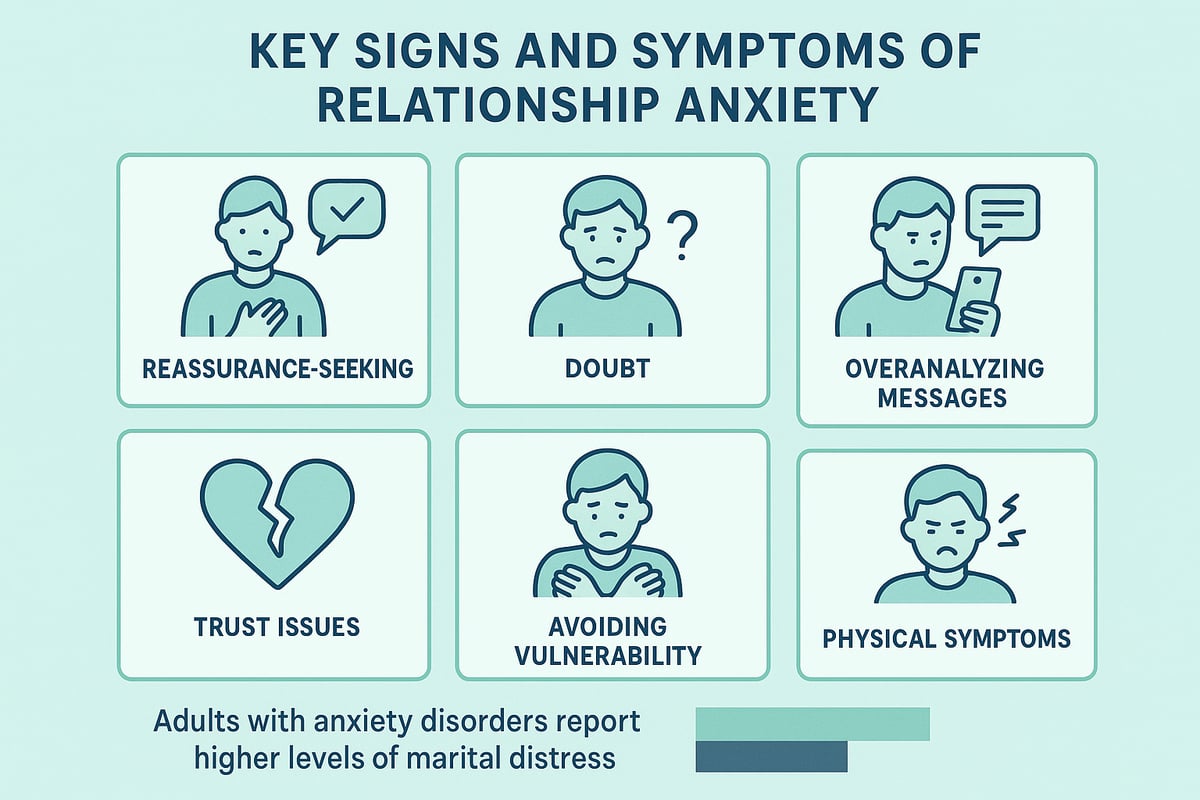
Other common symptoms include:
-
Persistent doubts about your partner’s feelings or intentions.
-
Overanalyzing texts, social media, or every word your partner says.
-
Difficulty trusting or letting your guard down.
-
Avoiding intimacy, vulnerability, or tough conversations.
-
Physical symptoms like trouble sleeping, irritability, or muscle tension.
It's easy to fall into the trap of reading too much into small things, especially if you’re already feeling unsure. Research shows that the anxiety of relationships can lead people to examine every conflict or comment, fueling even more worry and misunderstanding. For a deeper dive into how anxiety can shape romantic conflict, check out Social anxiety and romantic conflict: Examining prospective interpersonal dynamics.
Adults living with anxiety disorders often report higher levels of marital distress and lower relationship satisfaction. These symptoms can affect anyone, regardless of background or relationship type, and don’t mean your relationship is doomed.
How Relationship Anxiety Impacts Couples
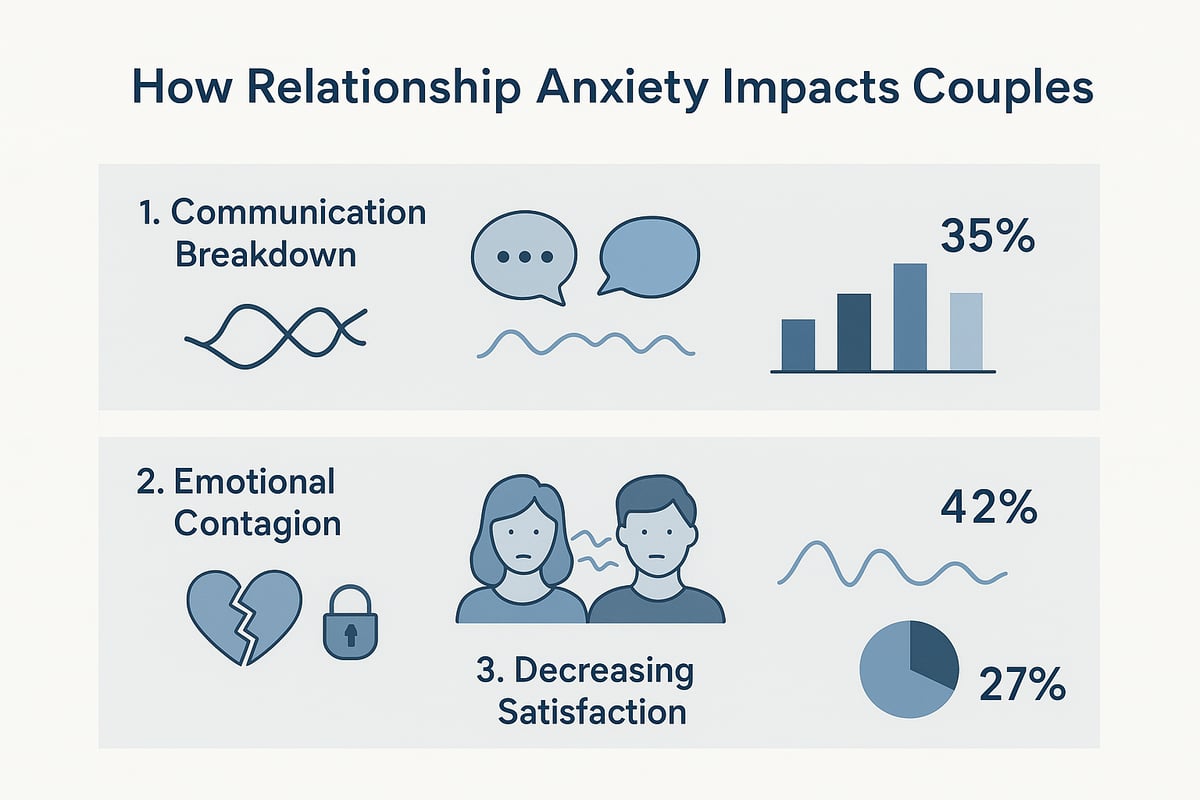
When it comes to the anxiety of relationships, couples often find themselves caught in a web of misunderstandings and emotional ups and downs. Let's look at how these worries show up in day-to-day life and what that means for your connection.
Effects on Communication and Conflict
The anxiety of relationships can turn small disagreements into major arguments. Partners might misinterpret each other's words or pull away during tough conversations. It's common for people to avoid talking about important issues just to dodge the fear of being rejected.
-
Misunderstandings happen more often
-
Emotional shutdowns become a go-to defense
-
Needs and feelings stay bottled up
If you notice these patterns, you're not alone. Many couples benefit from outside support, like the tips found in Relationship Help for Couples, to rebuild trust and improve communication.
Emotional Contagion and Shared Distress
Anxiety in one partner tends to spread throughout the relationship. When someone feels on edge, the other partner often picks up on that stress, leading to a cycle of shared worry. Studies show that partners' moods can sync up, especially during tough times.
This emotional contagion sometimes leads couples to change routines or tiptoe around each other's triggers. Over time, this can create even more tension, making it harder to break free from the anxious cycle.
Relationship Satisfaction and Stability
The anxiety of relationships chips away at satisfaction and intimacy. Couples may find it harder to relax together or feel truly safe. Over time, this can make breakups more likely or leave both people feeling unhappy.
-
Trust takes a hit
-
Emotional safety feels out of reach
-
Conflicts become more frequent
Real-life examples show that couples dealing with ongoing anxiety often report lower relationship adjustment and more regular arguments.
Steps to Manage and Overcome Relationship Anxiety
Feeling stuck in the anxiety of relationships? You’re not alone. Managing this kind of stress takes a mix of self-awareness, honest communication, and sometimes professional help. Let’s break down what you can do, step by step.
Self-Awareness and Personal Growth
The anxiety of relationships often starts with what’s going on inside us. Building self-awareness helps you spot your unique triggers and patterns.
-
Try mood tracking apps or journaling to catch emotional spikes.
-
Practice mindfulness and breathing exercises daily.
-
Get honest feedback from trusted friends or mentors.
Small habits like these make it easier to recognize when your anxiety of relationships is flaring up, so you can take action before it grows.
Open Communication with Your Partner
You don’t have to handle everything alone. Sharing your feelings with your partner, even when it’s tough, can ease tension.
-
Set up regular check-ins to talk about concerns.
-
Agree on boundaries around social media and digital habits.
-
Use “I feel” statements instead of blaming.
-
Practice active listening and empathy exercises together.
When you both feel safe to speak up, it’s easier to build trust and tackle anxiety together.
Seeking Professional Support
Sometimes, the anxiety of relationships just won’t budge on its own. That’s when reaching out for professional support can make all the difference.
-
Individual or couples therapy can help you untangle old patterns.
-
Evidence-based approaches like CBT, EFT, or EMDR are proven to work.
-
If distress lingers or starts to affect daily life, don’t wait to seek help.
-
Check out Trauma, Anxiety, and Depression Insights to see how therapy addresses the root causes of anxiety.
With the right support, you can rebuild confidence and trust, even if the anxiety of relationships has been around for a while.
Preventing Relationship Anxiety in the Future
Preventing the anxiety of relationships in the future means being proactive, not just reactive. As our connections get more complex, it helps to build a strong foundation with your partner right from the start.
Here are some ways to future-proof your relationship against unnecessary stress:
-
Work on secure attachment by understanding your own triggers and communicating them openly.
-
Stay flexible with roles and routines, since expectations are always changing.
-
Prioritize mental health by staying aware of how anxiety can show up differently for everyone. For recent stats on anxiety symptoms among U.S. adults, check out Anxiety symptoms among U.S. adults by gender.
-
Set healthy tech boundaries like regular digital detoxes or shared screen-free time.
-
Talk openly about anxiety and emotional needs, making it normal to ask for support when needed.
-
Keep learning about the anxiety of relationships. Staying up to date with dating and social anxiety research can help you spot issues early.
Try creating simple shared rituals, like a weekly walk or check-in, to keep your bond strong and ease the anxiety of relationships before it even starts.
If you’re feeling the weight of relationship anxiety in today’s world, you’re definitely not alone. Navigating love and connection in 2026 comes with its own set of challenges—between digital overload, shifting expectations, and the ups and downs we all face, it can start to feel overwhelming. The good news is, you don’t have to figure it all out by yourself. At Théla Psychotherapy Clinic, we’re here to support you with a compassionate, evidence-based approach that meets you exactly where you are. If you’re ready to talk things through or get some extra guidance, Let's Connect! Book a Call.

Bonny Li
Contact Me
.jpg)