Do you find yourself overthinking every text, doubting your partner’s feelings, or fearing the worst in your relationship? You’re not alone. Many people struggle with overcoming anxiety in relationships, which can cause unnecessary stress and impact connection with loved ones.
This essential guide delivers practical, evidence-based strategies to help you address these challenges. Here, you will discover what relationship anxiety really is, why it occurs, and how it affects couples. We will walk you through step-by-step solutions, show you when to seek professional support, and provide actionable tools for lasting change.
Take the first step toward a healthier, more secure relationship today.
Understanding Relationship Anxiety
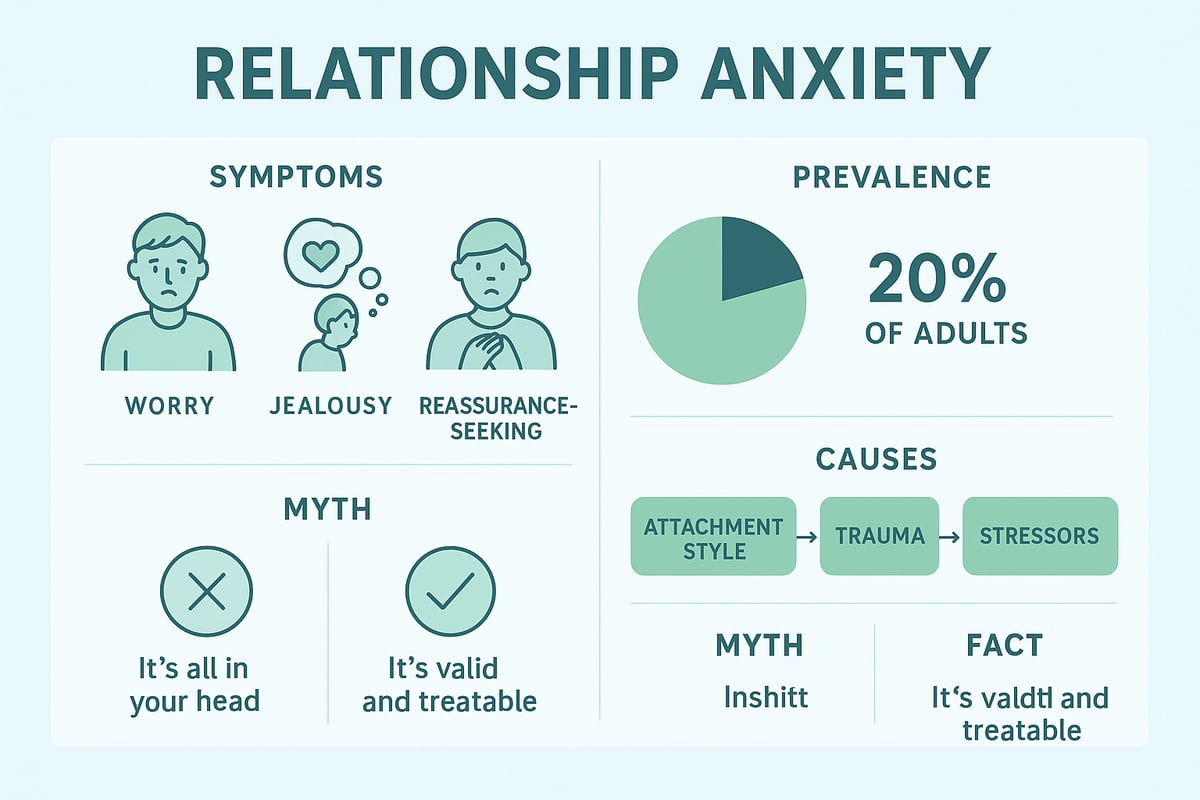
Relationship anxiety is a persistent sense of worry, doubt, or insecurity specifically tied to romantic partnerships. Unlike general anxiety, which can affect many areas of life, relationship anxiety centers on concerns about your connection, your partner’s feelings, or the future together. Common signs include overthinking, jealousy, and a constant need for reassurance. For example, you might frequently ask your partner if they still care, even after recent affirmations. Recognizing these patterns is a crucial first step in overcoming anxiety in relationships.
Defining Relationship Anxiety
Relationship anxiety differs from general anxiety by focusing on interpersonal dynamics and emotional safety within a romantic context. Typical signs include obsessing over text messages, feeling jealous of your partner’s friends, or fearing abandonment. For instance, someone might constantly seek validation after minor disagreements, convinced the relationship is at risk. Understanding these distinctions helps in overcoming anxiety in relationships, as it enables you to target the root cause instead of general symptoms.
Causes and Triggers
Several factors can contribute to relationship anxiety. Attachment styles—such as anxious, avoidant, or secure—shape how individuals respond to intimacy and stress. Past trauma, like childhood neglect or negative relationship experiences, can increase sensitivity to perceived threats. External stressors, including work, family, or health issues, often amplify anxious responses. For example, a person who experienced inconsistent caregiving as a child may find themselves especially prone to overcoming anxiety in relationships when faced with uncertainty.
How Relationship Anxiety Manifests
The emotional symptoms of relationship anxiety include persistent worry, insecurity, and irritability. Behaviorally, it may show up as checking a partner’s phone, excessive texting, or withdrawing to avoid conflict. For example, one partner may avoid difficult conversations, fearing it could jeopardize the relationship. If you recognize these patterns, exploring relationship anxiety and treatment options can provide practical steps for overcoming anxiety in relationships and fostering emotional safety.
Prevalence and Impact
Up to 20 percent of adults report significant relationship anxiety, according to Psychology Today (2023). This anxiety can lower relationship satisfaction and create instability within couples. It often impacts mental health, leading to sleep disturbances, mood swings, and difficulty concentrating on daily tasks. Addressing overcoming anxiety in relationships is vital, as unresolved anxiety can affect both partners’ overall well-being and the long-term health of the relationship.
Common Misconceptions
Many believe that experiencing anxiety means a relationship is fundamentally flawed or doomed. Others think only those in unhealthy partnerships face these struggles. In reality, relationship anxiety can occur even in loving, stable unions, and it is possible to change anxious patterns. Overcoming anxiety in relationships is not only achievable but also essential for building secure, resilient connections. Challenging these misconceptions opens the door to real growth and healing.
The Effects of Anxiety on Relationships
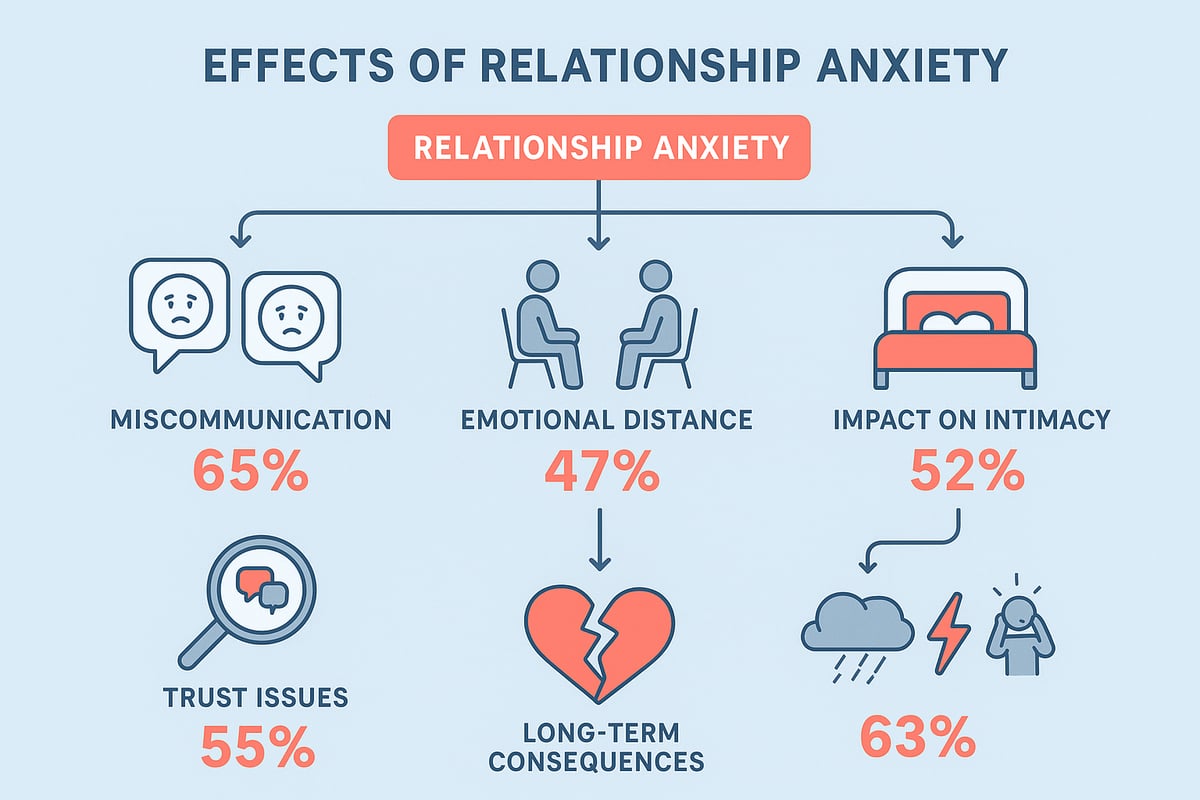
Anxiety can deeply shape how couples interact, communicate, and connect. When left unaddressed, its effects ripple through every aspect of a relationship, making overcoming anxiety in relationships a critical focus for many couples. Understanding these effects is the first step to building a healthier partnership.
Communication Breakdown
Communication often suffers when anxiety is present. People experiencing anxiety may overanalyze messages, misinterpreting neutral texts as negative. For example, a delayed reply might be seen as a sign of disinterest or rejection.
This misreading can lead to unnecessary arguments, as insecurity drives one partner to seek constant reassurance. Overcoming anxiety in relationships requires learning to pause and check assumptions before reacting. Small misunderstandings, if left unchecked, can spiral into larger conflicts, eroding the foundation of trust and openness.
Emotional Distance and Avoidance
Anxiety can push partners apart or cause one person to become overly clingy. Withdrawal is common when someone fears conflict or believes their feelings are too much for their partner. In other cases, anxiety leads to excessive neediness, which can overwhelm the other partner.
For example, a person might avoid sharing concerns to prevent a fight, creating emotional distance. Overcoming anxiety in relationships involves recognizing these patterns and making intentional efforts to reconnect. Both withdrawal and clinginess can undermine intimacy, making it difficult for couples to feel secure together.
Trust Issues and Jealousy
Trust often erodes when anxiety goes unmanaged. Repeated doubts can result in one partner checking the other's phone or social media accounts, seeking proof of loyalty. This behavior can create tension and resentment, even if there is no real reason for suspicion.
Jealousy may also arise, fueled by fear of abandonment or betrayal. Overcoming anxiety in relationships means addressing these fears openly and working together to rebuild trust. Without honest conversations, suspicion can become a self-fulfilling prophecy, damaging the relationship’s stability.
Impact on Physical Intimacy
Anxiety does not just affect emotions and communication, it can also impact physical closeness. Some individuals may lose interest in intimacy due to worry or fear of rejection. Others might experience performance pressure, feeling anxious about meeting their partner’s expectations.
For instance, avoiding intimacy after an argument is a common pattern. Overcoming anxiety in relationships encourages couples to discuss their needs and concerns openly, fostering a safer space for physical connection. When anxiety reduces desire, proactive communication and patience are essential for rebuilding closeness.
Long-Term Consequences
The long-term effects of unmanaged anxiety can be significant. Couples may face ongoing dissatisfaction, frequent arguments, or eventual separation. Research shows that couples facing persistent anxiety are twice as likely to separate compared to those who address these issues.
Over time, the cumulative stress affects both partners’ mental health and daily functioning. According to the Anxiety disorders and intimate relationships study, anxiety can significantly disrupt relationship quality and partner perceptions. This makes overcoming anxiety in relationships not just a personal goal but a shared responsibility for lasting partnership success.
Step-by-Step Guide to Overcoming Anxiety in Relationships
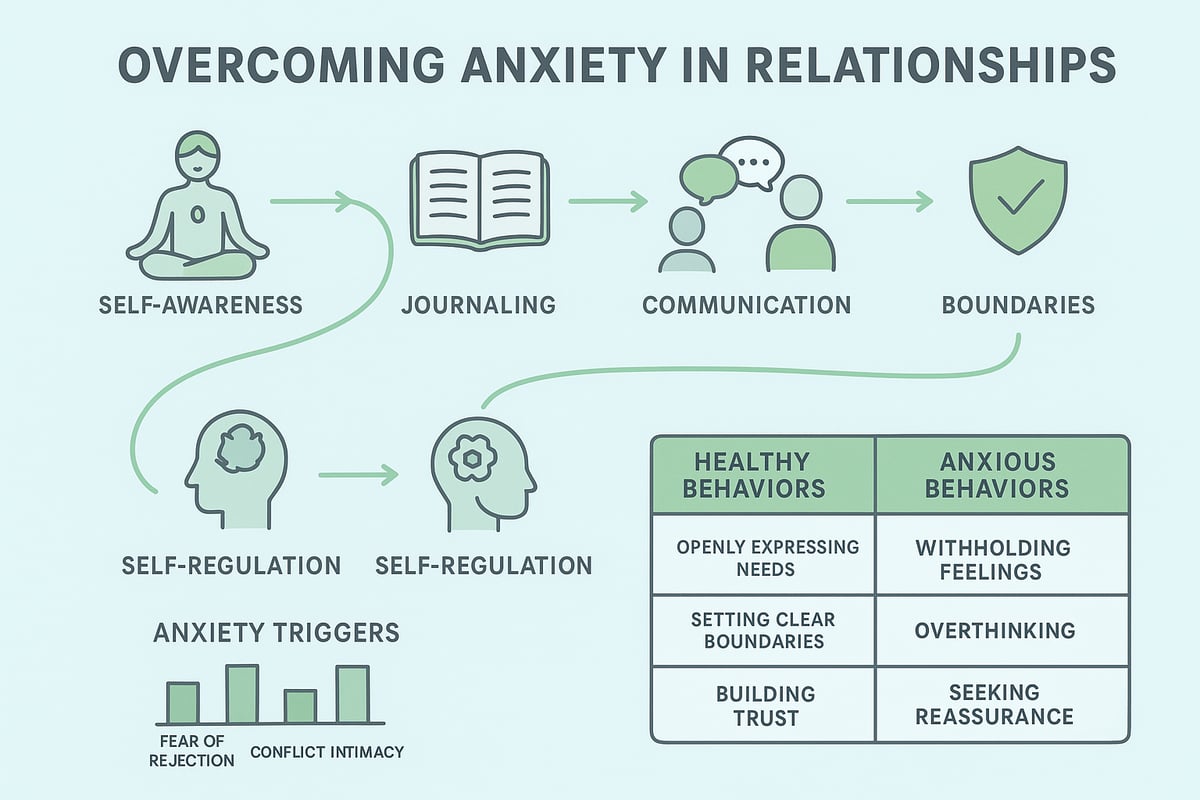
Overcoming anxiety in relationships is a gradual process that requires intention, patience, and the right strategies. The following step-by-step guide offers practical actions you can take to foster a more secure and fulfilling partnership. Each step builds upon the last, creating a comprehensive toolkit for lasting change.
Step 1: Recognize and Accept Your Anxiety
The first step in overcoming anxiety in relationships is acknowledging your feelings without judgment. Self-awareness is key. Notice when anxiety arises and allow yourself to observe these emotions with curiosity rather than criticism.
Journaling can help you track patterns and triggers. Mindfulness practices, such as deep breathing or grounding exercises, create space between your thoughts and reactions. For example, you might write down when you feel anxious after a conversation with your partner, then notice if this is a recurring theme.
By accepting anxiety as a valid emotion rather than a flaw, you create the foundation for meaningful change. Remember, self-compassion is essential on this journey.
Step 2: Identify Triggers and Underlying Beliefs
To continue overcoming anxiety in relationships, start identifying what sparks your anxious feelings. Triggers often stem from past experiences, attachment styles, or unresolved trauma.
Keep a daily log of situations that increase your anxiety. Reflect on recurring themes, such as fear of abandonment or mistrust. Explore your upbringing and relationship history to uncover patterns. For example, someone who experienced childhood neglect may notice heightened anxiety when a partner is less responsive.
Understanding these root causes empowers you to challenge unhelpful beliefs and recognize that your reactions are shaped by both past and present influences. This insight is a cornerstone for growth.
Step 3: Communicate Openly with Your Partner
Open communication is vital for overcoming anxiety in relationships. Share your feelings honestly, using “I” statements to avoid blame. For example, say “I feel anxious when plans change unexpectedly” rather than accusing your partner.
Active listening is just as important. Give your partner space to respond and validate their perspective. Practice patience, especially during emotionally charged conversations.
Setting aside time for regular check-ins can help you both express concerns before they escalate. The goal is to create a safe environment where vulnerability is met with empathy and respect.
Step 4: Practice Self-Regulation Techniques
Managing your emotions is a critical skill for overcoming anxiety in relationships. Self-regulation involves calming your body and mind before reacting.
Try deep breathing exercises, progressive muscle relaxation, or grounding techniques when anxiety strikes. Cognitive-behavioral strategies, such as challenging catastrophic thoughts and reframing negative assumptions, promote balanced thinking.
For example, if you worry that a delayed text means your partner is upset, pause and consider alternative explanations. Over time, these practices help you respond thoughtfully rather than impulsively, reducing conflict and building confidence.
Step 5: Set Healthy Boundaries and Expectations
Establishing clear boundaries is essential for overcoming anxiety in relationships. Define your personal needs and communicate them respectfully.
Discuss topics like communication frequency, personal space, and social interactions with your partner. Work together to negotiate boundaries that feel secure for both of you. For instance, you might agree to check in at certain times each day while maintaining independence.
Boundaries are not walls but guidelines for mutual respect. They foster trust and reduce misunderstandings, creating a sense of safety within the relationship.
Step 6: Build Security and Trust Together
The final step in overcoming anxiety in relationships is to actively cultivate trust and emotional safety. Create rituals of connection, such as weekly “relationship meetings” to discuss feelings and celebrate progress.
Vulnerability is a strength. Share your successes and setbacks, and acknowledge each other’s efforts. Evidence-based approaches, like the Gottman Method for couples, offer structured tools for building intimacy and reducing anxiety.
By prioritizing quality time and open dialogue, you lay the foundation for a resilient partnership. Remember, overcoming anxiety is a shared journey, and every step forward counts.
When to Seek Professional Help
Seeking professional help is a courageous and essential step in overcoming anxiety in relationships. Sometimes, despite your best efforts, anxiety can persist and begin to affect your daily life or your ability to connect with your partner. Recognizing when to reach out for additional support is a sign of strength and commitment to your own well-being.
Signs You Might Need Support
There are clear signs that overcoming anxiety in relationships may require outside assistance. If you notice persistent anxiety that does not improve with self-help techniques, or it begins to interfere with your work, health, or relationships, it may be time to consider therapy.
- Daily or near-daily anxious thoughts about your relationship
- Panic attacks, depression, or significant distress linked to your partnership
- Avoiding important conversations out of fear
When these signs appear, seeking help can be a proactive step toward healing and growth.
Types of Professional Support
A variety of therapeutic options are available for overcoming anxiety in relationships. Individual therapy, such as CBT, DBT, or EMDR, can help address personal patterns and triggers. Couples counseling offers a space to work together on communication and trust. For more information, visit Couples therapy for relationship issues to understand how joint sessions can support both partners. Group support and workshops also provide valuable peer perspectives.
Choosing the right approach depends on your unique needs and the dynamics of your relationship.
What to Expect from Therapy
Therapy for relationship anxiety is collaborative and tailored to your needs. It typically begins with an assessment to understand your challenges and set clear goals. You can expect to learn new communication skills, emotional regulation techniques, and strategies for building trust.
A supportive therapist will guide you through personalized exercises and offer practical tools for lasting change. Progress may take time, but many find renewed confidence and connection as they move forward.
Choosing the Right Therapist
Selecting a therapist is a key part of overcoming anxiety in relationships. Look for professionals who are trauma-informed and culturally sensitive, as these qualities ensure safe and relevant care. Always check credentials, licensure, and experience with relationship anxiety.
It is important to feel comfortable and respected during sessions. Trust your instincts and do not hesitate to ask questions about a therapist’s approach or background.
Théla Psychotherapy Clinic: Trauma-Informed Relationship Support
Théla Psychotherapy Clinic specializes in helping individuals and couples navigate relationship anxiety with evidence-based care. Their team offers approaches such as CBT, DBT, EFT, and EMDR, tailored to your specific needs. Services are accessible both online and in person across Ontario.

The clinic provides free initial consultations and affordable therapy programs, making it easier to start your journey toward overcoming anxiety in relationships with professional support.
Tools and Resources for Managing Relationship Anxiety
Navigating the path to overcoming anxiety in relationships is easier with the right resources. A variety of practical tools, apps, books, and support networks are available to help individuals and couples build resilience, foster self-awareness, and strengthen their connection.
Self-Help Strategies and Apps
For those focused on overcoming anxiety in relationships, self-help apps and daily practices can make a significant difference. Guided meditation apps such as Headspace and Calm offer relationship-focused mindfulness exercises that promote relaxation and emotional balance.
Journaling prompts help individuals track their thoughts and identify anxiety triggers. Many find that using an anxiety tracker app provides valuable insight into patterns and progress.
- Headspace: Relationship meditations
- Calm: Guided relaxation tools
- Moodnotes: Track and reframe anxious thinking
These resources empower users to take daily action toward emotional stability.
Recommended Books and Podcasts
Educational materials are essential for overcoming anxiety in relationships. Books like “Attached” by Amir Levine and “Hold Me Tight” by Dr. Sue Johnson present evidence-based frameworks for understanding attachment and building connection.
Podcasts such as “The Love, Happiness and Success Podcast” and “The Secure Relationship” deliver expert interviews, listener stories, and actionable tips. These resources provide ongoing support and fresh perspectives.
- “Attached” by Amir Levine
- “Hold Me Tight” by Dr. Sue Johnson
- “The Love, Happiness and Success Podcast”
- “The Secure Relationship” podcast
Exploring these can deepen self-awareness and offer new communication strategies.
Communication Exercises for Couples
Effective communication is a cornerstone of overcoming anxiety in relationships. Couples can benefit from daily check-ins, gratitude sharing, and structured conflict resolution scripts. Practicing the “appreciation sandwich” technique—sharing positive feedback, addressing concerns, then ending with encouragement—helps maintain a supportive tone.
For structured guidance, consider these effective conflict resolution strategies to address anxiety-driven challenges together.
- Daily emotional check-ins
- Appreciation sandwich
- Conflict resolution scripts
These exercises encourage openness and reduce misunderstandings.
Online Communities and Peer Support
Connecting with others who share similar experiences is invaluable. Online forums like Reddit’s r/relationship_advice and Facebook support groups provide a safe space to ask questions, share stories, and gain validation.
Peer support offers comfort and practical advice, reminding you that overcoming anxiety in relationships is a shared journey. These communities foster encouragement and reduce feelings of isolation.
Tracking Progress and Celebrating Wins
Celebrating milestones is crucial for sustaining motivation. Keeping a relationship growth journal lets you monitor patterns, set goals, and recognize improvements.
Monthly reflections on reduced anxiety episodes or successful communication moments highlight progress. Small celebrations reinforce positive changes and keep both partners engaged in overcoming anxiety in relationships.
If you’re recognizing patterns of anxiety in your relationships and you’re ready to take the next step toward healing, you’re not alone. Théla Psychotherapy Clinic specializes in compassionate, evidence-based care designed to help you build stronger, more secure connections. Whether you’re looking for individual support, couples counselling, or innovative approaches like canine therapy, you deserve a safe space to grow. Sometimes, the hardest part is reaching out—but that first conversation can make all the difference. If you’re curious about how personalized therapy can help you move forward, Book Your Free Consultation Appointment Now.

Bonny Li
Contact Me
.jpg)