Let's face it-we all struggle with our emotions sometimes. Whether you're dealing with relationship troubles, past trauma, or just feeling stuck in unhelpful patterns, emotional therapy offers a path forward that's grounded in science and compassion. This approach to mental health focuses on understanding, experiencing, and transforming your emotional life in ways that create lasting change. Instead of just talking about your problems, you'll learn to actually work through the feelings that keep you stuck.
What Is Emotional Therapy and How Does It Work?
Emotional therapy isn't just one single approach. It's actually a family of therapeutic methods that prioritize your feelings as the gateway to healing. The most well-known version is Emotionally Focused Therapy (EFT), which helps you identify, understand, and reshape your emotional responses.
Here's what makes this approach different:
- Emotions come first: Rather than just changing thoughts or behaviors, you'll explore the feelings underneath
- Attachment matters: Many emotional issues stem from early relationships and how we learned to connect
- It's experiential: You don't just talk about feelings-you actually feel them in session
- Change happens through awareness: Understanding your emotional patterns is the first step to transforming them
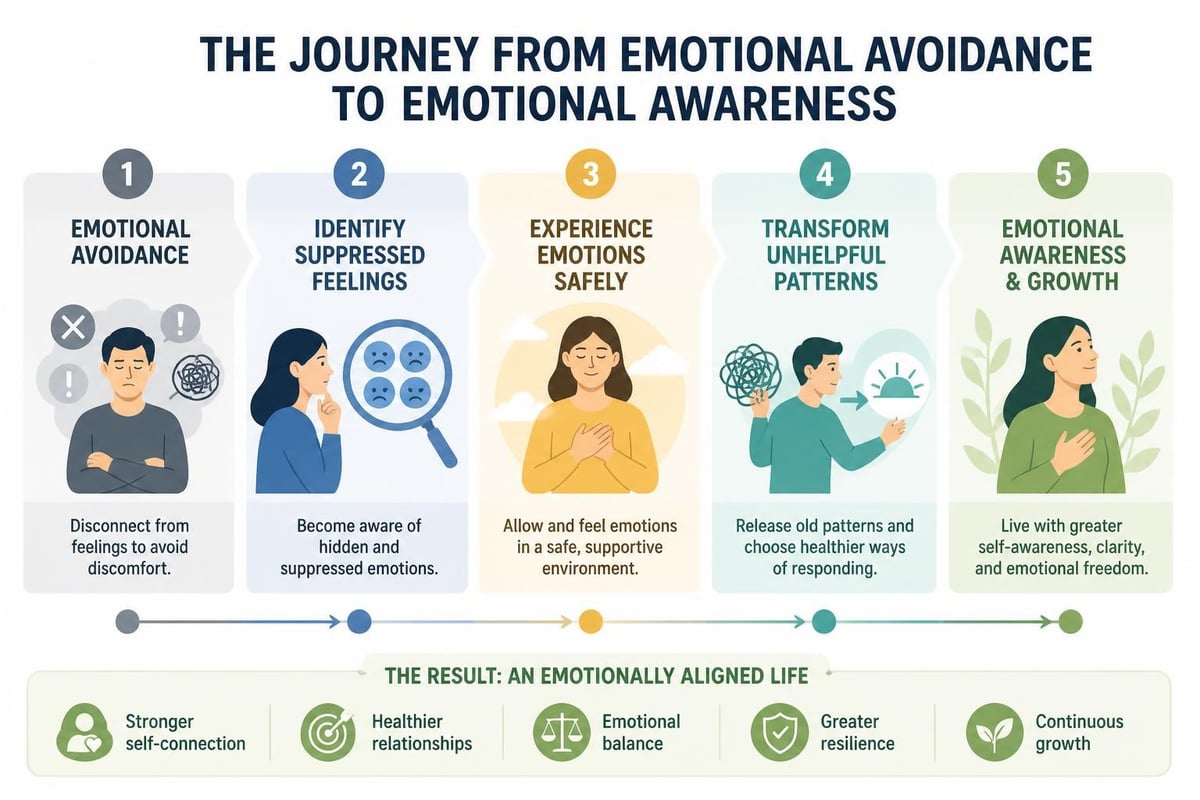
The work focuses on helping you become aware of emotions you might've been avoiding or didn't even know were there. When you can identify and express these feelings safely, healing becomes possible.
The Science Behind Emotion-Focused Approaches
Research backs up what therapists see every day-working with emotions directly creates real change. According to studies exploring emotion-focused therapy principles, this approach activates the brain regions responsible for emotional processing and memory.
Your emotions aren't the problem. They're actually messengers carrying important information about your needs, values, and experiences. Emotional therapy teaches you to listen to these messages instead of shutting them down.
| Benefit | How It Helps |
|---|---|
| Better Self-Awareness | Understand what you're really feeling and why |
| Improved Relationships | Communicate needs and connect more authentically |
| Trauma Processing | Work through difficult experiences safely |
| Reduced Anxiety | Learn to tolerate and regulate uncomfortable feelings |
The therapeutic approaches available today recognize that emotional avoidance actually maintains problems. When you face your feelings with skilled support, you break free from cycles that have kept you stuck for years.
Who Benefits Most from Emotional Therapy?
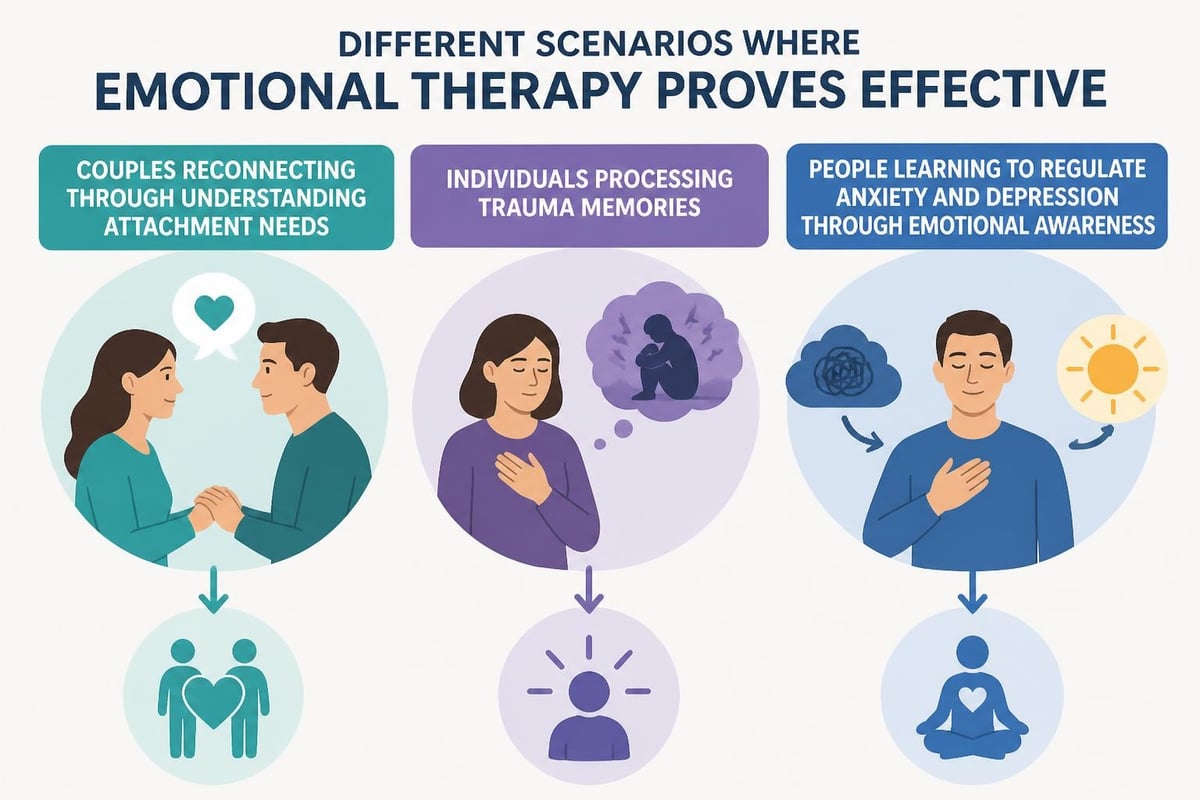
You don't need a specific diagnosis to benefit from this work. That said, certain situations respond particularly well to emotion-focused methods.
Couples and Relationship Issues
If you're struggling in your relationship, EFT relationship therapy has strong research support. It helps partners understand their emotional patterns and create secure attachment bonds. Many couples find this approach transformative because it gets to the heart of what's really happening beneath the arguments.
Trauma and PTSD
Emotional Awareness and Expression Therapy has shown promising results for people dealing with trauma effects. When you've experienced something overwhelming, your emotions can get frozen or fragmented. This therapeutic work helps you process what happened at an emotional level, not just an intellectual one.
Depression and Anxiety
When you're anxious or depressed, you might think the solution is to stop feeling these uncomfortable emotions. Actually, learning to experience them differently is often more effective. Anxiety depression therapy that incorporates emotional work helps you develop a different relationship with difficult feelings.
What to Expect in Emotional Therapy Sessions
Walking into your first session can feel nerve-wracking. Here's what typically happens when you work with an emotion-focused therapist:
- Assessment and safety building: Your therapist creates a secure environment and understands your story
- Identifying emotional patterns: Together, you'll explore how you typically handle feelings
- Accessing emotions: You'll practice experiencing feelings that might've been avoided
- Transforming responses: New emotional experiences lead to new ways of being
- Consolidating changes: You'll integrate what you've learned into daily life
The integrative approach of emotion-focused therapy means your therapist might blend techniques from different modalities. At Théla Psychotherapy Clinic, practitioners use evidence-based methods like CBT, DBT, EFT, and EMDR tailored to your unique needs.
Techniques Used in Emotional Therapy
Your therapist has a toolbox of techniques to help you work with emotions more effectively. These aren't tricks-they're research-backed methods that facilitate real change.
Two-Chair Technique: You'll dialogue between different parts of yourself, giving voice to conflicting emotions. It sounds unusual, but it's surprisingly powerful for resolving internal conflicts.
Focusing: This body-based method helps you tune into the felt sense of emotions in your physical body. Your body often knows what you're feeling before your mind does.
Evocative responding: Your therapist reflects your emotions in ways that help you experience them more fully and clearly.
Validation and empathy: Simply feeling understood creates the safety needed to explore difficult feelings.
The services offered through trauma-informed care recognize that technique matters less than the therapeutic relationship. You need to feel safe to do this deep work.
Finding the Right Emotional Therapy Support
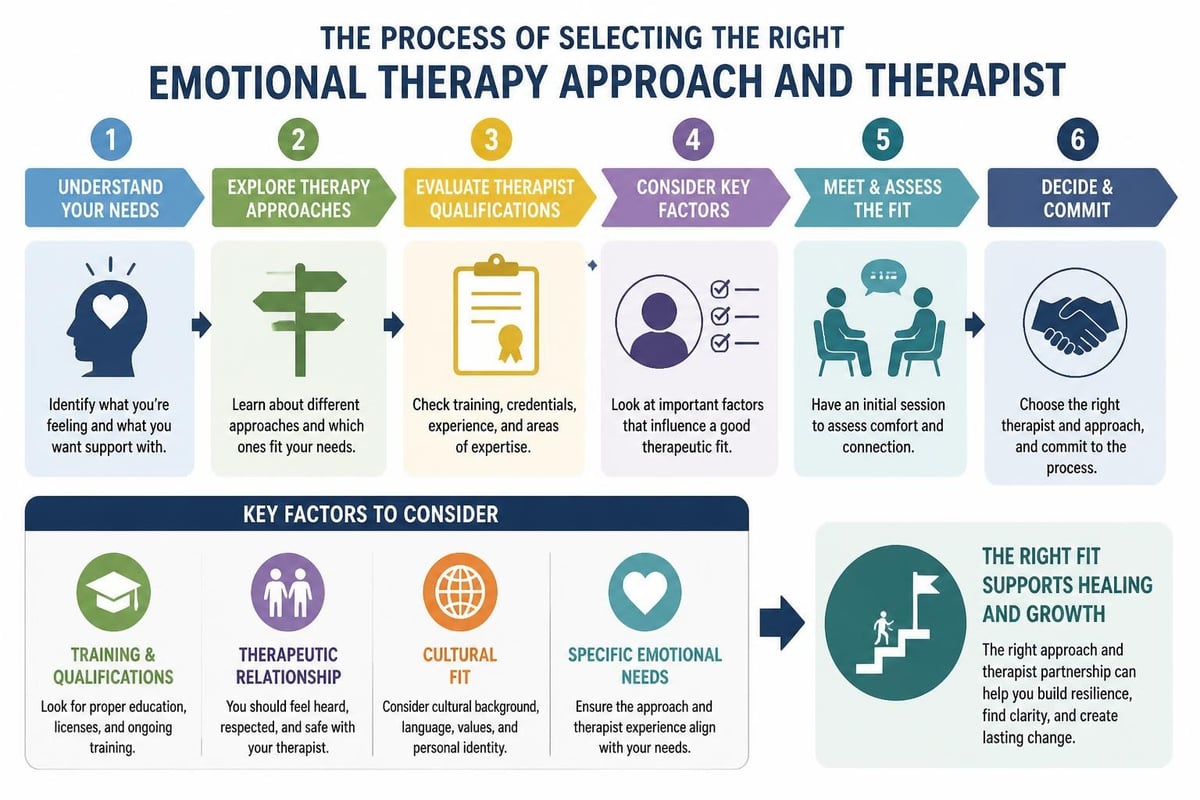
Not every therapist practices emotional therapy, and that's okay. What matters is finding someone trained in these approaches who feels like a good fit for you.
Consider these factors:
- Training and credentials: Look for therapists specifically trained in EFT or emotion-focused methods
- Cultural responsiveness: Your therapist should understand your cultural context and identity
- Approach compatibility: Some therapists are more directive, others more exploratory-find what works for you
- Practical considerations: Location, cost, and availability matter for sustainable therapy
If you're wondering whether you need a therapist, trust your instincts. Struggling with emotions that interfere with daily life, relationships, or wellbeing is a valid reason to seek support.
Common Misconceptions About Working with Emotions
Let's clear up some myths that might be holding you back from trying emotional therapy.
Myth: Emotional therapy is just crying and venting.
Reality: While emotions might arise, the work is structured and purposeful. You're learning new skills, not just releasing feelings.
Myth: If you start feeling, you'll never stop.
Reality: Emotions have natural cycles. When you allow yourself to feel them fully, they actually move through you more quickly.
Myth: Strong people don't need help with emotions.
Reality: It takes courage to face your feelings. Asking for support is strength, not weakness.
Myth: You'll be stuck in the past.
Reality: While you might explore past experiences, the goal is creating a better present and future.
Resources from emotion-focused therapy experts consistently emphasize that this work is about moving forward, not staying stuck in painful memories.
Integrating Emotional Therapy with Other Approaches
Emotional therapy doesn't exist in isolation. Many therapists integrate it with other evidence-based methods to create comprehensive treatment plans.
For example, someone dealing with ADHD might benefit from coaching alongside emotional work. The practical strategies help with organization while emotional therapy addresses the frustration and shame that often accompany ADHD.
Similarly, EMDR therapy often incorporates emotional processing as part of trauma treatment. The process-experiential approach combines different methods to facilitate deep emotional change.
Your mental health journey is unique. The right combination of approaches depends on your specific situation, goals, and preferences.
Understanding and transforming your emotional life is one of the most powerful things you can do for your mental health and relationships. Whether you're dealing with trauma, struggling in your relationships, or just feeling stuck in unhelpful patterns, emotional therapy offers a research-backed path to lasting change. If you're in Ontario and ready to explore how this approach might help, Théla Psychotherapy Clinic offers trauma-informed, culturally responsive care both in-person in Markham and online throughout the province. Our experienced therapists use evidence-based approaches including EFT to create a safe space for your healing journey.

Bonny Li
Contact Me
.jpg)