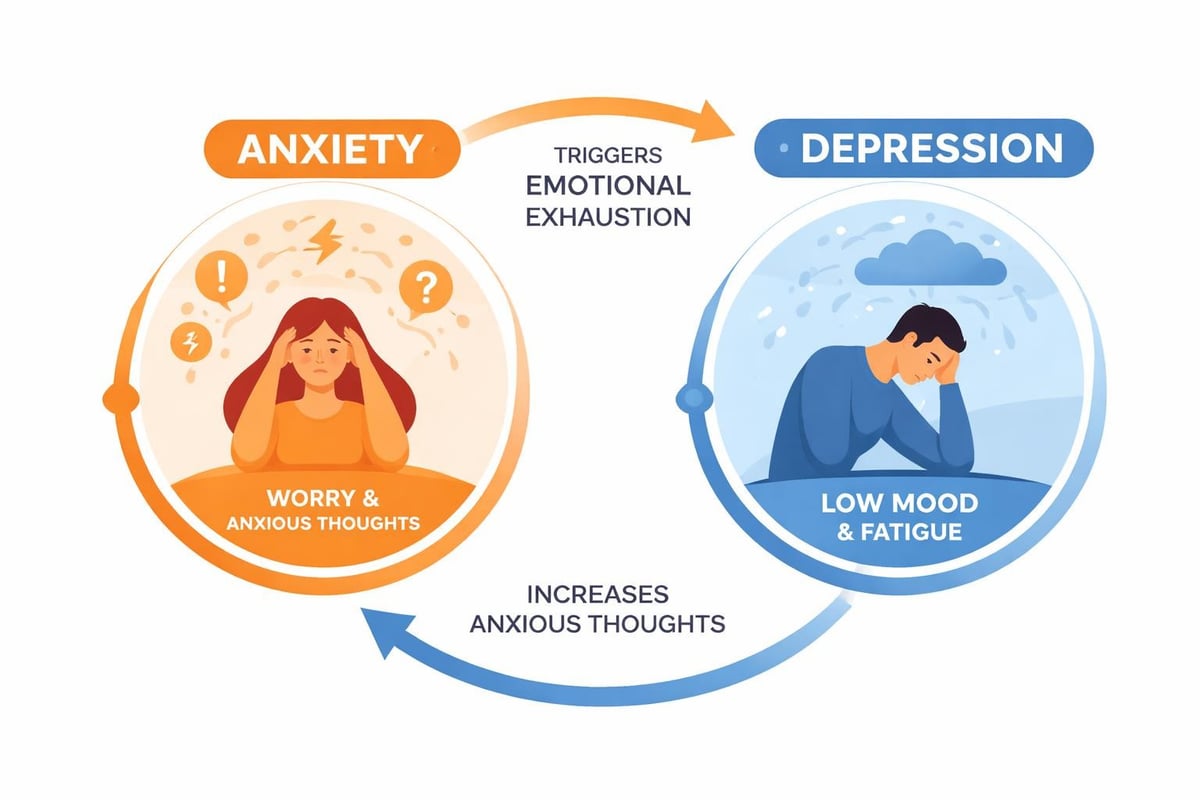
When anxiety and depression show up together, it can feel like you're stuck in quicksand. The more you struggle with anxious thoughts, the deeper the depression pulls you down. And the heavier the depression feels, the more anxiety creeps in about whether things will ever get better. If you're dealing with both at once, you're definitely not alone. Millions of people across Ontario and beyond experience these conditions simultaneously, and the good news is that anxiety depression therapy offers proven pathways to relief and recovery.
Understanding the Connection Between Anxiety and Depression
Anxiety and depression aren't just bad roommates who happen to live in the same brain. They're actually deeply connected in ways that researchers are still unpacking. When you're constantly on edge with worry, your nervous system stays in overdrive, which eventually exhausts your emotional resources and can lead to depression. Similarly, when depression saps your energy and motivation, it often triggers anxiety about your future, relationships, and ability to function.
The overlap includes:
- Shared brain chemistry involving serotonin and dopamine
- Similar thought patterns like catastrophizing and negative self-talk
- Physical symptoms such as fatigue, sleep problems, and difficulty concentrating
- Social withdrawal that reinforces both conditions
Research on information needs among individuals with depression and anxiety shows that understanding this connection is often the first step people take toward seeking help. Recognizing that these conditions feed off each other helps explain why you might feel stuck despite your best efforts to "just think positive" or "calm down."
What Anxiety Depression Therapy Actually Looks Like
So what happens when you actually start anxiety depression therapy? First off, forget any stereotypes about lying on a couch while someone takes notes and says "hmm" a lot. Modern therapy is collaborative, active, and tailored specifically to your needs and goals.
Evidence-Based Approaches That Work
Different therapeutic approaches target anxiety and depression from various angles. At Théla's individual therapy services, clinicians draw from multiple evidence-based methods to create a personalized treatment plan.
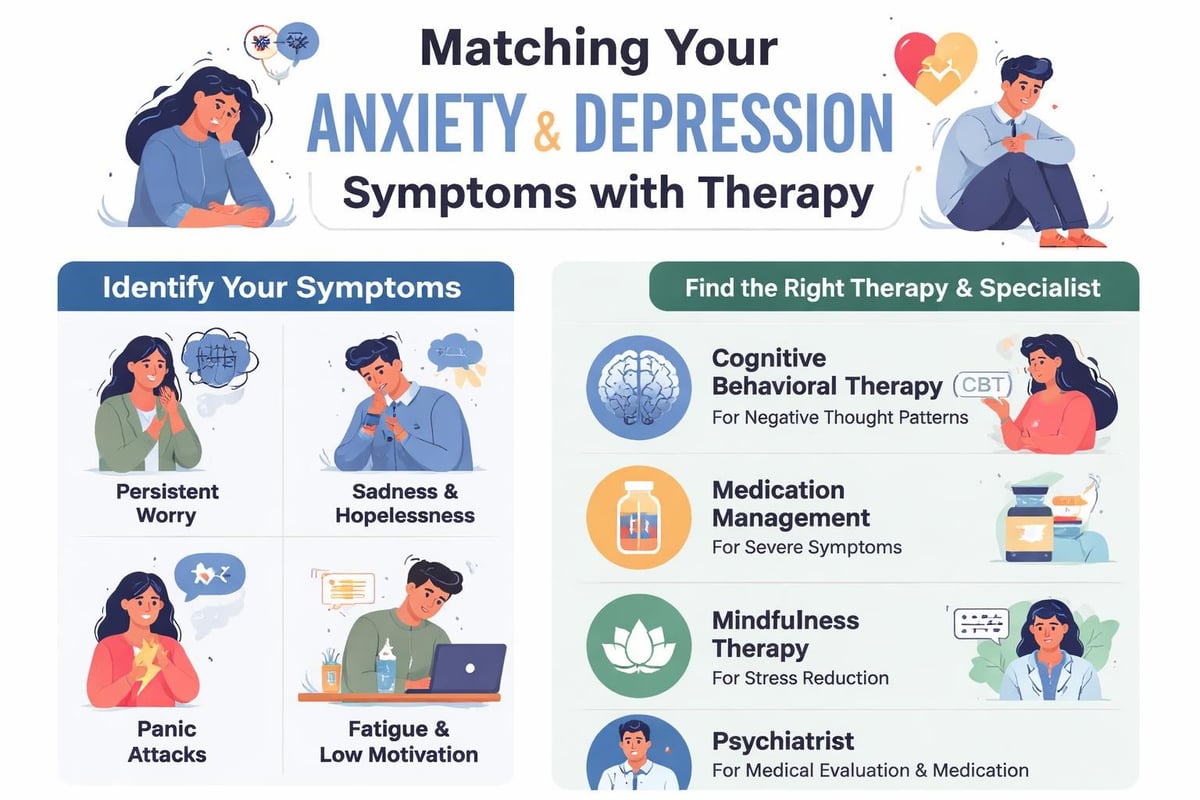
| Therapy Type | How It Helps | Best For |
|---|---|---|
| CBT | Identifies and changes negative thought patterns | Anxiety spirals, depressive thinking |
| DBT | Builds emotional regulation and distress tolerance skills | Intense emotional reactions, self-harm urges |
| EMDR | Processes traumatic memories that fuel symptoms | Trauma-related anxiety and depression |
| EFT | Explores emotional experiences and attachment patterns | Relationship-based distress |
Cognitive-behavioral therapy (CBT) remains one of the most researched and effective treatments. This comprehensive look at CBT for anxiety disorders demonstrates how identifying the connections between thoughts, feelings, and behaviors can break the cycle that keeps you stuck.
The First Few Sessions
Your initial sessions focus on building a therapeutic relationship and understanding your unique experience. Your therapist will ask about your symptoms, history, triggers, and what you've already tried. This isn't about judgment. It's about gathering information to help you most effectively.
You'll work together to set realistic goals. Maybe you want to leave the house without panic attacks, or perhaps you're aiming to get out of bed on tough days. These goals guide your treatment and help you measure progress, even when it feels slow.
Finding the Right Fit for Your Needs
Not all anxiety depression therapy is created equal, and what works brilliantly for your friend might not click for you. That's completely normal and expected.
Consider these factors when choosing:
- Therapeutic approach – Do you want structured skills-building or deeper emotional exploration?
- Therapist specialization – Some clinicians focus specifically on anxiety and depression
- Cultural responsiveness – Finding someone who understands your cultural background matters
- Accessibility – Online sessions vs. in-person, scheduling flexibility, location
The common areas that Théla Psychotherapy supports include specialized treatment for both conditions, with therapists trained in trauma-informed, culturally responsive care.
Making Therapy Work in Real Life
Starting anxiety depression therapy is one thing. Sticking with it when life gets messy is another challenge entirely. Here's the reality: therapy works, but it requires commitment and patience.
Between-Session Work
The magic doesn't just happen during your 50-minute session. Your therapist will likely suggest practices, exercises, or reflections to try between meetings. These might include thought records, breathing exercises, behavioral experiments, or emotion tracking.
Think of these as homework, but the kind that actually benefits you rather than just checking a box. When you engage with these tools outside the therapy room, you're essentially extending your session throughout the week and building new neural pathways.
Managing Setbacks
Some weeks you'll feel amazing progress. Others, you'll wonder if therapy is doing anything at all. Both experiences are normal parts of the healing journey. Understanding trauma, anxiety, and depression helps contextualize why recovery isn't linear and why setbacks don't mean failure.
Practical Considerations for Ontario Residents
If you're in Ontario, you've got options for accessing anxiety depression therapy. Coverage varies depending on your situation, but understanding your options helps remove barriers to getting started.
Coverage options include:
- Extended health benefits through employers
- OHIP-covered services (limited availability, often long waitlists)
- Private pay with potential tax deductions
- Sliding scale or affordable therapy programs
Many clinics now offer direct billing to insurance companies, which means you don't need to pay upfront and wait for reimbursement. This removes a significant financial barrier for many people seeking help.
Online vs. In-Person Sessions
Since 2020, online therapy has exploded in availability and acceptance. For anxiety depression therapy specifically, virtual sessions offer some unique advantages. You can attend from your safe space, there's no commute when you're already exhausted, and it's easier to fit into busy schedules.
That said, some people find in-person sessions more engaging and easier to focus on. The good news? You don't have to choose permanently. Many therapists offer flexibility to switch between formats based on your needs each week.
Comparing benefits and considerations of online versus in-person anxiety depression therapy for different lifestyles and needs
Additional Support Beyond Traditional Talk Therapy
Anxiety depression therapy doesn't exist in a vacuum. Complementary approaches can enhance your healing journey significantly.
Innovative Therapeutic Options
Some clinics now offer canine support therapy, where trained therapy dogs provide comfort and help regulate your nervous system during sessions. The presence of a calm, accepting animal can reduce anxiety and create a safer feeling space for difficult emotional work.
Other complementary supports might include:
- Mindfulness and meditation practices
- Exercise and movement therapy
- Nutrition counseling
- Sleep hygiene improvements
- Peer support groups
PBS offers extensive resources for understanding depression and finding additional support networks that can work alongside your therapy.
When to Seek Help Right Now
If you're wondering whether you need anxiety depression therapy or can tough it out alone, here's a helpful guideline: if your symptoms are interfering with your daily life, relationships, work, or sense of self, it's time to reach out.
Red flags that mean don't wait:
- Thoughts of self-harm or suicide
- Inability to complete basic self-care tasks
- Persistent physical symptoms without medical cause
- Substance use to cope with feelings
- Complete social isolation
You don't need to be in crisis to deserve help. Early intervention often prevents symptoms from becoming more severe and entrenched. Knowing the signs you need therapy can help you make the decision to start.
Anxiety depression therapy offers real hope and proven strategies for breaking free from the exhausting cycle of worry and low mood. Whether you're just starting to consider treatment or you've tried therapy before with mixed results, finding the right therapeutic approach and clinician makes all the difference. Théla Psychotherapy Clinic provides evidence-based, trauma-informed care both in-person in Markham and online across Ontario, creating a safe space where you can work toward genuine healing and build the skills you need for lasting mental health recovery.

Bonny Li
Contact Me
.jpg)