Let's be real - figuring out whether you need therapy isn't always straightforward. We all have bad days, moments of stress, and times when life feels overwhelming. But how do you know when it's time to reach out for professional help? Maybe you've been pushing through on your own, telling yourself things will get better, or maybe someone close to you has gently suggested you talk to someone. Whatever brought you here, you're in the right place to explore what getting support might look like for you.
Recognizing When You Need Therapy
The signs that you might benefit from professional support show up differently for everyone. Sometimes they're loud and obvious, other times they're quiet whispers you've been ignoring for months.
Common Signs It's Time to Reach Out
According to the Cleveland Clinic's guidance on therapy indicators, there are several clear signs that professional support could help. Here are some you might recognize:
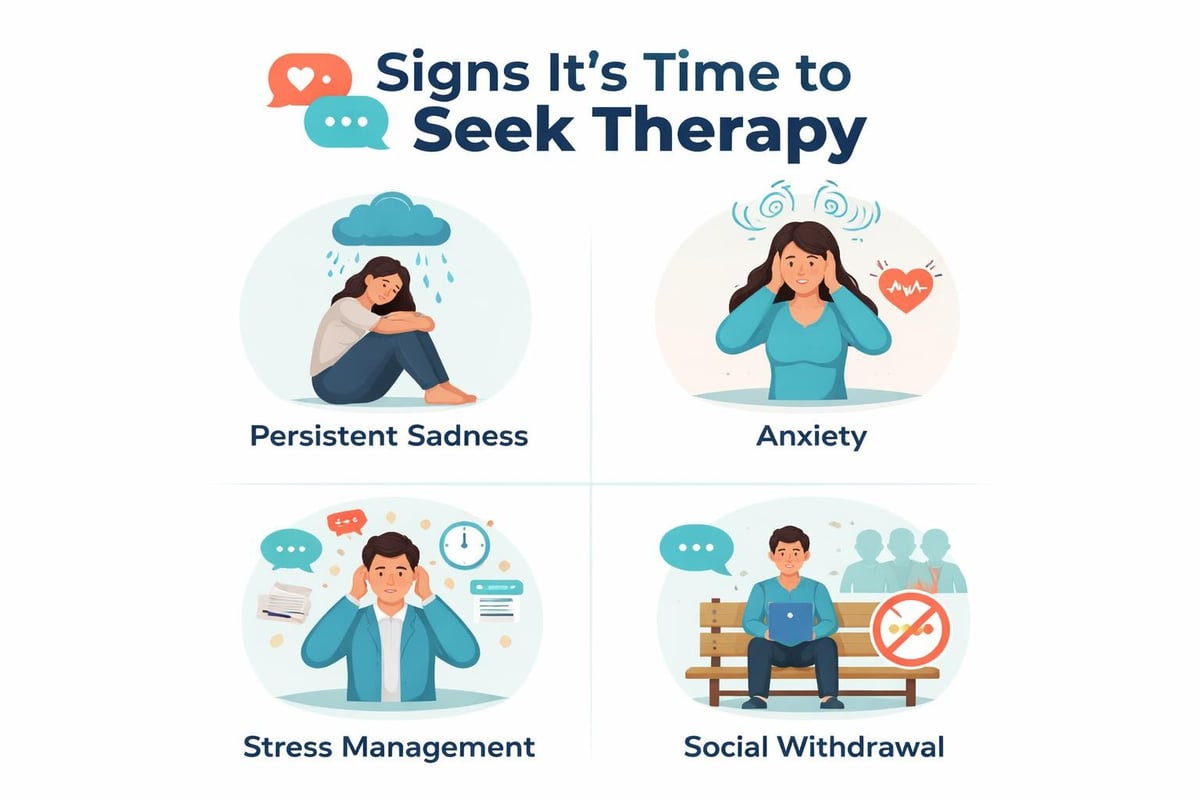
- Persistent sadness or hopelessness that doesn't lift after a few weeks
- Overwhelming anxiety that interferes with your daily routine
- Difficulty managing stress even with the usual coping strategies
- Changes in sleep or appetite that you can't explain
- Withdrawal from relationships or activities you used to enjoy
- Intense mood swings that feel out of control
You don't need to have a diagnosed condition to need therapy. Sometimes life just throws too much at you all at once - job stress, relationship struggles, family issues, or major transitions. If you're struggling to cope with daily life, that's reason enough.
The Physical Signs You Shouldn't Ignore
Here's something people don't talk about enough - mental health struggles show up in your body too. Chronic headaches, digestive issues, muscle tension, and unexplained aches can all be signs that your mental health needs attention.
| Physical Symptom | Possible Connection |
|---|---|
| Frequent headaches | Stress and tension |
| Stomach problems | Anxiety and worry |
| Fatigue | Depression or burnout |
| Muscle pain | Holding emotional stress |
| Sleep disturbances | Racing thoughts or trauma |
When your body's trying to tell you something, it's worth listening.
What Therapy Can Actually Do for You
So you're thinking you might need therapy - but what exactly will it do? Let's break down the real benefits you can expect.
Building Better Coping Skills
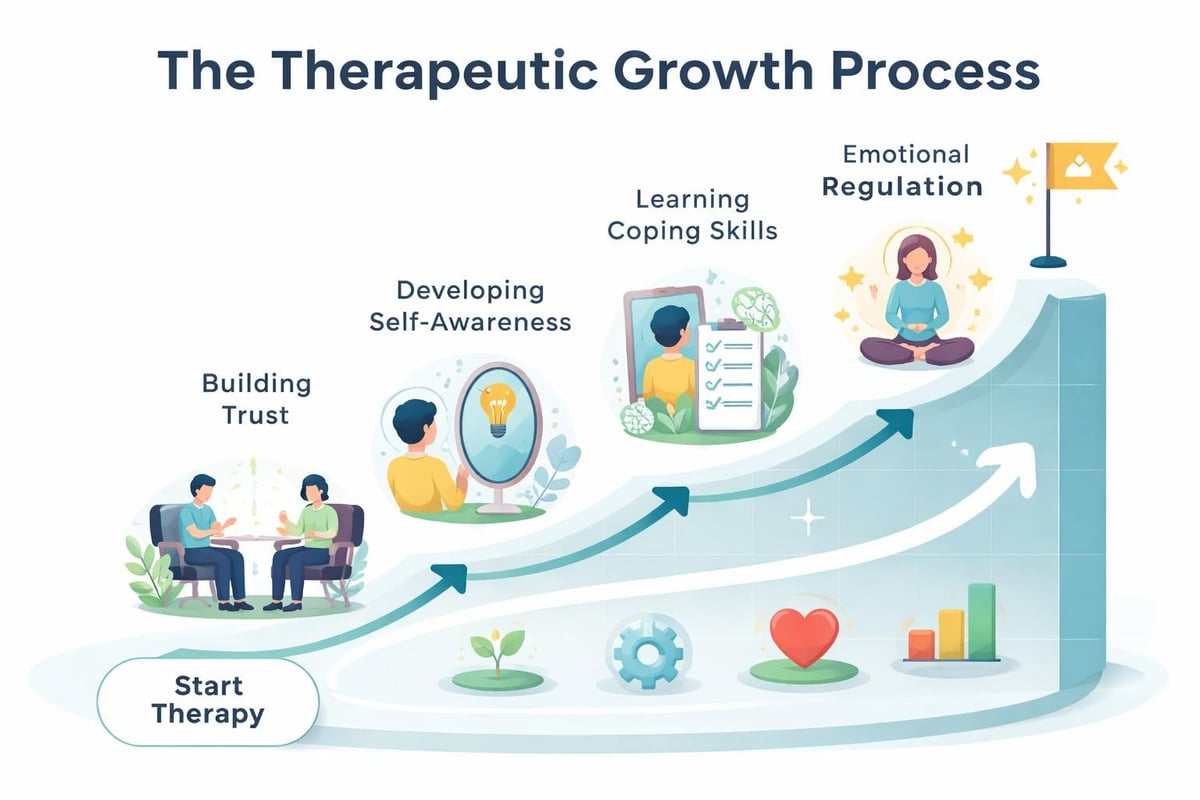
Therapy isn't just talking about your problems (though that's part of it). It's about learning new ways to handle life's challenges. The benefits of therapy include developing practical strategies for managing stress, anxiety, and difficult emotions.
At Théla Psychotherapy Clinic, therapists use evidence-based approaches like CBT, DBT, and EMDR to help you build a personalized toolkit. These aren't just theoretical concepts - they're practical skills you'll use in everyday situations.
Understanding Yourself Better
One of the most powerful aspects of therapy is gaining insight into why you think, feel, and act the way you do. You'll start recognizing patterns in your relationships, understanding your emotional triggers, and making connections between past experiences and current struggles.
This self-awareness is transformative. It helps you make better decisions, communicate more effectively, and break free from cycles that haven't been serving you.
Creating Real Change in Your Life
The rewarding benefits of therapy extend far beyond the therapy room. You might notice:
- Improved relationships with partners, family, and friends
- Better emotional regulation when things get tough
- Increased confidence in handling life's challenges
- Healthier boundaries in all areas of your life
- Greater life satisfaction overall
These changes don't happen overnight, but they do happen when you commit to the process.
Different Types of Support for Different Needs
Not all therapy looks the same, and that's a good thing. Whether you need therapy for individual struggles, relationship issues, or specific trauma, there's an approach that'll work for you.
Individual Therapy
Individual therapy for adults gives you a dedicated space to work through your personal challenges. It's just you and your therapist, focusing entirely on your needs, goals, and healing journey.
This format works well for:
- Processing past trauma
- Managing anxiety or depression
- Working through grief or loss
- Navigating major life transitions
- Building self-esteem and confidence
Couples and Relationship Therapy
Sometimes you need therapy together with your partner. Couples relationship therapy helps you address communication breakdowns, rebuild trust, and strengthen your connection.
| Individual Therapy | Couples Therapy |
|---|---|
| Focus on personal growth | Focus on relationship dynamics |
| Process individual trauma | Address shared challenges |
| Develop personal coping skills | Build communication skills together |
| Work at your own pace | Navigate change as a team |
Specialized Approaches for Specific Needs
If you've experienced trauma, EMDR trauma therapy offers a powerful way to process difficult experiences without needing to talk through every detail. This approach has helped countless people heal from PTSD, childhood trauma, and other painful experiences.
For those dealing with relationship anxiety or trauma-related challenges, specialized therapeutic approaches can make all the difference.
Taking the First Step
Here's the truth - deciding you need therapy is often the hardest part. Once you've made that decision, the next steps are actually pretty straightforward.
Finding the Right Therapist
You don't need to match with the first therapist you try. It's okay to shop around until you find someone who feels right. Look for therapists who:
- Specialize in your specific concerns
- Use approaches that resonate with you
- Make you feel heard and understood
- Offer convenient scheduling options
- Work within your budget
Many clinics, including Théla's affordable therapy program, offer sliding scale fees to make therapy accessible regardless of your financial situation.
What to Expect in Your First Session
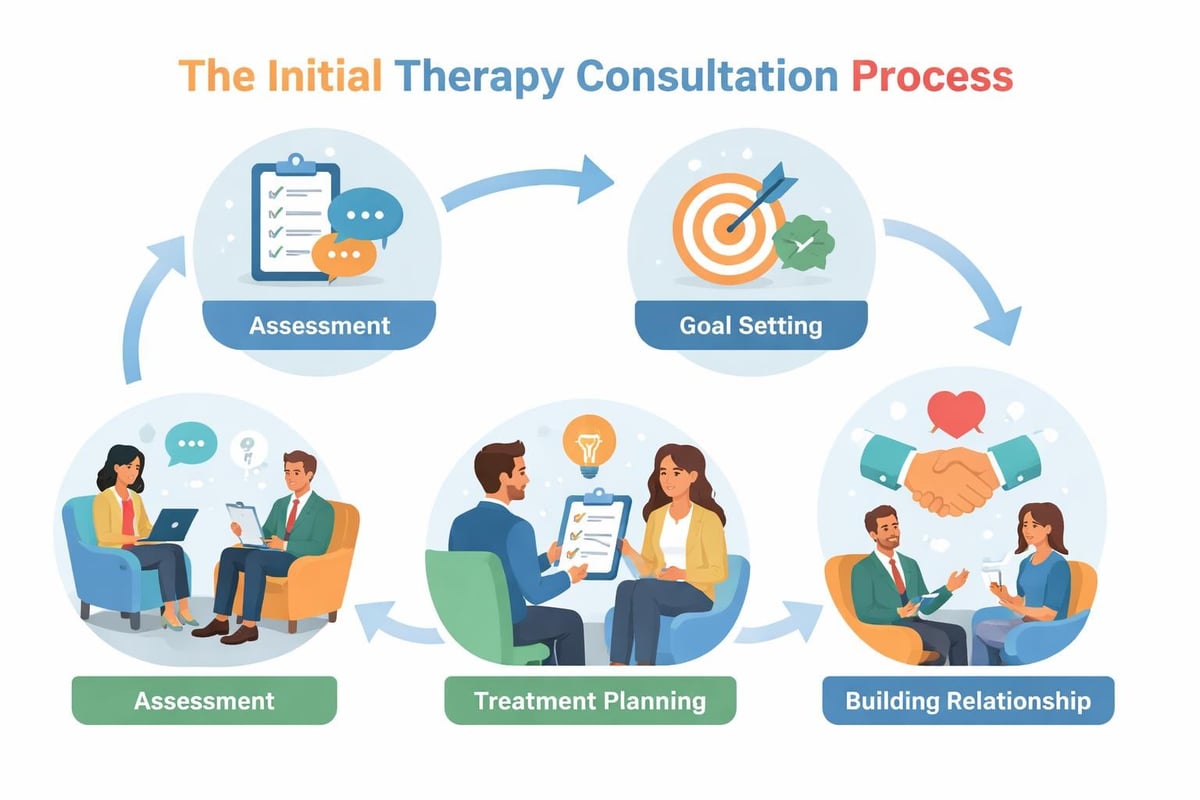
Your first therapy session is mostly about getting to know each other. Your therapist will ask about what brought you in, your history, and what you're hoping to achieve. You'll also discuss logistics like scheduling, confidentiality, and treatment approaches.
Don't worry about having everything figured out. Your therapist is there to help you make sense of things.
Making Therapy Work for You
Therapy requires commitment, but it doesn't have to take over your life. Most people start with weekly sessions, then gradually reduce frequency as they build skills and confidence.
Between sessions, you might:
- Practice new coping strategies
- Complete worksheets or exercises
- Journal about your experiences
- Notice patterns in your thoughts and behaviors
The work you do outside therapy sessions is just as important as the time you spend in them.
Overcoming Barriers to Getting Help
Even when you know you need therapy, obstacles can get in the way. Let's address some common ones.
"I can't afford therapy." Many therapists offer sliding scale fees, and some insurance plans cover mental health services. Check out insurance coverage options or ask about payment plans.
"I don't have time." Online therapy sessions make it easier than ever to fit mental health care into a busy schedule. You can meet with your therapist from home, during lunch breaks, or whenever works for you.
"I should be able to handle this myself." There's no shame in needing support. The benefits of talking therapy are well-documented, and seeking help is actually a sign of strength, not weakness.
"What will people think?" Your therapy is confidential. You don't need to tell anyone you're going unless you want to. And honestly, more people are in therapy than you'd think - they're just not broadcasting it.
Recognizing that you need therapy and actually reaching out for help are two of the most important steps you can take for your mental health and overall wellbeing. Whether you're dealing with anxiety, depression, relationship challenges, or just feeling stuck, professional support can help you move forward. Théla Psychotherapy Clinic offers compassionate, evidence-based care both in-person in Markham and online across Ontario, with therapists who understand that asking for help takes courage. Your healing journey starts with a single step - and that step might be today.

Bonny Li
Contact Me
.jpg)