When your relationship hits a rough patch, it's easy to feel stuck in the same arguments and disconnected patterns. You're not alone, and there's actually a scientifically-backed approach that's been helping couples reconnect for decades. Emotionally Focused Therapy (EFT) isn't just another relationship band-aid-it's a proven method that gets to the heart of what keeps couples apart and brings them back together. If you've been considering couples relationship therapy, understanding how eft couples therapy works might be exactly what you need to move forward.
What Makes EFT Couples Therapy Different
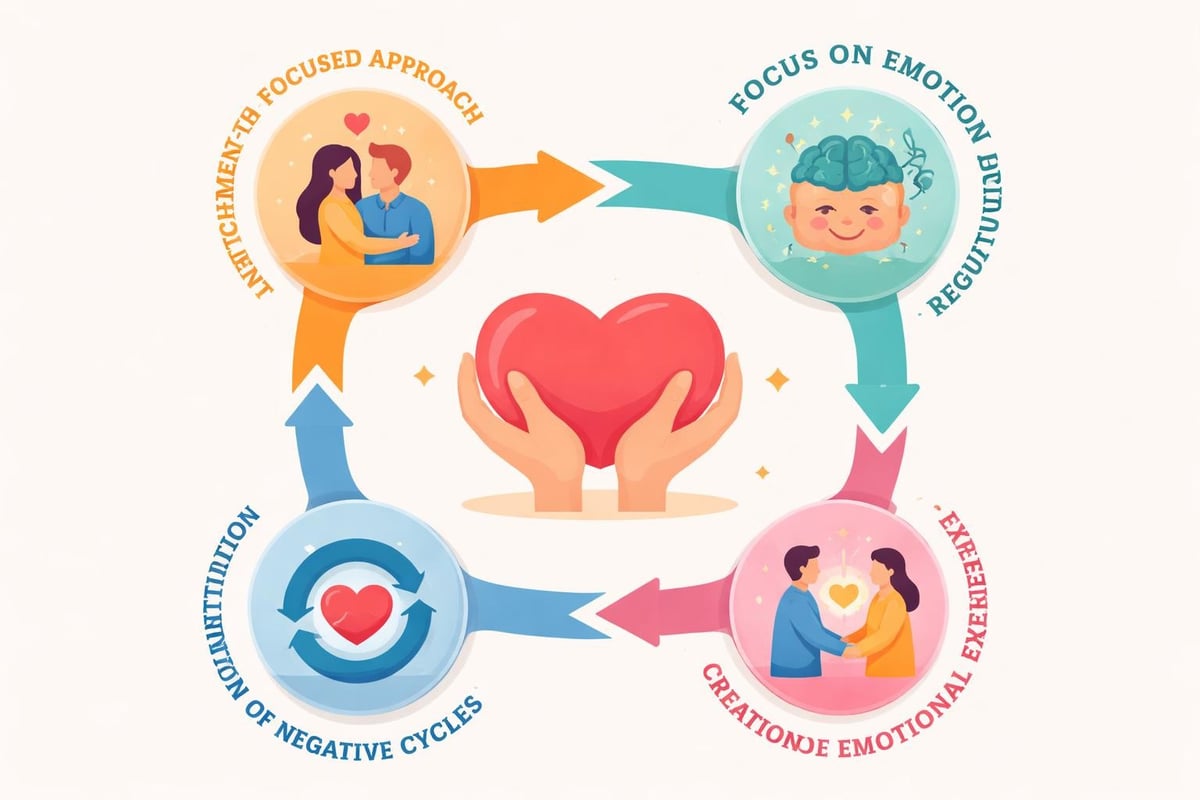
Here's the thing about eft couples therapy: it's not about teaching you communication skills or handing you a list of relationship rules to follow. Instead, this approach digs deeper into the emotional undercurrents that drive how you and your partner interact.
Developed by Dr. Sue Johnson in the 1980s, Emotionally Focused Therapy is rooted in attachment theory-the idea that we're hardwired to form deep emotional bonds with others. When those bonds feel threatened in your relationship, you might respond with criticism, withdrawal, or defensiveness without even realizing why.
The Core Principles
EFT operates on a few fundamental beliefs about relationships:
- Emotions are key: Your feelings aren't the problem-they're actually the roadmap to understanding what's really going on
- Attachment matters: We all need to feel safe and connected with our partners
- Negative patterns can change: Those frustrating cycles you're stuck in aren't permanent
The beauty of this approach is that it doesn't blame either partner. Instead, it treats the negative pattern itself as the enemy you're fighting together.
How EFT Couples Therapy Actually Works
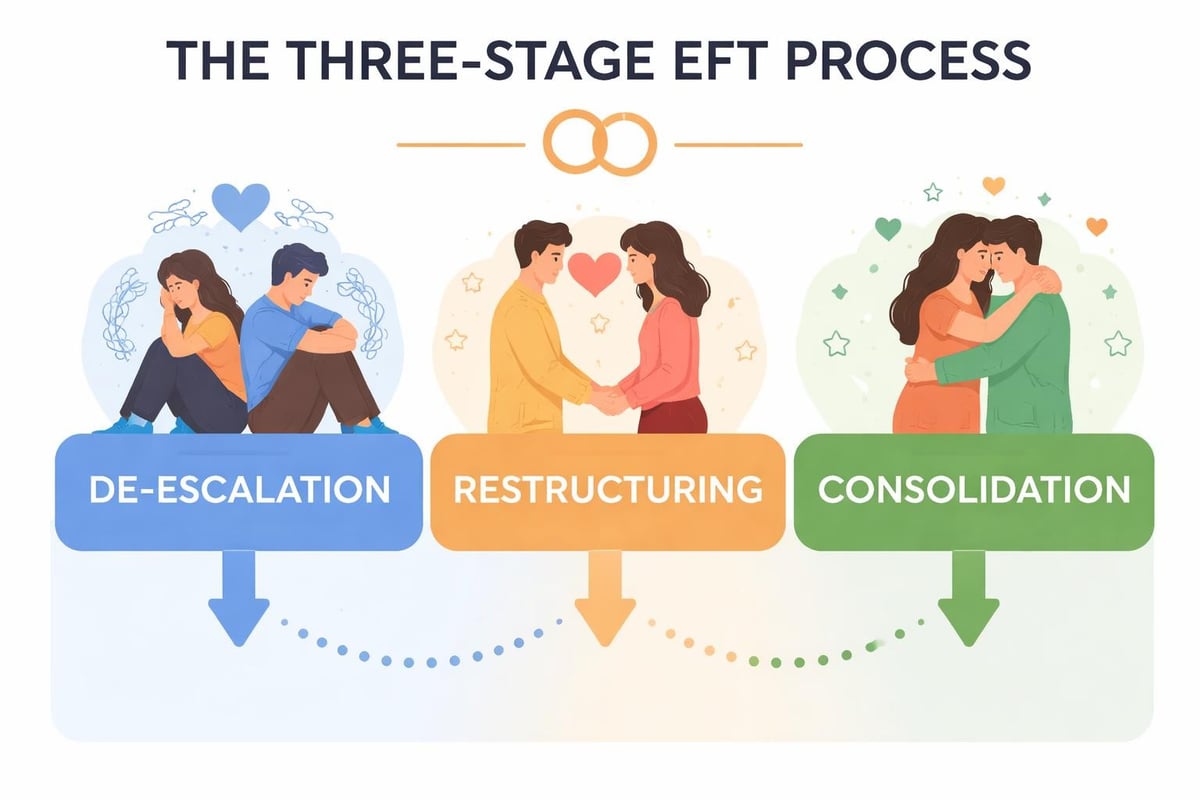
When you start working with a therapist trained in EFT techniques and approaches, you'll move through three distinct stages. Each builds on the last, creating lasting change in how you connect.
Stage One: De-escalation
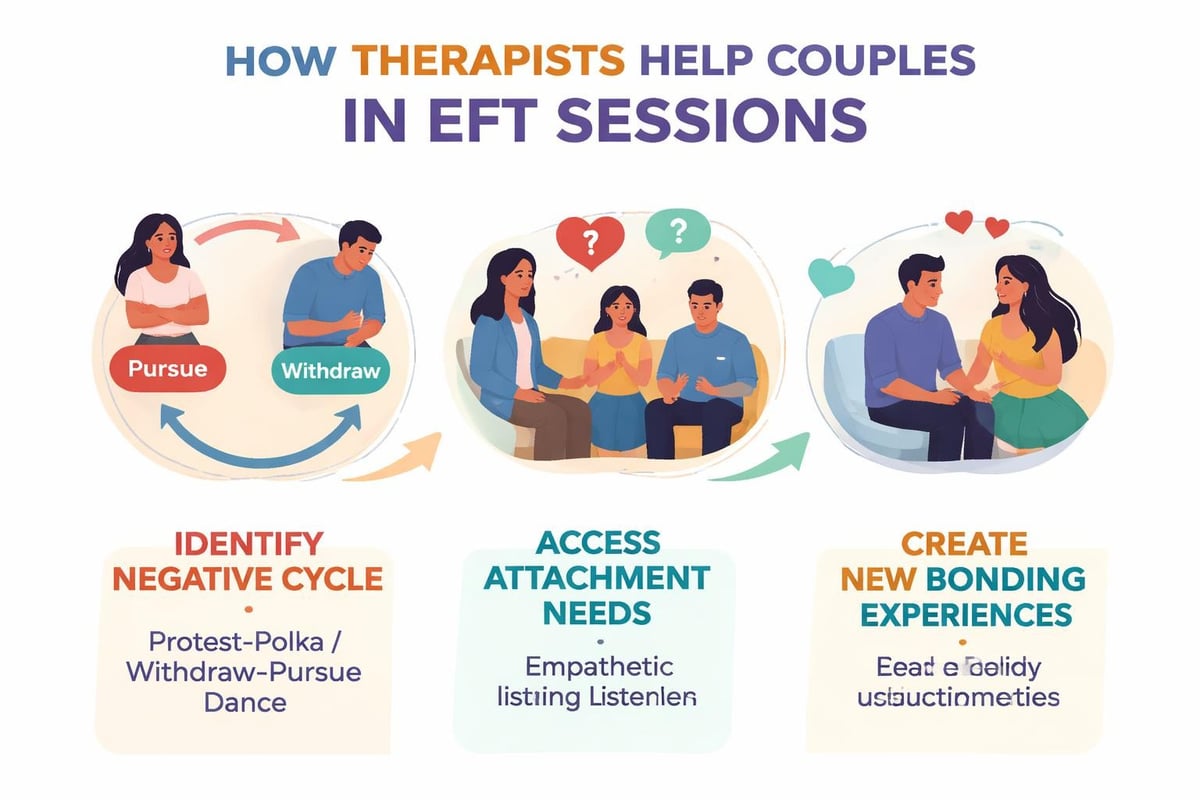
First up, you'll identify those pesky negative cycles that keep you stuck. You know the ones-where one partner criticizes, the other withdraws, which leads to more criticism, and round and round you go.
Your therapist will help you:
- Recognize your specific pattern
- Understand the emotions driving each person's reactions
- See how both of you contribute to the cycle (without blame)
Stage Two: Restructuring the Bond
This is where the real transformation happens. You'll start expressing those deeper emotions you've been protecting-the vulnerability hiding underneath the anger or the fear beneath the silence.
| What Changes | How It Helps | What You'll Notice |
|---|---|---|
| Emotional sharing | Creates intimacy | More openness between partners |
| Responsiveness | Builds security | Feeling heard and valued |
| New interactions | Breaks old patterns | Different ways of connecting |
Stage Three: Consolidation
Finally, you'll practice your new ways of relating and create solutions for ongoing challenges. The goal isn't perfection-it's having tools to reconnect when you inevitably hit bumps down the road.
What to Expect in Your Sessions
If you're wondering what actually happens in eft couples therapy sessions, let me paint you a picture. You'll typically meet with your therapist weekly or biweekly, with sessions lasting about 50-90 minutes.
Your therapist won't just sit back and take notes. They'll actively guide conversations, help you slow down heated moments, and point out patterns as they're happening. It might feel uncomfortable at first-getting vulnerable usually is-but that discomfort is where growth happens.
The International Centre for Excellence in Emotionally Focused Therapy reports that 70-75% of couples move from distress to recovery through this process. Even better? About 90% show significant improvements.
Who Benefits Most from EFT
While eft couples therapy can help almost any relationship, it's particularly effective for couples dealing with:
- Communication breakdowns and constant misunderstandings
- Trust issues after infidelity or betrayal
- Feeling disconnected or like roommates rather than partners
- Anxiety in relationships that creates insecurity
- Major life transitions causing strain
It's also worth noting that EFT isn't just for married couples. Whether you're dating, engaged, common-law, or in any committed partnership, this approach can strengthen your bond.
Getting Started with EFT
Ready to give it a shot? Finding a qualified therapist matters. Look for someone specifically trained in EFT-not all couples therapists use this method, even though many therapeutic services incorporate evidence-based approaches.
Questions to Ask Potential Therapists
When you're reaching out to therapists, here's what you'll want to know:
- Are you certified in EFT or working toward certification?
- How many couples have you worked with using this approach?
- What does your typical treatment timeline look like?
- Do you offer online sessions if needed?
Most couples complete eft couples therapy in 8-20 sessions, though your journey might be shorter or longer depending on your specific situation.
Understanding the Research Behind EFT
One thing that sets this approach apart is the solid research backing it up. According to comprehensive studies on EFT effectiveness, it's one of the most empirically validated approaches to couples therapy available today.
The science shows that changes made in eft couples therapy tend to stick around. Unlike approaches that focus only on behavior modification, EFT creates fundamental shifts in how partners relate to each other emotionally.
Combining EFT with Other Approaches
At many clinics offering comprehensive therapeutic care, eft couples therapy can work alongside other evidence-based treatments. For instance, if individual trauma is affecting your relationship, combining EFT with EMDR trauma therapy might accelerate healing.
The trauma-informed approach recognizes that past experiences shape how we show up in relationships today. By addressing both individual healing and relational patterns, you're setting yourselves up for deeper, more lasting change.
Making the Most of Your EFT Journey
Success in eft couples therapy isn't just about showing up to sessions. Between appointments, you'll want to practice the new ways of connecting you're learning. That might mean having vulnerable conversations at home, noticing when old patterns start creeping back in, or using EFT worksheets and resources your therapist provides.
Be patient with yourselves. Changing long-standing patterns takes time, and you'll probably stumble occasionally. That's completely normal and expected. The goal is progress, not perfection.
Your therapist might also suggest checking out additional resources from organizations like the EFT Center of Los Angeles to deepen your understanding between sessions. Some couples find that reading about the approach together helps them stay motivated when therapy feels challenging.
EFT couples therapy offers a powerful, research-backed path toward reconnection by addressing the emotional bonds that either strengthen or strain your relationship. If you're ready to break free from negative patterns and rebuild a secure, loving partnership, Théla Psychotherapy Clinic provides culturally responsive couples counselling both in-person in Markham and online across Ontario, with therapists trained in evidence-based approaches including EFT to support your unique journey toward healing and growth.

Bonny Li
Contact Me