
You know that feeling when your emotions seem to have a mind of their own? One minute you're fine, the next you're overwhelmed by anger, sadness, or anxiety that feels impossible to control. That's emotional dysregulation at work, and if you've experienced it, you're definitely not alone. It's more common than most people realize, and understanding what's happening can be the first step toward feeling more balanced and in control of your emotional life.
What Emotional Dysregulation Actually Means
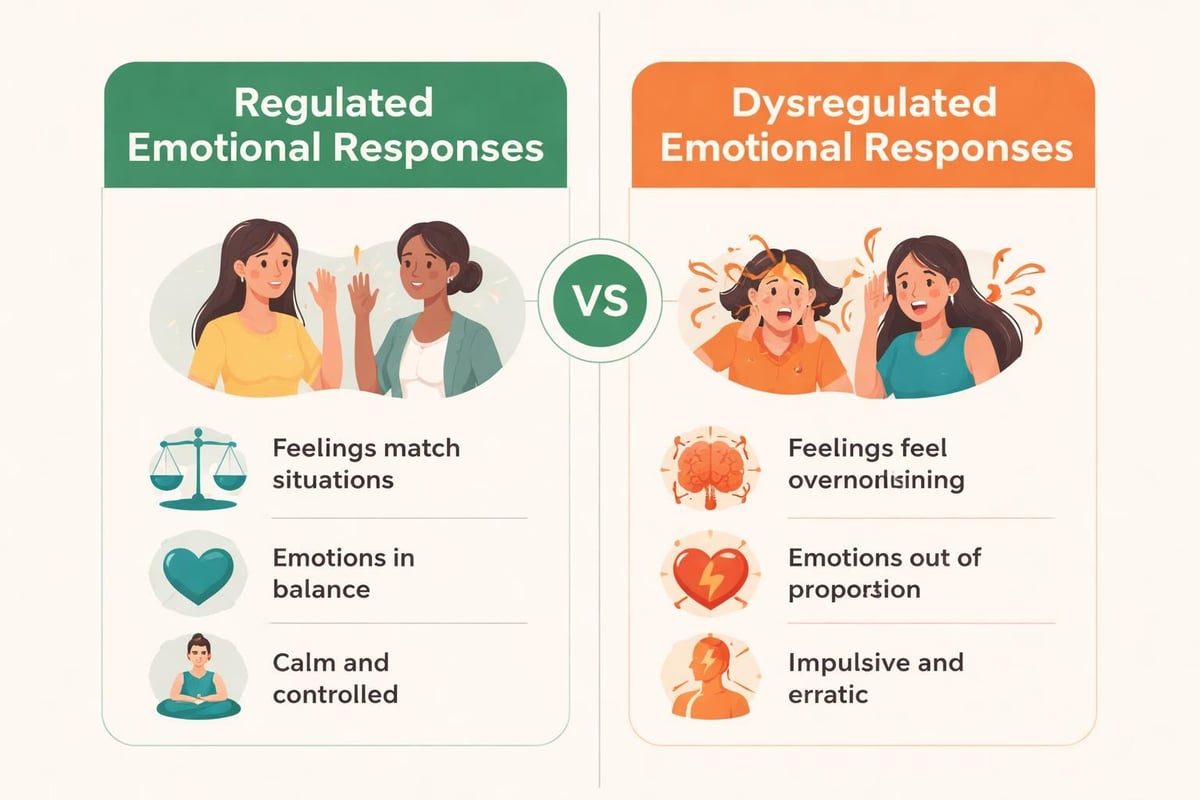
Emotional dysregulation happens when you struggle to manage your emotional responses in ways that match the situation you're in. It's not just about feeling strong emotions-we all have those. It's about emotions that feel too big, last too long, or change too quickly for you to handle effectively.
Think of it like your emotional thermostat is broken. Instead of adjusting gradually to what's happening around you, your feelings spike from zero to 100 in seconds, or they stay stuck on high even when the stressful moment has passed.
Common Signs You Might Notice
- Intense mood swings that seem to come out of nowhere
- Difficulty calming down once you're upset
- Emotions that feel way bigger than the situation calls for
- Impulsive reactions you regret later
- Trouble identifying what you're actually feeling
People experiencing emotional dysregulation often describe feeling like they're at the mercy of their emotions rather than being able to work with them. It's exhausting, and it can affect everything from your relationships to your work performance and overall well-being.
Where It Comes From
Understanding the roots of emotional dysregulation can help you approach it with more compassion for yourself. Research on adverse childhood experiences and emotion dysregulation shows strong connections between early life experiences and how we manage emotions as adults.
Childhood experiences play a huge role. If you grew up in an environment where emotions weren't acknowledged or validated, you might not have learned healthy ways to process feelings. Maybe expressing emotions led to punishment or dismissal, so you learned to suppress them until they exploded.
Studies on parental emotion dysregulation demonstrate how this pattern can be passed down through generations. When parents struggle with their own emotional regulation, children often don't get the modeling they need to develop these skills naturally.
Trauma is another major contributor. Your brain's alarm system can become overactive after traumatic experiences, making it harder to regulate intense emotions when they arise. This is where trauma-informed therapeutic approaches become especially valuable.
| Contributing Factor | How It Affects Regulation | What Helps |
|---|---|---|
| Childhood invalidation | Never learned to name/process emotions | Validation and skill-building |
| Trauma history | Overactive stress response | Trauma therapy (EMDR, EFT) |
| Neurological differences | Heightened emotional sensitivity | DBT skills and medication |
| Attachment disruptions | Difficulty with emotional safety | Relationship-focused therapy |
How It Shows Up in Daily Life
Emotional dysregulation doesn't look the same for everyone. For some people, it's explosive anger that damages relationships. For others, it's shutting down completely and going numb. Both extremes are forms of dysregulation.
You might notice it in your relationships. When your partner says something mildly critical, you might feel devastated or furious in a way that surprises even you. Or you might find yourself cutting people off completely after small conflicts because the emotional intensity feels unbearable.
At work, emotional dysregulation can make feedback feel like a personal attack, leading to defensive reactions or quitting jobs impulsively. The anxiety that comes with emotional dysregulation can make everyday stressors feel overwhelming.
The Ripple Effects
- Relationship strain from unpredictable reactions
- Self-esteem issues from feeling out of control
- Avoidance behaviors to prevent emotional situations
- Physical symptoms like headaches and digestive issues
- Decision-making difficulties when emotions cloud judgment
Research on emotion dysregulation in families shows how these patterns affect entire family systems, making it crucial to address for your own wellbeing and that of those around you.
What Actually Helps
Here's the good news: emotional regulation is a skill you can learn, even if you didn't develop it naturally in childhood. It takes practice, but change is absolutely possible.
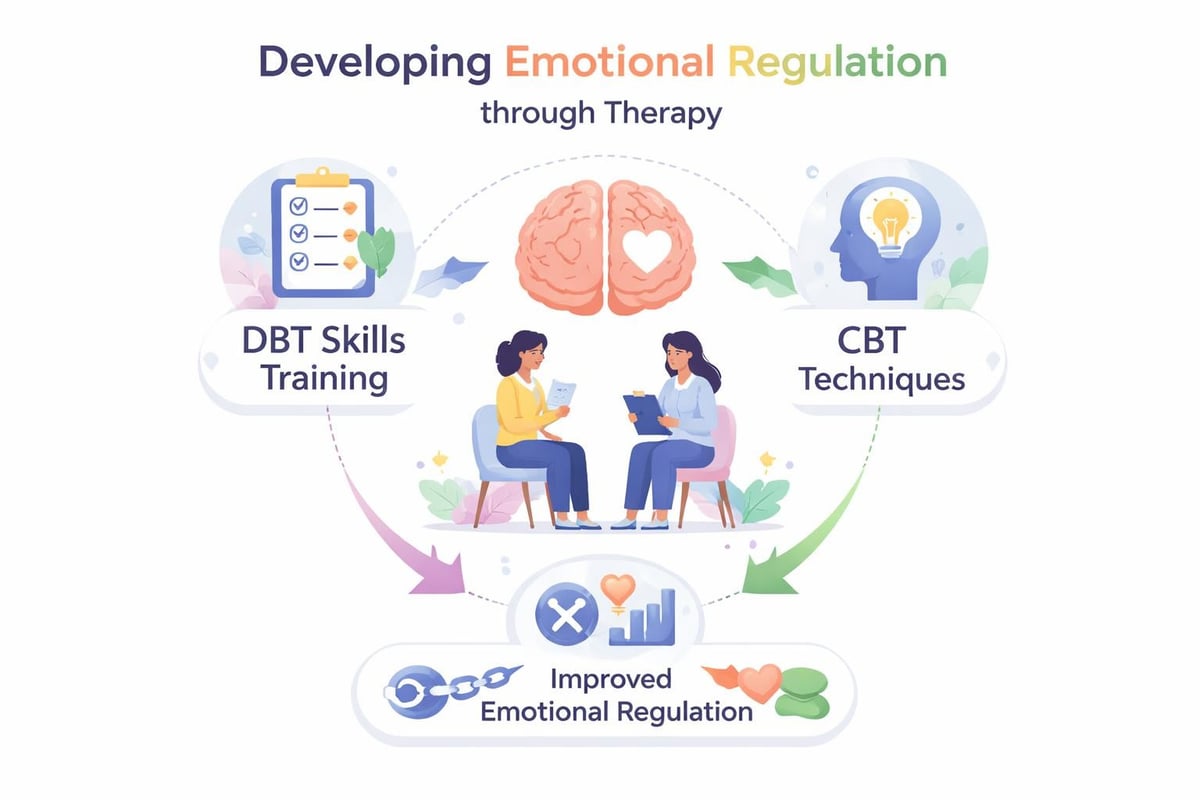
Dialectical Behavior Therapy (DBT) is specifically designed to teach emotional regulation skills. It's not just about managing symptoms-it's about building a whole new toolkit for handling intense emotions. Services focused on evidence-based approaches often incorporate DBT because of how effective it is.
The core DBT skills include:
- Mindfulness to notice emotions without being overwhelmed by them
- Distress tolerance for riding out emotional storms safely
- Emotion regulation techniques to change emotional responses
- Interpersonal effectiveness for handling relationship conflicts
Cognitive Behavioral Therapy (CBT) helps you identify the thoughts that intensify emotions and develop more balanced ways of thinking. When you can catch the thought spiral early, you can often prevent the emotional escalation. Learn more about how CBT works in practice.
Trauma processing through EMDR or EFT can be transformative when emotional dysregulation stems from past traumatic experiences. These approaches help your brain process stuck memories so they stop triggering such intense present-day reactions.
Building Your Regulation Practice
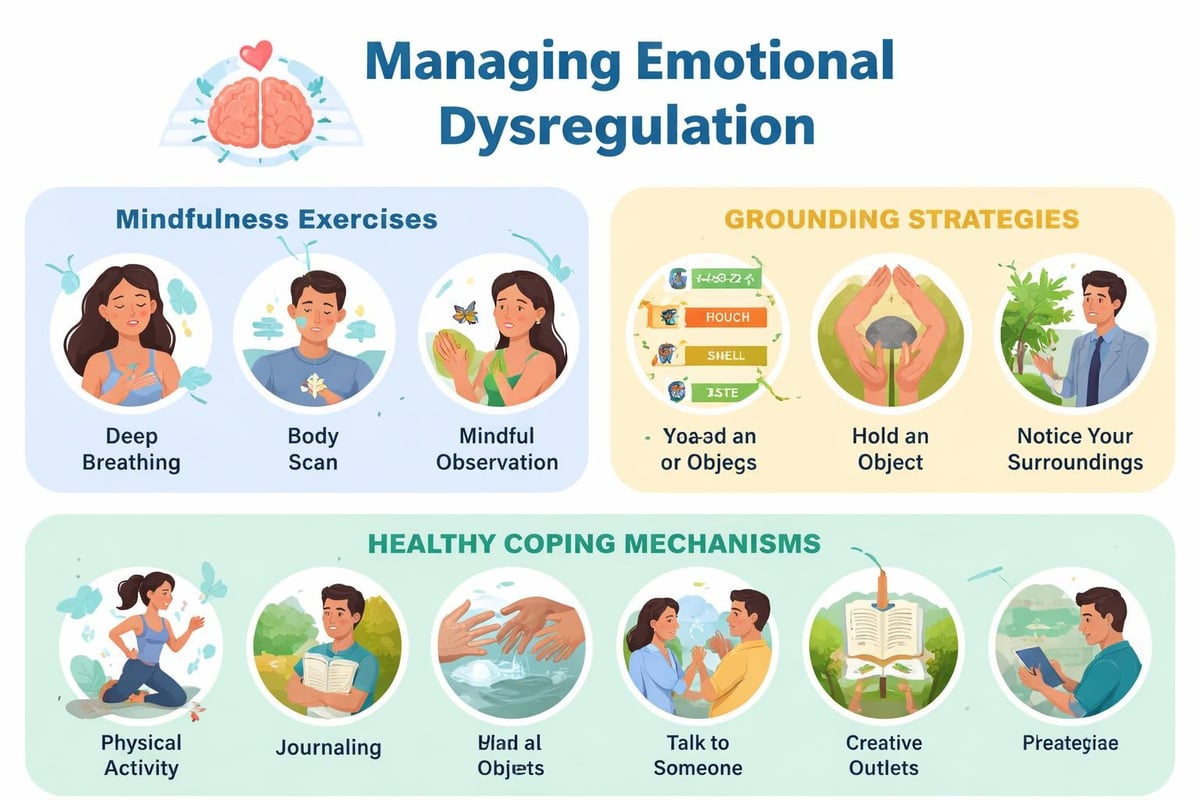
Between therapy sessions, there's a lot you can do to strengthen your emotional regulation muscles. These aren't quick fixes, but consistent practice makes a real difference.
Start by naming what you feel. It sounds simple, but research shows that labeling emotions actually reduces their intensity. Instead of "I feel bad," try "I feel disappointed and a little anxious about how this turned out."
Create space between feeling and reacting. Even a few seconds can help. Try the STOP skill from DBT: Stop, Take a step back, Observe what's happening, Proceed mindfully.
| Strategy | When to Use It | Why It Works |
|---|---|---|
| Deep breathing | During emotional spikes | Activates calming nervous system |
| Grounding techniques | When feeling overwhelmed | Brings you back to present moment |
| Opposite action | When emotions don't fit facts | Breaks unhelpful emotional patterns |
| Self-validation | After intense reactions | Reduces shame and secondary emotions |
Physical self-care matters more than you might think. Sleep, nutrition, and movement all affect your emotional baseline. When you're exhausted or hungry, emotional dysregulation gets worse. It's not about being perfect-it's about recognizing these connections.
Understanding interventions for emotion dysregulation helps clarify which approaches work best for different situations and age groups.
The Role of Relationships in Healing
You can't regulate emotions in isolation. We're wired for connection, and relationships are where we often first learn (or fail to learn) regulation skills. They're also where we can heal.
Working on emotional dysregulation often means addressing relationship patterns. Couples therapy can help when your dysregulation affects your partnership, teaching both people how to respond to intense emotions more effectively.
For parents struggling with emotional dysregulation, understanding how parenting styles affect children's emotional development can be eye-opening. Breaking the cycle means developing your own skills while consciously modeling healthy regulation for your kids.
Safe relationships provide the context for practicing new skills. A therapist who gets it, a partner willing to learn alongside you, or family relationship counselling can all create the safety needed for emotional growth.
Sometimes the most powerful healing happens when someone simply validates your experience without trying to fix it. That validation can quiet the emotional storm in ways that logic never could.
Moving Forward with Self-Compassion
If you're struggling with emotional dysregulation, please know that it doesn't mean you're broken or weak. Your nervous system learned to respond this way for a reason, probably to protect you at some point. Now you're learning new ways to feel safe and manage what comes up.
Progress isn't linear. You'll have days when you handle things beautifully and days when you react in old patterns. That's normal and expected. What matters is the overall trajectory, not perfection.
Getting professional support can make a huge difference. Therapists trained in trauma-informed, evidence-based approaches understand that emotional dysregulation isn't about willpower-it's about building skills you may never have had the chance to develop.
The journey toward better emotional regulation is worth it. Imagine feeling like your emotions are information rather than emergencies, like you can trust yourself to handle whatever feelings arise. That's not just possible-it's what you deserve.
Learning to regulate your emotions takes time, patience, and the right support, but it can genuinely transform how you experience daily life. At Théla Psychotherapy Clinic, our trauma-informed therapists use evidence-based approaches like DBT, CBT, and EMDR to help you develop the emotional regulation skills that fit your unique needs. Whether you're in Markham or anywhere across Ontario, we're here to create a safe space for your healing journey.

Bonny Li
Contact Me
.jpg)

