If you're dealing with anxiety, depression, or both at the same time, you already know how exhausting it can be. The racing thoughts, the heaviness that makes getting out of bed feel impossible, the way everything feels overwhelming. You're not imagining it, and you're definitely not alone. Finding a therapist for anxiety and depression can feel like one more impossible task when you're already running on empty, but it's often the turning point that changes everything.
Why Working with a Specialized Therapist Matters
Not all therapy is created equal, and when you're dealing with anxiety and depression, you want someone who really gets it. A therapist for anxiety and depression brings specific training and experience to help you understand what's happening in your brain and body, not just surface-level coping strategies.
These conditions often show up together, which therapists call "comorbidity." Your anxiety might fuel your depression, or your depression might make your anxiety worse. It's a frustrating cycle, but a skilled therapist knows how to interrupt it.
What Evidence-Based Approaches Actually Help
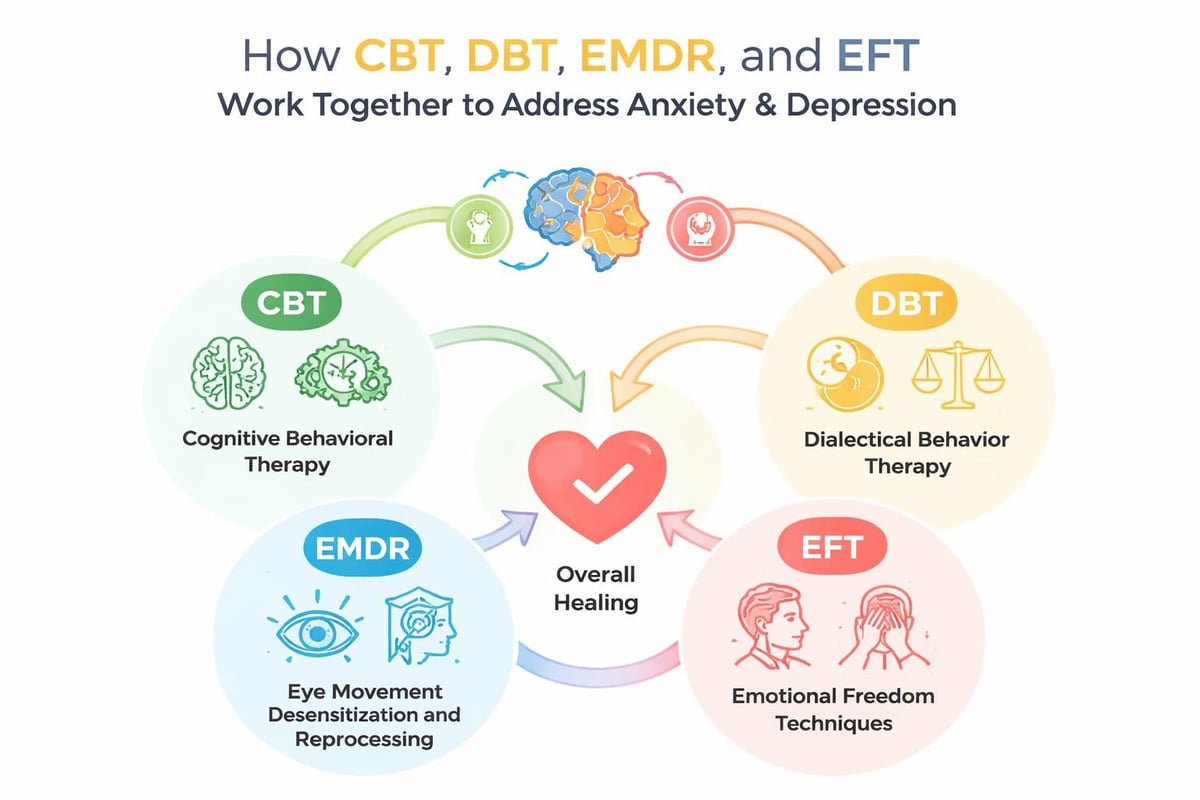
When you're looking for support, you'll hear a lot of acronyms thrown around. Here's what actually works, according to research:
- Cognitive Behavioral Therapy (CBT) helps you identify and change thought patterns that keep you stuck
- Dialectical Behavior Therapy (DBT) teaches emotional regulation and distress tolerance skills
- Eye Movement Desensitization and Reprocessing (EMDR) processes trauma that might be feeding your symptoms
- Emotionally Focused Therapy (EFT) addresses how your emotions and relationships interact
Proven therapy approaches for depression and anxiety have been extensively studied, and the good news is that they genuinely work when you find the right fit.
What to Look for When Choosing Your Therapist
Finding the right therapist for anxiety and depression isn't just about credentials (though those matter too). It's about finding someone you actually trust enough to be vulnerable with.
| Factor | Why It Matters | Questions to Ask |
|---|---|---|
| Specialization | Experience with your specific struggles | "How often do you work with anxiety and depression?" |
| Approach | Different methods work for different people | "What therapeutic approaches do you use?" |
| Cultural competency | Feeling understood in your full context | "Do you have experience with my background?" |
| Logistics | Consistency is key to progress | "What's your availability and session format?" |
When exploring mental health therapy options, remember that the therapeutic relationship itself is one of the biggest predictors of success. If something feels off after a few sessions, that's valuable information.
The First Session and What Comes After
Your first appointment with a therapist for anxiety and depression is mostly about getting to know each other. You'll talk about what brought you in, what you've tried before, and what you're hoping will change. Don't worry about having everything perfectly articulated. Your therapist is trained to help you make sense of the tangle.
Most people start noticing small shifts within the first month, though deeper healing takes longer. That's completely normal.
Trauma-Informed and Culturally Responsive Care
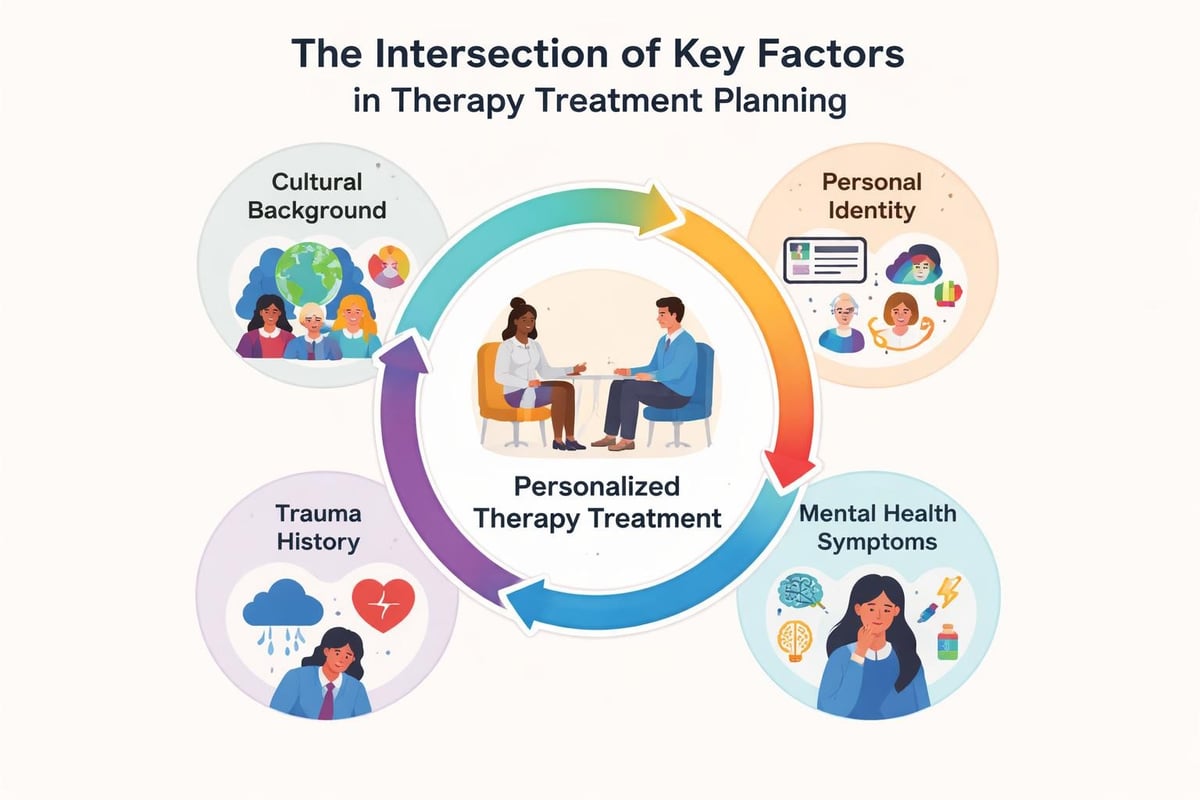
Here's something that doesn't get talked about enough: your anxiety and depression don't exist in a vacuum. Your experiences, your culture, your identity, all of it matters. Trauma-informed care means your therapist understands how past experiences shape your current symptoms without you having to relive everything in detail right away.
The common areas therapists support often include trauma, relationship issues, and identity-related stress alongside anxiety and depression. If you've experienced discrimination, family conflict, or cultural disconnection, working with someone who gets that context makes a huge difference.
Making Therapy Accessible in Ontario
Let's talk about the practical stuff. Therapy can be expensive, and that's a real barrier for a lot of people. In Ontario, there are more options than you might think.
Coverage Options:
- Extended health insurance through work
- Employee Assistance Programs (EAPs)
- OHIP-covered services through family doctors or community clinics
- Sliding scale or reduced-fee programs at some clinics
Direct billing options can make things easier by handling insurance claims for you, and some clinics offer affordable therapy programs specifically designed to increase access.
If you're wondering whether you need therapy at all, trust your gut. If you're asking the question, that's usually a sign that talking to someone could help.
Online vs. In-Person Therapy
One of the biggest changes in 2026 is how normal online therapy has become. For anxiety especially, not having to commute or sit in a waiting room can actually make it easier to show up consistently.
| Format | Pros | Best For |
|---|---|---|
| In-person | Full body language, physical presence | Those who connect better face-to-face |
| Online | Convenience, accessibility, comfort of home | Busy schedules, rural areas, social anxiety |
| Hybrid | Flexibility to switch as needed | People with variable energy levels |
Both formats are equally effective for treating anxiety and depression when you're working with a qualified professional.
Special Approaches That Can Help
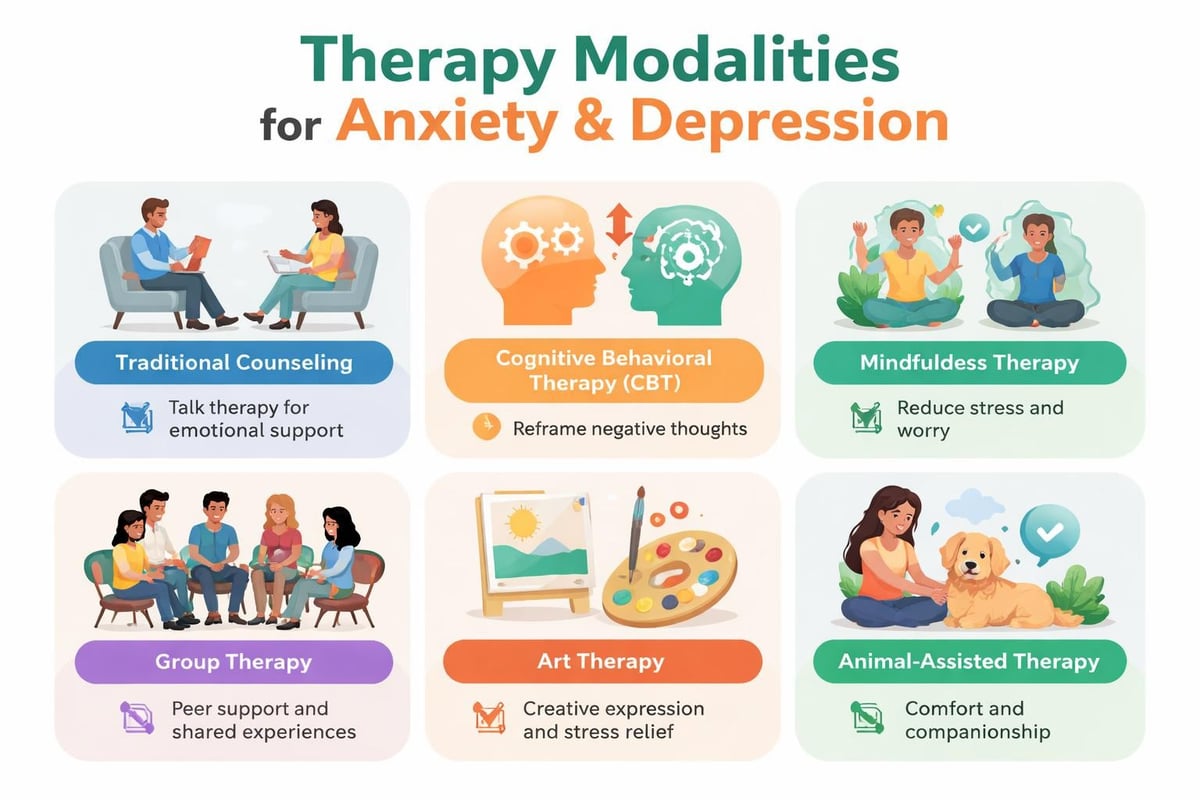
Beyond traditional talk therapy, there are some additional approaches worth knowing about. Canine support therapy uses the calming presence of therapy dogs to help regulate your nervous system during sessions. It sounds simple, but the research backs up what many people feel instinctively: animals help.
For couples where one or both partners are struggling, relationship therapy can address how anxiety and depression affect your partnership. Sometimes the relationship itself needs support to weather mental health challenges.
International resources like MindSwiss show how therapy is evolving globally to be more accessible and culturally diverse, offering support in multiple languages to meet people where they are.
Getting Started with Your Search
When you're ready to find a therapist for anxiety and depression, start with these practical steps:
- Check what your insurance covers and get any required referrals
- Use directories like Anxiety.org's therapist finder to search by location and specialty
- Read therapist bios carefully, looking for mentioned experience with your specific concerns
- Book consultations with 2-3 therapists if possible to compare your comfort level
- Ask about their experience with anxiety treatment approaches during your first call
Understanding counselling for anxiety and depression helps you know what to expect from the process. It's okay to have questions, and good therapists welcome them.
What Your Therapy Journey Might Look Like
Your path through therapy won't look exactly like anyone else's, but here's a general framework:
Months 1-2: Building trust, identifying patterns, learning initial coping skills
Months 3-6: Deeper work on root causes, practicing new behaviors, processing difficult emotions
Months 6+: Consolidating gains, addressing setbacks, working toward sustained wellness
Some people need a few months of focused work, while others benefit from longer-term support. There's no "right" timeline for healing.
Finding the right therapist for anxiety and depression is one of the most important investments you can make in your wellbeing, and it doesn't have to be a solo journey. Whether you're dealing with racing thoughts, overwhelming sadness, or both, professional support can help you understand what's happening and build genuine, lasting relief. Théla Psychotherapy Clinic offers trauma-informed, culturally responsive care using evidence-based approaches like CBT, DBT, EMDR, and EFT, with options for in-person sessions in Markham or online therapy throughout Ontario. Ready to take that first step toward feeling like yourself again?

Bonny Li
Contact Me
.jpg)