Living with depression and anxiety can feel incredibly isolating. You're dealing with racing thoughts, crushing sadness, or that constant knot in your stomach, and it seems like nobody truly gets it. But here's something that might surprise you: you're definitely not alone in this struggle. A depression anxiety support group can become one of your most powerful tools for healing, offering connection, understanding, and practical strategies from people who genuinely understand what you're going through.
What Makes a Depression Anxiety Support Group Different
You might be wondering how sitting in a room with other people (or logging into a virtual meeting) could possibly help your mental health. It's a fair question.
Support groups aren't therapy sessions, though they complement therapeutic work beautifully. They're spaces where people with similar experiences come together to share, listen, and support each other. Think of it as the difference between talking to someone who's read about swimming and someone who's actually jumped into the deep end.
The Core Benefits You'll Experience
When you join a depression anxiety support group, you're tapping into something research has shown to be incredibly effective. Understanding how people with depression and anxiety seek information reveals that peer support plays a crucial role in managing mental health conditions.
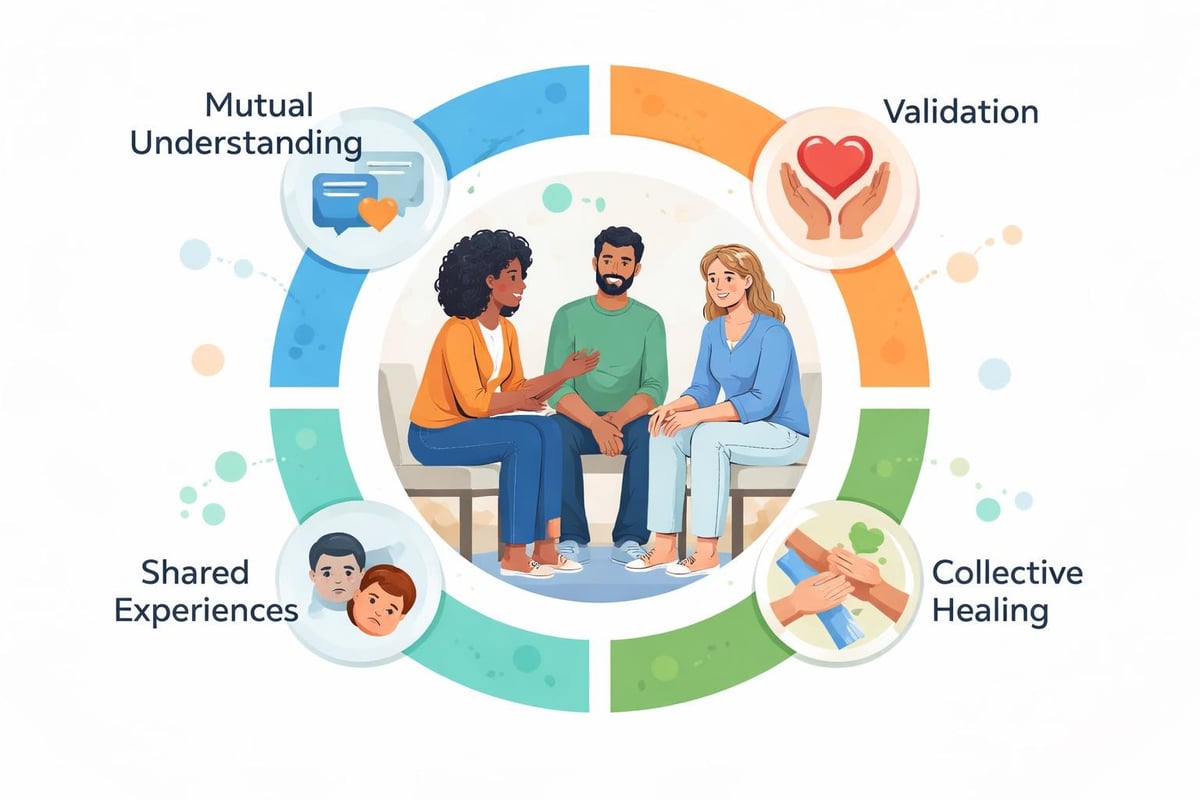
- Reduced isolation through connecting with others who truly understand
- Practical coping strategies that members have tested in real life
- Validation that your experiences and feelings are legitimate
- Accountability to help you stick with healthy habits
- Hope from seeing others at different stages of recovery
The beautiful thing about these groups is that everyone contributes. You're not just receiving support, you're giving it too, which can be incredibly empowering when depression and anxiety make you feel helpless.
Types of Depression Anxiety Support Groups Available
Not all support groups work the same way, and that's actually a good thing. You've got options to find what fits your personality and needs.
| Group Type | Format | Best For |
|---|---|---|
| Peer-Led | Members facilitate discussions | Those seeking authentic shared experiences |
| Professionally Facilitated | Therapist or counselor guides sessions | People wanting structured, expert-guided support |
| Online Communities | Virtual meetings or forums | Those with scheduling conflicts or mobility concerns |
| In-Person Meetings | Face-to-face gatherings | People preferring direct human connection |
Finding the Right Fit for Your Journey
Exploring various depression support groups shows there's incredible variety out there. Some groups focus specifically on anxiety, others on depression, and many address both conditions together since they often co-occur.
Professional facilitation offers structure and expertise. At clinics like Théla Psychotherapy Clinic, you'll find therapeutic services that complement support group participation, creating a comprehensive approach to mental health care.
Peer-led groups bring raw authenticity. There's something powerful about learning from someone who's navigated the same dark waters you're swimming through right now.
What to Expect in Your First Sessions
Walking into your first depression anxiety support group can feel nerve-wracking. Your anxiety might be screaming at you to turn around and run. That's completely normal.
Most groups start with introductions where you share only what you're comfortable with. Nobody's going to force you to spill your deepest secrets on day one. Many people just say their name and that they're dealing with anxiety or depression in their first meeting.
Ground Rules That Create Safety
- Confidentiality is paramount (what's said in group stays in group)
- Respect for different experiences and perspectives
- No cross-talk during shares in many groups
- Optional participation (you can just listen)
- Non-judgment as a core value
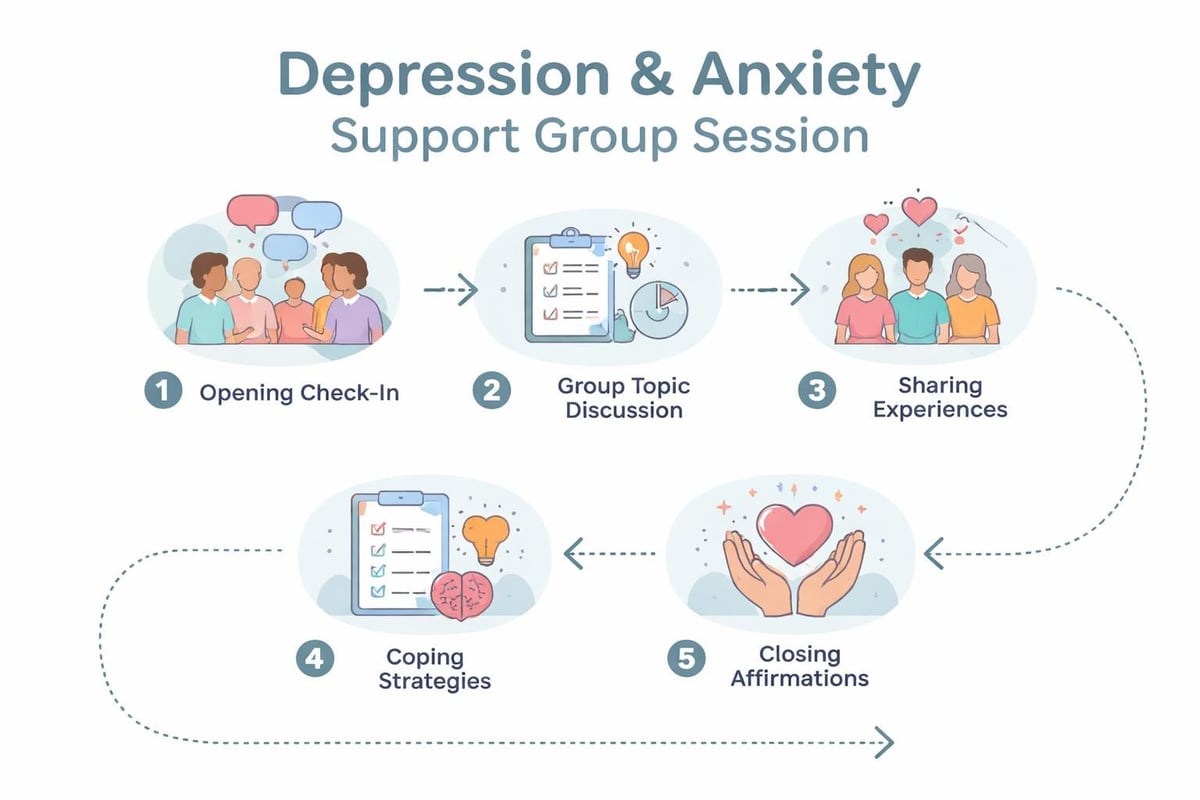
You'll quickly notice that anxiety support groups often have similar structures, typically running 60-90 minutes with check-ins, topic discussion, and sharing time.
How Support Groups Complement Professional Therapy
Here's something important: a depression anxiety support group isn't a replacement for professional treatment. It's a powerful addition to it.
Think of it this way:
- Individual therapy gives you personalized, expert guidance for your specific situation
- Support groups provide peer connection and shared wisdom
- Together, they create a comprehensive support system
If you're currently working with a therapist, like those offering counselling for anxiety and depression, mention that you're considering joining a support group. They can help you find one that aligns with your treatment goals.
Building Your Complete Support Network
Your mental health recovery benefits from multiple support layers:
- Professional therapy (CBT, DBT, EMDR, or other modalities)
- Support group participation
- Trusted friends and family
- Self-care practices
- Medication management (if applicable)
The therapeutic approaches available today work even better when combined with peer support. You're getting expert clinical help while also benefiting from lived experience wisdom.
Practical Tips for Getting the Most from Your Group
Showing up is half the battle, but here's how to really maximize what you get from a depression anxiety support group.
Be consistent. Healing doesn't happen in one session. Commit to attending regularly for at least a few months. You'll build relationships and trust that make sharing easier over time.
Participate when ready. You don't have to share every week, but gradually opening up helps you and helps others feel less alone. Start small if that feels safer.
Apply what you learn. When someone shares a coping strategy that resonates, actually try it. These aren't just theoretical ideas; they're battle-tested tools.
Warning Signs of an Unhealthy Group
Not every group is created equal. Watch out for:
- Leaders who promote unproven treatments or discourage professional care
- Members who dominate every session
- Lack of confidentiality
- Pressure to share before you're ready
- Toxic positivity that dismisses genuine struggles
Trust your gut. If something feels off, it's okay to try a different group.
Where to Find Support Groups in Ontario and Online
Living in Ontario gives you access to various mental health resources. Many community health centers, hospitals, and mental health clinics offer support groups.
Online options have exploded since 2020, making it easier than ever to connect regardless of location. You can attend a group in your pajamas at 8 PM on a Tuesday, which is pretty amazing when anxiety makes leaving the house feel impossible.
| Resource Type | Examples | Access |
|---|---|---|
| Healthcare Facilities | Hospitals, community health centers | In-person, often free |
| Mental Health Organizations | CAMH, local nonprofits | Mixed formats, sliding scale fees |
| Online Platforms | Dedicated mental health apps and websites | Virtual, various pricing |
| Private Practices | Therapy clinics offering group sessions | In-person or online, may have fees |
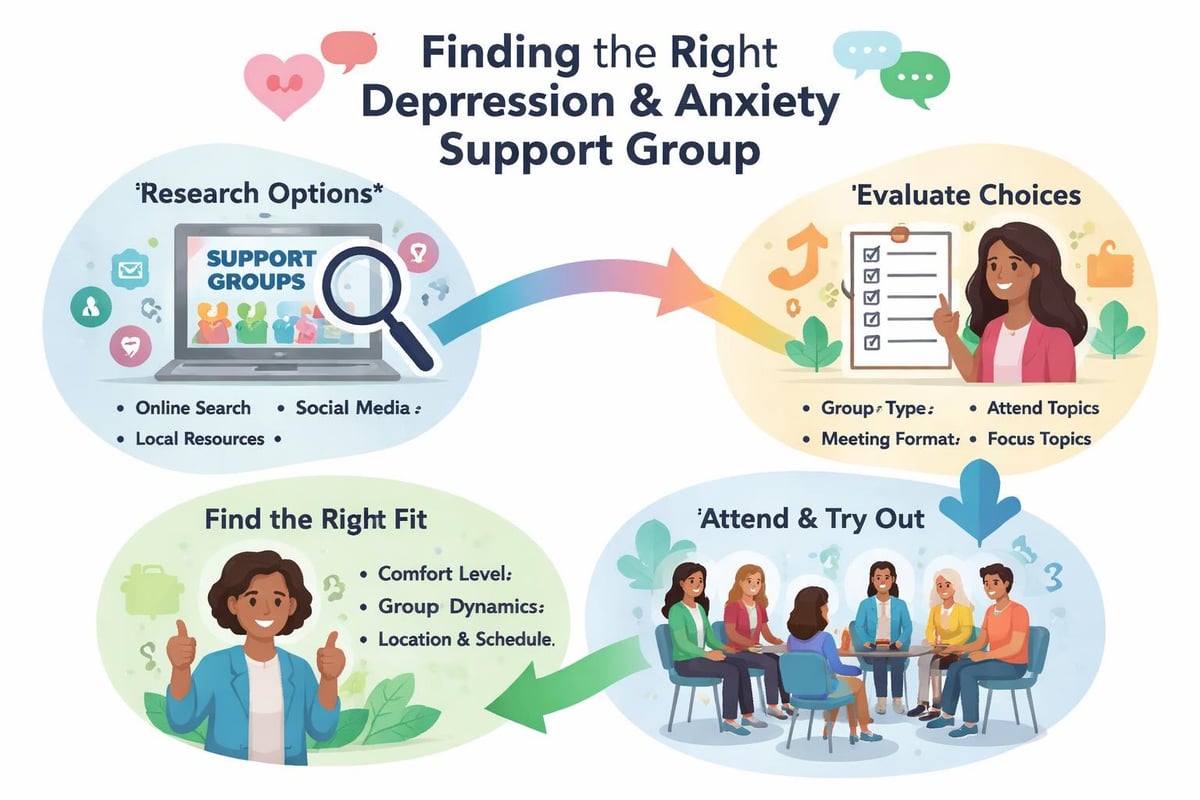
Ask your family doctor, therapist, or contact organizations specializing in depression and therapy for recommendations. They often know which groups have good reputations and effective facilitation.
Making the Commitment to Show Up
The hardest part about joining a depression anxiety support group? Actually going to that first meeting. Your brain will give you a thousand reasons why you shouldn't go. You'll be too tired, too anxious, too whatever.
Go anyway.
You don't have to feel ready. You don't have to have it all figured out. You just have to show up and see what happens. Some of the most profound healing comes from simply being in a room (physical or virtual) with people who get it.
Remember, everyone in that group was once sitting where you're sitting right now, wondering if this would help. And they kept coming back for a reason.
Finding the right depression anxiety support group can transform your healing journey from a solitary struggle into a shared experience of growth and recovery. Whether you choose peer-led meetings, professionally facilitated groups, or online communities, the connection and understanding you'll find can complement your therapeutic work beautifully. If you're ready to take the next step in your mental health journey with professional support, Théla Psychotherapy Clinic offers evidence-based, trauma-informed care both in-person in Markham and online throughout Ontario, creating a safe space where your healing can truly begin.

Bonny Li
Contact Me