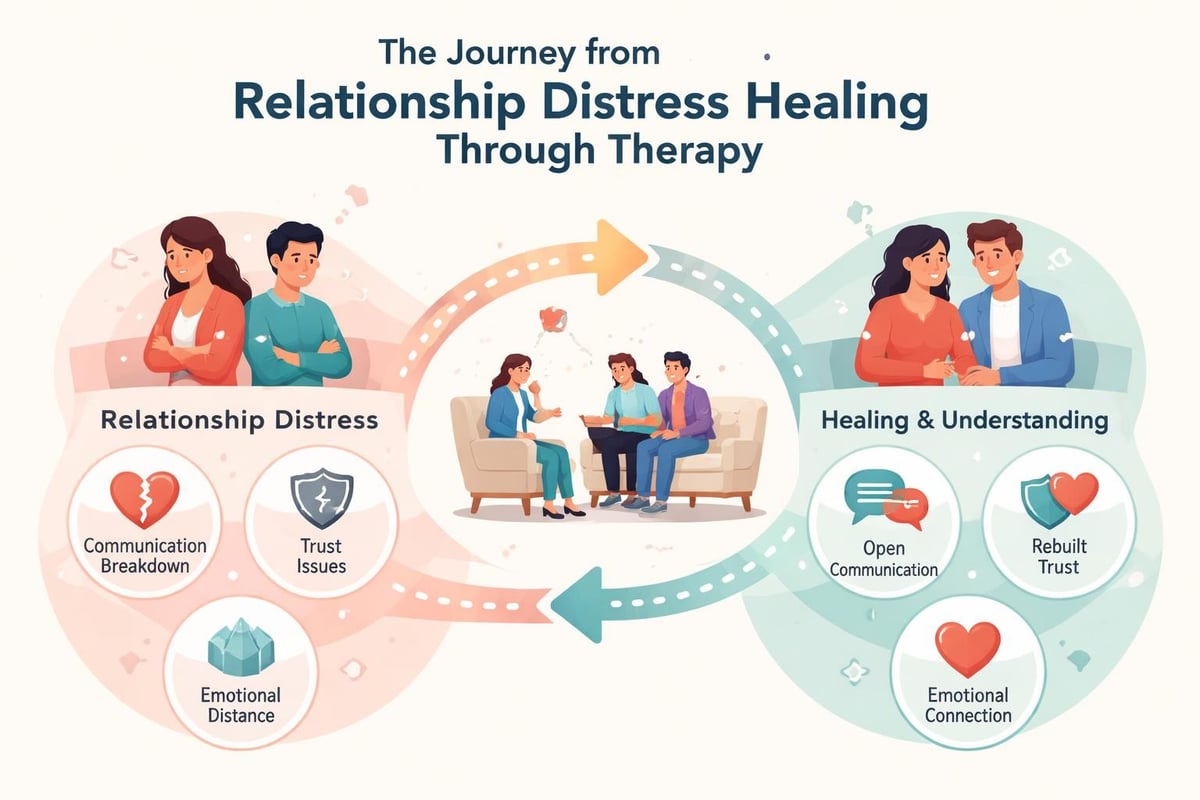
Relationships take work, and sometimes that work needs a little professional guidance. Whether you're dealing with communication breakdowns, trust issues, or just feeling disconnected from your partner, couples relationship therapy offers a structured path toward healing and reconnection. It's not about pointing fingers or determining who's "right" in arguments. Instead, it's about creating a safe space where both partners can be heard, understood, and supported as they navigate challenges together.
Why Couples Seek Therapy
You might be wondering when it's the right time to seek professional help. The truth is, there's no perfect moment. Some couples come to therapy when they're on the brink of separation, while others seek support at the first sign of trouble.
Common reasons couples pursue therapy include:
- Communication difficulties that lead to frequent misunderstandings
- Trust issues stemming from infidelity or broken promises
- Financial stress creating ongoing tension
- Intimacy concerns affecting physical or emotional connection
- Life transitions like parenthood, career changes, or relocation
- Unresolved conflicts that keep resurfacing
Here's the thing: waiting until your relationship is in crisis mode isn't necessary. Preventive care works for relationships just like it does for your physical health. Many couples find that couples relationship therapy helps them strengthen their bond before small issues become major problems.
Evidence-Based Approaches That Actually Work
Couples relationship therapy isn't a one-size-fits-all solution. Different therapeutic approaches work for different couples, and skilled therapists often integrate multiple methods based on your specific needs.
Emotionally Focused Therapy (EFT)
EFT focuses on attachment and bonding between partners. This approach helps you understand the emotional patterns that create distance and teaches you how to reconnect on a deeper level. It's particularly effective for couples who feel emotionally disconnected.
Cognitive Behavioral Therapy (CBT)
Cognitive-Behavioral approaches help couples identify and change negative thought patterns that fuel conflicts. You'll learn to recognize destructive behaviors and replace them with healthier responses.
| Approach | Primary Focus | Best For |
|---|---|---|
| EFT | Emotional attachment and bonding | Emotionally distant couples |
| CBT | Thought patterns and behaviors | Couples stuck in negative cycles |
| Gottman Method | Communication and conflict resolution | Practical skill-building |
| Imago Therapy | Childhood patterns in relationships | Deep-rooted relationship patterns |
The Gottman Method
This research-based approach teaches practical tools for managing conflict, increasing intimacy, and building friendship within your relationship. It's grounded in decades of research about what makes relationships succeed or fail.
What Actually Happens in Sessions
Let's get real about what you can expect when you walk into couples relationship therapy. The first session typically involves both partners sharing their perspective on what's bringing them to therapy. Your therapist will ask questions, observe how you interact, and start identifying patterns.
A typical therapy journey includes:
- Initial assessment where both partners share their concerns
- Goal-setting to establish what you want to achieve
- Skill-building exercises for communication and conflict resolution
- Processing difficult emotions in a safe environment
- Homework assignments to practice new behaviors between sessions
- Regular progress checks to adjust your approach as needed
Don't expect instant miracles. Therapy is a process, and meaningful change takes time and effort from both partners. You'll likely have sessions where you feel hopeful and sessions that feel challenging. That's completely normal.
At places like Théla Psychotherapy Clinic, therapists use trauma-informed and culturally responsive approaches that respect your unique background and experiences. This matters because your cultural context shapes how you view relationships, conflict, and communication.
The Therapeutic Alliance Makes the Difference
Here's something that doesn't get talked about enough: the relationship you build with your therapist matters just as much as the therapeutic approach they use. Research on therapeutic alliance in couple counseling shows that feeling safe, understood, and supported by your therapist significantly impacts your outcomes.
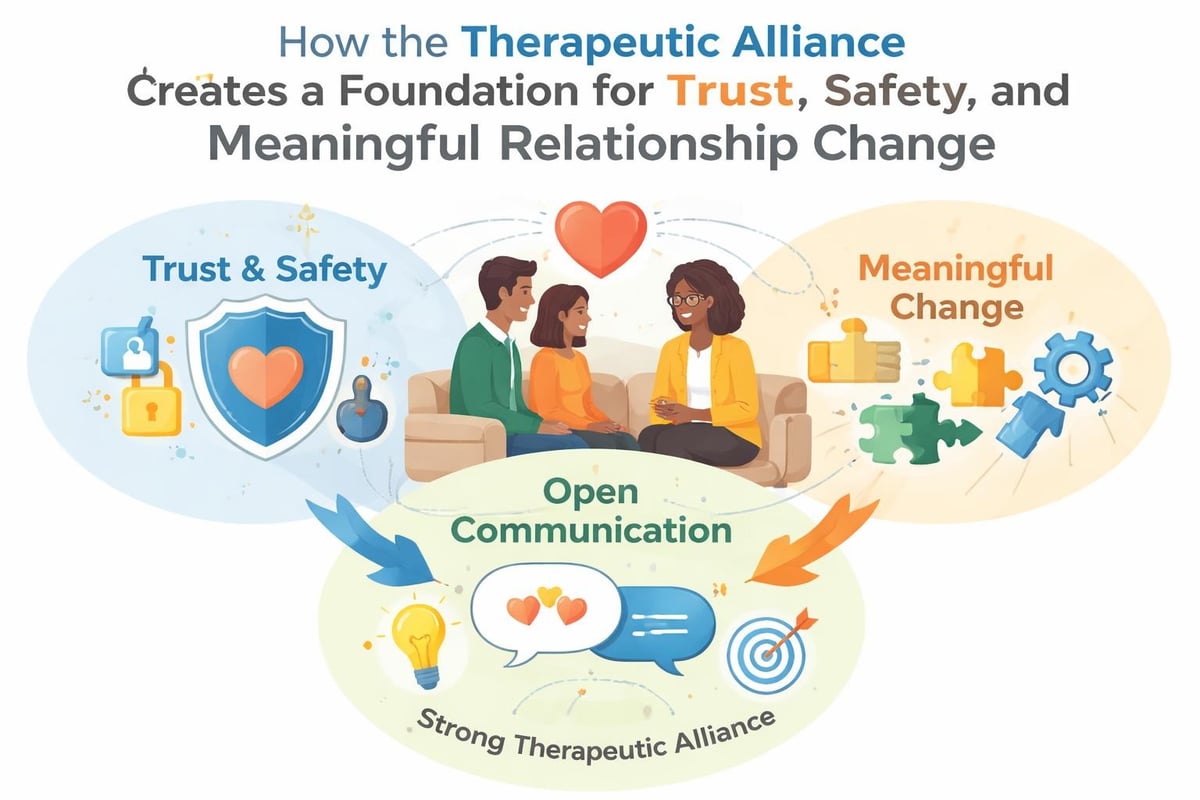
You should feel comfortable being vulnerable with your therapist. If something doesn't feel right, it's okay to speak up or even switch therapists. This isn't about being difficult; it's about finding the right fit for your relationship.
For couples who find traditional therapy approaches ineffective, therapists like Shira Hearn at Radical Relationship Transformation offer structured, direct approaches that focus on changing stuck patterns rather than endless talking.
Making Therapy Work Outside the Office
The real work of couples relationship therapy happens between sessions. You'll need to practice new communication skills, try different approaches to conflict, and work on breaking old patterns when you're in your everyday environment.
Practical ways to maximize therapy benefits:
- Set aside dedicated time each week for relationship conversations
- Practice active listening without planning your response
- Use "I" statements instead of blame language
- Take responsibility for your part in conflicts
- Celebrate small wins and progress milestones
You might also benefit from additional resources for couples that provide exercises, readings, and tools to support your work between sessions.
Some couples find that addressing individual mental health concerns through individual therapy alongside couples therapy creates even better outcomes. Your personal healing supports your relationship healing.
Navigating Specific Relationship Challenges
Certain relationship issues require specialized attention within couples relationship therapy. If you're dealing with anxiety in relationships, for example, your therapist might integrate anxiety management techniques alongside relationship work.
Trauma can also significantly impact relationships. Whether it's relationship trauma from past partnerships or individual trauma affecting your current relationship, trauma-informed therapy approaches help you heal without retraumatizing either partner.
When One Partner is Hesitant
It's incredibly common for one partner to be more enthusiastic about therapy than the other. If your partner is skeptical, that's actually workable. Many therapists specialize in working with couples where one person doubts whether therapy can help.
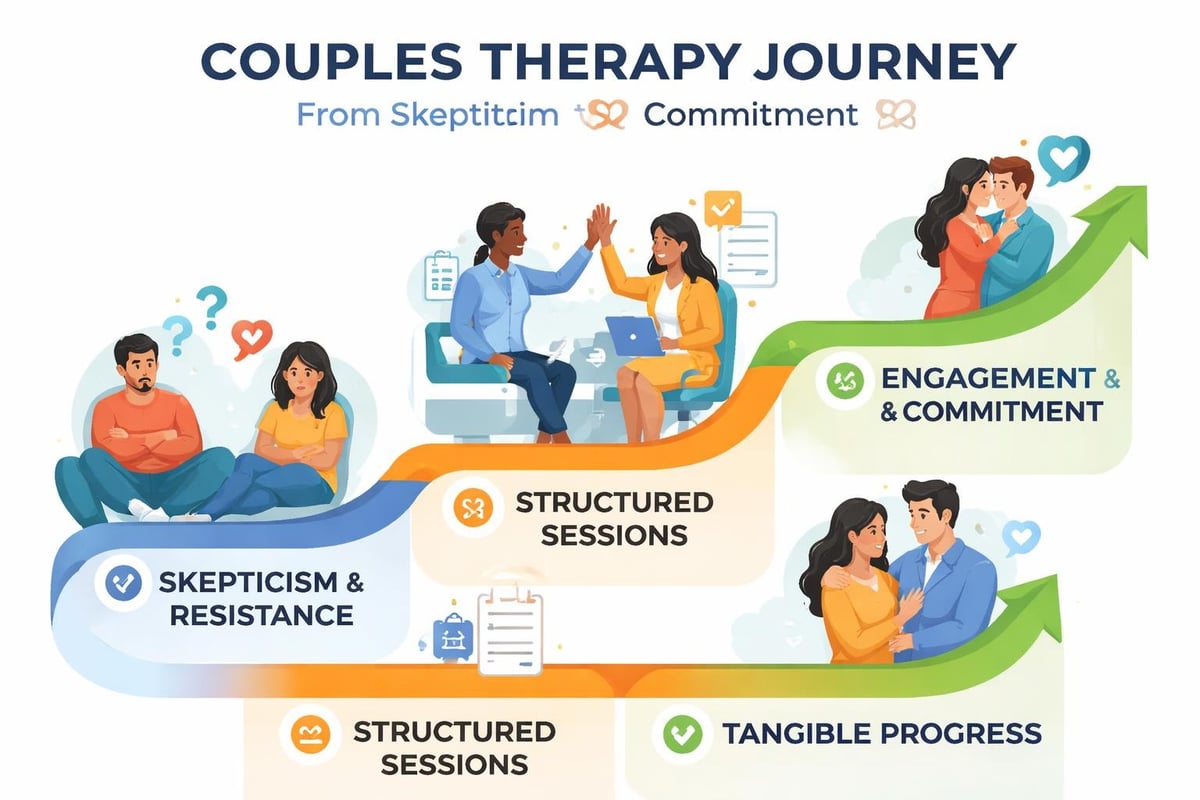
Sometimes starting with relationship help resources or reading materials helps the hesitant partner feel more comfortable with the process.
Investment and Accessibility Considerations
Let's talk about the practical side: couples relationship therapy requires an investment of time, money, and emotional energy. Sessions typically run weekly or biweekly, and you're looking at several months of consistent work for meaningful change.
Cost considerations:
- Sessions typically range from $150-300 per session in Ontario
- Many therapists offer sliding scale fees based on income
- Some insurance plans cover couples counseling
- Direct billing options can simplify payment processes
For those concerned about affordability, programs like the affordable therapy program make couples relationship therapy more accessible to different income levels.
The American Association for Marriage and Family Therapy sets professional standards that ensure you're receiving quality care from qualified therapists, which matters when you're making this investment.
Moving Forward Together
Choosing couples relationship therapy shows strength, not weakness. It demonstrates that both partners value the relationship enough to invest in its health and longevity. The journey won't always be comfortable, but growth rarely is.
Remember that therapy isn't about fixing one partner or the other. It's about understanding patterns, improving communication, and building a stronger foundation for your relationship. With the right support from comprehensive therapeutic services that use evidence-based approaches, you can navigate challenges and create the relationship you both want.
Couples relationship therapy offers a pathway to understanding, healing, and deeper connection when relationships face challenges. Whether you're dealing with communication issues, trust concerns, or feeling emotionally disconnected, professional support can make all the difference. At Théla Psychotherapy Clinic, our trauma-informed therapists use evidence-based approaches like EFT, CBT, and EMDR to support couples across Ontario through both in-person sessions in Markham and online therapy. If you're ready to invest in your relationship's future, reach out to learn how we can help you rebuild connection and strengthen your partnership.

Bonny Li
Contact Me
.jpg)