When you're in a committed relationship, the way you talk to each other can make or break your bond. It's not just about what you say - it's about how you listen, respond, and show up for your partner during both the easy and difficult moments. Couples communication forms the foundation of every healthy relationship, yet it's something many of us struggle with daily. Whether you've been together for six months or sixteen years, learning to communicate more effectively can transform your partnership and help you navigate life's challenges together.
Why Couples Communication Matters More Than You Think
You've probably heard that communication is important, but let's get real about what that actually means. Research shows that how couples communicate varies significantly depending on the topic being discussed, which means you might be great at talking about vacation plans but terrible at discussing finances or emotional needs.
The real impact of communication goes deeper than most people realize:
- It determines how conflicts get resolved (or don't)
- It shapes emotional intimacy and trust
- It influences how both partners feel understood and valued
- It affects mental health outcomes for both individuals
When couples struggle with communication, they're not just having "bad conversations" - they're missing opportunities to connect, heal, and grow together. That's why couples counselling at Théla focuses heavily on developing these essential skills through evidence-based approaches like Emotionally Focused Therapy (EFT).
The Most Common Communication Breakdowns
Let's talk about what actually goes wrong. You're not alone if you recognize these patterns in your relationship.
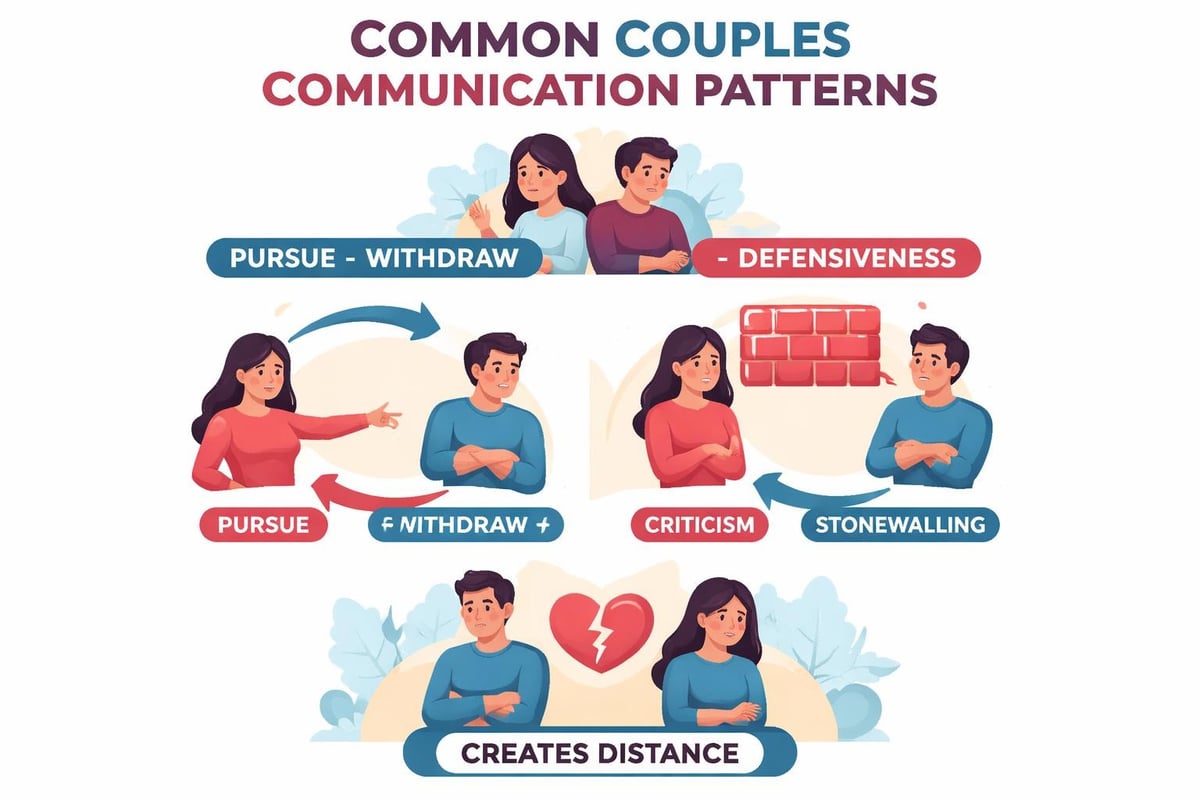
The Pursuit-Withdraw Pattern
One partner pushes for conversation and connection while the other pulls away and shuts down. Sound familiar? This creates a painful cycle where both people feel misunderstood and alone.
Criticism vs. Defensiveness
When concerns turn into personal attacks, the other partner naturally defends themselves. This back-and-forth destroys productive dialogue and leaves both people feeling attacked.
| Communication Breakdown | What It Looks Like | The Impact |
|---|---|---|
| Stonewalling | Complete shutdown, silent treatment | Partner feels abandoned and unheard |
| Kitchen Sinking | Bringing up every past issue | Original problem never gets resolved |
| Mind Reading | Assuming you know what they're thinking | Misunderstandings multiply quickly |
| Contempt | Eye-rolling, sarcasm, mockery | Most destructive predictor of breakup |
Studies examining how couples communicate during health challenges like cancer reveal that communication patterns established during normal times become even more critical during crisis moments. The way you talk during stress tests everything.
Building Better Couples Communication Skills
Here's the good news - communication skills can absolutely be learned and improved. You're not stuck with the patterns you have now.
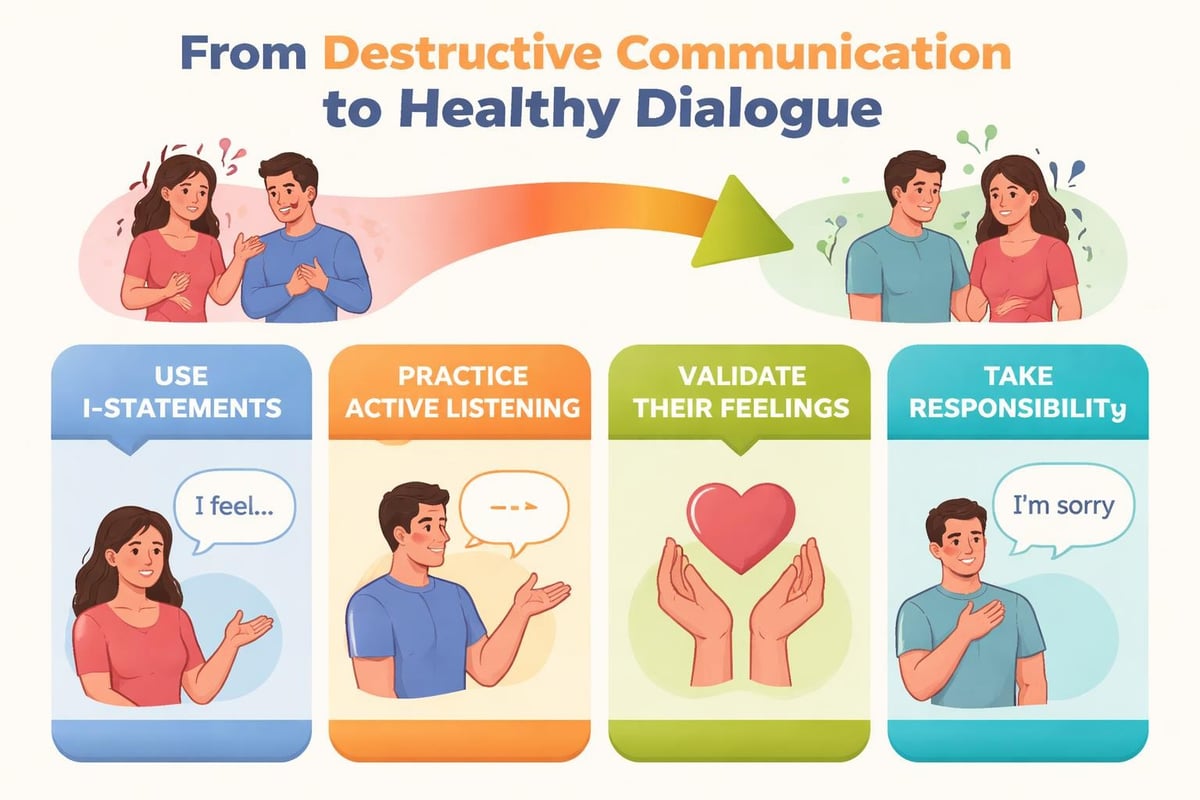
Start with active listening. This isn't just waiting for your turn to talk. It means:
- Putting down your phone and making eye contact
- Reflecting back what you heard before responding
- Asking clarifying questions instead of making assumptions
- Validating their feelings even when you disagree with their perspective
- Noticing your own emotional reactions without letting them take over
Research on communication skills training shows significant improvements in marital intimacy when couples commit to structured learning. This doesn't mean you need to sound like robots - it means developing tools that help during heated moments.
The Power of "I" Statements
Switch from "You always ignore me" to "I feel lonely when we don't talk in the evenings." Notice the difference? One blames, the other shares your experience. This small shift changes everything about how your partner receives your message.
When to Seek Professional Support
Sometimes you need more than YouTube videos and relationship books. If you're constantly fighting about the same issues, feeling emotionally disconnected, or struggling to have conversations without them escalating, couples communication therapy can provide the structured support you need.
The professionals at Théla Psychotherapy Clinic use trauma-informed and culturally responsive approaches to help couples break destructive patterns. Whether you're dealing with anxiety in your relationship or working through deeper relationship trauma, specialized support makes a real difference.
Consider therapy if you're experiencing:
- Repeated arguments that never get resolved
- One or both partners shutting down completely
- Difficulty discussing important topics without fighting
- Feelings of resentment building over time
- Loss of emotional or physical intimacy
Modern approaches to couples therapy have evolved significantly. A systematic review of observed couple communication and relationship satisfaction confirms what therapists see daily - the quality of your communication directly predicts relationship outcomes.
Digital Tools and Modern Communication
We're living in 2026, and technology affects couples communication in complex ways. Texting can be great for quick check-ins, but terrible for resolving conflicts. Video calls help long-distance couples stay connected, but also create new challenges.
Digital interventions for relationship satisfaction show promising results, though they work best as supplements to in-person work, not replacements. Apps can remind you to check in with your partner, but they can't replace genuine emotional presence.
Creating Communication Rituals
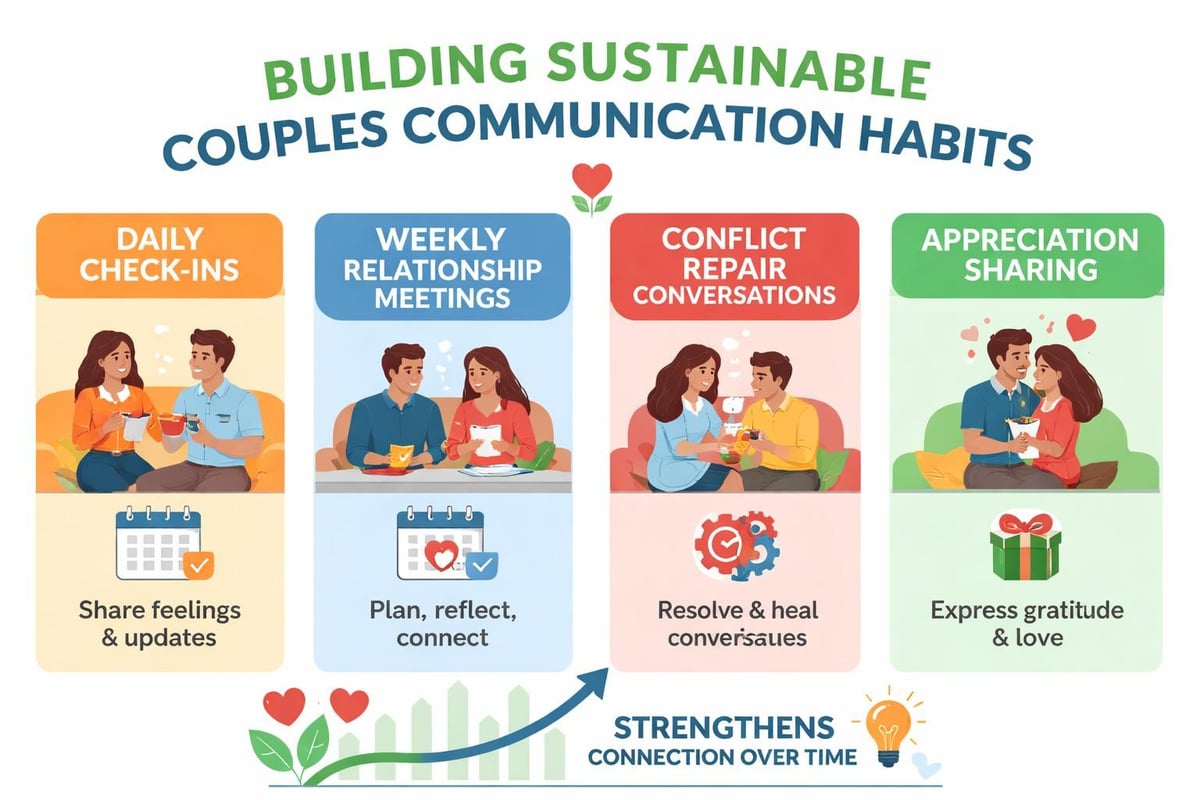
Set aside dedicated time for meaningful conversation. This might be morning coffee together, evening walks, or weekly date nights where you actually talk. The specific ritual matters less than the consistency and intentionality.
The Role of Emotional Regulation
Here's something most people miss - couples communication isn't just about talking better. It's about managing your own emotional state so you can stay present during difficult conversations. When your nervous system is activated and you're in fight-or-flight mode, productive communication becomes nearly impossible.
Practical emotional regulation strategies include:
- Taking breaks when conversations get too heated (with agreement to return)
- Using breathing exercises to calm your nervous system
- Naming your emotions before discussing the issue
- Recognizing your triggers and taking responsibility for them
This is where approaches like Dialectical Behavior Therapy (DBT) become incredibly valuable. The services offered at Théla incorporate these evidence-based methods to help couples develop both communication and emotional regulation skills simultaneously.
Moving Forward Together
Improving couples communication is ongoing work, not a destination you reach and forget about. Relationships evolve, life circumstances change, and new challenges emerge. The couples who thrive aren't the ones who never struggle - they're the ones who've developed tools to navigate struggles together.
Remember that seeking help isn't a sign of failure. It's actually a sign of commitment to your relationship and willingness to grow. Many couples wait years before reaching out for support, allowing patterns to become deeply entrenched. The earlier you address communication challenges, the easier they are to resolve.
Strong couples communication creates the foundation for lasting love, deep intimacy, and resilient partnerships that can weather any storm. If you're ready to transform how you connect with your partner, Théla Psychotherapy Clinic offers specialized couples counselling both in-person in Markham and online across Ontario, using proven approaches like EFT and DBT to help you build the relationship you deserve. Don't wait until communication breaks down completely - reach out today and start creating the connected partnership you both want.

Bonny Li
Contact Me