There's something remarkable about the way animals can touch our hearts and calm our minds. Whether it's a dog resting their head on your lap during a tough moment or the gentle presence of a therapy animal in a counseling session, these connections offer something uniquely powerful. Animal therapy has emerged as a valuable complement to traditional therapeutic approaches, providing comfort, reducing stress, and opening pathways to healing that words alone sometimes can't reach.
What Makes Animal Therapy Different
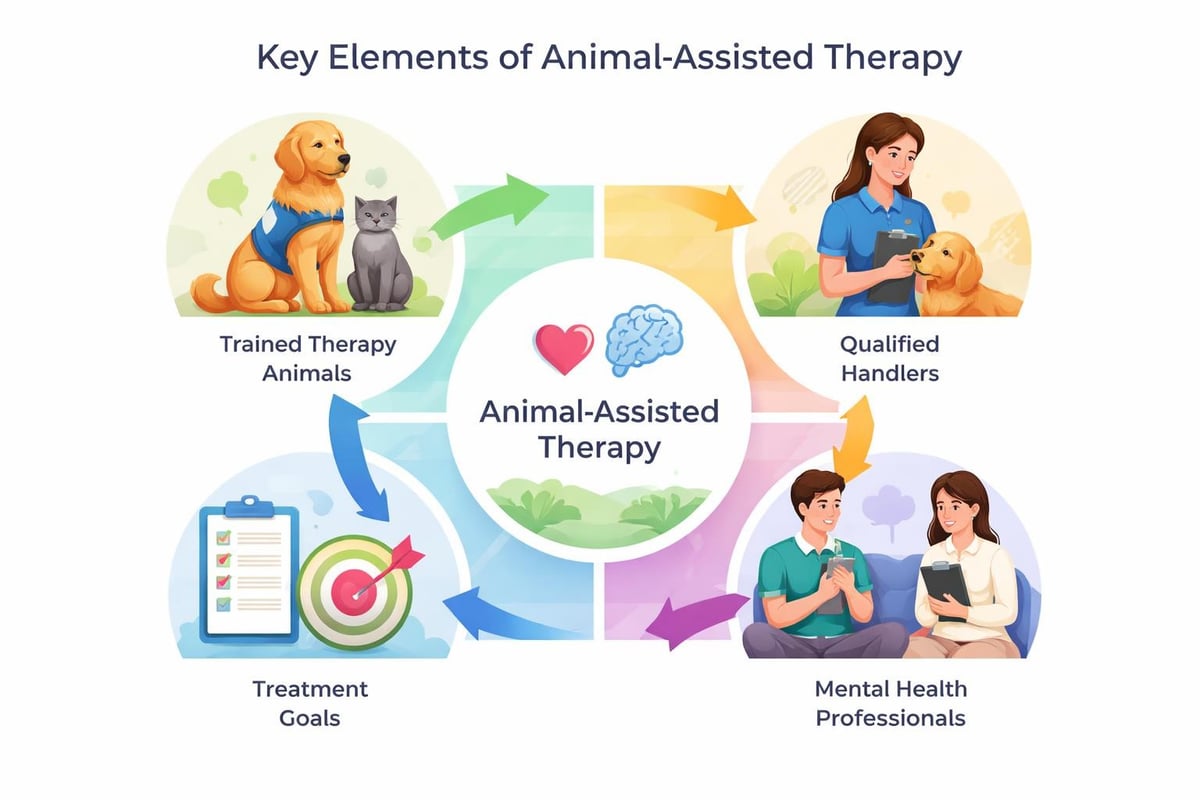
Animal therapy isn't just about having a pet in the room. It's a structured, goal-oriented intervention where trained animals and their handlers work alongside mental health professionals to support specific therapeutic outcomes. Research on animal-assisted therapy interventions shows measurable benefits across various mental health conditions.
The magic lies in the unique bond between humans and animals. Animals offer unconditional acceptance without judgment, creating a safe space where people feel comfortable opening up. They respond to our emotional states in ways that can mirror our feelings back to us, helping us become more aware of our own emotions.
Types of Animal-Assisted Interventions
Not all animal therapy looks the same. Here's how different approaches work:
- Animal-Assisted Therapy (AAT): Goal-directed interventions where a trained animal is part of the treatment plan
- Animal-Assisted Activities (AAA): More casual interactions that provide comfort and companionship
- Canine Support Therapy: Specialized work with dogs to address trauma, anxiety, and emotional regulation
Each type serves different purposes, and what works best depends on your individual needs and therapeutic goals. At Théla Psychotherapy Clinic, canine support therapy integrates seamlessly with evidence-based approaches like CBT and EMDR.
The Science Behind the Healing
You might wonder what actually happens in our brains and bodies when we interact with therapy animals. The evidence is pretty compelling. Studies examining animal-assisted therapies reveal reductions in cortisol (the stress hormone) and increases in oxytocin (the bonding hormone).
When you pet a dog or connect with a therapy animal, your nervous system responds. Heart rate slows, blood pressure drops, and that tight feeling in your chest often eases. It's not magic - it's biology working in your favor.
Mental Health Benefits You Can Expect
| Condition | How Animal Therapy Helps | Expected Outcomes |
|---|---|---|
| Anxiety | Grounding presence, physical touch | Reduced symptoms, improved coping |
| Depression | Motivation, routine, companionship | Better mood, increased engagement |
| PTSD/Trauma | Safe attachment, emotional regulation | Decreased hypervigilance, trust building |
| Autism Spectrum | Social skill practice, sensory support | Enhanced communication, reduced stress |
Research on animal therapy for various conditions continues to expand our understanding of how these interventions work across different populations and mental health challenges.
Who Benefits Most from Animal Therapy
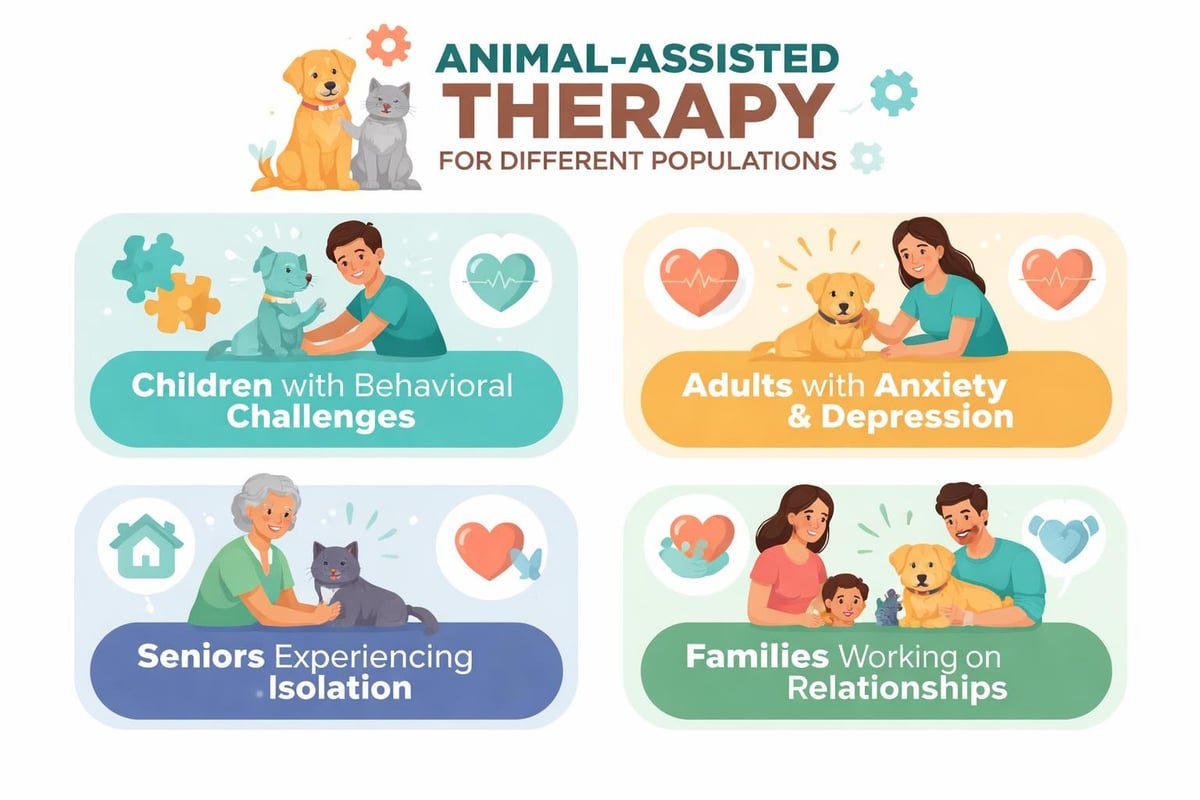
Honestly? Almost anyone can benefit, but certain groups find it particularly helpful. Children and teens often connect more easily with animals than adults, making therapy sessions feel less intimidating. Kids who've experienced trauma may find it easier to trust an animal first, then gradually extend that trust to their therapist.
Adults dealing with anxiety, depression, or relationship struggles also report significant benefits. The presence of a therapy dog can make difficult conversations feel more manageable. For those working through trauma recovery, animals provide a non-threatening way to practice emotional regulation and healthy attachment.
Special Considerations
Before starting animal therapy, consider:
- Any allergies or fears related to animals
- Your comfort level with different types of animals
- Whether this approach aligns with your therapeutic goals
- The training and certification of both the animal and handler
- How it integrates with your other treatments
Clinical guidelines for animal-assisted therapy emphasize the importance of proper screening and matching clients with appropriate interventions.
What to Expect in Your Sessions
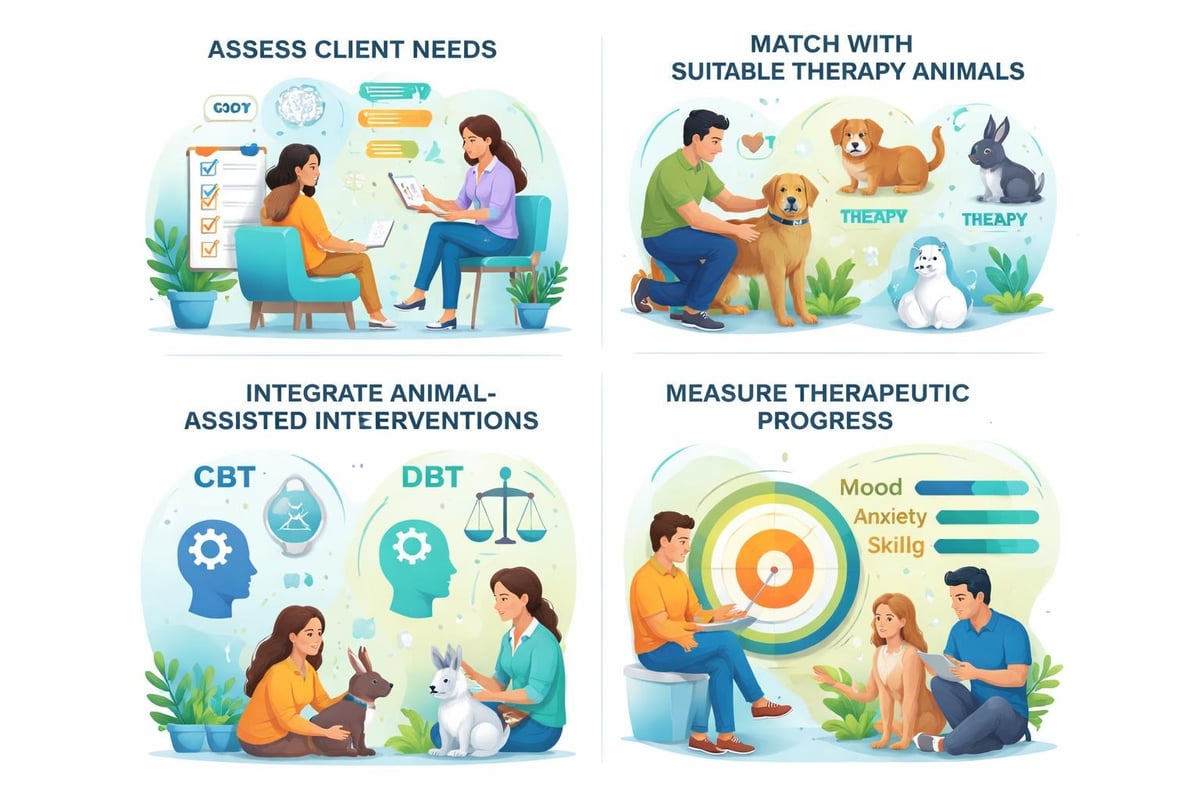
Your first animal therapy session might feel different from traditional talk therapy. You'll still work with a qualified mental health professional, but now there's a four-legged co-therapist involved. The therapist will explain how the animal will participate and what goals you're working toward together.
Sessions typically blend conversation with animal interaction. You might process difficult emotions while petting a therapy dog, or practice mindfulness by focusing on the animal's breathing. Some people find they can discuss painful topics more easily when they don't have to maintain constant eye contact with their therapist.
The beauty of therapeutic support that includes animals is its flexibility. Your therapist can adjust the level of animal involvement based on what you need that day.
Integrating Animal Therapy with Other Approaches
Animal therapy doesn't replace evidence-based treatments - it enhances them. When combined with approaches like CBT therapy, dialectical behavior therapy, or EMDR, animal-assisted interventions can help you practice skills in real-time.
For example, if you're learning emotional regulation techniques, a therapy dog's calming presence provides immediate feedback. You can practice grounding exercises while stroking their fur, or work on distress tolerance by focusing on caring for the animal when difficult feelings arise.
| Traditional Therapy | With Animal Support | Combined Benefit |
|---|---|---|
| Talk processing | Physical grounding | Mind-body integration |
| Cognitive restructuring | Behavioral activation | Practical skill application |
| Exposure therapy | Graduated comfort building | Reduced anxiety response |
Evidence from controlled trials supports this integrative approach, showing enhanced outcomes when animal therapy complements standard psychological interventions.
Finding the Right Fit for You
Not everyone connects with animals in the same way, and that's completely okay. Some people prefer dogs, while others might respond better to other animals. The key is finding what resonates with your personal experience and comfort level.
If you're interested in exploring animal therapy, talk to your therapist about whether it might fit your treatment plan. Ask about their training in animal-assisted interventions, the animals they work with, and how they've seen it help clients with similar concerns to yours.
For families seeking support, relationship counselling that includes animal therapy can create a less threatening environment for difficult conversations. Kids especially may open up more freely with a gentle dog present.
Making Animal Therapy Work Long-Term
Success with animal therapy often comes from consistency and integration with your broader treatment plan. Regular sessions help build that therapeutic relationship with both your counselor and the therapy animal. Over time, you'll likely notice patterns in how you respond to the animal's presence and how those responses connect to your emotional state.
Many clients find that skills learned through animal-assisted interventions transfer to their daily lives. The patience you practice with a therapy dog might help you be more patient with yourself. The unconditional acceptance you receive might teach you to offer yourself more compassion.
Whether you're dealing with anxiety, depression, trauma, or relationship challenges, animal therapy offers another pathway to healing - one that honors the deep connection between humans and animals that's existed throughout our history.
Animal therapy opens doors to healing through the unique bond between humans and animals, offering comfort, reducing stress, and supporting emotional growth alongside traditional therapeutic approaches. If you're curious about how canine support therapy might complement your mental health journey, Théla Psychotherapy Clinic in Markham offers animal-assisted interventions integrated with trauma-informed, evidence-based care. Whether you're seeking support for anxiety, depression, trauma, or relationship challenges, our team provides compassionate, culturally responsive therapy tailored to your needs, both in-person and online across Ontario.

Bonny Li
Contact Me
.jpg)