Did you know that the demand for therapeutic support is expected to hit an all-time high in 2026? More people than ever are recognizing how vital mental health is to overall wellbeing. With new approaches, digital tools, and personalized care, accessing help is easier and more effective than before.
This guide is here to help you understand, access, and truly benefit from the evolving world of therapeutic support. We’ll break down the different types available, explore exciting innovations, show you how to choose what’s right for you, and explain the role of technology in reaching support wherever you are.
Ready to take charge of your mental health journey? Dive in and discover how therapeutic support is changing lives in 2026.
Understanding Therapeutic Support: Definitions and Core Principles
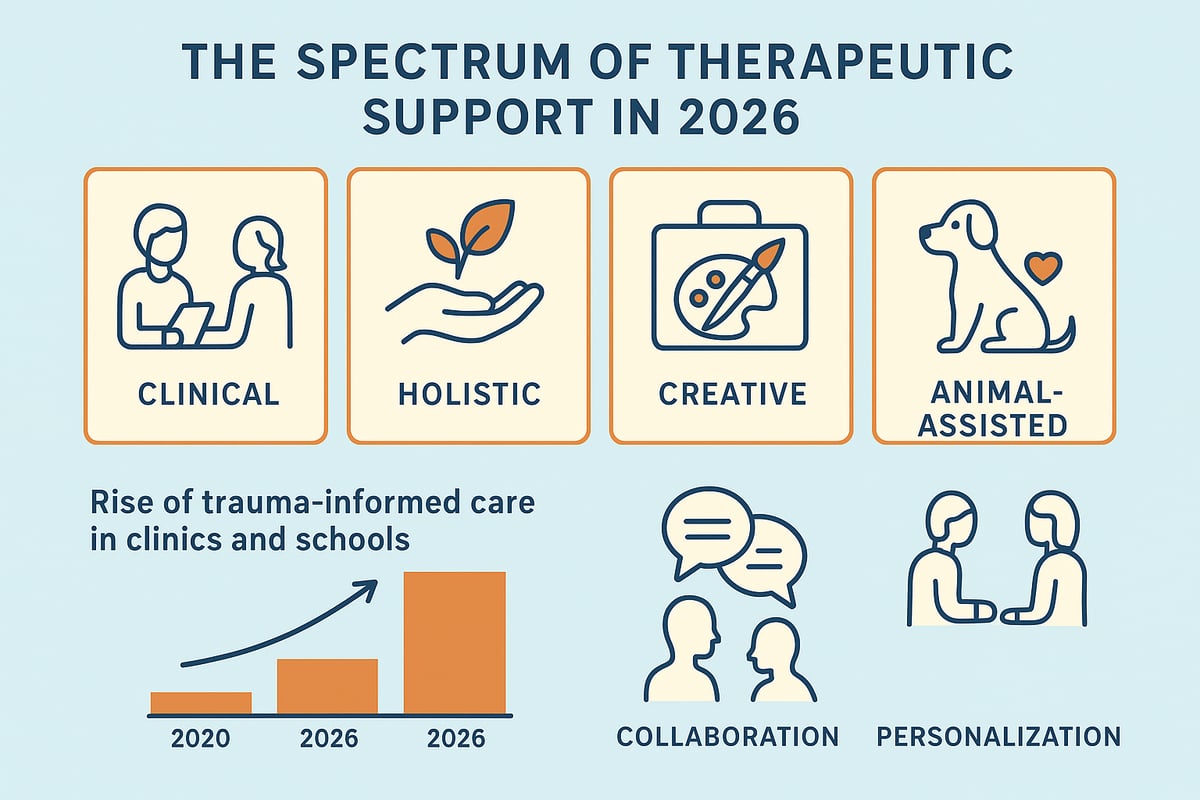
Therapeutic support is all about helping you tackle life's mental and emotional challenges with the right tools and guidance. In 2026, it means more than just talk therapy—it's a personalized journey that covers everything from clinical methods like CBT and EMDR to holistic options such as mindfulness or animal-assisted therapy.
Here's a quick look at the spectrum of therapeutic support:
| Approach | Example Use |
|---|---|
| Clinical (CBT, EMDR) | Healing trauma and anxiety |
| Holistic (Mindfulness) | Stress management |
| Creative (Art Therapy) | Self-expression |
| Animal-Assisted | Emotional comfort |
Trends shaping therapeutic support now include trauma-informed care and culturally responsive practices. Clinics and schools are rapidly adopting these models, with studies showing over 60% now using trauma-informed approaches.
Personalization matters. Therapists and clients work together, blending emotional, physical, and social needs for the best results. This can mean individual sessions, group support, or even family interventions.
Want to dive deeper into trauma and the evolving approaches? Check out this Guide to Healing Individual Trauma for more insight.
Therapeutic support in 2026 is collaborative, holistic, and tailored to you.
Types of Therapeutic Support Available in 2026
The landscape of therapeutic support is more diverse than ever in 2026, making it easier to find an approach that truly fits your needs. Let’s break down what’s available, from classic one-on-one sessions to creative and holistic methods.
Individual Therapy and Specialized Modalities
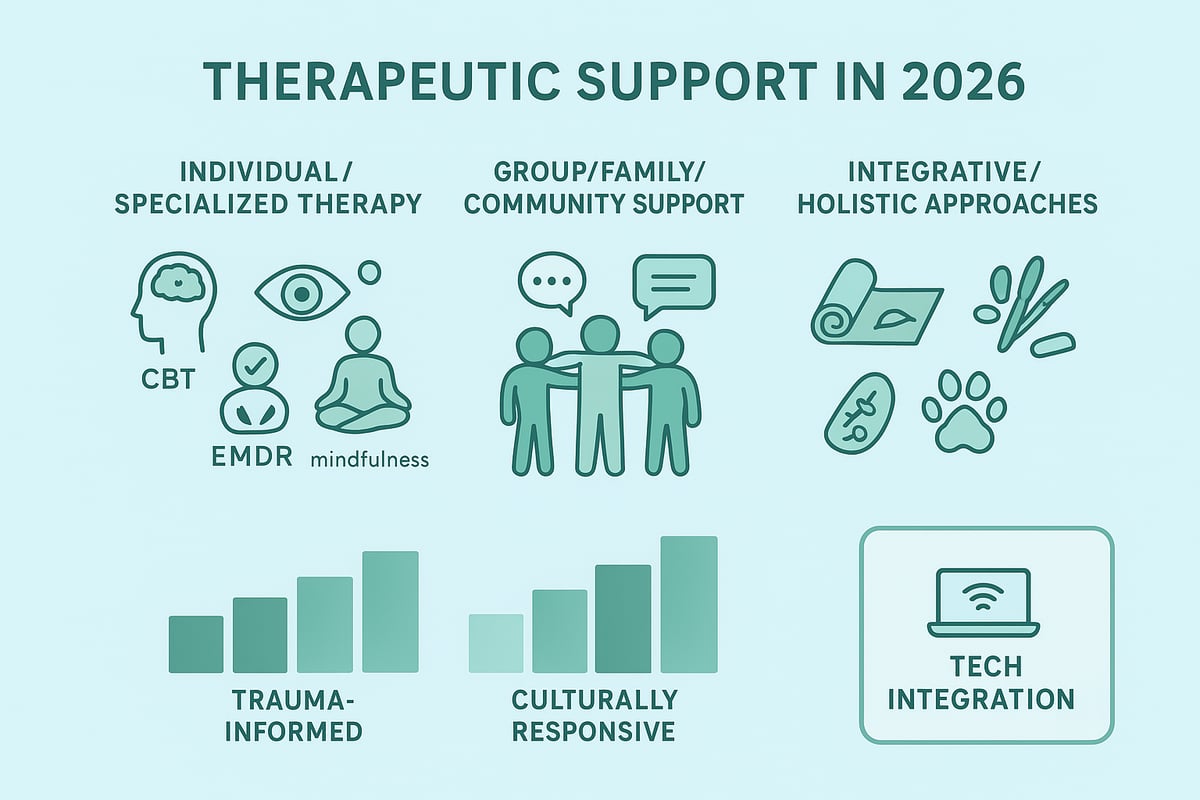
When it comes to therapeutic support, individual therapy remains a cornerstone. Classic methods like CBT, DBT, and narrative therapy are widely used, but 2026 brings even more options. Therapies tailored for neurodivergent or culturally diverse clients are on the rise, making sessions more inclusive. Creative arts and animal-assisted therapies offer new ways to connect and heal. For trauma, EMDR Therapy for Trauma Support is a popular choice, while mindfulness-based approaches help with stress and anxiety.
- CBT for thought patterns
- EMDR for trauma recovery
- Mindfulness for stress
- Art therapy for self-expression
Group, Family, and Community-Based Support
Therapeutic support also shines in group, family, and community settings. Group therapy and support groups let people share experiences and learn from each other, building resilience and connection. Family therapy brings everyone together to tackle challenges as a team. These approaches encourage stronger relationships and interpersonal skills, making support more accessible for those who may feel isolated.
- Group therapy for shared growth
- Support groups for advocacy
- Family therapy for unity
Integrative and Holistic Approaches
2026 is big on holistic healing. Integrative therapy blends talk therapy with wellness coaching, yoga, or movement practices. Physical modalities like massage and acupuncture are now part of mental health care plans. Many people find that combining traditional and holistic methods leads to more comprehensive therapeutic support, especially when dealing with stress or trauma.
- Integrative therapy for balance
- Yoga therapy for mind and body
- Blended care for whole-person wellness
Innovations and Trends in Therapeutic Support for 2026
The landscape of therapeutic support is evolving fast in 2026, thanks to a wave of digital therapy platforms, telehealth, and AI-driven tools. Virtual sessions are now mainstream, making it easier than ever to connect with the right therapist, even from remote locations. Curious about how artificial intelligence is shaking up mental health care? Explore the exciting role of AI in Mental Health Care and how it’s making support more accessible and personalized.
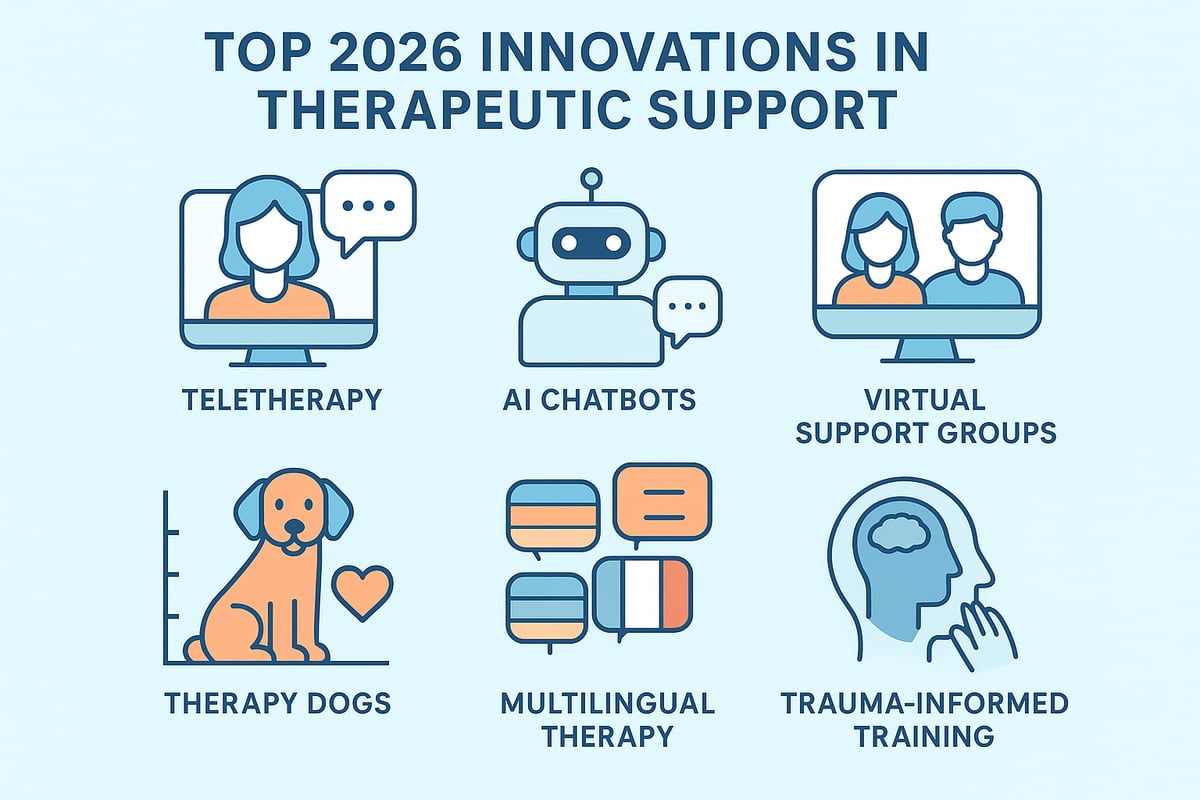
Trauma-informed practices are everywhere now, from schools to workplaces and clinics. There's a growing push for culturally responsive and multilingual therapy, so more people feel truly heard and understood. Programs like whole-school trauma-sensitive training and new support models are raising the bar for compassionate care.
Data shows a huge jump in virtual therapy adoption, with blended models—mixing online and in-person sessions—leading to better outcomes for many. Whether it's bringing therapy dogs into sessions, using digital self-assessment tools, or joining virtual support groups, therapeutic support in 2026 is all about meeting you where you are and making care more effective than ever.
How to Choose the Right Therapeutic Support for Your Needs
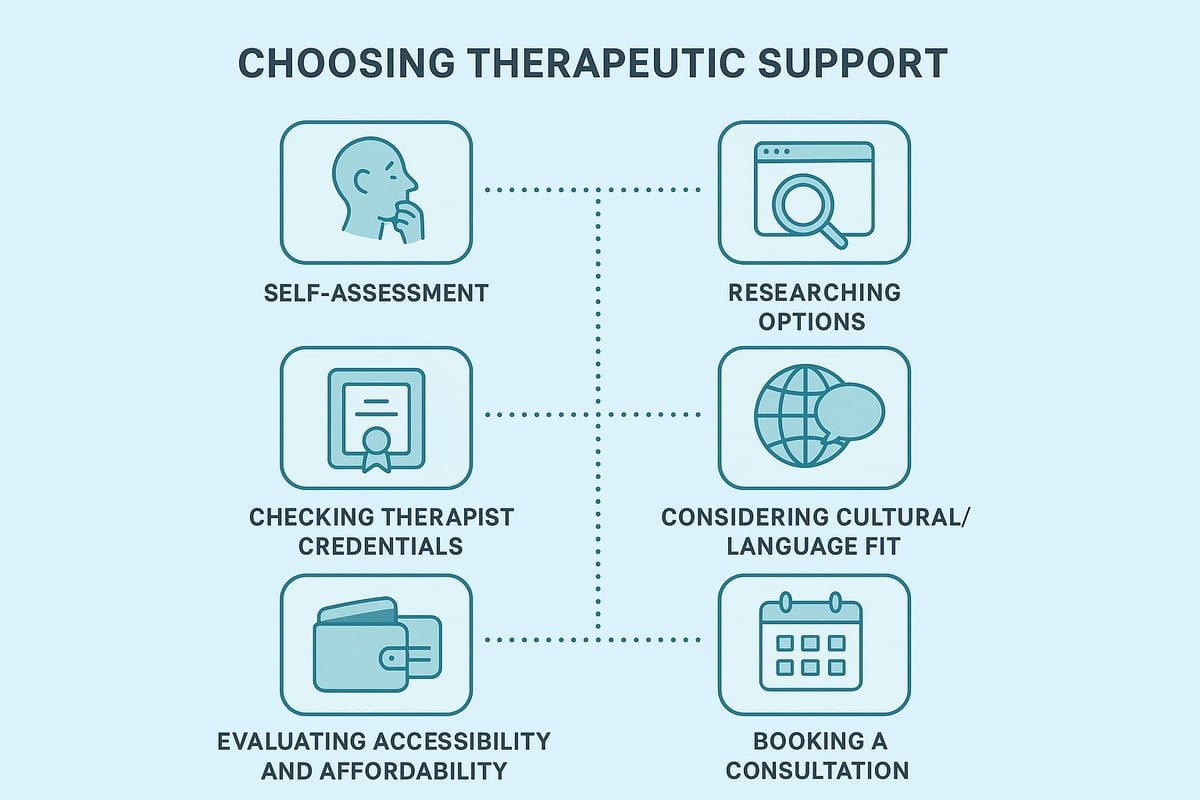
Choosing the right therapeutic support can feel overwhelming, but it’s all about finding a fit that works for you. Start by asking yourself what you need most right now. Are you looking for individual therapy, family sessions, or maybe group support? Think about your goals—do you want to manage stress, heal from trauma, or build better relationships?
Next, look into potential therapists’ credentials. It’s important they’re licensed, experienced, and have training in the area you’re seeking help. Don’t forget about cultural background and language—sometimes, feeling understood makes all the difference.
A good first step is to schedule an initial consultation. This gives you a chance to see if their approach matches your needs. Many providers also offer psychological assessments to help personalize your care plan.
Accessibility and cost matter too. Research options that fit your budget and check your insurance coverage. If affordability is a concern, you can explore Affordable Therapy Program Options to find support that won’t break the bank.
Finally, trust your instincts. The right therapeutic support should feel safe, collaborative, and tailored to you. Take your time and remember, you deserve care that fits your life.
The Role of Technology and Accessibility in Modern Therapeutic Support
Technology is shaking up how we access therapeutic support. With teletherapy, online support groups, and mental health apps, people can now connect with help wherever they are. This shift is making therapeutic support more flexible and available than ever before.
For folks in remote or marginalized communities, digital options break down barriers. Whether you're neurodivergent or just need a therapist who gets your culture, there's now a wider range of accessible care. But with all these options, it's crucial to think about privacy and digital literacy too.
Here are some quick tips for staying safe:
- Use platforms with strong privacy settings.
- Keep your information secure with up-to-date passwords.
- Make sure you understand how your data is used.
Blended models, which mix online and in-person care, are catching on fast. According to recent reports, client satisfaction and outcomes are improving as more people try these flexible approaches. Curious about how these models work? Check out the rise of Hybrid Therapy Models for a closer look.
Here's a quick comparison of popular tech in therapeutic support:
| Tech Option | Main Benefit | Who It Helps Most |
|---|---|---|
| Teletherapy | Convenience, flexibility | Remote clients |
| Mobile Apps | Self-guided support | Busy or on-the-go users |
| Online Groups | Peer connection | Isolated or shy individuals |
Therapeutic support is truly evolving, and technology is making it easier for everyone to get the care they need.
Building a Personal Support System: Practical Steps for 2026
Building a personal support system in 2026 is more than just finding a therapist. It’s about taking active steps to combine professional help, peer connections, and self-care for well-rounded therapeutic support.
Start by getting clear on your needs. Are you looking for individual counseling, group support, or maybe something for your family? Set realistic goals for your mental health journey. Don’t be afraid to reach out—connecting with others is a big part of making progress.
Next, create your own network. This could mean joining a local support group, tapping into online communities, or even asking close friends to check in regularly. Community resources, ongoing education, and peer groups all add layers to your therapeutic support.
Keep track of your progress along the way. Regular self-assessment helps you see what’s working and what needs a tweak. You can use digital tools, like journals or Therapeutic Homework Support Tools, to stay organized and motivated. Remember, building resilience and practicing self-advocacy will help you get the most from your support system.
We’ve covered a lot together—how therapy’s changing in 2026, why finding the right fit matters, and even how tech is making support more accessible. If you’re ready to explore what personalized, trauma informed care could look like for you or someone you care about, you don’t have to figure it out alone. I know taking the first step can feel daunting, but reaching out is a sign of strength, not weakness. Want to chat about your options or just see if we’re a good fit? Let's Connect! Book a Call.

Bonny Li
Contact Me