When your relationship hits a wall, whether it's infidelity, constant fighting, or just feeling like strangers living under the same roof, you might wonder if things can ever go back to how they used to be. Here's the thing: they probably can't. But with the right support from a relationship recovery therapist, you can build something even better. These specialized professionals help couples navigate the aftermath of relationship trauma and work toward healing, understanding, and genuine reconnection.
What Makes Relationship Recovery Different
A relationship recovery therapist isn't just your average couples counselor. They're specifically trained to handle relationships in crisis mode, where one or both partners are seriously questioning whether to stay or go.
Think of it this way: regular couples therapy is like a tune-up for your car. Relationship recovery therapy? That's more like major reconstruction after an accident. You're not just improving communication or learning conflict resolution skills. You're rebuilding trust from the ground up, processing betrayal or trauma, and figuring out if the foundation is even salvageable.
The Crisis Points That Bring People In
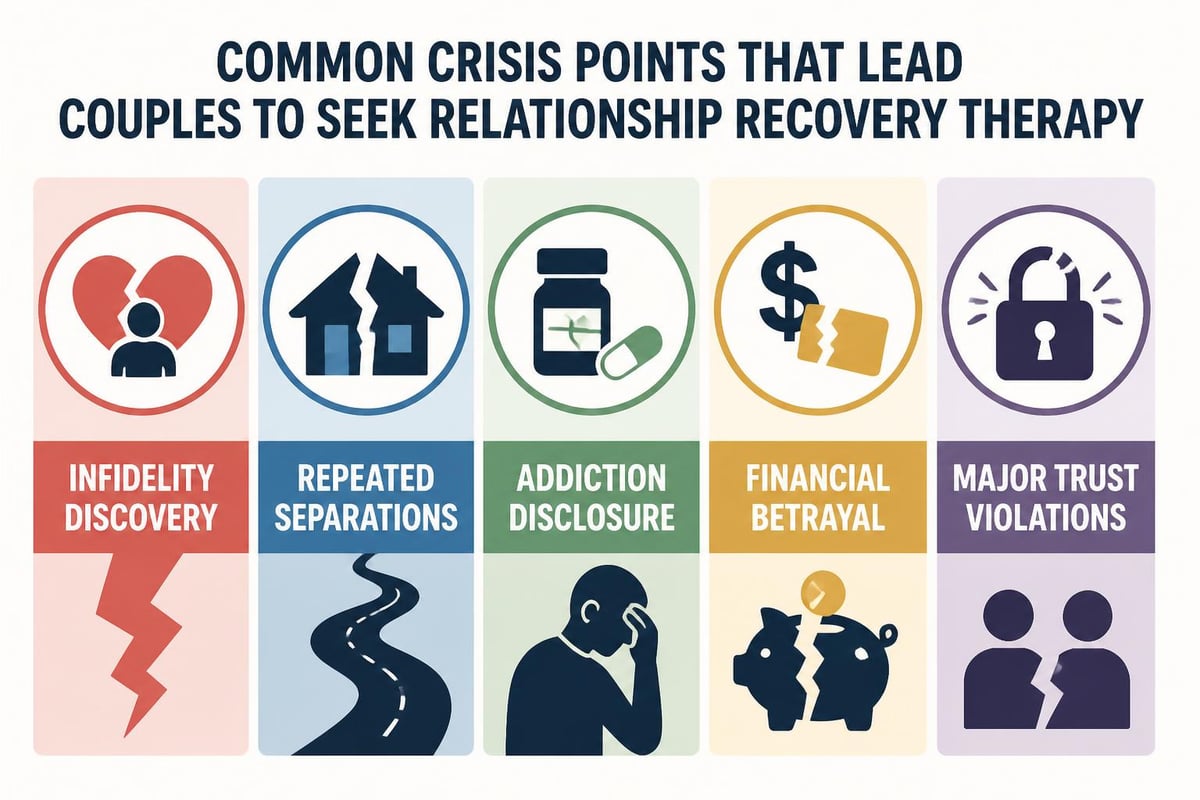
Most folks don't wake up one morning and decide to see a relationship recovery therapist. Something specific pushes them to get help:
- Infidelity or emotional affairs that have shattered trust
- Repeated separations where you keep breaking up and getting back together
- Major life transitions like job loss, illness, or becoming parents that strain the relationship
- Discovery of addiction (substance use, gambling, pornography)
- Betrayal of major life decisions like secret debt or hidden plans
These aren't your everyday relationship hiccups. They're the kind of wounds that getting the relationship help you need becomes absolutely critical for moving forward.
How Recovery Therapy Actually Works
The process isn't just about sitting on a couch and talking about your feelings (though there's definitely some of that). A relationship recovery therapist uses specific, evidence-based approaches to help you heal.
The Initial Assessment Phase
Your therapist will want to understand what happened, where you are now, and where you want to be. They'll assess:
- Safety first – Is anyone at risk physically or emotionally?
- The severity of the crisis – How deep does this go?
- Both partners' commitment levels – Are you both willing to do the work?
- Individual mental health – Are there personal issues that need addressing too?
This isn't about placing blame. It's about getting a clear picture so your therapist can create a roadmap that actually makes sense for your situation.
Evidence-Based Approaches That Work
Research shows that structured relationship programs can significantly improve outcomes when couples are dealing with serious challenges. Here's what actually helps:
| Therapy Approach | What It Does | Best For |
|---|---|---|
| EFT (Emotionally Focused Therapy) | Identifies emotional patterns and attachment injuries | Rebuilding emotional connection |
| Gottman Method | Addresses communication breakdowns and builds friendship | Constant conflict and contempt |
| EMDR | Processes traumatic relationship events | Betrayal trauma and infidelity |
| Discernment Counseling | Helps decide whether to stay or leave | Mixed-agenda couples |
The Hold Me Tight program based on EFT has shown particularly strong results for couples working through difficult periods. Many relationship recovery therapists incorporate these methods into their practice.
The Phases You'll Move Through
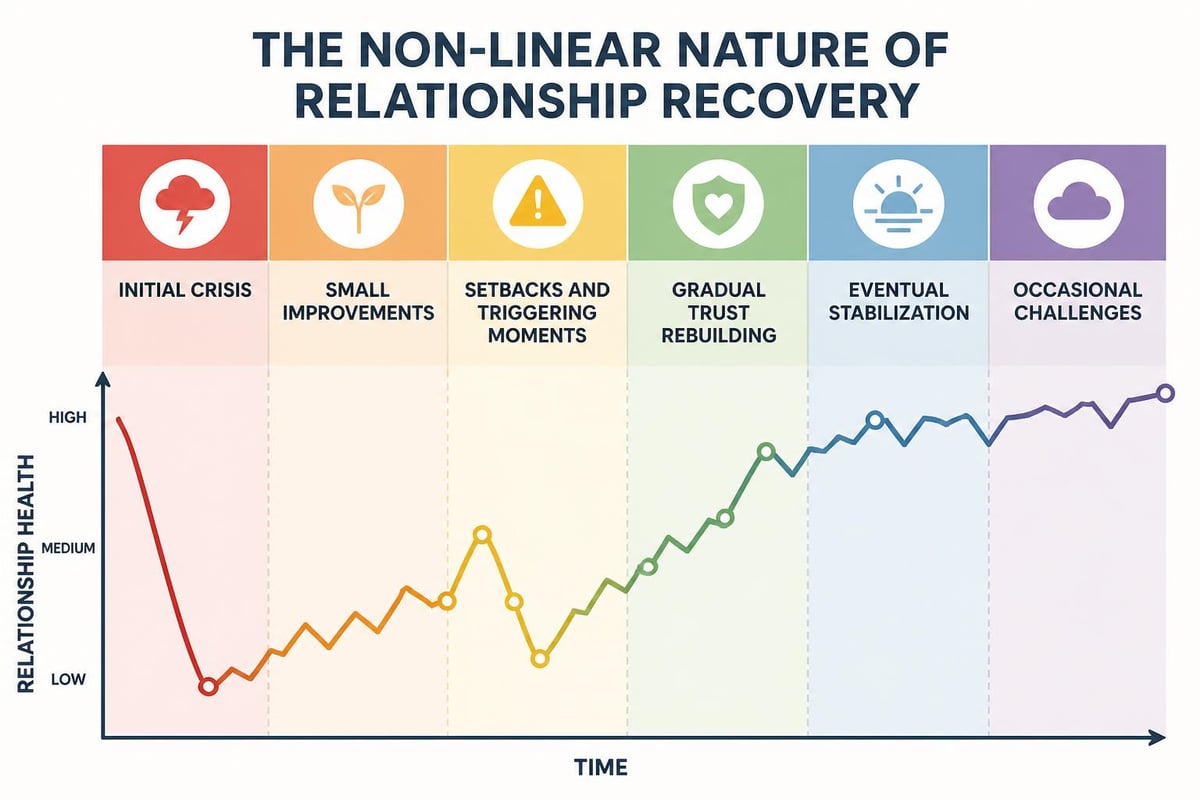
Recovery isn't linear, but there's generally a progression that happens when you're working with a skilled professional.
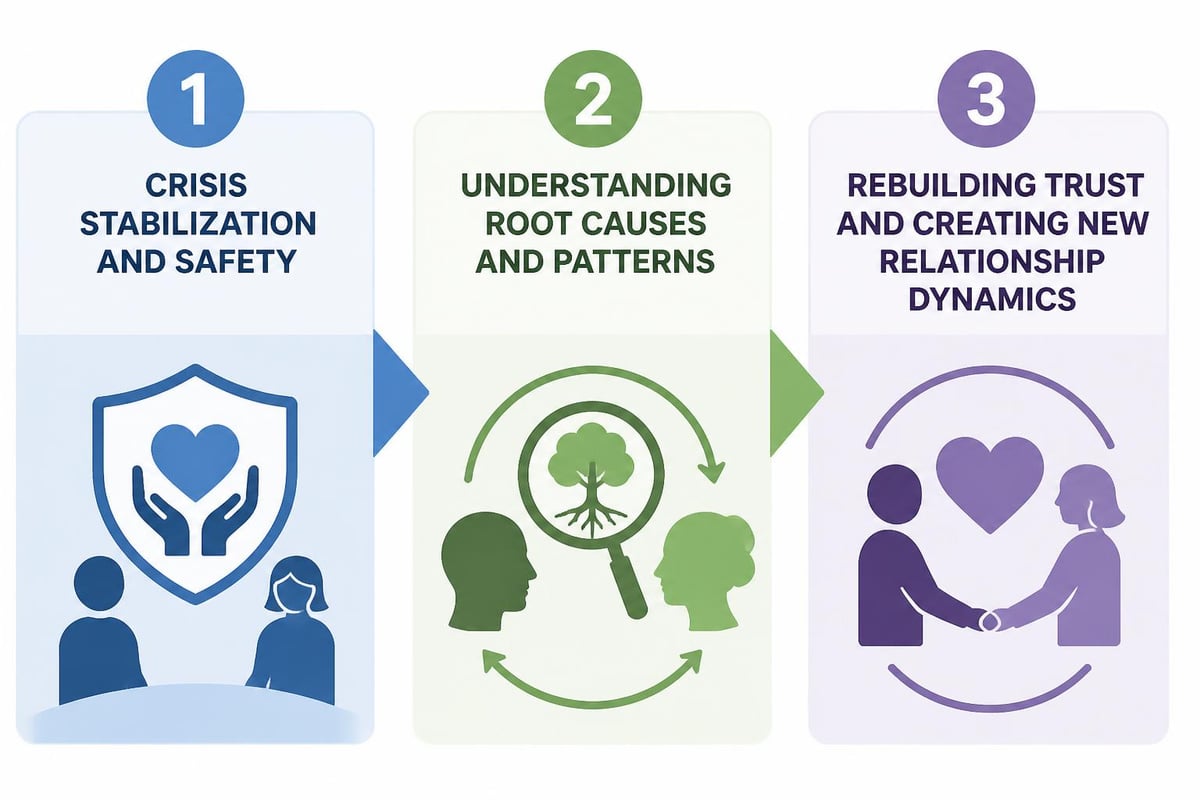
Phase One: Crisis Management
First, you've got to stop the bleeding. This means establishing ground rules, ensuring emotional safety, and deciding whether you're both willing to try. Some couples need time apart. Others need to reconnect physically and emotionally. Your relationship recovery therapist will help you figure out what's right for your situation.
Phase Two: Understanding What Happened
This is where things get real. You'll dig into the factors that led to the crisis. Not to assign blame, but to understand. What vulnerabilities existed? What needs weren't being met? What patterns kept repeating?
Many couples discover that addressing individual mental health concerns is crucial during this phase. Sometimes one partner's untreated anxiety or depression has been a major contributor to relationship problems.
Phase Three: Rebuilding and Creating Something New
Here's where hope enters the picture. You're not trying to recreate what you had before. You're building a new relationship with the same person, informed by everything you've learned.
This involves:
- Developing new communication patterns
- Creating rituals of connection
- Rebuilding intimacy (emotional and physical)
- Establishing accountability and transparency
- Learning to trust again (or trust differently)
When Individual Therapy Matters Too
Sometimes both partners need their own therapist alongside the couples work. A relationship recovery therapist might recommend individual sessions when:
- One partner is dealing with trauma from past relationships
- There's substance abuse or addiction that needs specialized treatment
- Someone has untreated mental health conditions
- The betrayed partner needs space to process independently
This isn't a sign that couples therapy isn't working. It's actually super common and often strengthens the recovery process. Théla's comprehensive therapeutic services address both individual and relationship needs.
Finding the Right Fit
Not every therapist who does couples work is equipped for relationship recovery. You want someone who:
- Has specific training in trauma-informed care
- Understands attachment theory and how betrayal affects it
- Won't push you to stay together or split up
- Can handle intense emotions without getting flustered
- Uses evidence-based therapeutic approaches
Ask potential therapists about their experience with situations like yours. How many couples have they helped through infidelity? What's their approach to rebuilding trust? Do they offer both in-person and online sessions for flexibility?
The Role of Technology in Modern Recovery
2026 has brought new tools to the relationship recovery process. Online therapy platforms make it easier to attend sessions from anywhere in Ontario, which is crucial when you're both juggling work and life stress.
Research on therapeutic relationships in online counseling shows that digital therapy can be just as effective as in-person sessions when the right structure is in place. Many couples appreciate the flexibility and privacy that online sessions provide during such a vulnerable time.
What to Expect From Sessions
Frequency and Duration
Most relationship recovery therapists recommend weekly sessions initially, sometimes even twice a week during acute crisis periods. Each session typically runs 50-90 minutes.
Homework and Practice
Yeah, there's homework. Your therapist will give you exercises to practice between sessions because real change happens in daily life, not just during appointments. This might include communication exercises, journaling, or specific activities to rebuild connection.
Progress Isn't Always Linear
Some weeks you'll feel amazing. Others, you'll wonder why you're bothering. That's completely normal. Understanding the ups and downs of the healing journey helps set realistic expectations.
Special Considerations for Different Crisis Types
Recovering From Infidelity
Affair recovery is probably the most common reason people seek a relationship recovery therapist. The process involves:
- Full disclosure (usually)
- Understanding why it happened
- Processing the betrayed partner's trauma
- Deciding on transparency measures
- Gradually rebuilding trust through consistent action
This can take 18-24 months or longer. Anyone who tells you it'll be quick is probably not being realistic.
Addiction-Related Relationship Damage
When addiction has damaged trust and connection, recovery requires addressing both the addiction and the relationship wounds. The role of support in recovery can't be overstated, whether that's through therapy, support groups, or both.
Financial Betrayal and Secret-Keeping
Hidden debt, secret spending, or major financial decisions made unilaterally can devastate trust just as much as infidelity. A relationship recovery therapist helps couples:
- Establish financial transparency
- Understand the underlying shame or fear that led to secrecy
- Create accountability systems that feel supportive, not controlling
- Work through resentment and rebuild financial partnership
The Investment in Your Relationship
Let's talk money because therapy isn't cheap. Most relationship recovery therapists charge $150-$300 per session. That adds up when you're going weekly.
But here's the perspective shift: What's the cost of divorce? Not just financially (which is massive), but emotionally, to your kids if you have them, to your social network, to your future?
Many therapists work with insurance, and Théla offers direct billing options to make accessing care easier. Some also have affordable therapy programs for those facing financial constraints.
| Cost Comparison | Relationship Recovery Therapy | Divorce |
|---|---|---|
| Financial | $3,000-$7,000 over 6-12 months | $15,000-$50,000+ average |
| Time Investment | 1-2 hours weekly | Months to years of legal proceedings |
| Emotional Toll | Intense but supported | Extremely high stress |
| Outcome | Possibility of stronger relationship | Relationship ends |
This isn't to say you should stay in an unhealthy relationship just because divorce is expensive. But if there's a chance to rebuild something worthwhile, investing in skilled help makes sense.
Recovery from relationship crisis isn't easy, but with the right guidance, many couples emerge stronger and more connected than before. If you're facing relationship challenges in Ontario, Théla Psychotherapy Clinic offers trauma-informed couples counseling both in-person in Markham and online throughout the province, using evidence-based approaches like EFT, EMDR, and CBT tailored to your unique situation.

Bonny Li
Contact Me
.jpg)