You know that feeling when even the smallest tasks feel like climbing a mountain? When brushing your teeth or replying to a text message seems impossible? You're not alone, and you're not lazy. What you're experiencing might be lack of motivation depression, a common symptom that affects millions of people. Understanding this connection is the first step toward getting the support you need and reclaiming your energy.
What Makes Lack of Motivation Depression Different
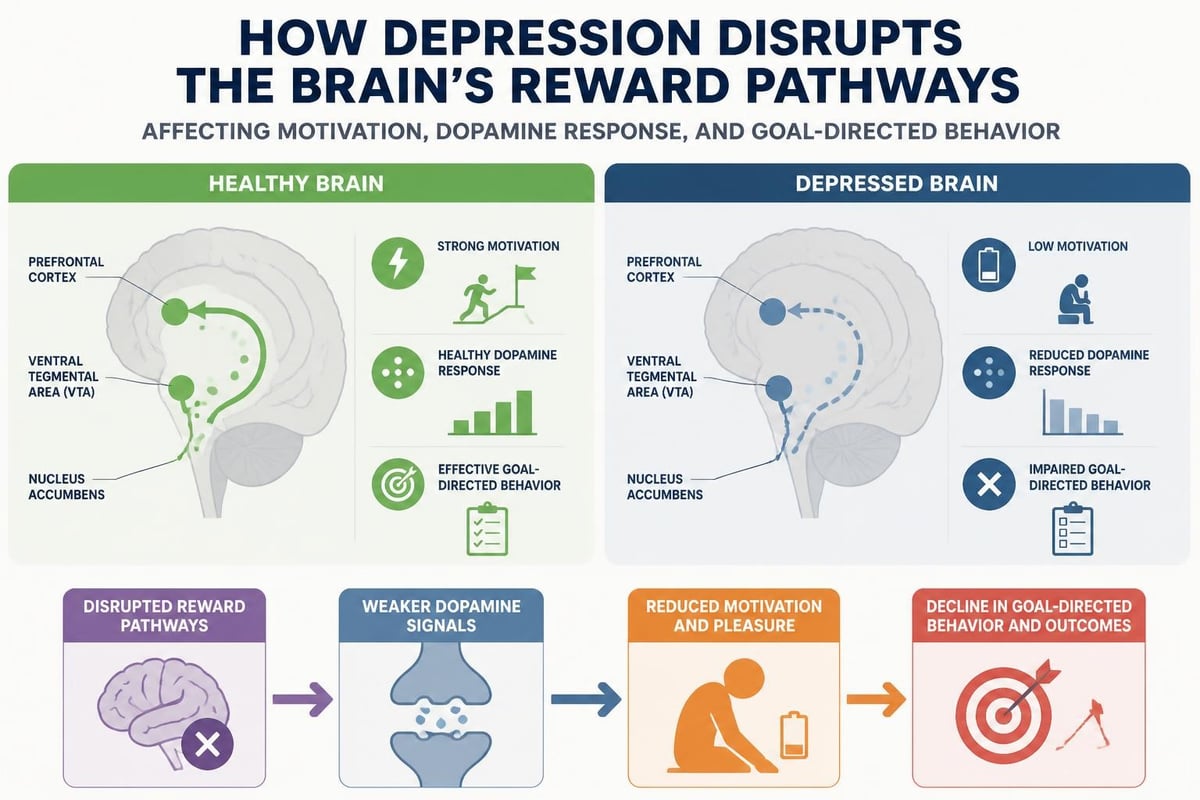
Depression isn't just feeling sad. It's a complex mental health condition that fundamentally changes how your brain processes rewards and goals. When you're dealing with lack of motivation depression, your brain's reward system isn't firing the way it should. Tasks that used to bring satisfaction now feel pointless.
The National Institute of Mental Health provides comprehensive information on depression and its various symptoms. What makes this particular symptom tricky is that people often mistake it for laziness or weakness. That couldn't be further from the truth.
The Science Behind Your Struggle
Here's what's actually happening in your brain:
- Neurotransmitter imbalance affects dopamine and serotonin levels
- Reward processing becomes disrupted, making achievement feel hollow
- Energy regulation gets thrown off, leaving you exhausted
- Executive function decreases, making decisions overwhelming
Avolition, a severe reduction in motivation, represents the extreme end of this spectrum. It's not about willpower. It's about brain chemistry.
Recognizing the Warning Signs
Lack of motivation depression shows up differently for everyone. You might recognize some of these patterns in your own life. Some days you can't get out of bed. Other days you're physically present but mentally checked out.
| Physical Signs | Emotional Signs | Behavioral Signs |
|---|---|---|
| Constant fatigue | Feeling numb or empty | Avoiding responsibilities |
| Sleep changes | Loss of interest | Withdrawing socially |
| Appetite shifts | Feeling worthless | Procrastinating everything |
| Low energy | Difficulty concentrating | Neglecting self-care |
The CDC emphasizes the importance of distinguishing between temporary sadness and clinical depression. If these symptoms persist for more than two weeks, it's time to reach out for professional support.
When Everything Feels Pointless
Depression has a sneaky way of making you question why anything matters. Your hobbies lose their appeal. Work feels meaningless. Even spending time with loved ones doesn't spark joy like it used to. This isn't a character flaw. It's a symptom that deserves attention and treatment.
Understanding common areas that psychotherapy can support helps you recognize that professional help exists for exactly what you're experiencing.
Breaking the Cycle
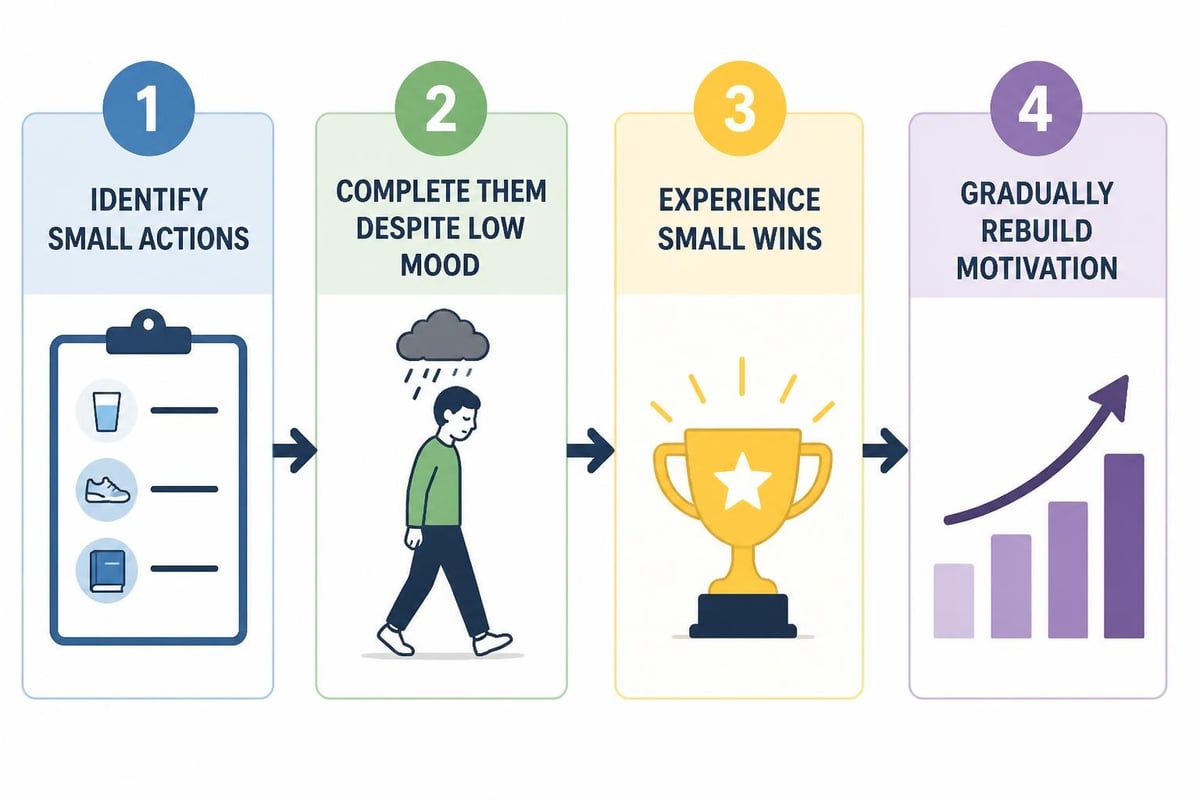
The relationship between lack of motivation depression and inactivity creates a vicious cycle. You feel unmotivated, so you do less. Doing less makes you feel worse. Feeling worse kills your motivation even more. Breaking this pattern requires strategic, compassionate approaches.
Start ridiculously small. Seriously. We're talking micro-goals here:
- Get out of bed and sit on the couch
- Brush your teeth for 30 seconds
- Step outside for one minute
- Send one text message
- Drink a glass of water
These aren't your final goals. They're your starting line. Behavioral activation therapy uses this exact principle. You're not trying to feel motivated first. You're creating tiny actions that gradually rebuild your capacity.
Practical Strategies That Actually Help
Let's get real about what works when you're struggling with lack of motivation depression. These strategies come from both clinical research and lived experience. Not everything will work for everyone, but you'll find something that clicks.
Movement as Medicine
You don't need to run a marathon. Research shows that physical activity can significantly boost motivation in people experiencing depression. A five-minute walk counts. Dancing to one song in your kitchen counts. Stretching in bed counts.
Create accountability without pressure:
- Text a friend when you complete a small task
- Use a simple checklist (checking boxes feels good)
- Set phone reminders for basic self-care
- Join a gentle movement class (online works fine)
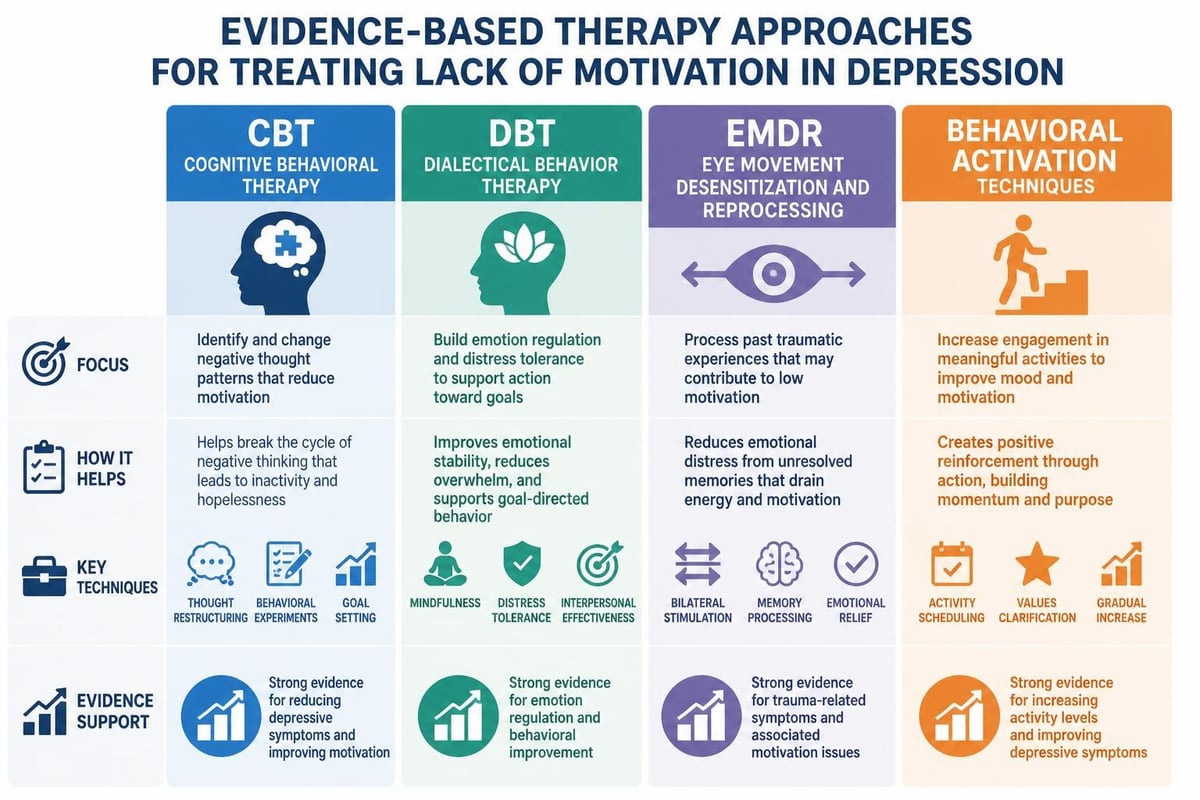
Evidence-based therapeutic approaches like CBT and DBT include behavioral components specifically designed to address motivation challenges.
Reframing Your Expectations
Depression lies to you constantly. It tells you that if you can't do something perfectly, you shouldn't do it at all. This black-and-white thinking keeps you stuck. Here's your new mantra: something is always better than nothing.
Did you only shower twice this week instead of daily? That's two victories. Could only work for three hours instead of eight? You showed up. These aren't failures. They're wins against a real illness.
Getting Professional Support
Here's something important: finding motivation while dealing with depression often requires professional guidance. You wouldn't try to fix a broken bone by yourself. Mental health deserves the same level of care.
Therapy options that specifically address lack of motivation depression include:
- Cognitive Behavioral Therapy (CBT) to challenge negative thought patterns
- Dialectical Behavior Therapy (DBT) for emotional regulation skills
- EMDR therapy when trauma contributes to depression
- Medication management to address chemical imbalances
Wondering what to expect from the therapy process? Most people find that understanding the journey ahead makes taking that first step easier.
Building Your Support System
You can't think your way out of lack of motivation depression alone. Connection matters, even when (especially when) you want to isolate yourself. Your support system doesn't need to be huge. Quality beats quantity every time.
| Support Type | How It Helps | Getting Started |
|---|---|---|
| Professional therapy | Expert guidance and evidence-based treatment | Book a consultation call |
| Trusted friend/family | Emotional support and accountability | Share one honest thing |
| Support groups | Shared experience and validation | Find online or local groups |
| Online communities | Anonymous connection and resources | Join moderated forums |
If you're in Ontario, accessing individual therapy services has never been easier, with both in-person and virtual options available. Cost concerns? Many clinics offer affordable therapy programs to ensure money doesn't stand between you and healing.
Moving Forward One Day at a Time
Recovery from lack of motivation depression isn't linear. You'll have good days and rough days. That's not failure. That's the reality of healing from a complex condition. The goal isn't perfection. It's progress, measured in the smallest possible increments.
Remember that your brain is working against you right now, but it can also work with you again. Treatment works. Support helps. You deserve both. Whether you need help overcoming depression or just want to understand why getting out of bed feels impossible some days, reaching out for professional support is a sign of strength, not weakness.
Understanding the connection between lack of motivation and depression helps you recognize that what you're experiencing isn't a personal failing but a treatable condition. If you're struggling with persistent low motivation, emptiness, or any symptoms of depression, professional support can make a real difference in your recovery journey. Théla Psychotherapy Clinic offers trauma-informed, evidence-based therapy throughout Ontario, both online and in-person, with specialized approaches tailored to your unique needs. You don't have to navigate this alone.

Bonny Li
Contact Me
.jpg)