Life can feel overwhelming when your emotions seem to run the show. One minute you're fine, the next you're spiraling, and it feels like there's no solid ground beneath your feet. If this sounds familiar, you're not alone. Many people struggle with intense emotions that affect their relationships, work, and overall quality of life. That's where dialectical behavior therapy comes in, offering practical tools and a path forward that actually works.
What Makes DBT Therapy Different
Dialectical behavior therapy stands out because it acknowledges a simple truth: two seemingly opposite things can be true at once. You can accept yourself exactly as you are right now while also working to change unhelpful patterns. This "both/and" approach, rather than "either/or" thinking, forms the foundation of the therapy.
Originally developed by Dr. Marsha Linehan in the late 1980s, dbt therapy was designed to treat borderline personality disorder, but its applications have expanded far beyond that initial focus. Today, therapists use it to help people dealing with emotional dysregulation, self-harm, suicidal thoughts, PTSD, eating disorders, and substance use issues.
The beauty of this approach lies in its structure and practicality. Unlike some therapies that focus primarily on talking through past experiences, dbt therapy gives you concrete skills you can use right now, today, to manage whatever life throws your way.
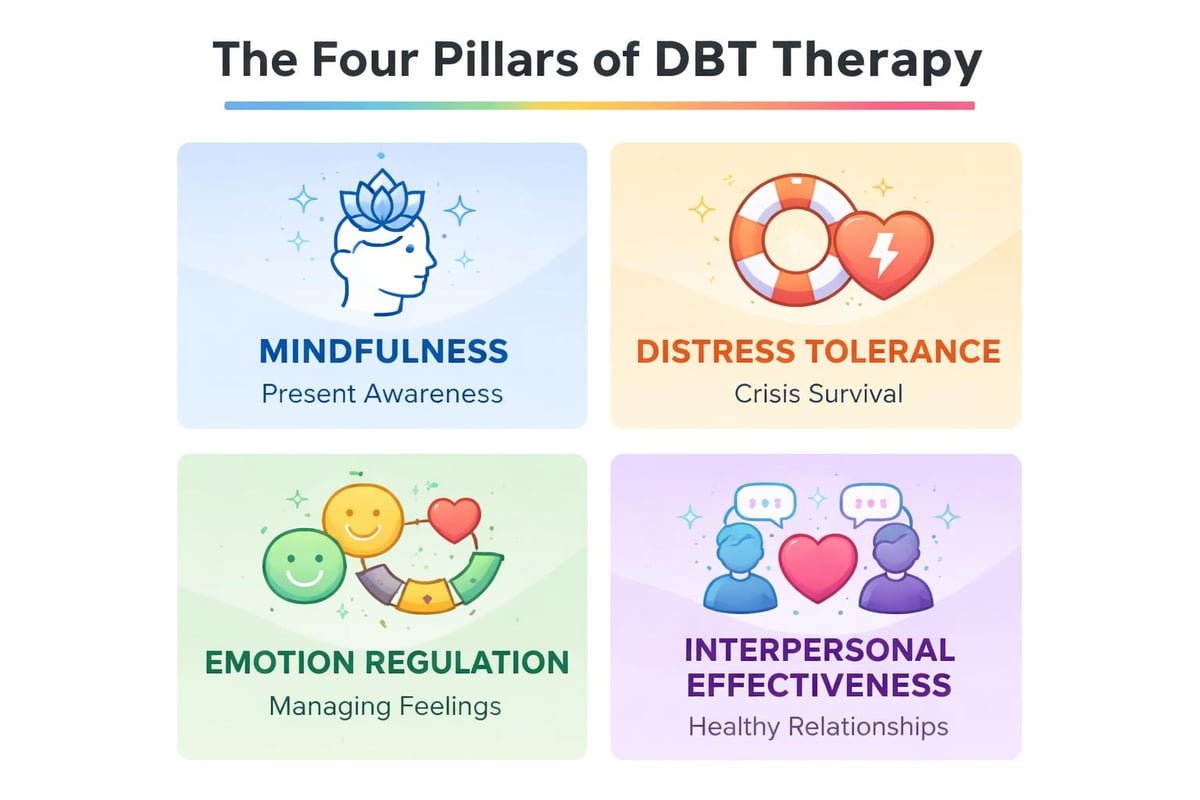
The Four Core Skills That Change Everything
Mindfulness
Think of mindfulness as your anchor. It's about noticing what's happening right now without judgment. When you're stuck in your head worrying about the future or ruminating about the past, mindfulness brings you back to this moment. It sounds simple, but it's revolutionary for people who spend most of their time battling their own thoughts.
Distress Tolerance
Life isn't always manageable, and sometimes you just need to survive the crisis without making things worse. Distress tolerance skills help you get through intense moments without turning to harmful coping mechanisms. These techniques include:
- Self-soothing through your five senses
- Improving the moment with visualization and meaning-making
- Radical acceptance of what you can't change
- TIPP skills (Temperature, Intense exercise, Paced breathing, Paired muscle relaxation)
Emotion Regulation
Understanding and managing your emotions doesn't mean suppressing them. In dbt therapy, you learn to identify what you're feeling, understand what triggered it, and respond in ways that serve you better. This module helps reduce emotional vulnerability and increases positive emotional experiences.
Interpersonal Effectiveness
Relationships get complicated when emotions run high. This skill set teaches you how to ask for what you need, say no when necessary, and maintain your self-respect while navigating conflicts. It's basically relationship 101 for people who never got that handbook.
How DBT Therapy Actually Works in Practice
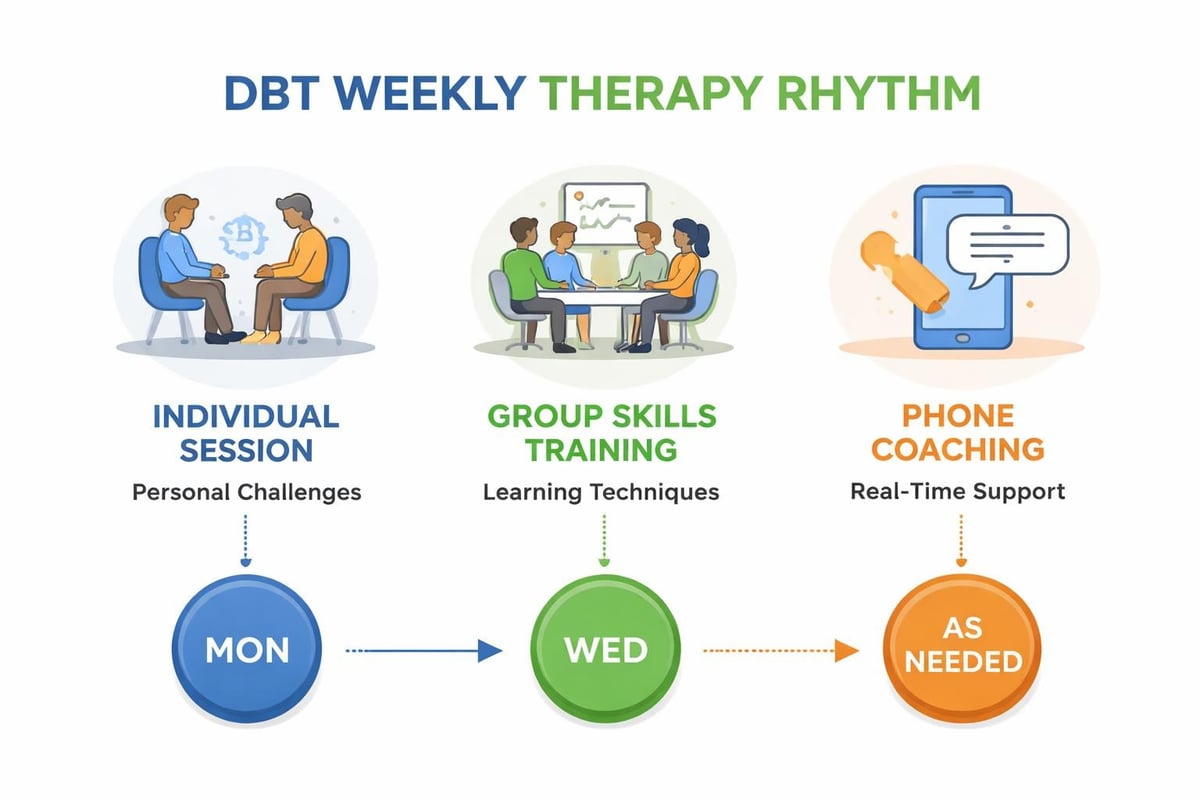
The typical dbt therapy program includes multiple components working together. You're not just showing up for a weekly chat, you're engaging in a comprehensive treatment approach.
| Component | What It Involves | Time Commitment |
|---|---|---|
| Individual Therapy | One-on-one sessions focused on your specific challenges | Weekly, 50-60 minutes |
| Skills Training Group | Learning and practicing the four modules with others | Weekly, 2-2.5 hours |
| Phone Coaching | Between-session support for skill application | As needed |
| Consultation Team | Therapists meeting to stay effective and motivated | Weekly (therapist-side) |
At clinics like Théla Psychotherapy Clinic, therapists integrate dbt therapy principles into individualized treatment plans that respect your unique circumstances and cultural background.
Who Benefits Most from This Approach
While dialectical behavior therapy was initially developed for borderline personality disorder, research shows it helps with much more. People dealing with emotional dysregulation of any kind can find relief through these skills.
You might benefit from dbt therapy if you experience:
- Intense emotions that feel out of control
- Impulsive behaviors you later regret
- Unstable relationships with frequent conflicts
- Self-harm or suicidal thoughts
- Chronic feelings of emptiness
- Difficulty managing anger or anxiety
The approach works particularly well for people who've tried other therapies without success. Sometimes traditional talk therapy or even cognitive behavioral therapy isn't quite enough when emotions are this intense.
The Science Behind the Skills
Research consistently shows that dialectical behavior therapy reduces self-injurious behavior and hospitalization rates while improving overall quality of life. The evidence is strong enough that it's now considered a gold-standard treatment for certain conditions.
What makes it work? The combination of validation and change creates a safe space for growth. Your therapist acknowledges that your struggles are real and make sense given your experiences, while also believing in your capacity to learn new ways of responding.
The skills aren't just theoretical concepts either. Psychology Tools outlines how DBT integrates cognitive-behavioral techniques with mindfulness principles, creating a practical roadmap for change that you can actually follow.
What to Expect in Your DBT Journey
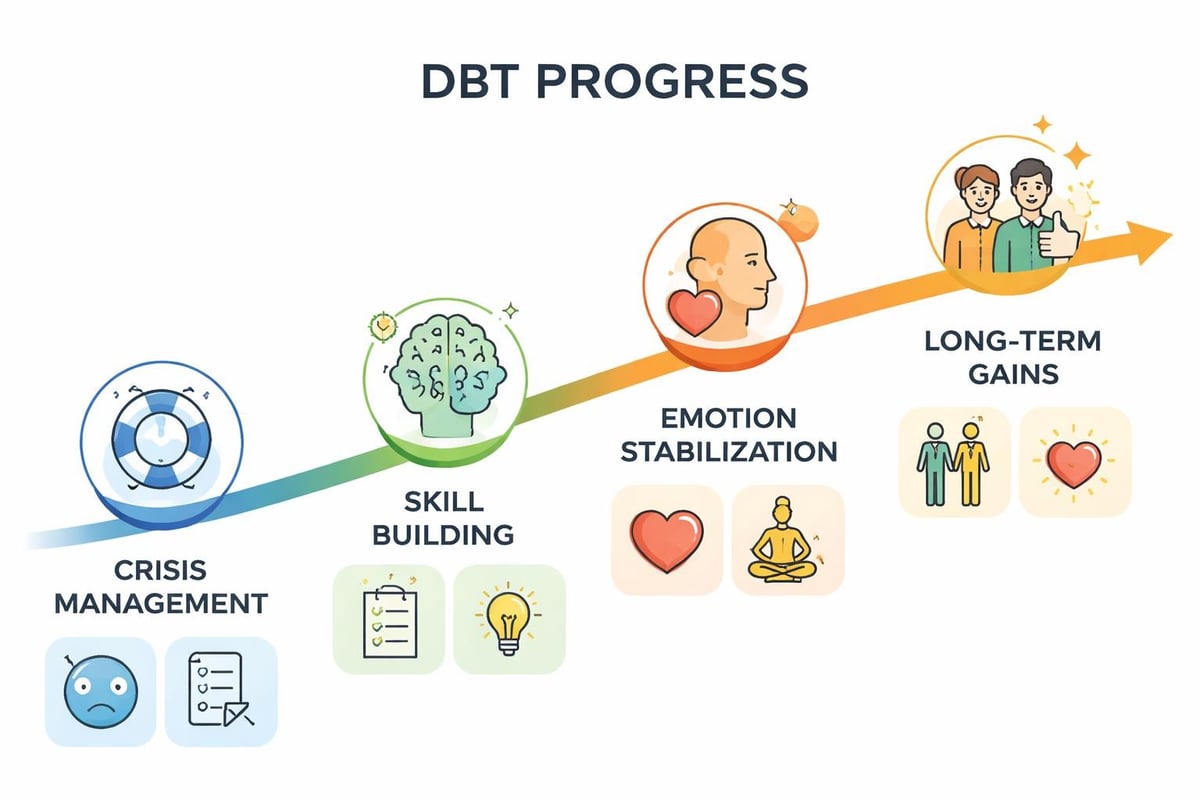
Starting dbt therapy requires commitment. You're not looking for a quick fix, you're building a foundation for lasting change. Most programs run for six months to a year, though some people continue longer depending on their needs.
The first phase focuses on stabilization. You'll work on stopping life-threatening behaviors and getting crisis situations under control. This isn't about perfection, it's about progress.
The second phase addresses quality of life issues. Once you've developed basic emotional regulation skills, you can tackle trauma processing, relationship problems, and other challenges that have been holding you back. Many people combine dbt therapy with other therapeutic approaches like EMDR during this phase.
The third phase emphasizes building a life worth living. What does that mean for you? Maybe it's pursuing career goals, deepening relationships, or simply finding more joy in everyday moments.
Interestingly, the mind-body connection plays a significant role in emotional regulation. Some people find that addressing physical health concerns through functional medicine approaches alongside therapy creates even better outcomes, since physical and mental health are deeply interconnected.
Finding the Right Support
Not all therapists practice dbt therapy the same way. Some offer the full comprehensive program, while others integrate DBT skills into a more flexible treatment approach. Understanding BPD and therapy options can help you know what questions to ask potential therapists.
When looking for a therapist, consider:
- Their training and certification in DBT
- Whether they offer individual sessions, group skills training, or both
- Their approach to phone coaching
- How they handle insurance coverage
- Whether they provide culturally responsive care
The relationship you build with your therapist matters tremendously. You need someone who can hold space for your pain while challenging you to grow. That balance of warmth and accountability defines effective dbt therapy.
Learning to manage intense emotions and build healthier relationships takes time, but the skills you develop through dialectical behavior therapy can truly transform your life. If you're ready to start this journey with trauma-informed, culturally responsive care, Théla Psychotherapy Clinic offers evidence-based DBT services both in-person in Markham and online throughout Ontario, creating a safe space where healing and personal growth become possible.

Bonny Li
Contact Me