Spotting the signs of depression in teens isn't always straightforward. Adolescence naturally brings mood swings, identity questions, and emotional ups and downs. But when does typical teenage angst cross the line into something more serious? As a parent or caregiver, understanding the difference could make all the difference in getting your teen the support they need. Let's walk through the key warning signs and what you can do when you notice them.
Understanding What Depression Looks Like in Teenagers
Teen depression doesn't always mirror adult depression. While adults might express sadness openly, teenagers often mask their feelings with irritability, anger, or complete emotional shutdown. Recognizing teen depression requires looking beyond surface-level moodiness.
Depression in adolescents affects roughly one in five teens at some point during their teenage years. That's a staggering statistic when you think about it. The condition doesn't discriminate, touching families across all backgrounds and circumstances.
Key Behavioral Changes to Watch For
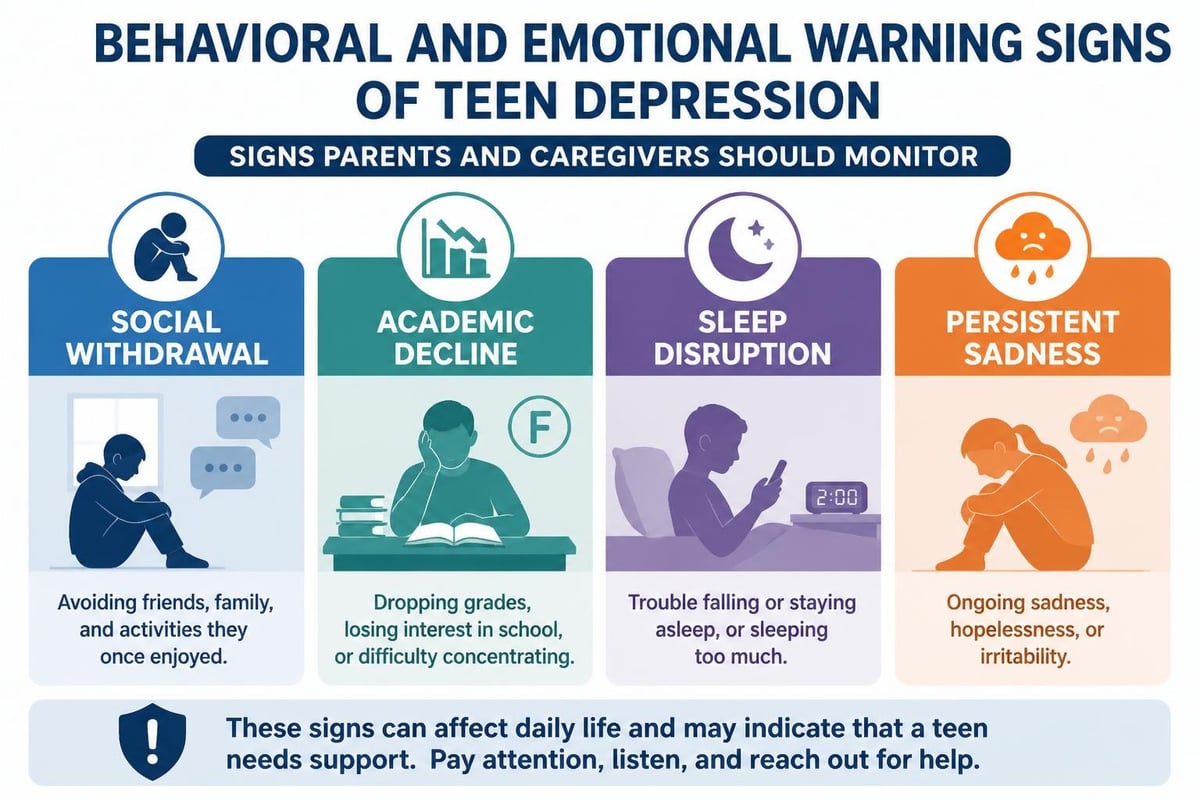
You know your teen better than anyone else. When their behavior shifts dramatically, pay attention. Here are some of the most common behavioral signs of depression in teens:
- Withdrawing from friends and family, especially activities they previously enjoyed
- Declining academic performance or loss of interest in schoolwork
- Changes in sleep patterns, either sleeping way too much or struggling with insomnia
- Appetite changes leading to significant weight loss or gain
- Loss of energy and constant complaints of being tired
Cleveland Clinic outlines 10 signs that help differentiate depression from normal teenage mood fluctuations, emphasizing that persistent patterns lasting two weeks or longer warrant attention.
Emotional and Mental Symptoms You Might Miss
Beyond what you can see externally, there's a whole internal world your teen might be struggling with. These emotional symptoms often go unnoticed because teenagers aren't always forthcoming about their feelings.
The Inner Struggles
Depression affects how teens think about themselves and their future. Watch for these mental and emotional patterns:
| Symptom Category | What to Look For | Duration to Monitor |
|---|---|---|
| Mood Changes | Persistent sadness, hopelessness, irritability | 2+ weeks |
| Self-Worth | Excessive guilt, feelings of worthlessness | Ongoing pattern |
| Concentration | Difficulty focusing, indecisiveness | Interferes with daily tasks |
| Future Outlook | Talk of hopelessness, no future plans | Persistent themes |
Teens experiencing depression might express feelings of emptiness or numbness. They may struggle with concentration, making homework and tests feel impossible. Some develop a fixation on past failures or become hypersensitive to criticism.
Understanding the various therapeutic approaches available can help when these symptoms become overwhelming. Evidence-based treatments like CBT and DBT have proven particularly effective for teen depression.
Physical Manifestations and Risk Behaviors
Depression isn't just in your teen's head. It manifests physically too. Scripps Health discusses how physical symptoms often accompany the emotional turmoil of teen depression.
Your teen might complain about:
- Frequent headaches or stomachaches with no clear medical cause
- General body aches and pains
- Digestive issues
- Unexplained physical complaints that don't respond to treatment
Warning Signs That Require Immediate Attention
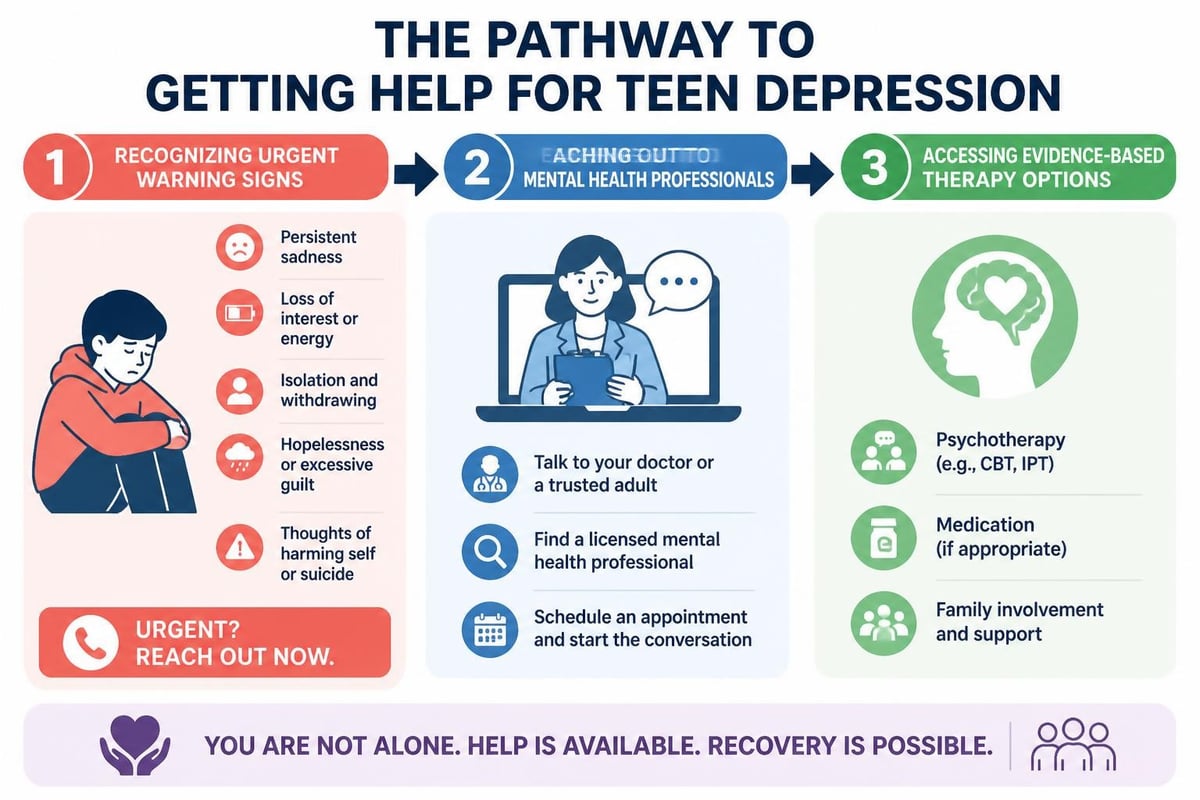
Some signs of depression in teens demand urgent action. If your teenager shows any of these behaviors, seek professional help immediately:
- Self-harm behaviors like cutting or burning
- Substance abuse as a coping mechanism
- Reckless behaviors that put them in danger
- Talk of suicide or death, even in passing
- Giving away possessions or saying goodbye to friends
When these severe symptoms appear, reaching out to professional services becomes critical. Don't wait or hope it'll pass on its own.
Social and Relationship Red Flags
Teenagers are social creatures. When a previously outgoing teen suddenly becomes isolated, that's significant. Elliot Hospital offers insights into distinguishing typical teenage social changes from depression-related withdrawal.
Depression often shows up in how teens relate to others:
- Pulling away from close friends without explanation
- Losing interest in romantic relationships
- Avoiding family gatherings or meals
- Declining invitations to events they'd normally enjoy
- Spending excessive time alone in their room
You might notice your teen becoming more argumentative or sensitive. Small disagreements blow up into major conflicts. They might push you away when you try to connect, making it hard to offer support.
Academic and Activity-Related Changes
School performance often takes a hit when depression strikes. A student who previously earned As and Bs might suddenly bring home Ds and Fs. They might skip classes, stop completing assignments, or lose interest in extracurricular activities completely.
Breaking Down Academic Warning Signs
| Area of Concern | Specific Examples | Impact Level |
|---|---|---|
| Grades | Sudden drop in performance | High |
| Attendance | Frequent absences, skipping classes | High |
| Participation | No longer raising hand, engaging in discussions | Medium |
| Activities | Quitting sports, clubs, or hobbies | High |
| Homework | Incomplete assignments, missing deadlines | Medium-High |
Teachers might reach out expressing concerns about your teen seeming disconnected or unmotivated. These observations from adults who see your teen in different contexts provide valuable perspective.
For teens balancing mental health challenges, exploring affordable therapy options ensures financial barriers don't prevent getting help.
Gender Differences in Depression Presentation
Boys and girls often express signs of depression in teens differently. Girls may be more likely to verbalize sadness, cry frequently, or withdraw socially. Boys might display more anger, irritability, or engage in risk-taking behaviors.
This doesn't mean one gender's depression is more serious than the other. It just means you need to stay alert to different presentations. A boy who becomes suddenly aggressive or starts getting into fights might be struggling with depression just as much as a girl who cries in her room every night.
When Normal Teen Struggles Become Depression
Every teenager has bad days, weeks even. They'll get moody during exam season, feel down after a breakup, or stress about college applications. That's normal. But how do you know when to seek help from a therapist?
Duration matters most. If symptoms persist for two weeks or longer without improvement, that's a red flag. Intensity matters too. Are the symptoms interfering with daily functioning? Can your teen still go to school, maintain friendships, and handle basic responsibilities?
Multiple symptoms together paint a clearer picture than one isolated issue. A teen who's sleeping more isn't necessarily depressed, but a teen who's sleeping 14 hours a day, stopped seeing friends, let their grades drop, and talks about feeling worthless? That's concerning.
Taking Action: What Parents Can Do
First, start a conversation. Pick a calm moment and express your concerns without judgment. Use "I" statements: "I've noticed you seem really tired lately" rather than "You're always sleeping."
Listen more than you talk. Your teen might not open up immediately, and that's okay. Keep the door open for future conversations. Let them know you're there whenever they're ready.
Document what you're seeing. Keep notes about specific behaviors, when they started, and how often they occur. This information helps healthcare providers understand the full picture.
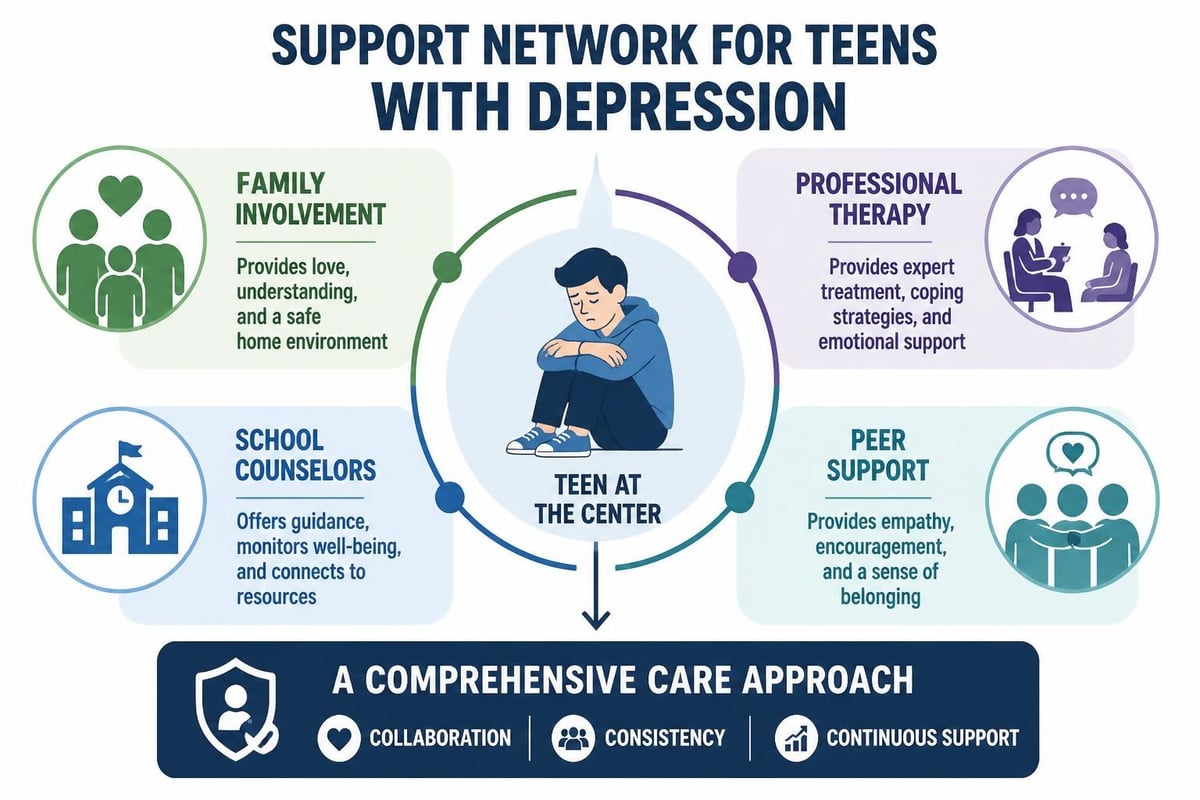
Research shows that seeking professional support makes a significant difference. Whether through individual therapy or specialized approaches like DBT, trained therapists provide teens with coping strategies and a safe space to process their feelings.
Don't go it alone. Connect with your teen's school counselor, your family doctor, or a mental health professional. The sooner you intervene, the better the outcomes typically are. Early treatment for signs of depression in teens prevents the condition from deepening and helps your teen develop resilience for future challenges.
Recognizing signs of depression in teens empowers you to act before the condition worsens. Trust your instincts as a parent, document what you observe, and don't hesitate to seek professional guidance. At Théla Psychotherapy Clinic, our team offers trauma-informed, evidence-based therapy tailored specifically for teens struggling with depression, available both in-person in Markham and online throughout Ontario. Your teen deserves support, and you don't have to navigate this journey alone.

Bonny Li
Contact Me