Living with narcissistic personality disorder (NPD) can feel like being trapped behind a wall you didn't even know you built. While it's one of the more challenging personality disorders to treat, the good news is that effective narcissistic personality disorder treatments do exist. The journey isn't easy, and it requires genuine commitment, but people can develop healthier relationship patterns and a more authentic sense of self. Whether you're seeking help for yourself or trying to understand options for someone you care about, knowing what treatments actually work makes all the difference.
Understanding Why Treatment Matters
Narcissistic personality disorder goes way beyond just being self-centered or a little vain. We're talking about a pervasive pattern of grandiosity, need for admiration, and lack of empathy that seriously impacts relationships and daily functioning. Harvard Health Publishing discusses the symptoms, diagnosis, and treatment approaches for NPD, highlighting just how complex this condition really is.
The tricky part? Most people with NPD don't initially seek treatment because they don't recognize there's a problem. They often come to therapy because of related issues like depression, anxiety, or relationship breakdowns. That's actually okay because once they're in the therapy room, skilled clinicians can address the underlying personality patterns.
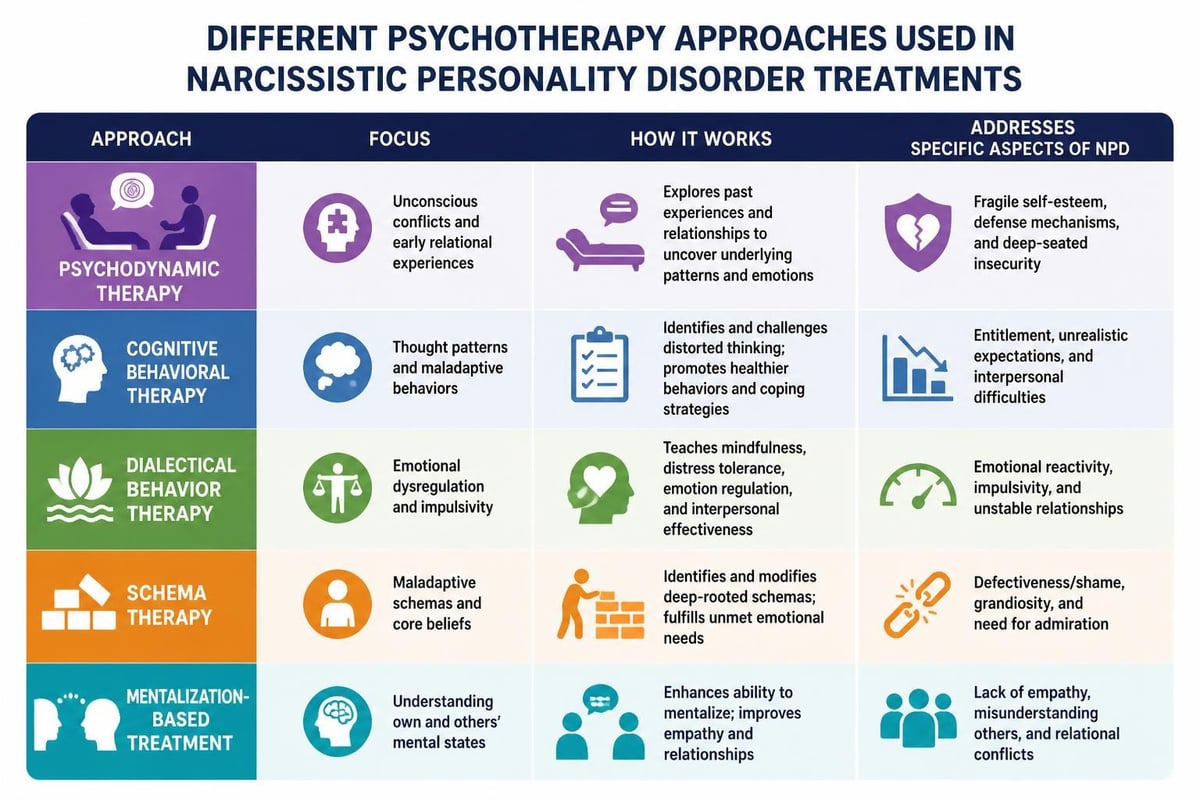
Evidence-Based Therapy Approaches
Psychodynamic Psychotherapy
This is often considered the gold standard among narcissistic personality disorder treatments. Psychodynamic therapy digs deep into unconscious patterns, early life experiences, and defense mechanisms that maintain narcissistic behaviors. It's typically a longer-term commitment, sometimes lasting several years, but it addresses the root causes rather than just symptoms.
The therapeutic relationship itself becomes a powerful tool. Through this connection, people with NPD can gradually develop more realistic self-perception and genuine empathy for others.
Cognitive Behavioral Therapy (CBT)
CBT takes a more structured, present-focused approach. It helps identify and challenge distorted thinking patterns that fuel narcissistic behaviors. At Théla Psychotherapy Clinic, CBT is one of several evidence-based approaches used to tailor treatment to each person's unique needs.
Key CBT techniques for NPD include:
- Identifying automatic thoughts related to superiority or entitlement
- Challenging black-and-white thinking patterns
- Developing realistic self-assessment skills
- Building empathy through perspective-taking exercises
- Learning healthier coping strategies for criticism
Dialectical Behavior Therapy (DBT)
While originally developed for borderline personality disorder, DBT has shown promise as one of the narcissistic personality disorder treatments, especially for emotional regulation. DBT therapy focuses on building skills in four key areas: mindfulness, distress tolerance, emotion regulation, and interpersonal effectiveness.
What the Treatment Process Actually Looks Like
Let's be real about expectations here. Narcissistic personality disorder treatments don't offer quick fixes. Medical News Today explores various treatment options, emphasizing that therapy is the primary intervention and progress happens gradually.
| Treatment Phase | Timeline | Focus Areas |
|---|---|---|
| Initial engagement | 3-6 months | Building trust, addressing presenting concerns |
| Core work | 1-3 years | Exploring patterns, developing insight, building skills |
| Integration | 6-12 months | Applying changes, maintaining progress |
The first challenge is establishing a therapeutic alliance. People with NPD might be defensive, dismissive, or hypersensitive to perceived criticism. A skilled therapist creates a safe, non-judgmental space where exploration can happen without triggering intense shame or rage.
Building Self-Awareness
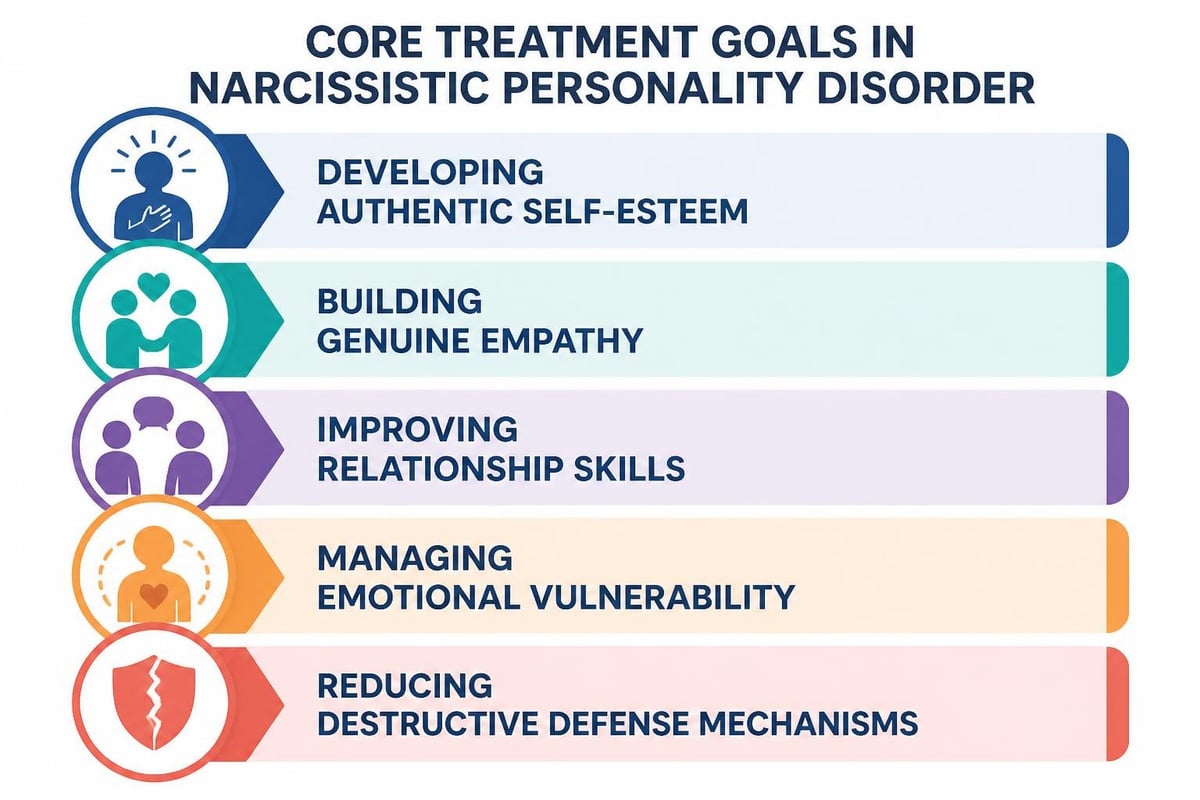
One of the most crucial aspects of narcissistic personality disorder treatments involves developing genuine self-awareness. This isn't about self-criticism or tearing someone down. It's about recognizing patterns honestly.
Therapists help clients notice:
- How they impact others emotionally
- When grandiosity serves as a defense against vulnerability
- Moments when empathy is accessible versus blocked
- The difference between authentic confidence and fragile self-esteem
Additional Treatment Components
Schema Therapy
This integrative approach combines elements from CBT, psychodynamic therapy, and attachment theory. It identifies and modifies deeply ingrained patterns (schemas) formed in childhood. Healthline provides a comprehensive overview of NPD, including how different therapeutic approaches address underlying causes.
Schema therapy is particularly effective for addressing:
- Entitlement schemas
- Defectiveness/shame patterns
- Emotional deprivation experiences
- Unrelenting standards
- Insufficient self-control
Mentalization-Based Treatment
This approach focuses on developing the capacity to understand mental states in oneself and others. For people with NPD, mentalization is often impaired, particularly regarding others' perspectives and emotions.
Through mentalization-based treatment, clients learn to pause and consider what might be happening internally for themselves and others during interactions. It's like developing a new lens for viewing relationships.
Medication Considerations
Here's something important to understand: there's no medication specifically approved for treating narcissistic personality disorder. However, medications may be helpful for co-occurring conditions.
Common co-occurring conditions include:
- Depression
- Anxiety disorders
- Substance use issues
- Bipolar disorder
At Théla's therapeutic services, the focus remains on evidence-based psychotherapy approaches, with medication referrals made when appropriate for addressing concurrent mental health concerns.
Cultural Responsiveness in Treatment
Narcissistic personality disorder treatments need to account for cultural context. What looks like pathological narcissism in one cultural framework might reflect different values or expressions in another. Understanding the therapy process includes recognizing how cultural factors influence both presentation and treatment.
Culturally responsive care considers:
- How individualism versus collectivism shapes self-concept
- Cultural norms around emotional expression
- Family dynamics and hierarchies
- Communication styles and directness
- Stigma surrounding mental health treatment
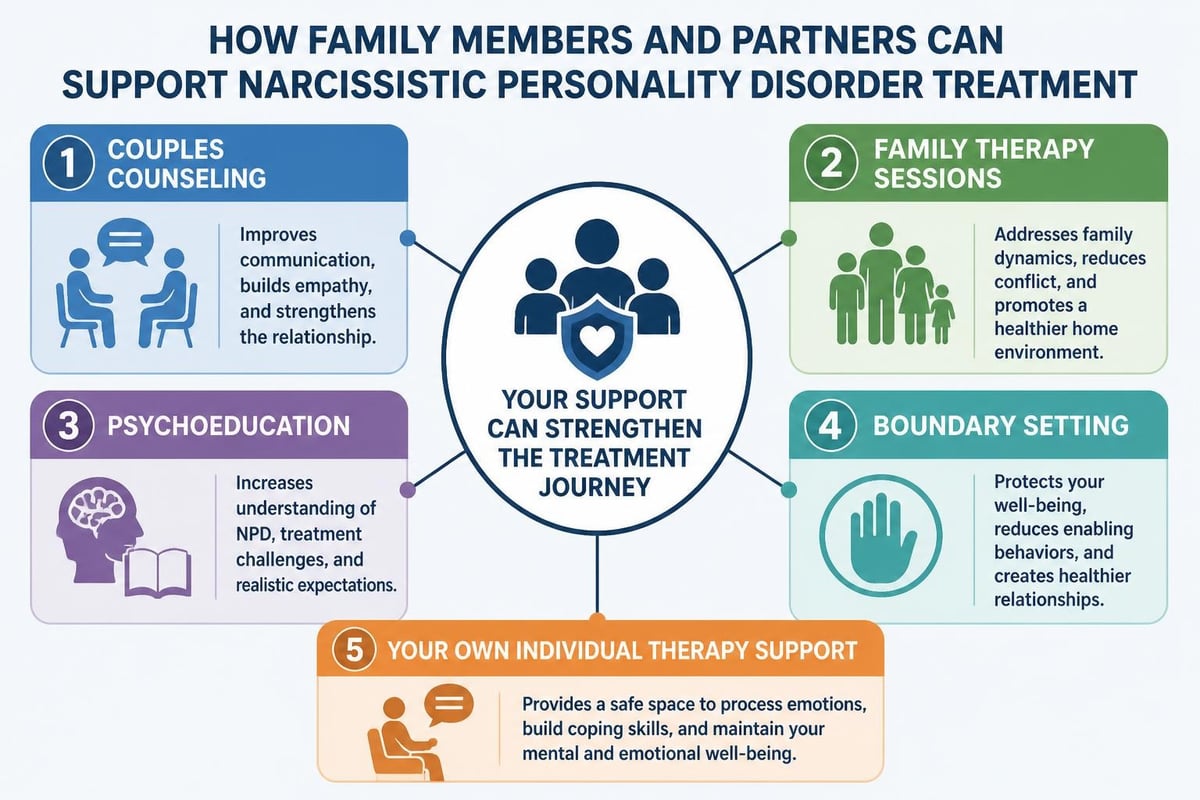
Support for Loved Ones
If you're in a relationship with someone with NPD, you probably need support too. Time discusses strategies for dealing with narcissistic individuals, offering insights into recognizing behaviors and setting healthy boundaries.
Couples counseling can be valuable, though it requires careful structuring. The therapist needs skills in both personality disorders and relationship dynamics. Théla offers couples counselling services that can address these complex relationship patterns with trauma-informed care.
Finding the Right Therapist
Not every therapist has the specialized training needed for narcissistic personality disorder treatments. Look for clinicians with:
- Specific personality disorder training
- Experience with long-term psychotherapy
- Strong boundary management skills
- Trauma-informed approaches
- Cultural competence
The therapeutic relationship makes or breaks treatment success. You need someone who can balance empathy with appropriate confrontation, who won't get drawn into narcissistic dynamics, and who genuinely believes change is possible.
Realistic Expectations for Progress
Let's talk honestly about outcomes. Narcissistic personality disorder treatments can lead to meaningful change, but it's rarely dramatic or quick. Progress might look like slightly more empathy in relationships, somewhat better stress tolerance, or gradually developing the capacity to reflect on one's impact.
Some people develop significant insight and make substantial changes. Others gain enough self-awareness to prevent the worst relational damage. Both represent success.
The most important predictor of positive outcomes? Genuine engagement in the therapeutic process, even when it feels uncomfortable or threatening to one's self-image.
Narcissistic personality disorder treatments require commitment, skilled therapeutic support, and patience with the gradual process of change. If you or someone you care about is struggling with NPD patterns, know that help is available and progress is possible. Théla Psychotherapy Clinic offers trauma-informed, culturally responsive care using evidence-based approaches like CBT, DBT, and EMDR, available both in-person in Markham and online throughout Ontario. Reach out today to start your healing journey in a safe, supportive environment.

Bonny Li
Contact Me