Ever feel like there's a battle going on inside your head? Like part of you wants to do something while another part holds you back? You're not imagining things. Internal Family Systems (IFS) therapy recognizes that we all have different "parts" within us, and understanding these parts can be the key to healing emotional wounds and living a more balanced life. Developed by Dr. Richard Schwartz in the 1980s, ifs therapy offers a fresh perspective on how our minds work and how we can achieve lasting change.
What Makes IFS Therapy Different
Unlike traditional talk therapy that treats you as a single, unified person, ifs therapy acknowledges that your psyche consists of multiple parts, each with its own perspective, emotions, and intentions. Think of it like a family living inside your mind. Just as families have members with different roles and personalities, your internal system has parts that serve specific functions.
The Internal Family Systems Model identifies three main types of parts:
- Exiles: Vulnerable parts that carry pain, trauma, or shame from past experiences
- Managers: Protective parts that try to keep you safe by controlling your environment and behavior
- Firefighters: Reactive parts that spring into action when exiles get triggered, often through impulsive behaviors
At the core of this system is your Self, which isn't just another part but your true essence. Your Self is compassionate, curious, calm, and connected. When you're in Self, you can lead your internal family with wisdom and care.
How IFS Therapy Actually Works
During an ifs therapy session, your therapist helps you identify and communicate with your different parts. You'll learn to recognize when a manager is taking over (maybe that critical voice telling you you're not good enough) or when a firefighter kicks in (like reaching for alcohol or binge-watching TV to numb difficult feelings).
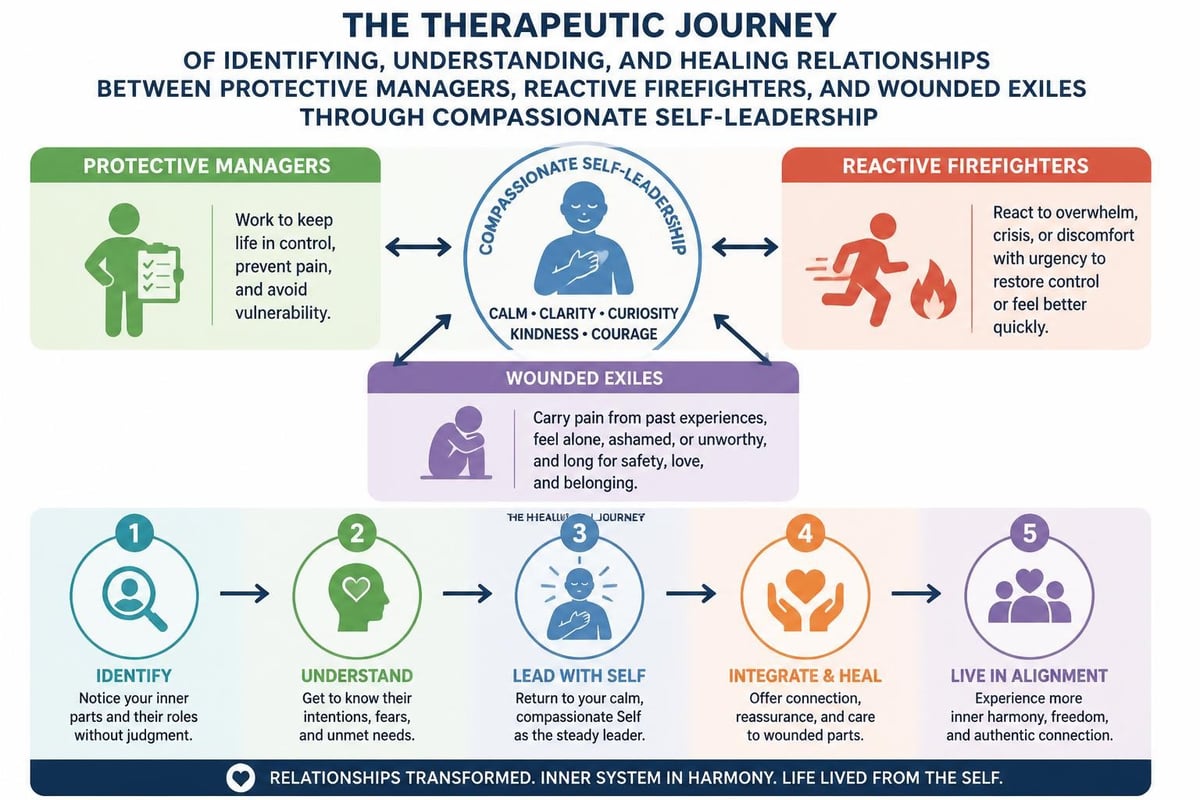
The process typically unfolds in stages:
- Getting to know your parts: Identifying which parts show up most often in your life
- Building trust: Learning that even difficult parts are trying to help you
- Unburdening: Helping exiled parts release old pain they've been carrying
- Integration: Allowing your Self to lead with all parts working together harmoniously
Many practitioners at Théla Psychotherapy Clinic integrate IFS principles with other therapeutic approaches to create personalized treatment plans. This flexibility makes ifs therapy particularly effective for a wide range of concerns.
Who Benefits from IFS Therapy
You might be wondering if ifs therapy is right for you. The beauty of this approach is its versatility. It's been shown to help with anxiety, depression, trauma, relationship issues, addiction, and eating disorders.
| Challenge | How IFS Helps |
|---|---|
| Trauma | Safely accessing and healing wounded parts without re-traumatization |
| Anxiety | Understanding protective parts and reducing their hypervigilance |
| Depression | Connecting with exiled parts and releasing burdens of shame |
| Addiction | Working with firefighter parts to find healthier coping strategies |
| Relationships | Recognizing which parts get triggered in conflicts |
People dealing with life trauma often find ifs therapy especially helpful because it offers a gentle way to approach painful memories. Instead of forcing yourself to confront trauma head-on, you work with the parts that are protecting you from that pain.
The approach is also incredibly effective for those who've tried other therapies without success. If you've felt stuck or like something's been missing in your healing journey, IFS might offer the breakthrough you're looking for.
The Science Behind IFS
While ifs therapy might sound abstract, it's grounded in neuroscience and attachment theory. Research shows that our brains naturally compartmentalize experiences, especially traumatic ones. The IFS Institute has compiled extensive evidence supporting this model's effectiveness.
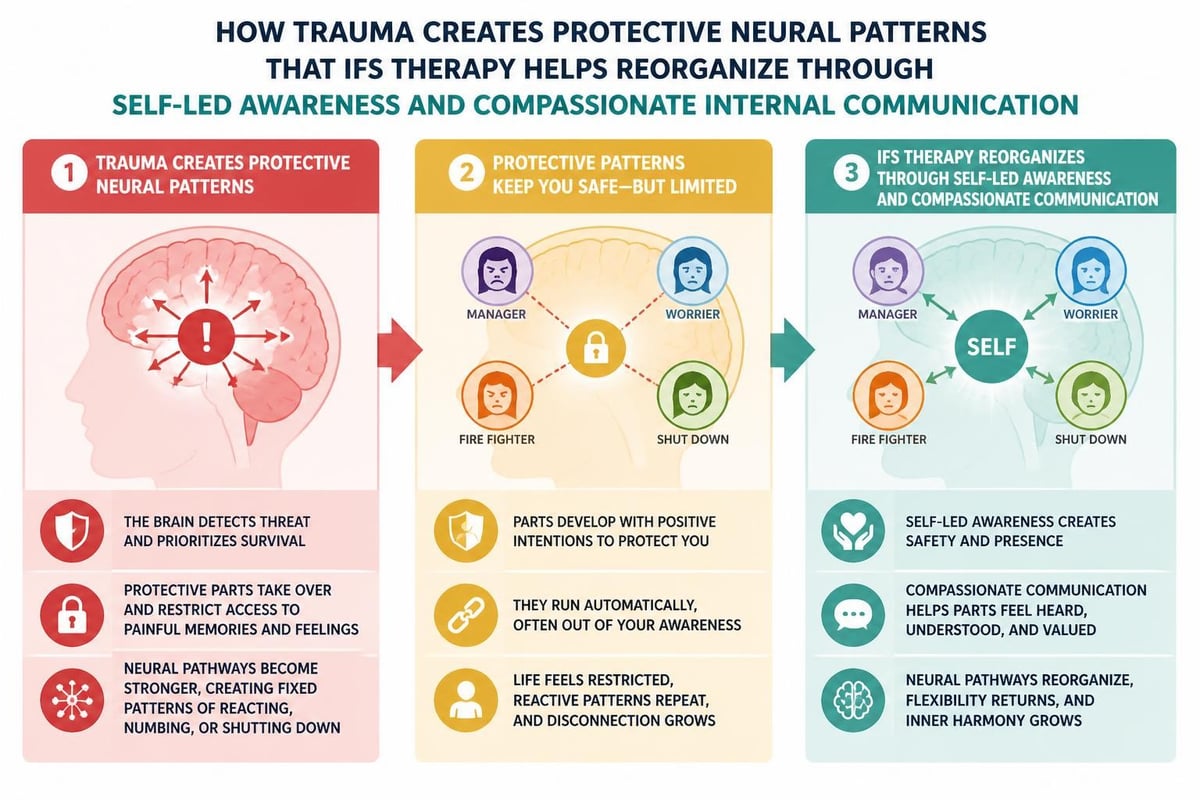
Studies published in peer-reviewed journals have demonstrated IFS's effectiveness in treating conditions like PTSD, depression, and physical health symptoms. The approach aligns with what neuroscientists have discovered about how our brains process and store emotional experiences.
What's particularly fascinating is how ifs therapy helps people access states of self-compassion naturally. You don't have to force yourself to be kind to your wounded parts. When you're in Self, compassion flows naturally.
Practical Applications in Daily Life
One of the most valuable aspects of ifs therapy is how you can apply it outside the therapy room. Once you learn the basics, you can check in with your parts throughout the day.
Feeling anxious before a presentation? That's probably a manager part trying to keep you safe from embarrassment. Instead of fighting the anxiety, you can acknowledge this part, thank it for trying to protect you, and reassure it from your Self.
Notice yourself scrolling social media for hours when you should be sleeping? A firefighter part might be working overtime to distract you from uncomfortable feelings. You can ask this part what it's protecting you from and address the underlying need more directly.
Common daily IFS practices include:
- Morning check-ins with your parts
- Journaling conversations between Self and parts
- Noticing which parts show up in relationships
- Asking parts for permission before making decisions
- Creating space for exiled parts to share their stories
The evidence-based approaches used at therapy clinics often incorporate these practical tools alongside formal sessions. This combination of in-session work and daily practice accelerates healing.
Finding the Right IFS Therapist
If you're interested in trying ifs therapy, finding a properly trained therapist matters. Look for someone who's completed training through the official IFS Institute or has extensive experience with the model. Many therapists integrate IFS with other modalities like EMDR, CBT, or EFT, which can be particularly powerful.
During your first session, a good IFS therapist will help you feel safe and curious about your parts rather than judgmental. They'll move at your pace and respect your parts' concerns about the therapeutic process. For a detailed exploration of the theoretical foundations, Richard Schwartz's comprehensive text provides excellent insights into the methodology.
Whether you're seeking individual therapy or exploring options online, ifs therapy can be adapted to various formats. Virtual sessions work particularly well for IFS since the work is primarily internal and conversational.
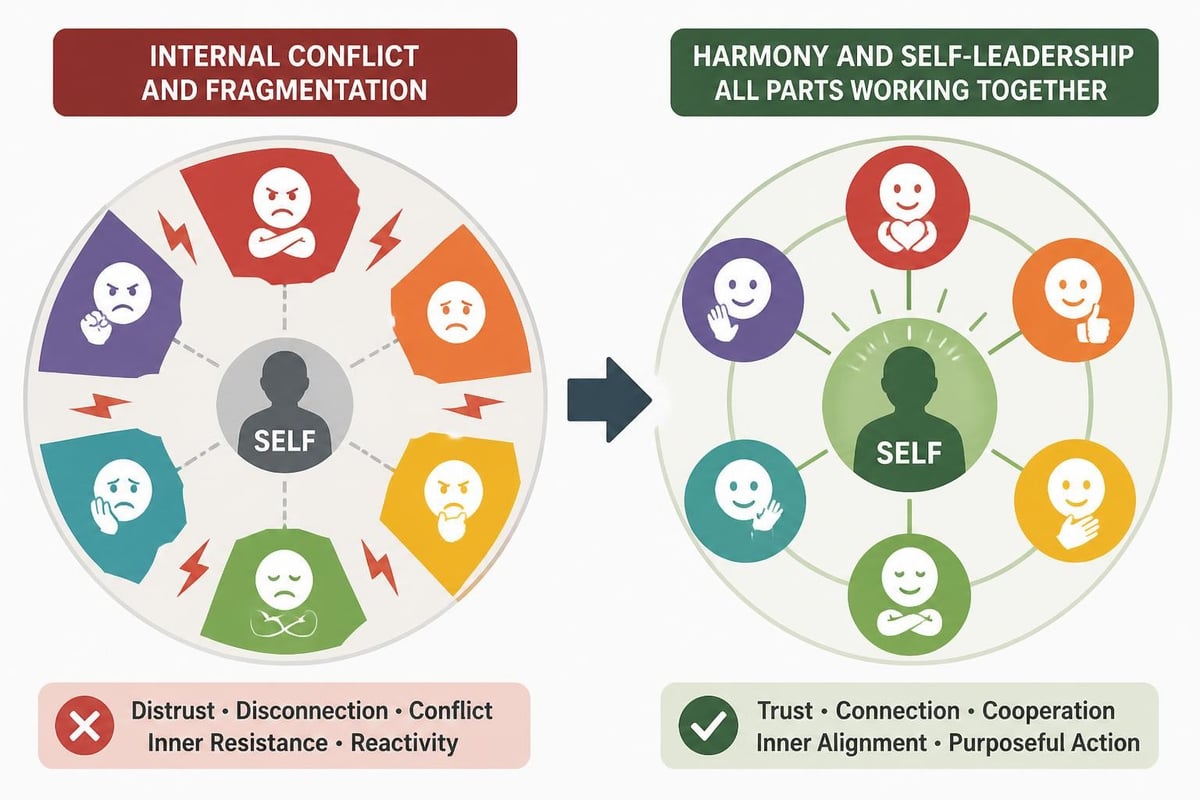
The journey of getting to know your parts can be surprising, emotional, and ultimately liberating. You might discover that the critical voice you've battled for years is actually trying to protect you from rejection. Or that your procrastination isn't laziness but a part that's overwhelmed and needs support.
Understanding your internal family can transform how you relate to yourself and others. IFS therapy offers a compassionate, non-pathologizing way to heal emotional wounds and live more authentically. If you're ready to explore your inner world and build a healthier relationship with all parts of yourself, Théla Psychotherapy Clinic offers trauma-informed care using evidence-based approaches tailored to your unique needs, available both in-person in Markham and online across Ontario.

Bonny Li
Contact Me