Losing someone you love feels like the ground has shifted beneath your feet. You're not just sad - you're navigating a whole storm of emotions that can feel overwhelming, confusing, and sometimes completely isolating. The good news? You don't have to walk this path alone. Grief therapy offers a compassionate, structured way to process loss and find your footing again. Whether you're dealing with the death of a loved one, a significant relationship ending, or any major loss, professional support can make all the difference in how you heal.
What Makes Grief Therapy Different
Grief therapy isn't your typical talk therapy session. It's specifically designed to help you work through the unique challenges that come with loss. Unlike general counseling, this specialized approach recognizes that grief isn't linear - it doesn't follow a neat timeline or predictable stages.
Key differences include:
- Focus on the specific emotions tied to loss (guilt, anger, yearning, numbness)
- Techniques to help you maintain healthy connections to what you've lost
- Strategies for rebuilding your identity after significant change
- Support for both emotional and physical symptoms of grief
Recent research shows that talk therapy is the most effective method for managing grief and depression following loss. This evidence-based validation gives us confidence that professional support truly works.
How Grief Therapy Actually Works
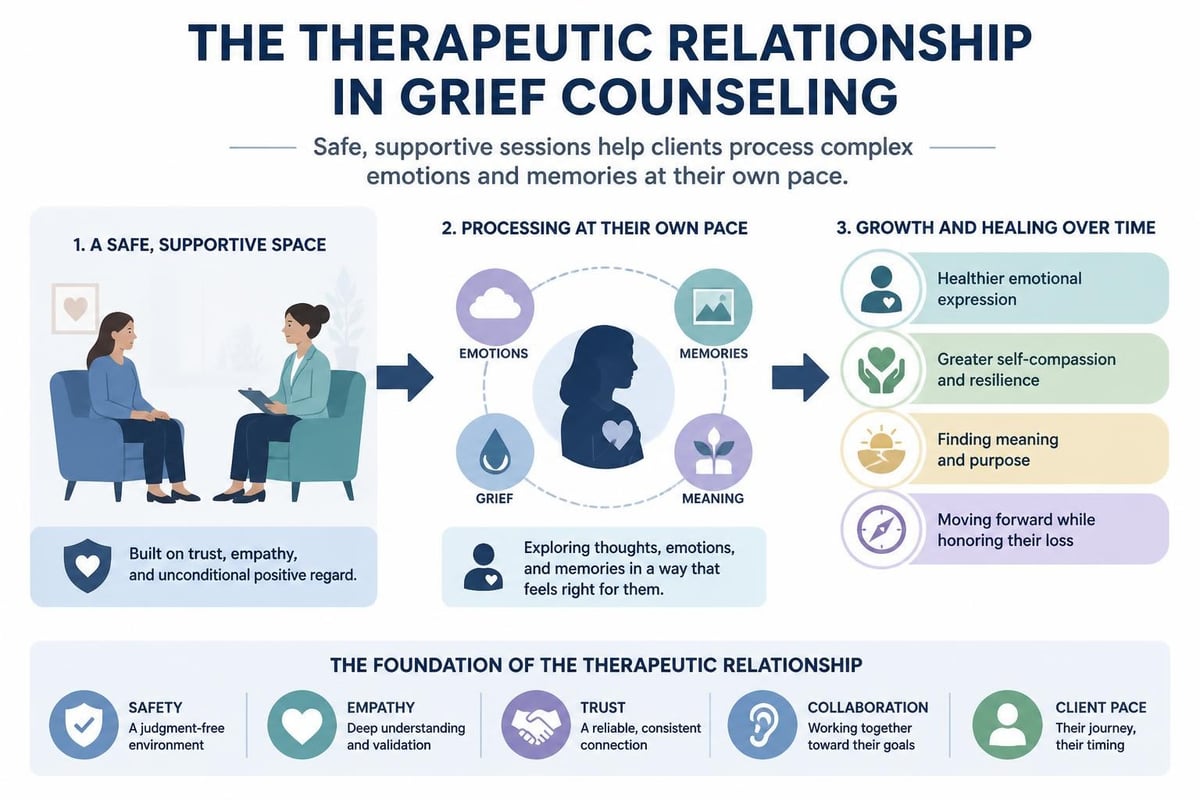
When you start grief therapy, your therapist creates a safe space where all your feelings are welcome. There's no "right" way to grieve, and you won't be rushed through your process.
The First Sessions
Your therapist will start by understanding your unique loss and how it's affecting you. They'll ask about your relationship with what you've lost, your support system, and any previous experiences with grief. This isn't about dwelling on pain - it's about creating a roadmap for healing.
At places like Théla Psychotherapy Clinic, therapists use trauma-informed approaches that recognize how loss can shake your entire sense of safety and security.
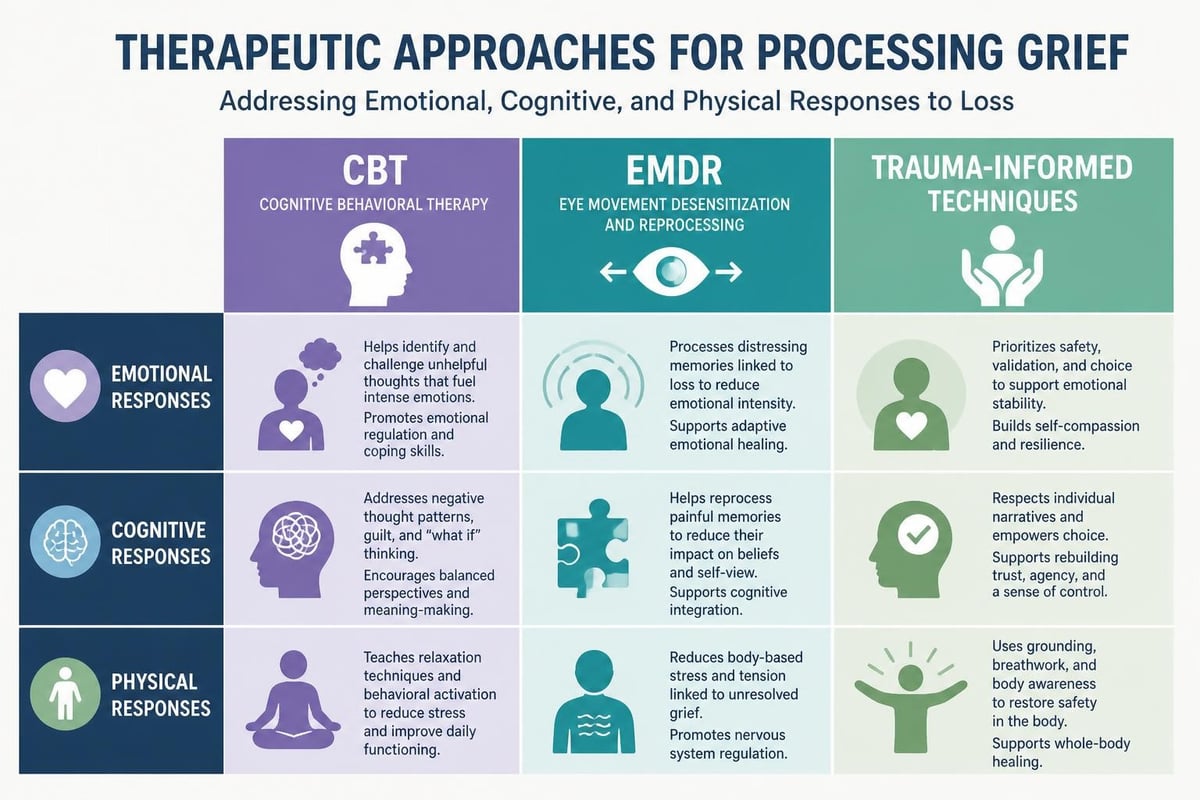
Evidence-Based Techniques
Your therapist might use several proven methods:
- Cognitive Behavioral Therapy (CBT) to address unhelpful thought patterns about your loss
- EMDR for processing traumatic aspects of grief
- Narrative therapy to help you integrate the loss into your life story
- Mindfulness practices to manage overwhelming emotions
The National Cancer Institute provides comprehensive information on grief and bereavement approaches, particularly helpful for those dealing with illness-related loss.
What to Expect During Your Healing Journey
Grief therapy typically unfolds over several months, though everyone's timeline is different. Some weeks you'll feel like you're making real progress. Other weeks might feel harder than when you started. That's completely normal.
| Phase | What Happens | Typical Duration |
|---|---|---|
| Early Sessions | Building trust, exploring the loss | 2-4 weeks |
| Active Processing | Working through intense emotions | 2-4 months |
| Integration | Finding new meaning, adjusting to life | 3-6 months |
| Maintenance | Check-ins and continued support | As needed |
Your therapist might assign "homework" between sessions - not busy work, but meaningful activities like journaling, creating memory boxes, or practicing specific coping techniques. These exercises help you continue healing even when you're not in the therapy room.
When Grief Becomes Complicated
Sometimes grief gets stuck. You might find yourself unable to function months or years after a loss, or experience symptoms that interfere with daily life. This is called complicated grief or prolonged grief disorder, and it affects about 10% of bereaved people.
Signs you might need specialized grief support:
- Intense yearning that doesn't ease over time
- Difficulty accepting the loss even after many months
- Numbness or detachment that persists
- Feeling life is meaningless without the person you lost
- Inability to engage in activities you once enjoyed
Specialized grief therapy can help you work through these stuck points. The Cleveland Clinic offers educational resources that can complement your therapy work and provide additional support during tough moments.
Finding the Right Grief Therapist
Not every therapist specializes in grief work, so it's worth finding someone with specific training and experience. You want someone who gets it - who won't minimize your pain or push you to "move on" before you're ready.
Questions to Ask Potential Therapists
- What's your experience with grief and loss?
- What approaches do you use for grief therapy?
- How do you handle setbacks or difficult sessions?
- What's your philosophy about the grieving process?
If you're in Ontario, Théla Psychotherapy Clinic offers services both in-person in Markham and online throughout the province, making it easier to access specialized care when you need it most.
Supporting Your Own Healing
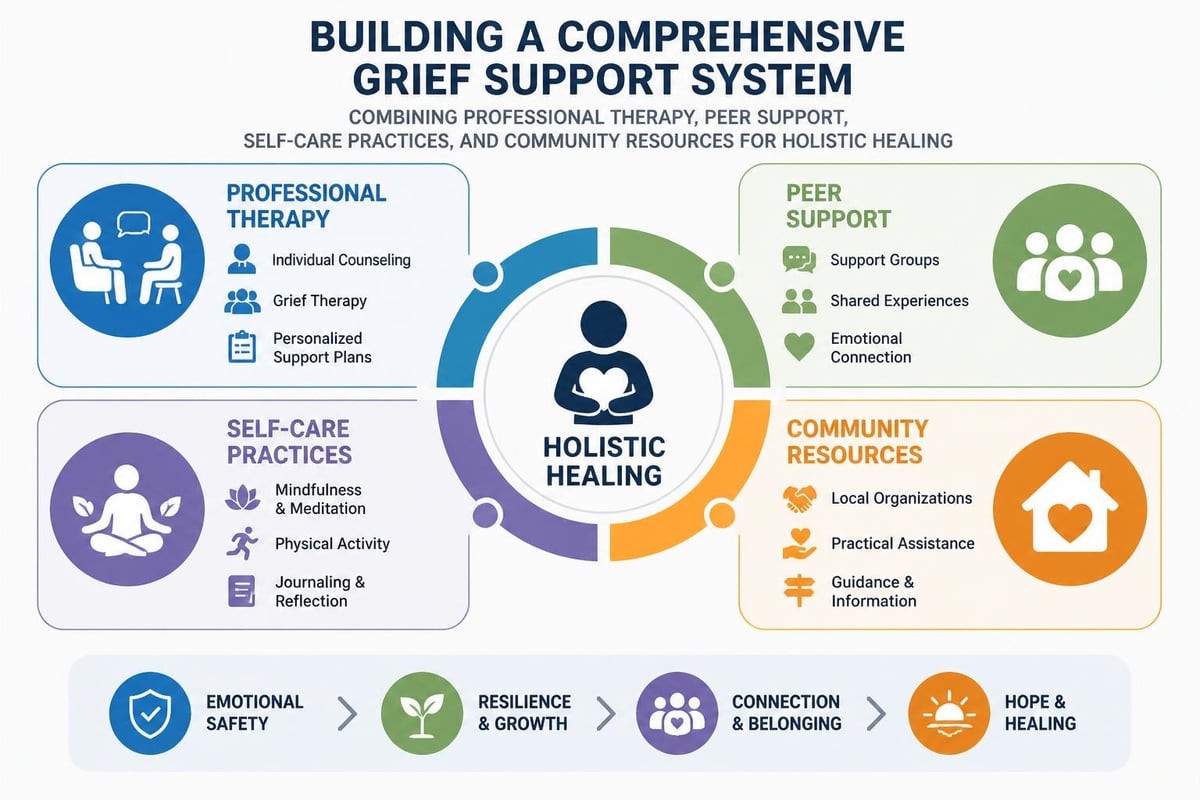
Grief therapy works best when you're also taking care of yourself outside sessions. This isn't about "getting over" your loss - it's about learning to carry it with you in healthy ways.
Self-care strategies that support grief therapy:
- Maintaining regular sleep and eating patterns (even when you don't feel like it)
- Moving your body gently through walks, yoga, or stretching
- Staying connected to people who support you
- Creating rituals that honor what you've lost
- Being patient with yourself on hard days
Some people find that combining traditional grief therapy with other supportive approaches helps too. Understanding the therapy process can ease anxiety about starting treatment.
Different Types of Loss, Different Needs
Grief therapy adapts to different kinds of loss. Losing a partner requires different support than losing a parent, child, friend, or even a beloved pet. Your therapist will tailor their approach to your specific situation.
For families dealing with serious mental illness, specialized grief therapy addresses the unique challenges of this type of loss, including ambiguous grief and complicated emotions.
Cultural Considerations
Your cultural background shapes how you grieve and what healing looks like for you. Good grief therapy honors these differences rather than imposing a one-size-fits-all approach. Culturally responsive care - like what's offered at Théla Psychotherapy Clinic - recognizes that healing happens differently across cultures and traditions.
The Path Forward
Healing from loss doesn't mean forgetting or "getting over it." It means learning to live with the loss in ways that don't consume you. You're building a new normal - one where you can remember with love instead of just pain, where you can laugh again without guilt, where you can imagine a future even though it looks different than you planned.
Grief therapy gives you tools, support, and permission to heal at your own pace. Some days will still be hard. Some anniversaries or memories will always sting. But with support, you can find your way through the fog and back to a life that feels meaningful again.
Processing grief takes courage, time, and the right support. Professional grief therapy provides a safe space to honor your loss while finding your path forward at your own pace. Whether you're in the early days of loss or struggling with grief that's lingered for years, Théla Psychotherapy Clinic offers compassionate, evidence-based care tailored to your unique needs - available both in-person in Markham and online across Ontario. You don't have to navigate this journey alone.

Bonny Li
Contact Me
.jpg)