Going through a divorce is one of life's most challenging transitions, and you don't have to navigate it alone. If you're searching for a divorce therapist near me, you're already taking an important step toward protecting your mental health during this difficult time. Finding the right therapeutic support can make all the difference in processing emotions, developing coping strategies, and building a foundation for your next chapter. Whether you're just beginning to consider separation or you're already deep in the process, understanding what to look for in a divorce therapist will help you make the best choice for your healing journey.
Why Specialized Divorce Support Matters
Not all therapists specialize in divorce-related challenges, and that's actually a good thing to know upfront. When you're dealing with the emotional rollercoaster of ending a marriage, you want someone who really gets it. A divorce therapist understands the specific stages of grief, anger, and adjustment that come with marital dissolution.
These specialists know how to help you work through complicated feelings about shared finances, co-parenting arrangements, and identity shifts. They're familiar with the legal process's emotional toll and can provide support that complements your practical divorce proceedings.
What Makes Divorce Therapy Different
Regular therapy focuses on general mental health, but divorce therapy targets specific challenges unique to relationship dissolution. You're not just dealing with sadness or anxiety. You're processing loss, rebuilding your sense of self, and often managing complex family dynamics simultaneously.
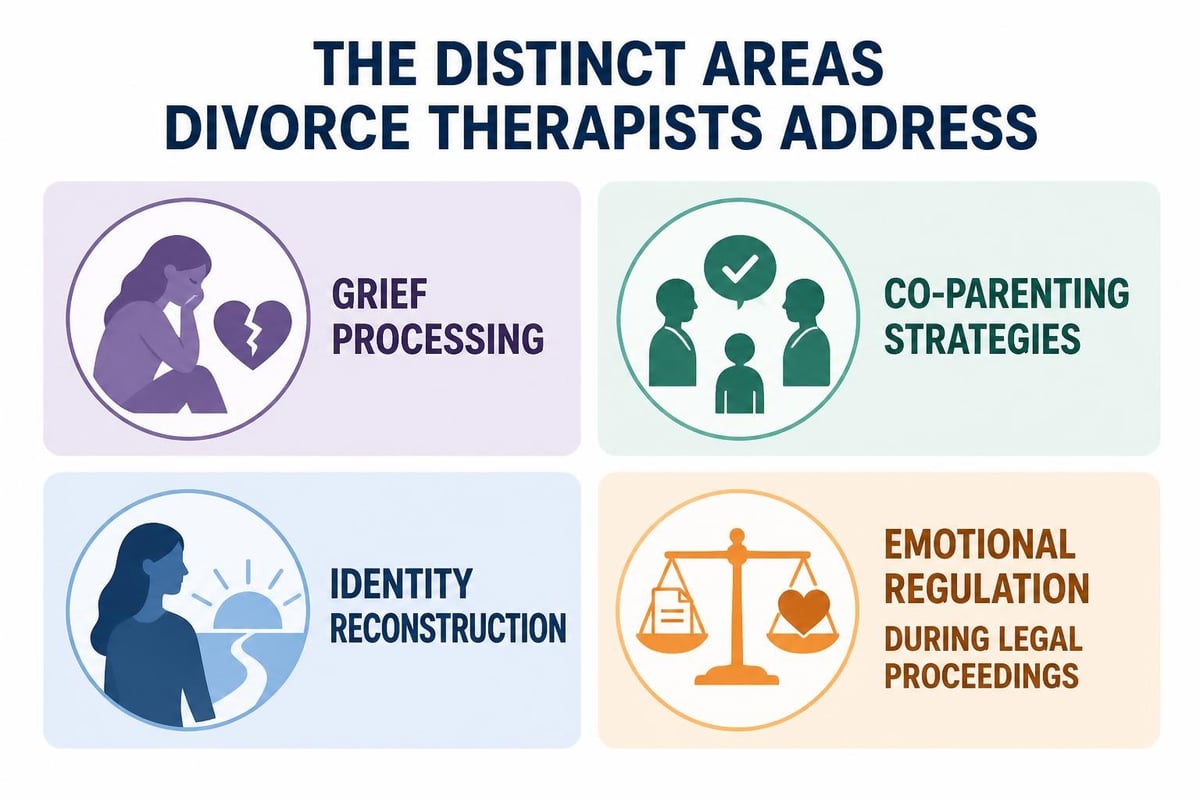
Key areas divorce therapists address:
- Processing grief and loss in a healthy way
- Managing anger and resentment productively
- Developing co-parenting strategies that protect kids
- Rebuilding self-esteem and personal identity
- Creating boundaries with your ex-partner
- Planning for your post-divorce life
The therapeutic approaches used in divorce therapy often include CBT for managing negative thought patterns, EFT for processing emotions, and trauma-informed care when necessary.
Finding Qualified Professionals in Your Area
When you search for a divorce therapist near me, you'll likely find dozens of options. That's where things can get overwhelming. Let's break down what actually matters when evaluating potential therapists.
Essential Credentials to Look For
| Credential Type | What It Means | Why It Matters |
|---|---|---|
| Licensed Therapist | MSW, MFT, Psychologist, or Counselor | Legal authorization to practice |
| Divorce Specialization | Training specific to separation/divorce | Targeted expertise in your challenge |
| Evidence-Based Training | CBT, DBT, EFT, EMDR certification | Proven therapeutic methods |
| Cultural Competency | Training in diverse populations | Personalized, respectful care |
Professional qualifications matter, but so does the therapist's approach to your unique situation. Checking credentials and experience should be your first step before scheduling consultations.
Questions to Ask During Your Search
Before committing to a therapist, you'll want to have some initial conversations. Most therapists offer brief phone consultations to see if you're a good fit. Here's what to ask:
- What's your specific experience with divorce clients?
- Which therapeutic approaches do you use for divorce-related issues?
- How do you handle co-parenting concerns?
- What are your fees and do you offer sliding scale rates?
- Are sessions available in-person, online, or both?
- How quickly can you typically schedule appointments?
These essential questions help you determine whether a therapist's style and expertise align with your needs.
Understanding Different Therapy Options
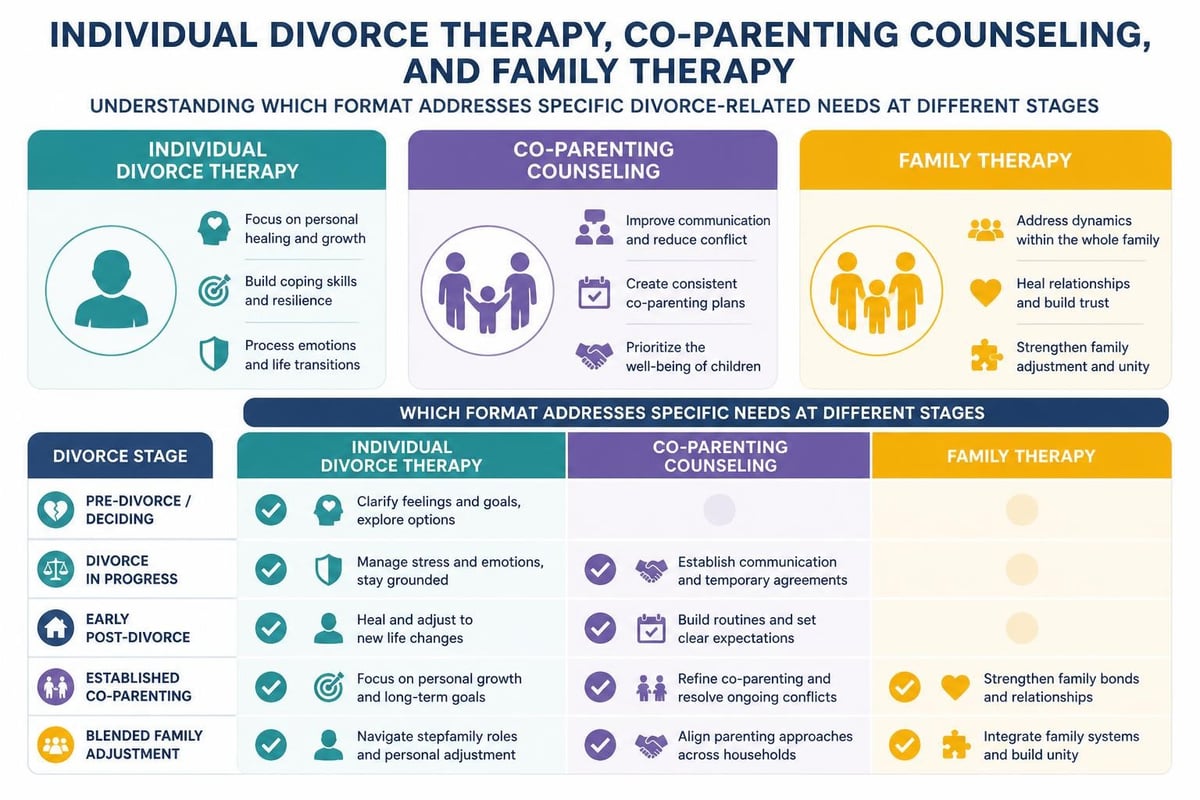
When searching for a divorce therapist near me, you'll encounter various therapy formats. Each serves different purposes at different stages of your divorce journey.
Individual Therapy for Personal Healing
Individual therapy provides space to process your emotions without worrying about anyone else's feelings. This is where you can be completely honest about your anger, fear, sadness, or relief. It's your time to focus on healing and growth.
At Théla Psychotherapy Clinic, individual therapy sessions are tailored to your specific needs, whether you're processing trauma from the relationship or building skills for your new life.
Couples Counseling vs. Divorce Therapy
Here's something people often confuse: couples counseling aims to save relationships, while divorce therapy helps you end one healthily. If you're certain about divorcing, you don't need couples counseling. You need support for navigating separation.
That said, some divorcing couples do engage in "divorce counseling" together to improve communication for co-parenting. This is different from trying to reconcile.
What to Expect in Your First Sessions
Starting therapy during a divorce can feel vulnerable, but knowing what to expect helps reduce anxiety about that first appointment.
Your initial sessions typically cover:
- Your relationship history and current situation
- Immediate concerns and safety issues
- Goals for therapy
- Assessment of your emotional state
- Discussion of therapeutic approach
Don't worry if you cry, feel angry, or seem all over the place emotionally. That's completely normal and expected. Your therapist has seen it all before.
Building a Therapeutic Relationship
The relationship you build with your therapist is actually one of the most important factors in successful therapy outcomes. Research shows that the therapeutic alliance matters more than the specific techniques used.
Give yourself at least three to four sessions to determine if a therapist is right for you. The first meeting might feel awkward, and that's okay. You're both getting to know each other.
Practical Considerations for Ontario Residents
If you're in Ontario and searching for a divorce therapist near me, you have access to both in-person and virtual options. This flexibility can be incredibly helpful when you're juggling divorce proceedings, work, and possibly childcare.
In-Person vs. Online Therapy
| Format | Benefits | Best For |
|---|---|---|
| In-Person | Face-to-face connection, dedicated space | Those who prefer traditional setting |
| Online/Virtual | Convenience, flexibility, privacy at home | Busy schedules, rural areas, mobility issues |
| Hybrid | Best of both options | People wanting variety and flexibility |
Many therapists now offer both formats. You might prefer getting help in person for some sessions and virtually for others, depending on your schedule.
Cost and Insurance Coverage
Therapy costs vary significantly across Ontario. Some therapists charge $150-250 per session, while others offer sliding scale fees based on income.
Good news: many insurance plans cover psychotherapy services. Check your benefits for coverage details, and ask potential therapists about direct billing options that simplify the payment process.
If cost is a barrier, don't give up. Some clinics offer affordable therapy programs designed to make mental health support accessible regardless of financial situation.
Red Flags and Green Flags
As you search for a divorce therapist near me, you'll want to watch for certain indicators of quality care and potential concerns.
Positive Signs You've Found the Right Fit
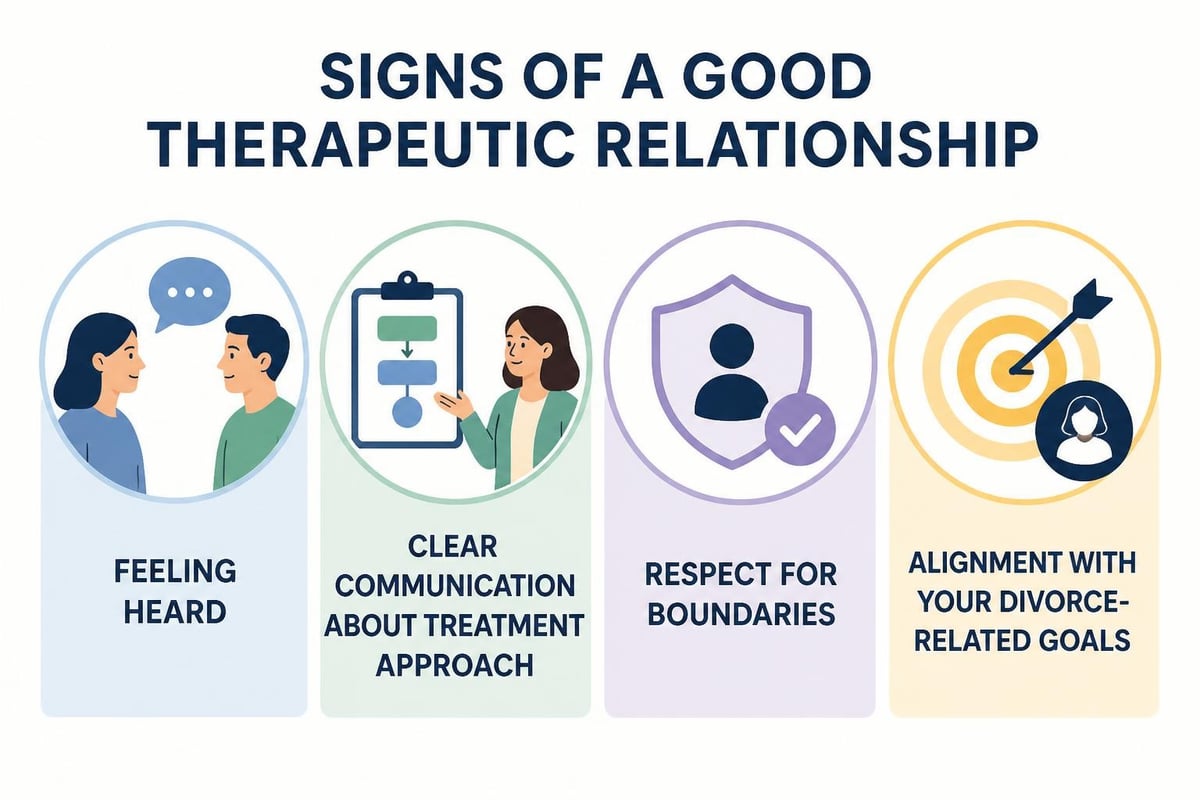
- The therapist listens more than they talk
- You feel heard and validated, not judged
- They explain their approach clearly
- They respect your timeline and boundaries
- They're transparent about fees and policies
- They have relevant experience with divorce cases
Warning Signs to Watch For
- Pushing you toward reconciliation when you've decided to divorce
- Sharing too much about their own divorce
- Making you feel rushed or pressured
- Lack of clear boundaries
- Dismissing your concerns or feelings
- No clear treatment plan after several sessions
Trust your gut. If something feels off, it probably is. Finding the right therapist might take a few tries, and that's perfectly fine.
Moving Forward with Confidence
Searching for a divorce therapist near me is more than just typing words into Google. It's about finding someone who can walk alongside you during one of life's most challenging transitions. The right therapist provides tools for managing intense emotions, clarity when everything feels confusing, and hope when the future seems uncertain.
Remember that starting therapy doesn't mean you're broken or failing. It means you're choosing to invest in your mental health and future wellbeing. Whether you're struggling with anxiety and depression related to your divorce or simply need support processing this major life change, professional help accelerates healing.
Take your time evaluating options, ask lots of questions, and don't settle for a therapist who doesn't feel right. Your healing journey deserves the best support possible, and that means finding someone who truly understands your needs and can provide evidence-based care tailored to your situation.
Finding the right divorce therapist takes effort, but it's one of the most valuable investments you can make in yourself during this transition. At Théla Psychotherapy Clinic, our trauma-informed therapists understand the complexities of divorce and provide compassionate, evidence-based support both in-person in Markham and online throughout Ontario. Whether you need help processing emotions, developing co-parenting strategies, or rebuilding your sense of self, we're here to support your healing journey every step of the way.

Bonny Li
Contact Me