Relationships take work, and sometimes that work needs professional guidance. But what happens when your schedules are packed, you live in different locations temporarily, or you just can't make it to an office? That's where couples counseling virtual sessions come in. This modern approach to relationship therapy has transformed how couples access support, making it easier than ever to strengthen your partnership from wherever you are.
What Makes Virtual Couples Counseling Different
Virtual therapy isn't just regular counseling on a screen. It's a deliberately designed experience that brings professional relationship support into your most comfortable space. When you're sitting in your own living room or bedroom, there's often less performance anxiety than walking into a clinic waiting room together.
The technology behind couples counseling virtual sessions has improved dramatically. High-quality video, secure platforms, and better internet connectivity mean you're getting nearly the same visual and verbal connection as in-person sessions. Research on videoconferencing therapy shows couples often feel surprisingly connected to their therapist through screens.
Key benefits include:
- No commute time means more sessions fit into busy schedules
- Access to specialized therapists beyond your immediate area
- Comfort of your own environment can reduce initial anxiety
- Easier to maintain consistency when traveling for work
- Often more affordable without office overhead costs
Setting Up Your Virtual Session Space
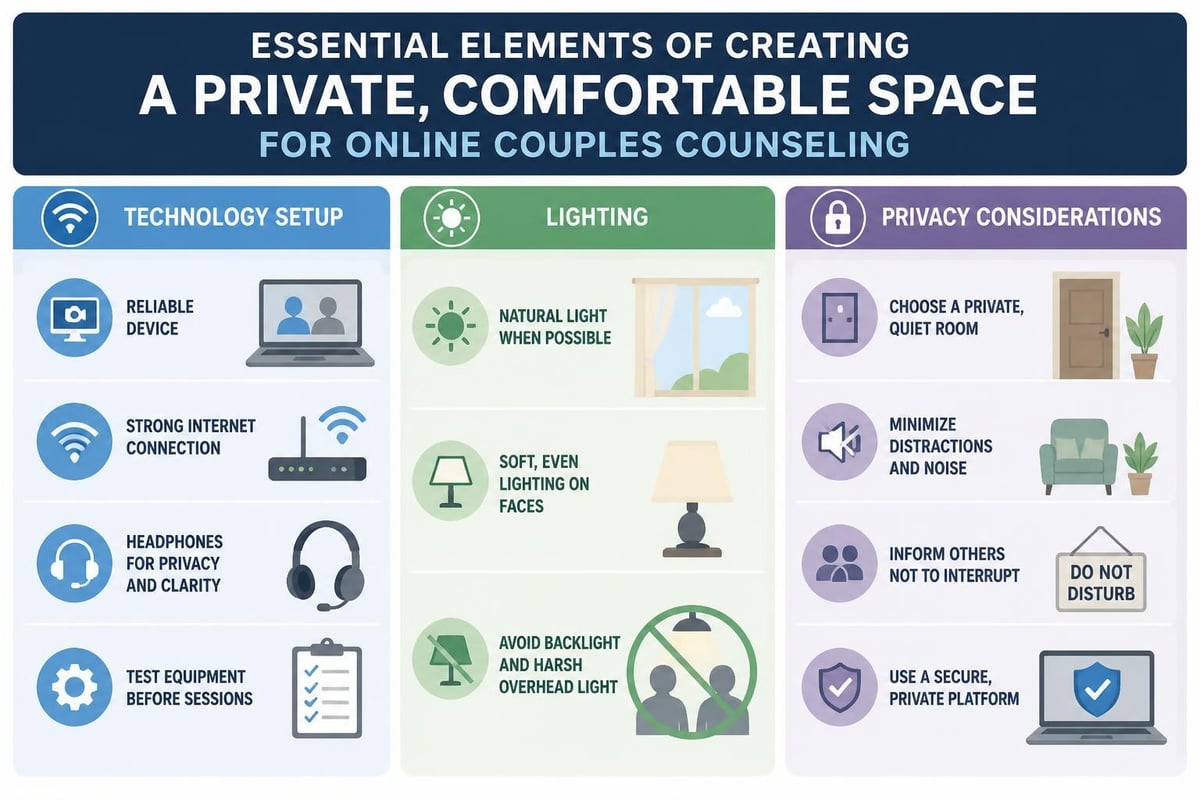
Creating the right environment matters more than you might think. You're not just logging into a video call-you're creating a therapeutic space where vulnerable conversations can happen safely.
Technical Requirements
First things first: you'll need reliable technology. A laptop or tablet works better than phones because the larger screen helps you see both your partner and therapist clearly. Test your camera angle beforehand so you're both visible without awkward positioning.
| Essential Element | Why It Matters | Quick Fix |
|---|---|---|
| Strong WiFi | Prevents disconnections during emotional moments | Position near router or use ethernet cable |
| Good lighting | Helps therapist read facial expressions and body language | Face a window or add a desk lamp |
| Quality audio | Ensures everyone hears clearly without repetition | Use headphones with built-in microphones |
| Private space | Allows honest conversation without interruption | Lock doors, use "Do Not Disturb" signs |
Creating Privacy
Privacy isn't negotiable in therapy. Tips for successful couples teletherapy emphasize that both partners need to feel completely safe speaking openly. That means kids are occupied elsewhere, roommates know you're unavailable, and you've silenced all notifications.
How Virtual Sessions Actually Work
So you've booked your first couples counseling virtual appointment-what happens next? Most therapists send secure video links ahead of time. You'll click in, usually see a virtual waiting room, then get admitted when your therapist is ready.
The session structure mirrors in-person therapy closely. Your therapist will check in, set an agenda together, and guide conversations using evidence-based approaches. At Théla Psychotherapy Clinic, therapists use approaches like EFT relationship therapy and CBT, which translate seamlessly to virtual formats.
What to Expect in Your First Session
- Introductions and goal-setting where you'll explain what brought you to therapy
- Relationship history covering how you met, major milestones, and current challenges
- Communication patterns as your therapist observes how you interact together
- Initial treatment plan outlining approaches that might help your specific situation
- Homework assignments to practice between sessions
Making Virtual Therapy More Effective
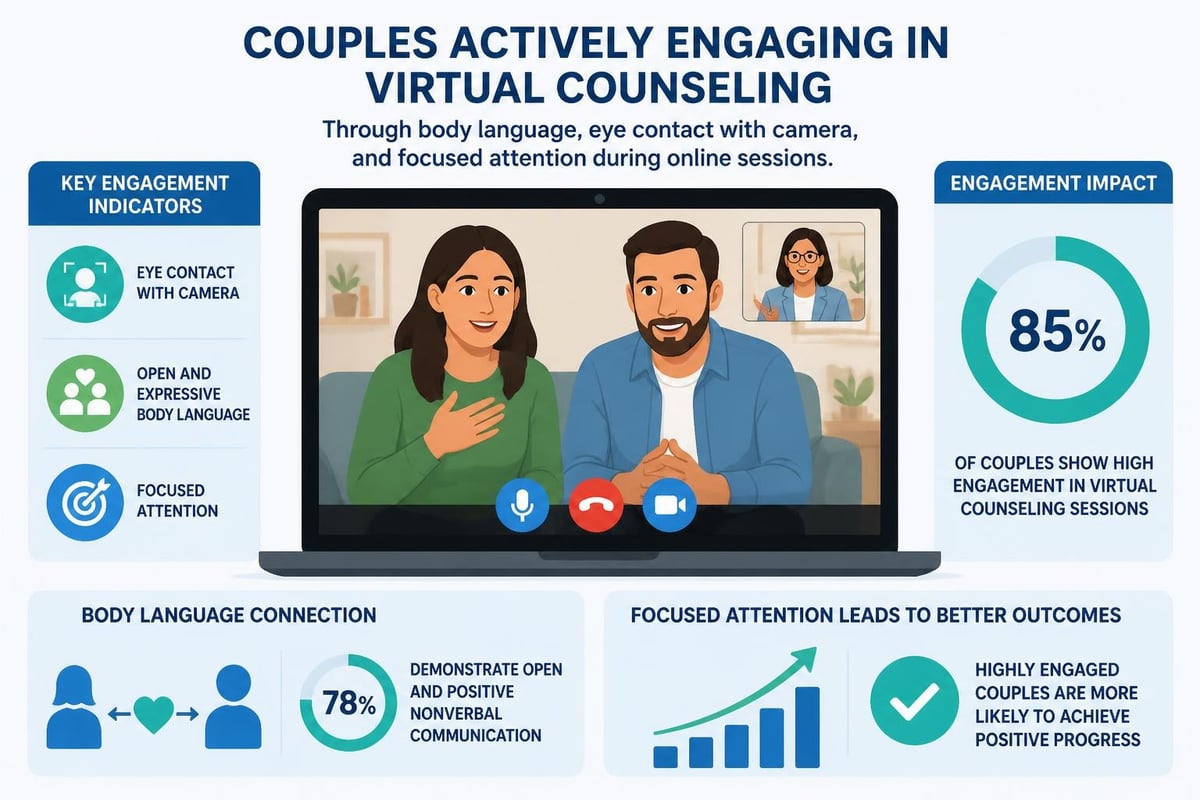
Success in online counseling isn't automatic-it requires intentional participation. One advantage is you can keep a private journal or notes app open during sessions to capture insights you don't want to forget.
Think about your physical positioning too. Sitting together on a couch sends different signals than sitting across from each other at a table. Some couples find side-by-side seating helps them feel unified while facing challenges together. Others prefer facing each other to practice direct communication.
Best practices for engagement:
- Commit to showing up on time, just like an in-person appointment
- Silence phones and close unnecessary browser tabs
- Have water nearby so you don't need breaks
- Take a few deep breaths together before starting
- Schedule sessions when you're not rushed immediately after
Understanding how online relationship therapy works can help you approach each session with realistic expectations and readiness to participate fully.
Addressing Common Concerns
"Will it feel as personal?" is usually the first question couples ask. Honestly, the first session might feel a bit awkward as you adjust to the format. But most couples report that by session two or three, they forget about the screen entirely.
Technical Difficulties Happen
What if your connection drops mid-conversation? Good therapists build in backup plans. You'll typically have a phone number to call if video fails, and your therapist will reschedule without penalty if tech issues prevent a productive session. The best practices for virtual mental health therapy include having contingency communication methods ready.
Privacy and Security
Legitimate concerns about privacy are valid. Professional therapists use HIPAA-compliant or equivalent platforms with end-to-end encryption. Your conversations are as protected as they'd be in a soundproofed office-often more so since you control your physical environment. You can learn more about therapeutic approaches that prioritize client safety both emotionally and digitally.
When Virtual Counseling Works Best
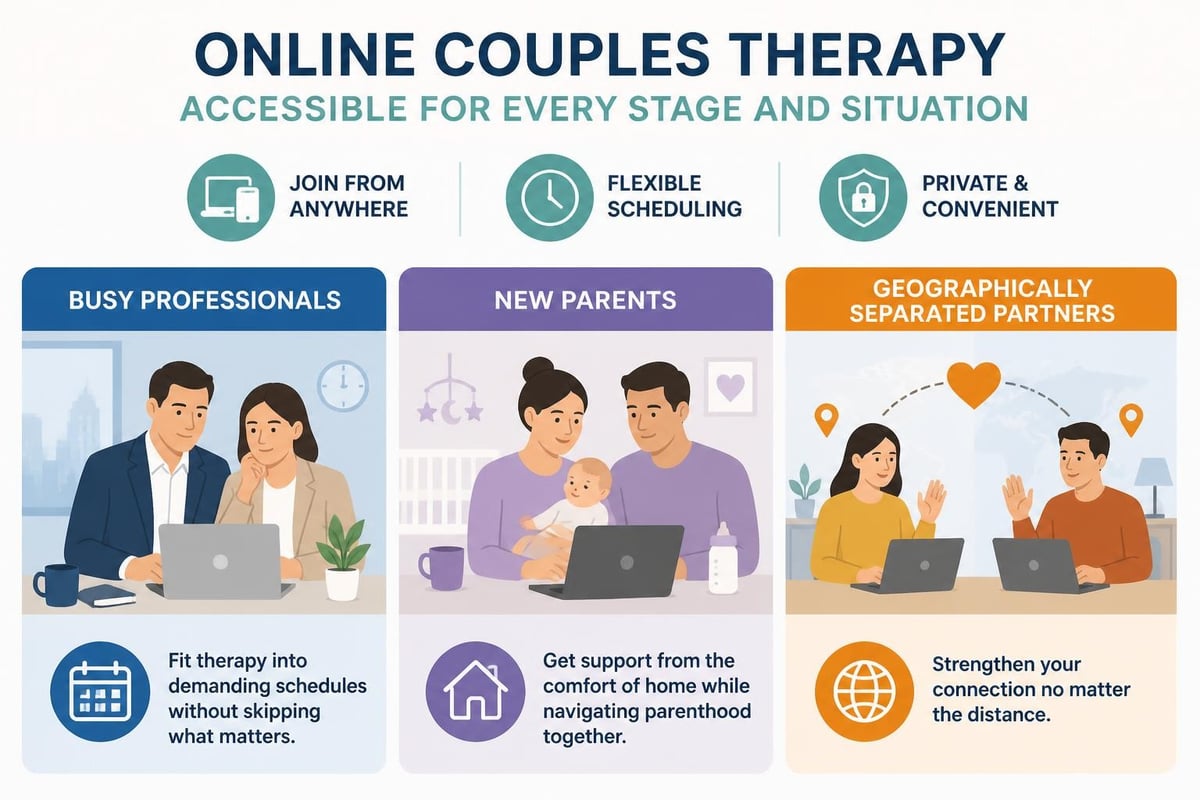
Couples counseling virtual sessions excel for specific situations. If you're managing busy careers, parenting demands, or health concerns that make travel difficult, online therapy removes significant barriers. It's particularly valuable when one or both partners travel frequently for work.
Geographic flexibility means accessing specialized therapists who understand your unique needs. Getting relationship help shouldn't be limited by your postal code, and virtual sessions make that possible across Ontario and beyond.
| Situation | Why Virtual Works | Consideration |
|---|---|---|
| New parents | No childcare logistics | May need to schedule during naps |
| Long-distance temporarily | Maintains consistency during separation | Requires both partners' commitment |
| Social anxiety | Reduced performance pressure | Still requires vulnerability |
| Rural locations | Access to specialized therapists | Need reliable internet |
| Busy professionals | Fits into lunch breaks or evenings | Must truly disconnect from work |
Preparing for Long-Term Success
One session won't fix everything-relationship work is a journey. Most couples attend 8-12 sessions initially, then transition to monthly check-ins. The convenience of couples counseling virtual appointments makes maintaining this consistency much easier than traditional in-person therapy.
Between sessions, you'll likely have exercises or conversations to practice. Some therapists use secure messaging platforms for quick check-ins or resource sharing. This extended support between appointments is actually easier to maintain virtually than through traditional therapy models.
Consider exploring additional support options like DBT group therapy if individual skill-building would complement your couples work. Many clinics now offer comprehensive virtual programs that address relationship dynamics alongside personal growth.
Remember that asking for help shows strength, not weakness. Whether you're working through communication issues, rebuilding trust, or preparing for major life transitions, professional guidance makes a measurable difference. Understanding areas of concern common in relationships can help you recognize when support would be valuable.
Virtual couples counseling has opened doors for thousands of relationships that might not have accessed help otherwise. The combination of professional expertise, evidence-based approaches, and modern technology creates powerful opportunities for healing and growth. If you're ready to strengthen your relationship with expert support, Théla Psychotherapy Clinic offers trauma-informed, culturally responsive couples counseling virtual sessions across Ontario, meeting you wherever you are in your journey toward a healthier partnership.

Bonny Li
Contact Me
.jpg)