You're about to walk into a networking event, and suddenly your heart's pounding like you've just run a marathon. Your palms are sweating, your mind's going blank, and all you want to do is turn around and leave. Sound familiar? If you've experienced these feelings regularly, you might be dealing with social anxiety symptoms. Understanding what's actually happening in your mind and body is the first step toward getting the support you need.
What Social Anxiety Actually Feels Like
Social anxiety disorder goes way beyond normal nervousness or shyness. According to the National Institute of Mental Health, it's a persistent fear of social situations where you might be judged, embarrassed, or scrutinized by others.
The thing is, everyone gets nervous sometimes. You're not weird for feeling anxious before a big presentation or a first date. But social anxiety symptoms become a concern when they're intense, frequent, and seriously mess with your daily life.
Physical Signs Your Body Is Screaming
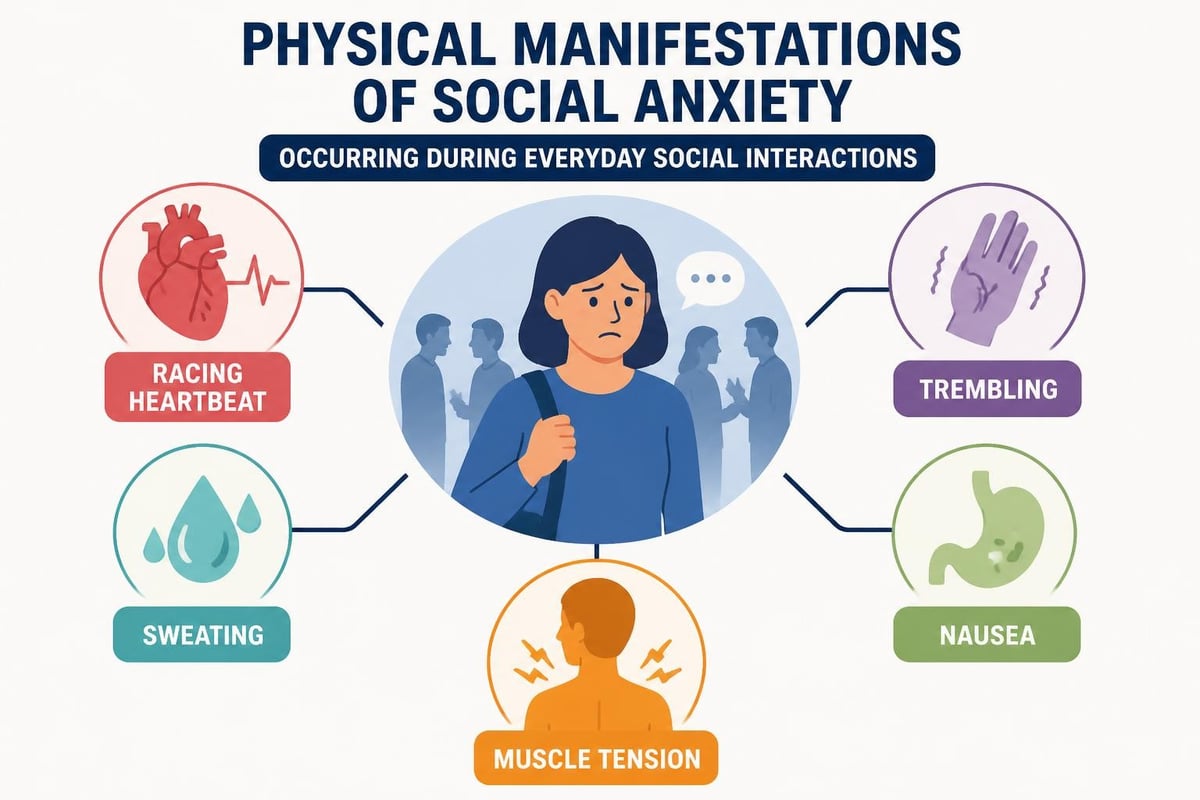
Your body has a pretty dramatic way of telling you something's up. When social anxiety kicks in, you might experience:
- Racing or pounding heartbeat
- Excessive sweating, especially in your palms or underarms
- Trembling hands or shaky voice
- Nausea or upset stomach
- Dizziness or lightheadedness
- Muscle tension, particularly in your shoulders and neck
These physical reactions happen because your brain's alarm system (hello, fight-or-flight response) is working overtime. Your body thinks you're facing a genuine threat, even though you're just trying to order coffee or make small talk at a party.
The Mental Side of Social Anxiety Symptoms
What's happening in your head is just as important as what's happening in your body. Research shows that cognitive symptoms are central to understanding social anxiety disorder.
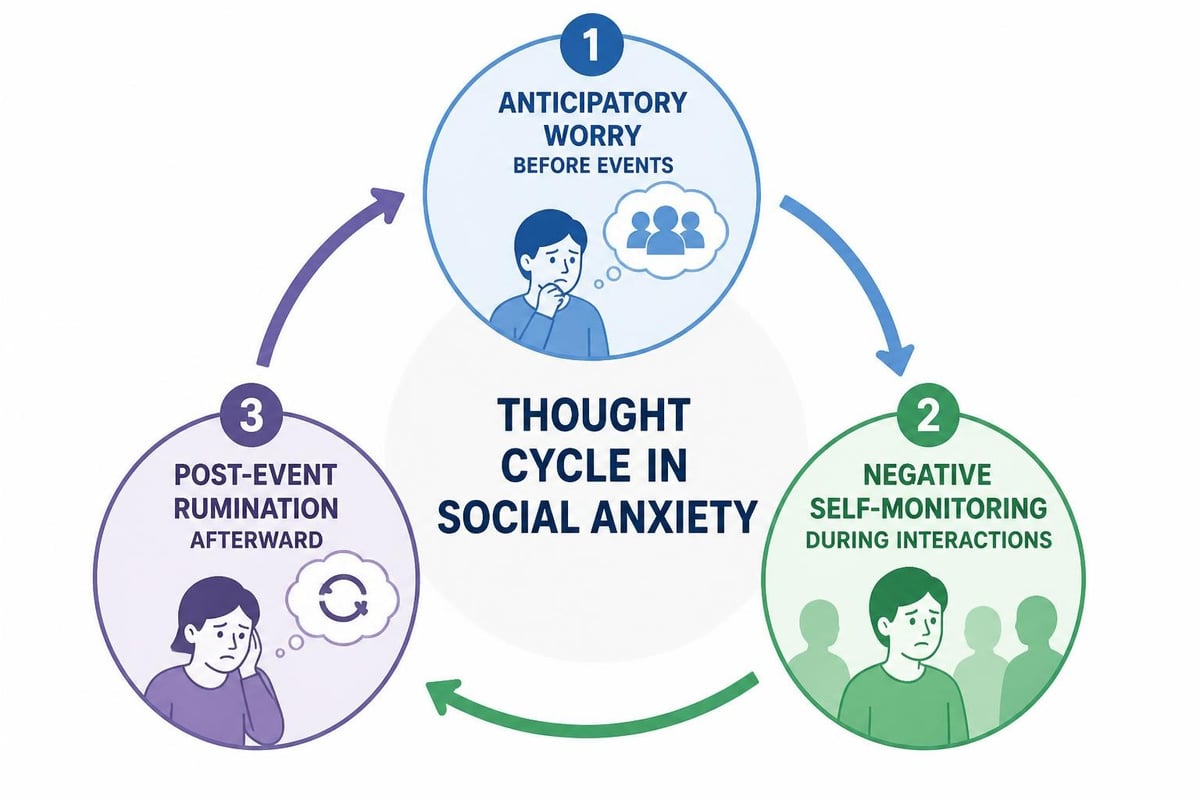
Negative thought patterns dominate your internal dialogue. You might constantly worry about upcoming social events days or even weeks in advance. Your brain creates worst-case scenarios where you'll embarrass yourself, say something stupid, or be rejected by others.
There's also this thing called "post-event processing" where you replay social interactions over and over, analyzing every word you said and convincing yourself you messed up. It's exhausting, honestly.
Avoidance: When Life Gets Smaller
Here's where social anxiety symptoms really start impacting your life. You begin avoiding situations that trigger your anxiety:
- Declining invitations to parties or social gatherings
- Eating lunch alone to avoid the cafeteria or break room
- Shopping online instead of going to stores
- Skipping important events like weddings or work functions
- Avoiding eye contact or phone calls
The prevalence of social anxiety disorder affects millions of adults, and avoidance behaviors often make it worse over time. Your world gets smaller and smaller, which reinforces the anxiety cycle.
How Social Anxiety Shows Up in Different Situations
Not everyone experiences social anxiety symptoms in the same way or situations. Some people only struggle with performance-related activities, while others find all social interactions challenging.
| Situation Type | Common Triggers | Typical Response |
|---|---|---|
| Performance | Public speaking, presentations | Intense fear, avoidance, physical symptoms |
| Interactive | Conversations, meetings | Difficulty speaking, mind going blank |
| Observational | Eating in public, working while watched | Self-consciousness, trembling |
| Assertive | Returning items, making complaints | Avoidance, accepting poor service |
Understanding your specific triggers helps when you're working with a therapist. The team at Théla uses evidence-based therapeutic approaches like CBT and DBT to address these patterns.
The Fear of Judgment
At the core of social anxiety symptoms is an intense fear of negative evaluation. You're convinced everyone's watching you, judging you, and finding you lacking somehow. According to Britannica, this fear significantly impacts both behavioral and cognitive functioning.
You might spend hours preparing for a simple conversation or rehearsing what you'll say. When you're in the moment, you're hyper-aware of yourself, monitoring every facial expression and word choice.
When Social Anxiety Symptoms Start Early
Many people first notice social anxiety symptoms during their teenage years, though it can develop at any age. For young people, this might look like refusing to participate in class, avoiding school activities, or having difficulty making friends.
If you're concerned about a teenager in your life, WebMD highlights key signs that differentiate normal adolescent self-consciousness from clinical social anxiety. Professional support can make a huge difference during these formative years.
The Impact on Daily Functioning
Social anxiety symptoms don't just make you uncomfortable, they can seriously derail your life goals. People with untreated social anxiety might:
- Turn down job promotions that require presentations
- Struggle to form romantic relationships
- Have difficulty advocating for themselves
- Miss out on educational opportunities
- Experience co-occurring depression or substance use issues
The NCBI guidelines emphasize the importance of early recognition and treatment to prevent these long-term impacts.
Recognizing When You Need Help
So how do you know if your social anxiety symptoms warrant professional support? Here are some clear indicators:
Your anxiety is out of proportion to the actual social situation. You know logically that ordering food won't kill you, but your body and mind react like it might.
It's been going on for months. We're not talking about being nervous for a one-time event. Social anxiety symptoms persist across multiple situations over time.
You're avoiding important life activities. When anxiety starts controlling your choices and limiting your opportunities, it's time to reach out for help.
Getting Support That Actually Works
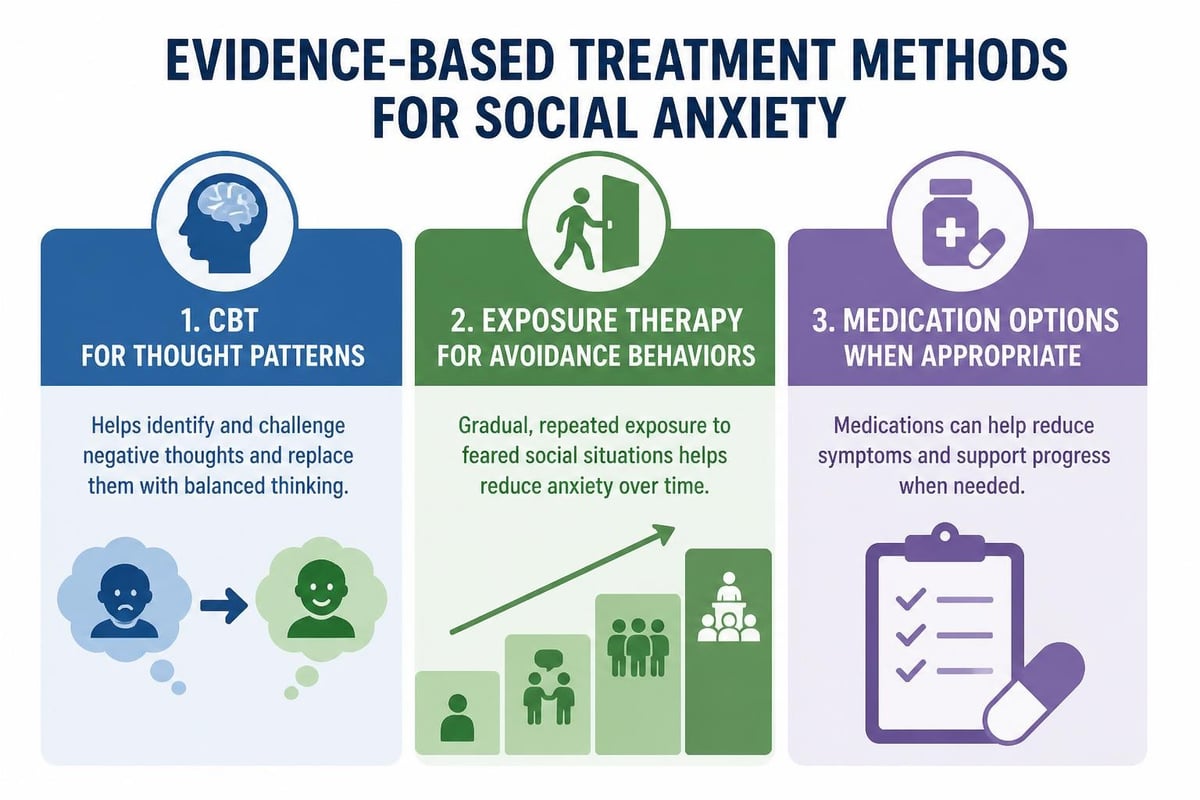
The good news? Social anxiety symptoms respond really well to treatment. Therapy approaches like Cognitive Behavioral Therapy (CBT) help you identify and challenge those negative thought patterns. Exposure therapy gradually helps you face feared situations in a safe, supportive environment.
At Théla Psychotherapy Clinic, therapists work with clients across Ontario using trauma-informed and culturally responsive approaches. Whether you're dealing with mild social discomfort or severe anxiety that's impacting your daily life, there are effective treatment options available.
| Treatment Approach | How It Helps | Time Frame |
|---|---|---|
| CBT | Challenges negative thoughts | 12-16 weeks typically |
| Exposure Therapy | Gradually faces feared situations | Varies by individual |
| DBT | Builds emotional regulation skills | Several months |
| Medication | Reduces physical symptoms | Ongoing as needed |
Remember, seeking help isn't admitting weakness. It's recognizing that you deserve to live without constant fear and anxiety holding you back. Many people find that individual therapy provides the personalized support they need to manage social anxiety symptoms effectively.
Recognizing social anxiety symptoms is the first step toward reclaiming your life from fear and avoidance. Whether you're experiencing physical symptoms, struggling with negative thoughts, or finding yourself avoiding important situations, you don't have to navigate this alone. The compassionate therapists at Théla Psychotherapy Clinic offer evidence-based treatment tailored to your unique needs, with services available both in-person in Markham and online throughout Ontario. Reach out today to start your journey toward more confident, fulfilling social connections.

Bonny Li
Contact Me