We've all felt nervous before a big presentation or meeting new people. But what happens when that nervousness doesn't just happen occasionally-it becomes a constant companion that shapes every social interaction? Social anxiety disorder symptoms go way beyond typical shyness, affecting millions of people who find everyday social situations genuinely overwhelming. Understanding these symptoms is the first step toward recognizing when you or someone you care about might need support. Let's dive into what social anxiety disorder actually looks like and how it shows up in daily life.
The Core Social Anxiety Disorder Symptoms
Social anxiety disorder manifests through a complex mix of emotional, physical, and behavioral patterns. The National Institute of Mental Health offers an in-depth look at social anxiety disorder, explaining how these symptoms differ from ordinary nervousness.
Intense Fear of Social Situations
The hallmark symptom is an overwhelming fear of being judged, embarrassed, or humiliated in social settings. This isn't just feeling a little awkward-it's a persistent, intense anxiety that can start days or weeks before an anticipated event.
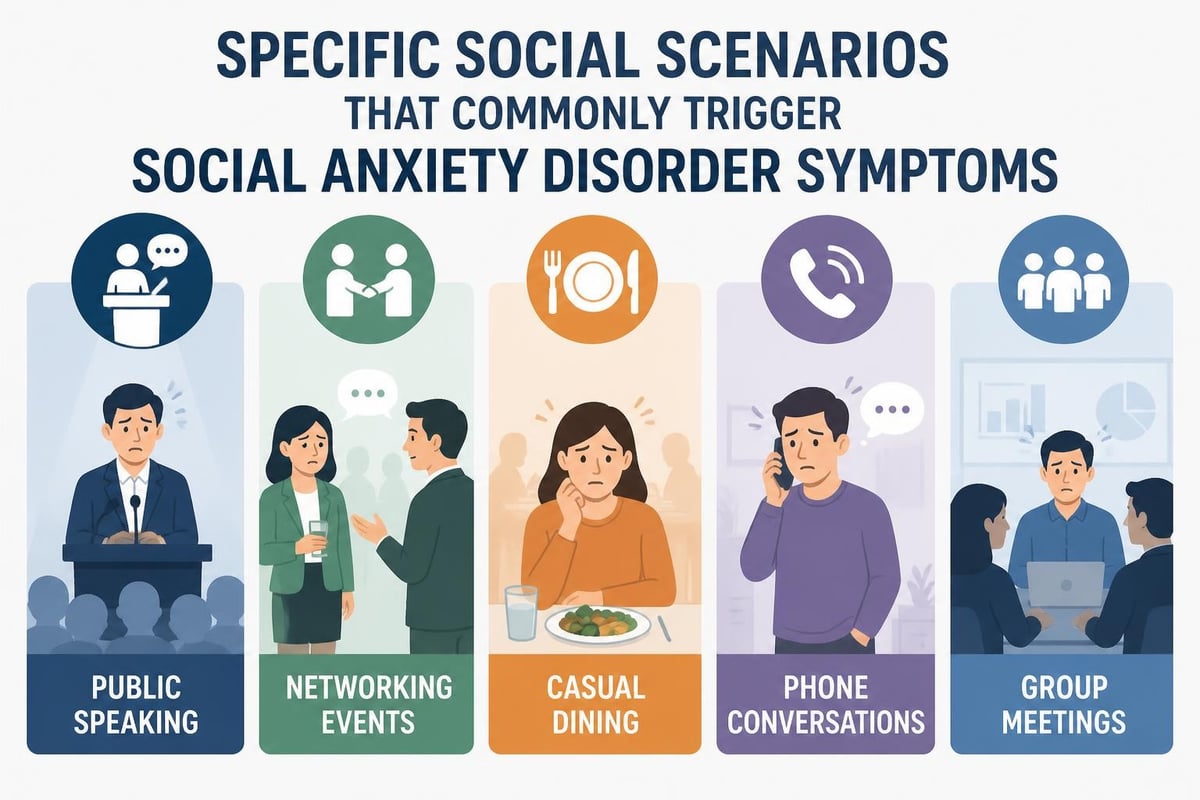
People with social anxiety disorder symptoms often fear:
- Speaking in public or in front of groups
- Meeting new people or making small talk
- Eating or drinking in front of others
- Being the center of attention
- Making phone calls or video calls
- Using public restrooms
Physical Manifestations You Can't Ignore
Your body has a way of expressing what your mind is experiencing. The physical social anxiety disorder symptoms can be just as debilitating as the psychological ones.
| Physical Symptom | How It Presents |
|---|---|
| Rapid heartbeat | Pounding chest, feeling like your heart might burst |
| Sweating | Excessive perspiration, especially on palms and forehead |
| Trembling | Shaky hands or voice that you can't control |
| Blushing | Intense facial redness that feels impossible to hide |
| Nausea | Upset stomach or feeling like you might be sick |
| Dizziness | Lightheadedness or feeling disconnected from reality |
Research examining physiological responses shows how socially anxious individuals experience measurable physical changes across different social contexts.
Behavioral Patterns and Avoidance
One of the most challenging aspects of social anxiety disorder symptoms is how they shape behavior over time. You start avoiding situations that trigger anxiety, which might bring temporary relief but ultimately reinforces the disorder.
Avoidance Becomes a Lifestyle
Avoidance patterns might look like:
- Turning down invitations to social gatherings
- Choosing careers or jobs that minimize social interaction
- Avoiding eye contact during conversations
- Staying quiet in meetings even when you have valuable input
- Leaving events early or finding excuses not to attend
The University of Pennsylvania's Center for the Treatment and Study of Anxiety provides detailed information on how these behavioral symptoms differentiate social anxiety disorder from typical nervousness.
Safety Behaviors That Keep You Stuck
People develop "safety behaviors" they think help them cope, but actually maintain the anxiety cycle. These might include rehearsing conversations excessively, using alcohol to feel more comfortable, or always bringing a friend to social events as a buffer.
Cognitive and Emotional Symptoms
Social anxiety disorder symptoms aren't just about what happens in the moment-they involve persistent thought patterns and emotional experiences.
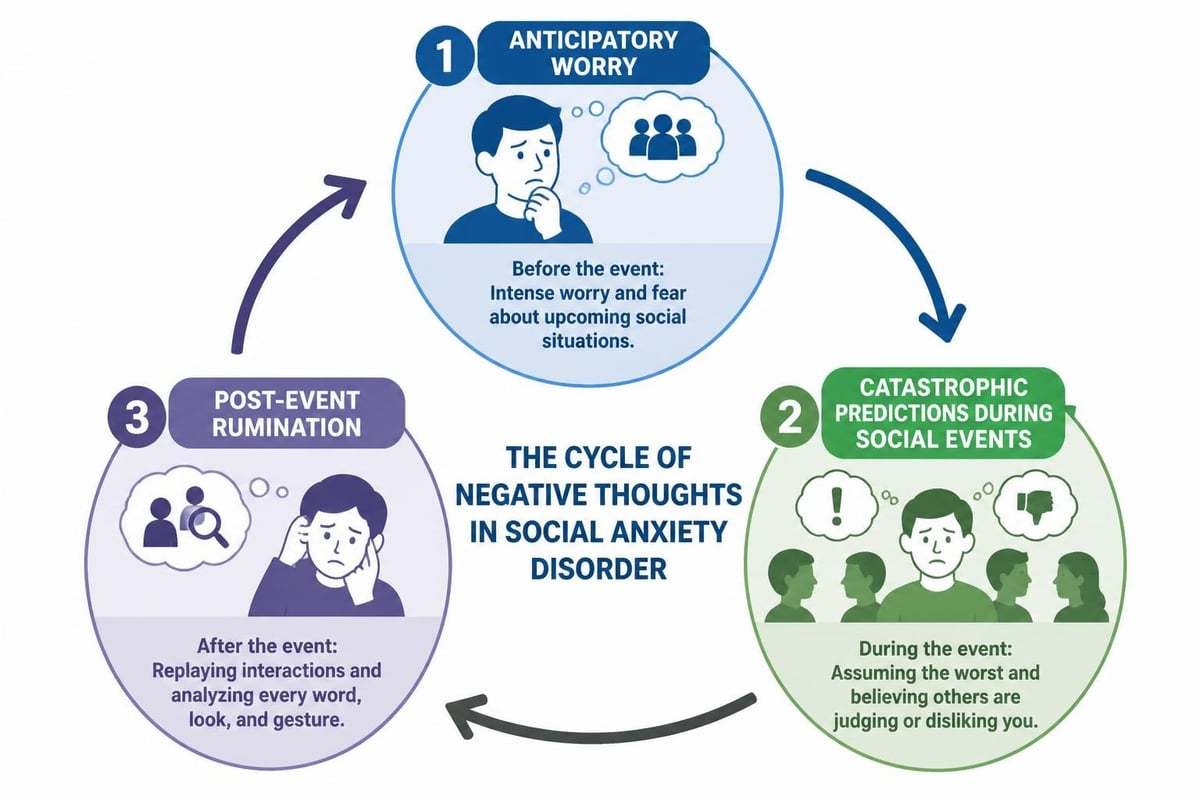
Your mind might constantly run negative scenarios: "Everyone will think I'm stupid," "I'll embarrass myself," or "They'll see how anxious I am." These thoughts feel absolutely real and convincing, even when there's no evidence to support them.
Common cognitive symptoms include:
- Excessive self-consciousness in everyday situations
- Worrying for days or weeks before social events
- Intense self-criticism after social interactions
- Difficulty concentrating when anxious
- Fear that others notice your anxiety symptoms
How Social Anxiety Disorder Symptoms Impact Daily Life
According to MedlinePlus, social anxiety disorder can significantly interfere with work, school, and personal relationships. The impact extends far beyond feeling uncomfortable at parties.
| Life Area | Potential Impact |
|---|---|
| Career | Difficulty with interviews, presentations, or networking |
| Education | Avoiding class participation or group projects |
| Relationships | Struggling to form close friendships or romantic connections |
| Daily tasks | Avoiding necessary activities like shopping or appointments |
The NHS provides perspective on how social anxiety disorder affects individuals throughout their daily routines, often creating a cycle of isolation and decreased quality of life.
At Théla Psychotherapy Clinic, we understand that therapeutic approaches need to address both the symptoms and their underlying causes through evidence-based methods tailored to each person's unique experience.
When Symptoms Cross the Line from Shyness to Disorder
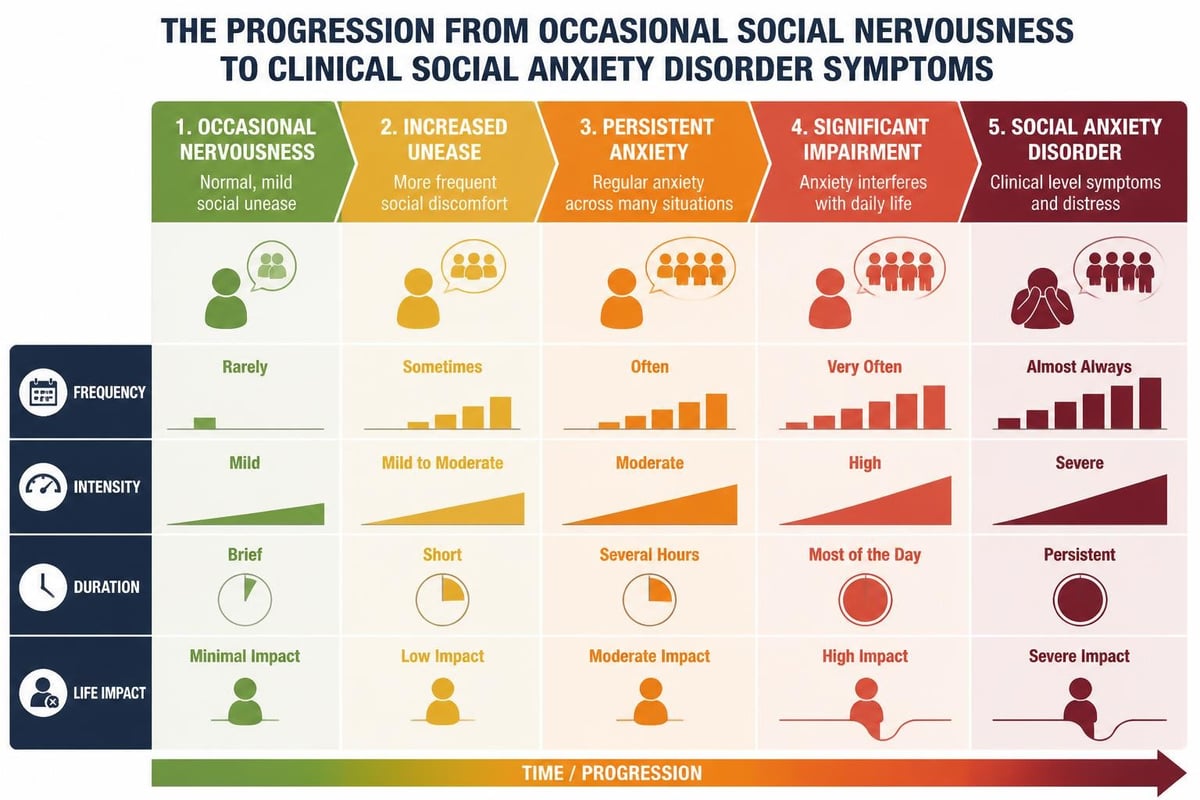
Here's the thing-everyone feels shy or nervous sometimes. Social anxiety disorder symptoms become a clinical concern when they:
- Persist for six months or longer
- Cause significant distress or impairment
- Lead to avoidance of important activities
- Interfere with your ability to function in work, school, or relationships
An observational study analyzing symptom prevalence highlights the diverse ways emotional and physical symptoms manifest across different individuals, emphasizing that no two people experience social anxiety disorder exactly the same way.
Co-Occurring Symptoms and Conditions
Social anxiety disorder symptoms rarely exist in isolation. Many people experience additional mental health challenges alongside their social anxiety.
Common co-occurring conditions include:
- Depression - The isolation and avoidance can lead to persistent low mood
- Other anxiety disorders - Generalized anxiety or panic disorder often overlap
- Substance use concerns - Some people self-medicate to manage symptoms
- Eating disorders - Particularly when anxiety centers around eating in public
Understanding these connections is crucial for comprehensive treatment. Our team at Théla recognizes the importance of addressing multiple areas of concern through integrated, trauma-informed care.
The Importance of Professional Assessment
While this overview helps you recognize social anxiety disorder symptoms, only qualified mental health professionals can provide an accurate diagnosis. Clinical guidelines from NCBI detail the thorough assessment process required for proper recognition and treatment planning.
A professional assessment typically includes:
- Detailed symptom history and timeline
- Impact on daily functioning evaluation
- Screening for co-occurring conditions
- Discussion of past treatment experiences
- Collaborative treatment goal setting
The good news? Effective treatments exist. Approaches like CBT and DBT have strong evidence supporting their effectiveness for managing social anxiety disorder symptoms and improving quality of life.
Physical vs. Psychological: Understanding Both Dimensions
Research shows that social anxiety disorder symptoms involve both mind and body working in tandem. Studies examining autonomic arousal during cognitive tasks reveal measurable physiological changes that occur when someone with social anxiety faces triggering situations.
This mind-body connection means effective treatment addresses both dimensions-helping you manage anxious thoughts while also learning to regulate your body's stress response.
Recognizing social anxiety disorder symptoms is an empowering first step toward reclaiming your social life and overall well-being. If these symptoms resonate with your experience, know that you don't have to navigate this journey alone. Théla Psychotherapy Clinic offers trauma-informed, evidence-based therapy both in-person in Markham and online across Ontario, creating a safe space where you can work through social anxiety with compassionate professionals who understand exactly what you're facing. Your path to more confident, comfortable social interactions starts with reaching out.

Bonny Li
Contact Me
.jpg)