
Recovery from anxiety and depression isn't a straight line, and that's completely okay. If you're reading this in 2026, you're already taking an important step by seeking information and understanding. The path to healing looks different for everyone, but what matters most is knowing you're not alone and that recovery is absolutely possible. Whether you're just starting to recognize symptoms or you're already deep into your healing journey, understanding what recovery actually means and how to approach it can make all the difference.
What Recovery Actually Looks Like
Let's be real: recovery from anxiety and depression doesn't mean you'll never have a bad day again. It means developing the tools and resilience to handle those days when they come.
Recovery is more about progress than perfection. You might have weeks where you feel amazing, followed by a tough few days. That doesn't mean you've failed or gone backward. Think of it like learning to ride a bike - you wouldn't expect to never wobble again once you've learned the basics.
Understanding Your Unique Path
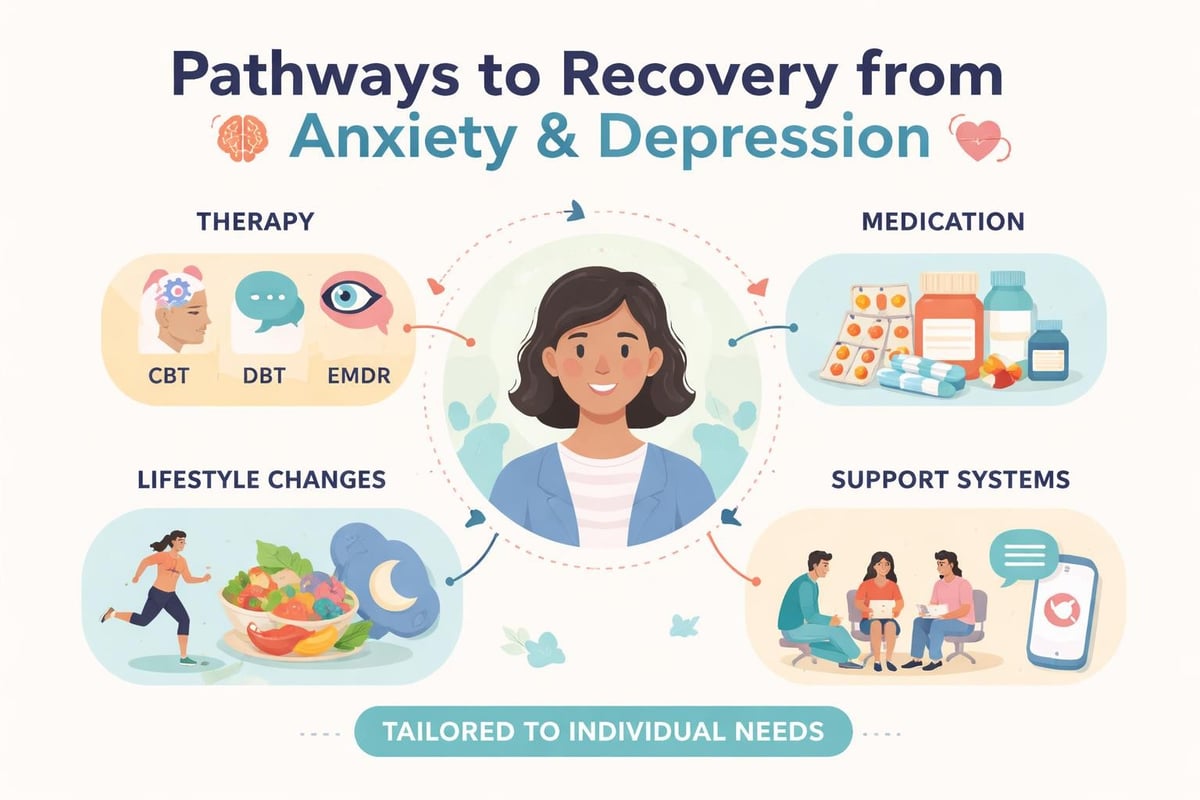
Research shows that individualized approaches to self-management play a crucial role in recovery. What works for your friend or family member might not work exactly the same way for you, and that's totally normal.
Here's what makes each recovery journey unique:
- Your specific symptoms and triggers: Some people experience more physical symptoms, while others struggle primarily with thoughts and emotions
- Your support system: The people around you and their understanding of mental health
- Your past experiences: Trauma history, previous treatment, and coping mechanisms you've already developed
- Your cultural background: How your family and community view mental health can significantly impact your approach
Building Your Recovery Foundation
Think of recovery from anxiety and depression like building a house. You need a solid foundation before you can add the walls and roof. This foundation includes several key elements that work together.
Evidence-Based Therapeutic Approaches
At Théla Psychotherapy Clinic, we've seen how different therapeutic approaches can transform lives. Here's a quick breakdown of what each one offers:
| Therapy Type | Best For | How It Helps |
|---|---|---|
| CBT (Cognitive Behavioral Therapy) | Negative thought patterns | Identifies and changes unhelpful thinking |
| DBT (Dialectical Behavior Therapy) | Emotional regulation | Builds skills for managing intense emotions |
| EMDR (Eye Movement Desensitization) | Trauma-related anxiety | Processes traumatic memories safely |
| EFT (Emotionally Focused Therapy) | Relationship struggles | Strengthens emotional bonds and security |
The Information You Need
Having access to reliable information about your condition matters more than you might think. Studies on information needs among individuals with depression and anxiety reveal that understanding your symptoms, treatment options, and what to expect can significantly reduce fear and uncertainty.
Don't underestimate the power of education. When you understand what's happening in your brain and body, those symptoms feel less scary and more manageable.
Daily Practices That Support Healing
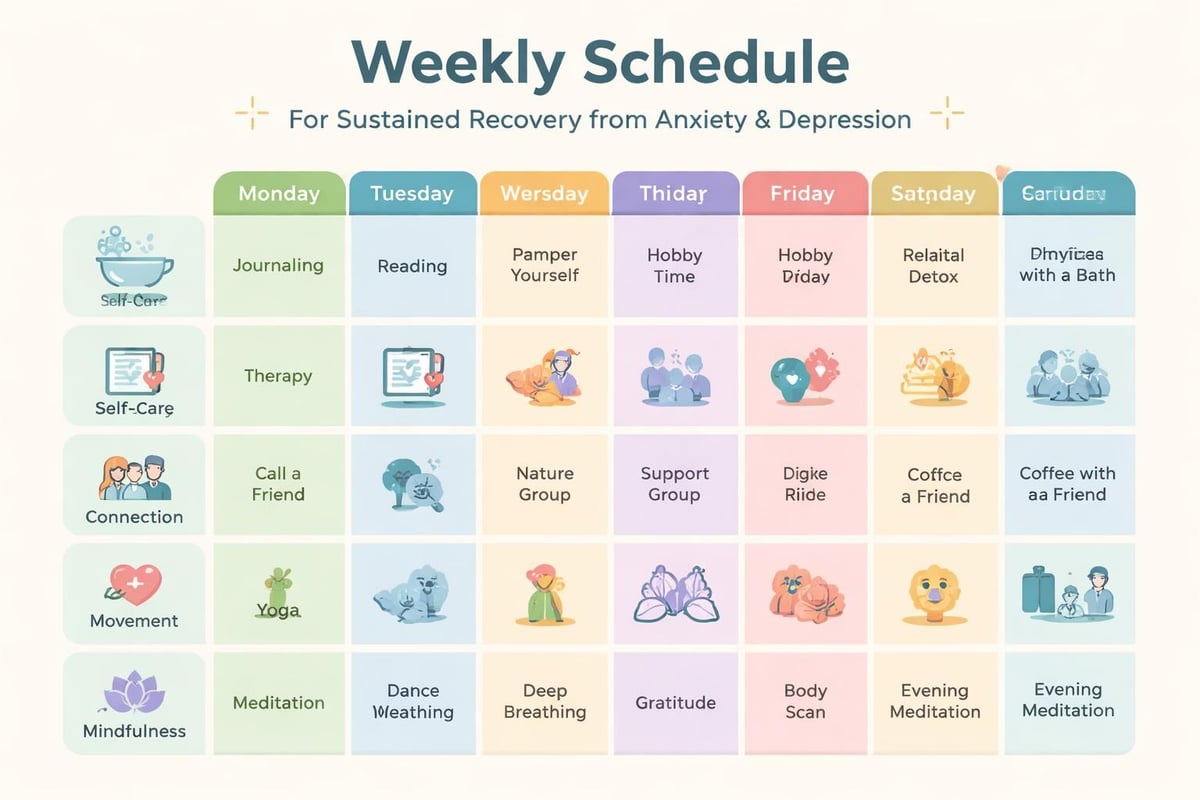
Recovery from anxiety and depression happens in the small, everyday moments just as much as in therapy sessions. These aren't quick fixes, but they're the building blocks of lasting change.
Self-Management Strategies
Here are practical tools you can start using today:
- Sleep hygiene: Aim for consistent bed and wake times, even on weekends
- Movement: You don't need to run marathons - a 15-minute walk counts
- Nutrition: Focus on regular meals rather than "perfect" eating
- Social connection: Even texting a friend helps combat isolation
- Mindfulness practices: Start with just two minutes of breathing exercises
You can find additional support for common challenges that might be affecting your mental health journey.
When to Seek Professional Support
Sometimes self-management isn't enough, and that's when professional help becomes essential. If you're experiencing persistent symptoms that interfere with daily life, counselling for anxiety and depression can provide the structured support you need.
Signs it's time to reach out:
- Symptoms lasting more than two weeks without improvement
- Difficulty completing work, school, or household tasks
- Withdrawing from relationships and activities you once enjoyed
- Physical symptoms like changes in appetite or sleep patterns
- Thoughts of self-harm or feeling hopeless about the future
The Role of Support Systems
You can't recover in isolation. The people around you - whether that's family, friends, therapists, or support groups - form an essential part of your healing network.
Building Effective Support
Research on mental health recovery support emphasizes the importance of active listening and validation. Your support people don't need to have all the answers. They just need to show up and care.
Communication is key. Let people know what helps and what doesn't. Maybe you need someone to just listen, or maybe you need help with practical tasks when you're struggling. Be specific about what support looks like for you.
Professional Support Networks
Working with mental health professionals provides structured guidance that friends and family can't always offer. Trauma-informed and culturally responsive care ensures your unique background and experiences are honored throughout treatment.
For those in Ontario, accessing affordable therapy options makes professional support more attainable regardless of financial circumstances.
Measuring Progress and Celebrating Wins
Recovery from anxiety and depression isn't always obvious. You might not wake up one day and suddenly feel "cured." Instead, you'll notice small shifts over time.
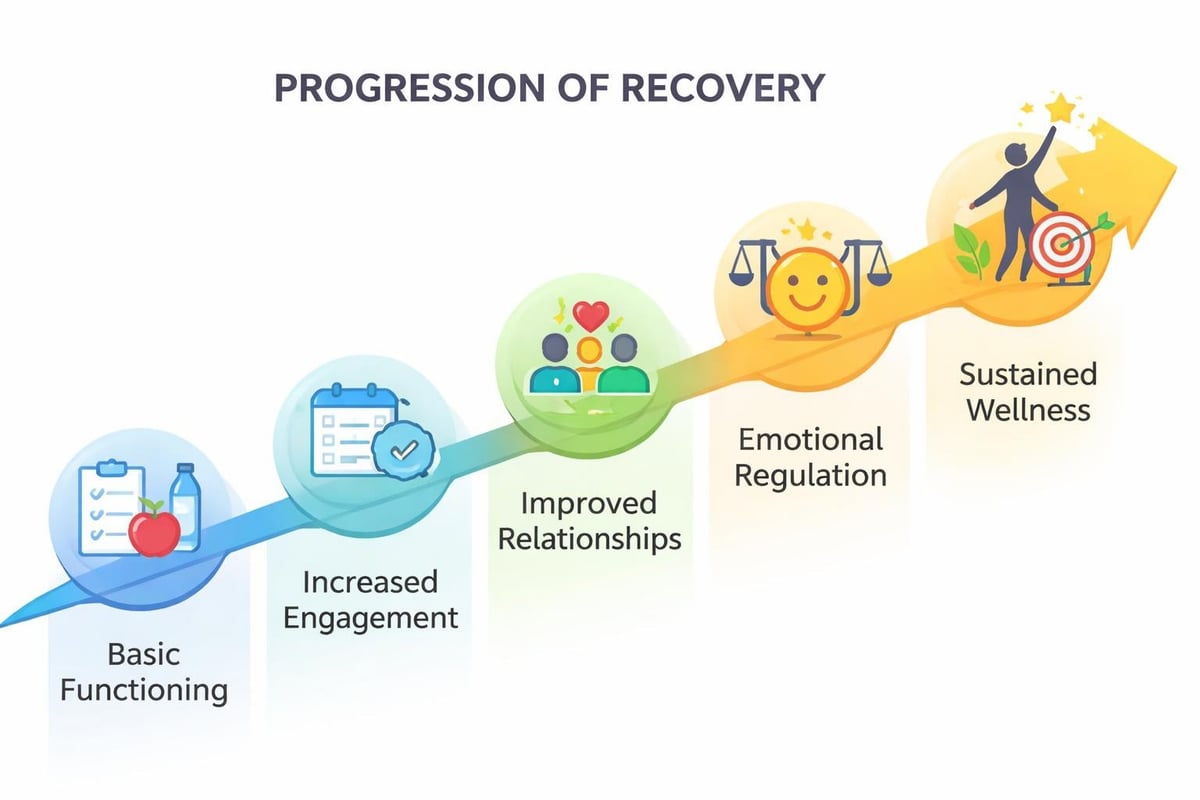
What Progress Actually Looks Like
| Early Recovery | Mid Recovery | Advanced Recovery |
|---|---|---|
| Getting out of bed most days | Engaging in hobbies again | Planning for future goals |
| Attending therapy consistently | Reconnecting with friends | Helping others with similar struggles |
| Using one coping skill | Having multiple coping strategies | Teaching coping skills to loved ones |
| Recognizing symptoms early | Managing symptoms independently | Preventing major setbacks |
Remember to acknowledge the small victories. Did you shower today even though it felt impossible? That's huge. Did you reach out to a friend instead of isolating? That deserves recognition.
Adjusting Your Approach
Your treatment plan should evolve as you do. What worked six months ago might need tweaking now. Regular check-ins with your therapist help ensure your approach stays aligned with your current needs. Accessing reliable health information can also help you stay informed about new treatment options and approaches.
If you're considering medication, wondering about insurance coverage, or exploring alternative therapies like animal-assisted support, these are all valid parts of customizing your recovery path.
Recovery from anxiety and depression is possible, and it's happening for people every day right here in Ontario and across the world. The journey requires patience, support, and the right therapeutic tools tailored to your unique needs. If you're ready to take the next step in your healing journey, Théla Psychotherapy Clinic offers compassionate, evidence-based care both in-person in Markham and online throughout Ontario, helping you build the foundation for lasting wellness and personal growth.

Bonny Li
Contact Me
.jpg)

