Ever find yourself lying awake at night wondering what it all means? You're not alone. Those big questions about purpose, freedom, and what really matters aren't signs you're overthinking-they're part of being human. That's exactly where existential therapy comes in, offering a unique approach that doesn't just treat symptoms but digs into the meaningful stuff that makes life, well, life.
What Makes Existential Therapy Different
Unlike traditional therapy models that focus primarily on behavior modification or past traumas, existential therapy zeroes in on your present experience and future possibilities. It's all about embracing the messy, sometimes uncomfortable reality of being human.
This approach recognizes that anxiety isn't always something to eliminate-sometimes it's pointing you toward something important. Maybe you're anxious because you're living according to someone else's values, or you've been avoiding a tough decision about your career or relationship.
The Core Themes You'll Explore
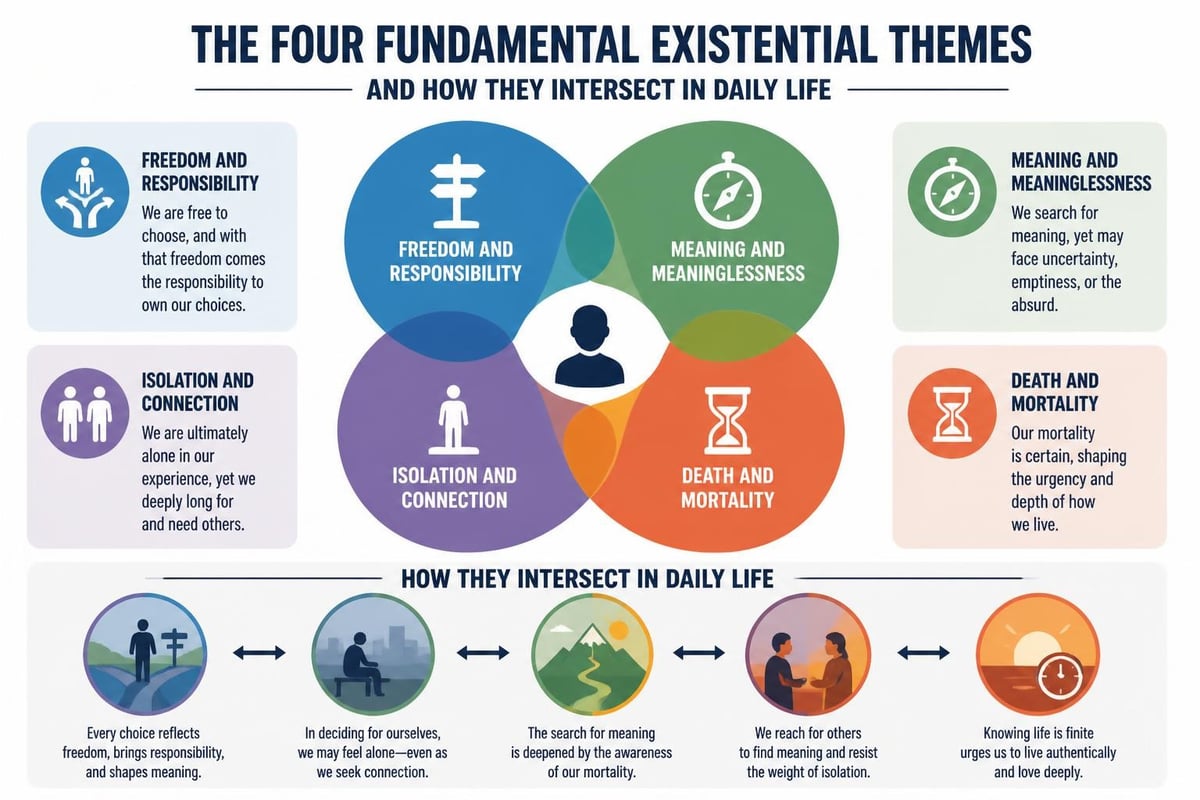
When you work with a therapist using existential approaches, you'll tackle four main areas that affect everyone:
- Freedom and responsibility - recognizing that you have choices (even when it doesn't feel like it) and owning the consequences
- Meaning and meaninglessness - finding what matters to you in a world that doesn't come with a pre-written instruction manual
- Isolation and connection - balancing your fundamental aloneness with your need for authentic relationships
- Death and mortality - confronting the reality that life is finite and letting that shape how you live
These aren't exactly light coffee-chat topics, but they're the stuff that keeps many of us up at night. At Théla Psychotherapy Clinic, therapists integrate existential perspectives with other therapeutic approaches to create personalized care that honors your unique experience.
How Existential Therapy Actually Works
You won't find worksheets or homework assignments in traditional existential therapy. Instead, expect deep, philosophical conversations about your lived experience. Your therapist becomes a fellow traveler, exploring questions alongside you rather than positioning themselves as the expert with all the answers.
The therapeutic relationship itself becomes a laboratory for practicing authentic connection. If you struggle with being genuine in relationships, how you show up in therapy-the masks you wear, the truths you avoid-becomes valuable material to examine together.
| Traditional Therapy | Existential Therapy |
|---|---|
| Focuses on symptoms and diagnosis | Explores meaning and experience |
| Therapist as expert authority | Therapist as collaborative partner |
| Aims to reduce distress | Embraces anxiety as potentially meaningful |
| Past-focused or behavior-focused | Present and future-oriented |
Existential-humanistic psychology has roots stretching back to philosophers like Kierkegaard and Nietzsche, but it became a formal therapy approach in the mid-20th century through thinkers like Viktor Frankl, Rollo May, and Irvin Yalom.
Who Benefits From This Approach
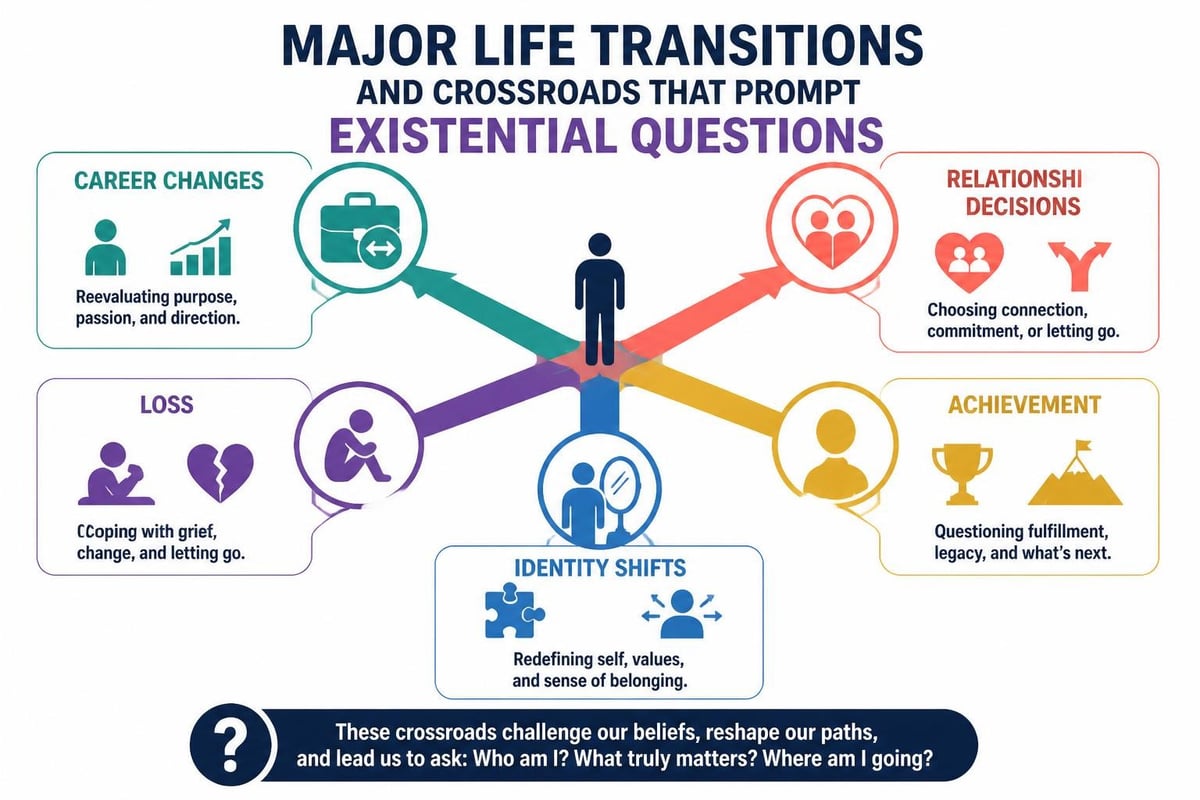
Here's the thing-existential therapy isn't just for people having full-blown existential crises (though it definitely helps with those). It's incredibly useful for anyone grappling with life transitions, identity questions, or that nagging feeling that something's missing.
Common situations where this approach shines:
- Career transitions or retirement when you're questioning your purpose
- Relationship crossroads where you're weighing authenticity versus security
- Loss or grief that's making you confront mortality
- Success that feels hollow or unfulfilling
- Chronic anxiety that seems disconnected from specific triggers
You might find existential therapy particularly helpful if you're tired of surface-level solutions. When someone suggests meditation or positive thinking for the tenth time and you're thinking "but what's the point of any of this?"-that's when existential work becomes relevant.
The evidence base for existential therapy continues to grow, with research compiled in resources like Mick Cooper's book on existential therapies demonstrating its effectiveness across various populations and concerns.
Practical Tools and Concepts
Despite its philosophical bent, existential therapy offers concrete ways to navigate daily life. One key practice is phenomenological exploration-learning to observe your experience without immediately judging or fixing it. When anxiety shows up, instead of reaching for a distraction, you pause and get curious: What's this telling me? What am I avoiding?
Working With Freedom
The idea that you're free to choose can feel empowering or terrifying, often both. Your therapist might help you identify where you've been living on autopilot, following scripts written by family, culture, or fear.
This doesn't mean every choice is easy or that circumstances don't constrain you. But even in tough situations, you maintain the freedom to choose your attitude and response. Viktor Frankl discovered this truth in Nazi concentration camps-the ultimate example of limited external freedom revealing profound internal freedom.
Key questions you might explore:
- Where am I claiming "I have to" when I actually mean "I choose to because..."?
- What would I do differently if I fully owned my freedom?
- What am I pretending not to know about my situation?
The National Library of Medicine features resources addressing frequently asked questions about existential therapy, helping demystify this approach for both practitioners and clients seeking to understand it better.
Integration With Other Approaches
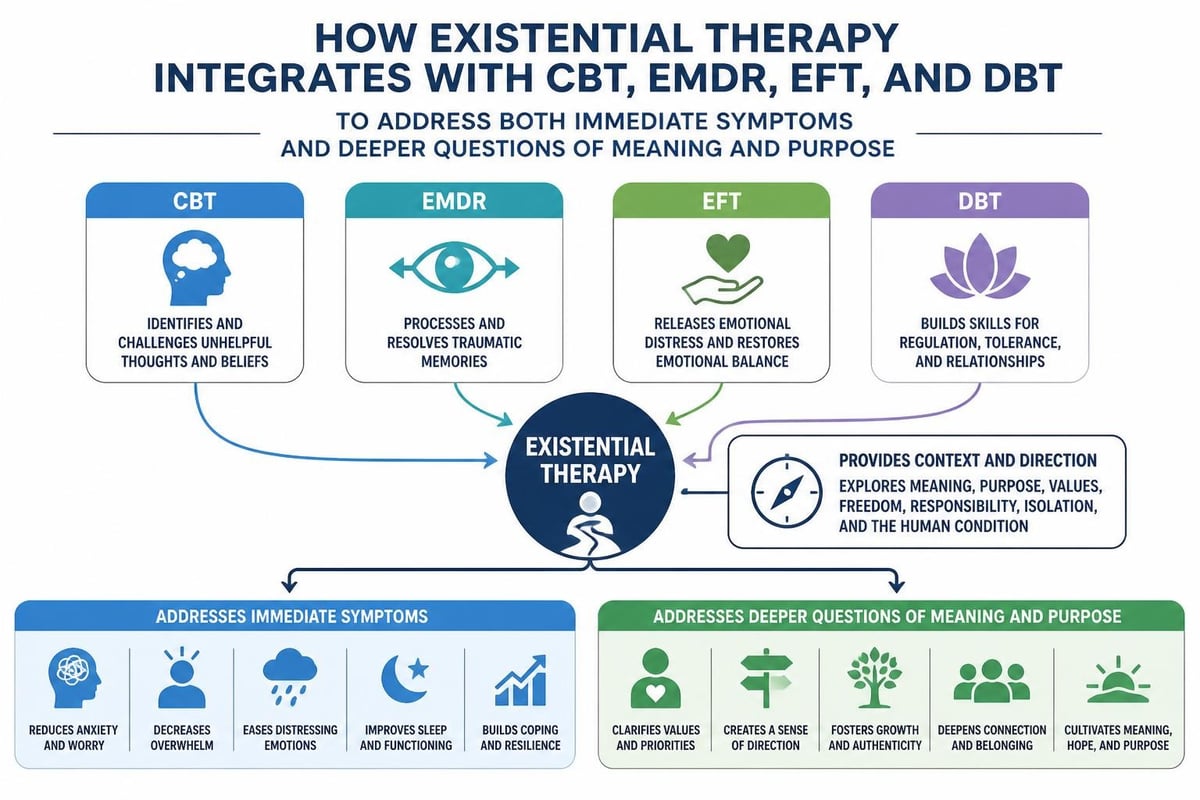
Most therapists don't practice pure existential therapy in isolation. At clinics like Théla, you'll often find it woven together with evidence-based methods. Someone dealing with trauma might benefit from EMDR therapy while also exploring existential questions about safety, control, and rebuilding meaning after violation.
Similarly, couples working through relationship issues might use EFT (Emotionally Focused Therapy) techniques while also examining existential themes of isolation, authenticity, and commitment. Understanding various therapeutic approaches helps you find the right fit for your specific needs.
| Combination | Best For |
|---|---|
| Existential + CBT | Practical anxiety management while exploring underlying meaning |
| Existential + EMDR | Trauma processing with philosophical integration |
| Existential + DBT | Emotional regulation plus authentic values identification |
| Existential + EFT | Relationship healing with deeper existential commitment work |
Finding Your Authentic Path Forward
The beauty of existential therapy is that it doesn't prescribe what your life should look like. There's no checklist for a meaningful existence. Instead, it offers a framework for discovering what authenticity means specifically for you-not your parents, not society, not your Instagram feed.
This process can be uncomfortable. You might realize you've been pursuing goals that don't actually resonate with your values. You might recognize that the relationship you've been trying to save isn't aligned with who you're becoming. These realizations hurt, but they also liberate.
When you're ready to move from living reactively to living intentionally, existential therapy provides both the philosophical ground and practical support for that shift. It's not about achieving some perfect state of enlightenment-it's about engaging more consciously with the life you're already living.
Existential therapy offers a powerful framework for exploring life's biggest questions while finding practical ways to live more authentically and meaningfully in 2026. Whether you're navigating a major transition, grappling with anxiety, or simply seeking deeper purpose, this approach can illuminate your path forward. Théla Psychotherapy Clinic provides existential and integrative therapy both in-person in Markham and online across Ontario, creating a safe, culturally responsive space where you can explore these profound questions with skilled, trauma-informed therapists who honor your unique journey.

Bonny Li
Contact Me
.jpg)