Living with bipolar disorder means navigating intense mood swings that can feel overwhelming, but you're not alone in this journey. The good news? We've got more effective bipolar disorder therapies available in 2026 than ever before. Whether you're dealing with manic episodes, depressive lows, or the challenging in-between spaces, the right combination of therapeutic approaches can make a real difference in your daily life. Understanding your options helps you build a treatment plan that actually works for your unique situation.
Understanding Your Therapy Options
When it comes to managing bipolar disorder, medication often gets most of the attention. But here's the thing: therapy plays an equally crucial role in long-term stability.
The most effective treatment plans typically combine:
- Evidence-based psychotherapy approaches
- Medication management (when appropriate)
- Lifestyle adjustments and self-care strategies
- Support systems and family involvement
Research shows that combining medication with psychotherapy leads to better outcomes than either treatment alone. Think of it like building a house: medication provides the foundation, but therapy gives you the tools to construct a life you actually want to live.
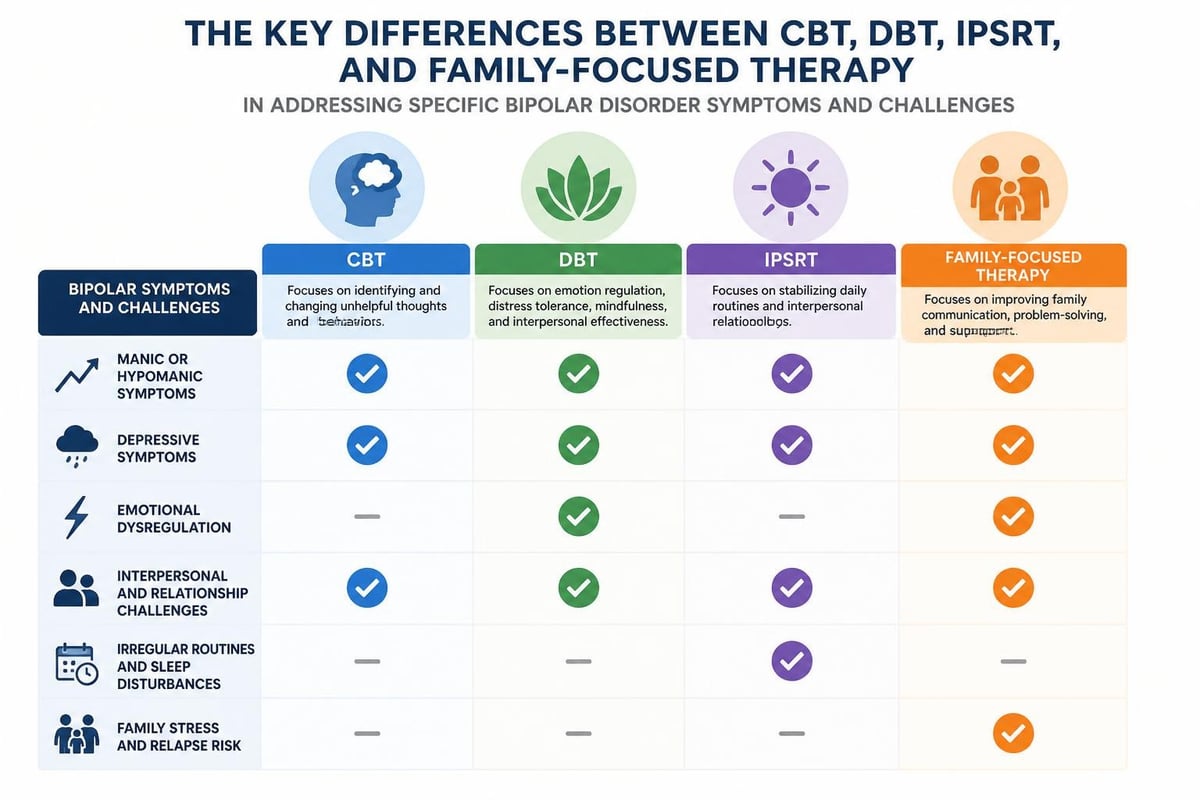
Cognitive Behavioral Therapy (CBT)
CBT has become one of the go-to bipolar disorder therapies for good reason. This approach helps you identify negative thought patterns that trigger or worsen mood episodes.
During CBT sessions, you'll work with your therapist to:
- Recognize early warning signs of mood shifts
- Challenge distorted thinking patterns
- Develop coping strategies for stressful situations
- Build problem-solving skills for daily challenges
What makes CBT particularly valuable is its practical nature. You're not just talking about problems-you're actively learning skills you can use right away. Many clients find that the therapeutic approaches they learn in CBT become lifelong tools.
Dialectical Behavior Therapy for Emotional Regulation
DBT takes things a step further by focusing on emotional regulation and interpersonal effectiveness. Originally developed for borderline personality disorder, DBT has proven incredibly helpful for people managing bipolar disorder too.
| DBT Skill Module | What It Addresses | Bipolar Application |
|---|---|---|
| Mindfulness | Present-moment awareness | Recognizing mood shifts early |
| Distress Tolerance | Crisis management | Handling intense emotions |
| Emotion Regulation | Managing feelings | Preventing extreme episodes |
| Interpersonal Effectiveness | Relationship skills | Maintaining stability in connections |
The beauty of DBT is how it validates your experiences while teaching you new ways to respond. You're not broken-you're learning skills that maybe nobody taught you before. At Théla Psychotherapy Clinic, DBT groups provide both skill-building and peer support.
Interpersonal and Social Rhythm Therapy (IPSRT)
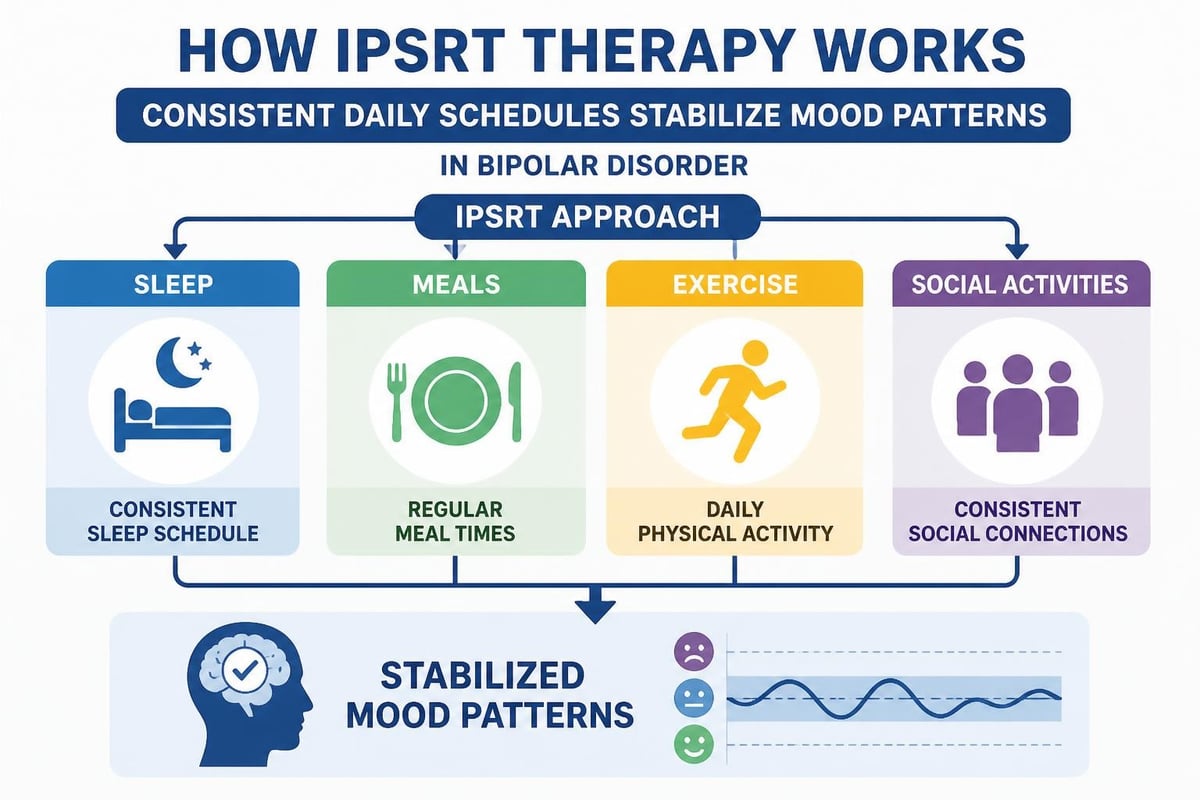
Here's something fascinating: your daily routines have a bigger impact on bipolar symptoms than you might think. IPSRT focuses on stabilizing your daily rhythms-sleep, meals, social activities-because these patterns directly affect mood stability.
IPSRT helps you:
- Establish consistent sleep-wake cycles
- Navigate relationship challenges
- Process grief and role transitions
- Build predictable daily structures
According to research on treatment assessment, maintaining regular routines can significantly reduce the frequency of mood episodes. It's not just about going to bed at the same time (though that helps)-it's about creating a life rhythm that supports your brain's need for stability.
Family-Focused Therapy
Bipolar disorder doesn't just affect you-it impacts everyone close to you. Family-focused therapy brings your loved ones into the treatment process, which can be game-changing.
This approach typically includes:
- Education about bipolar disorder for family members
- Communication skills training to reduce conflicts
- Problem-solving strategies everyone can use
- Relapse prevention planning as a team
When your family understands what you're experiencing, they become part of your support system rather than an additional stressor. The National Institute of Mental Health notes that family involvement in treatment improves outcomes and reduces hospitalization rates.
Psychoeducation as a Foundation
Sometimes the most powerful therapy is simply understanding what's happening in your brain. Psychoeducation teaches you about bipolar disorder, its triggers, and how different treatments work.
Key psychoeducation topics include:
- Recognizing your personal warning signs
- Understanding medication effects and side effects
- Identifying environmental and emotional triggers
- Learning when to seek additional support
This knowledge empowers you to make informed decisions about your care. When you understand why certain bipolar disorder therapies work, you're more likely to stick with them. Healthline's overview of therapy options emphasizes that education forms the foundation of effective self-management.
Finding the Right Fit
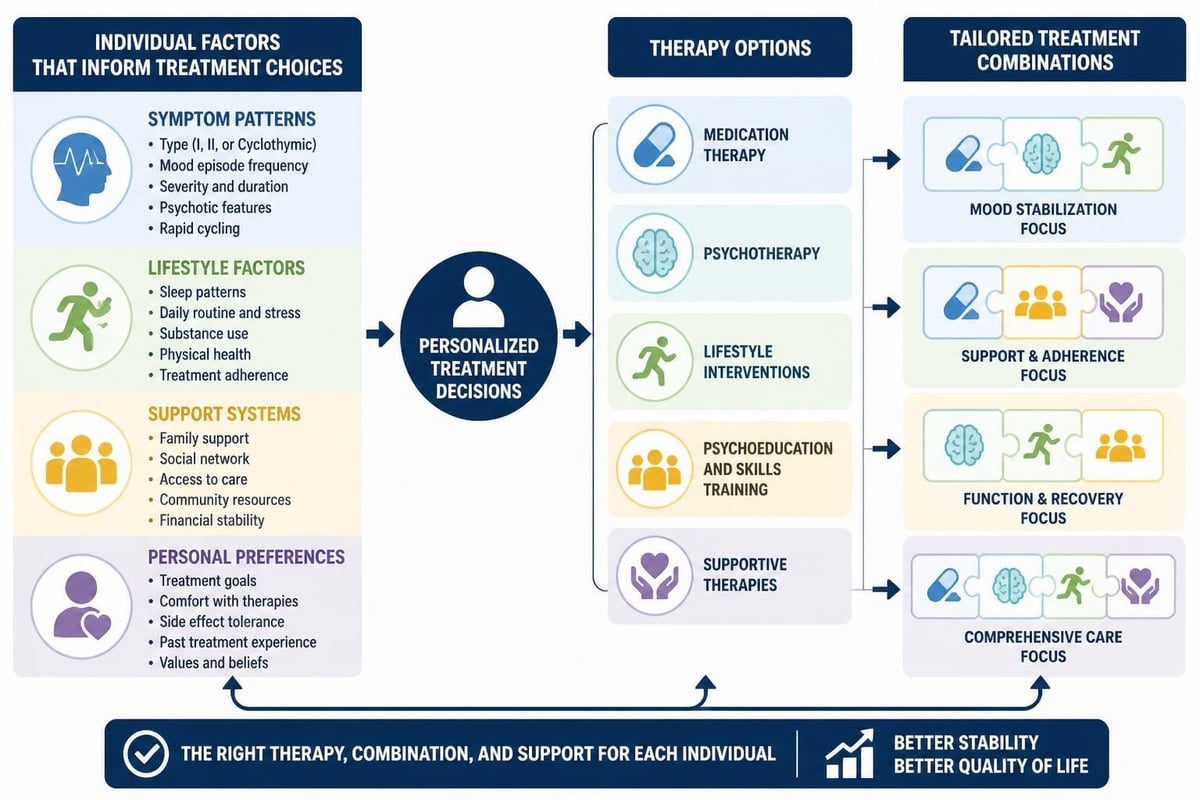
Not every therapy works for every person. Your ideal treatment plan might combine several approaches or focus primarily on one. The key is finding what resonates with you.
Consider these factors when exploring options:
- Your specific symptoms and challenges
- Your personal preferences and learning style
- Your support system and living situation
- Your schedule and accessibility needs
Many Ontario residents find that accessing evidence-based services both in-person and online gives them the flexibility they need to maintain consistent treatment.
Integrating Multiple Approaches
Here's where treatment gets really personalized. Most effective plans combine elements from different bipolar disorder therapies. You might do individual CBT, attend a DBT skills group, and involve your partner in some sessions.
| Treatment Component | Frequency | Primary Goal |
|---|---|---|
| Individual Therapy | Weekly | Personal skill-building |
| Skills Group | Bi-weekly | Learning with peers |
| Family Sessions | Monthly | Improving support system |
| Medication Management | Quarterly | Optimizing treatment |
This integrated approach addresses different aspects of bipolar disorder simultaneously. You're working on thoughts, emotions, behaviors, relationships, and biology all at once. As WebMD explains, comprehensive treatment plans yield the best long-term results.
Building Your Support Team
Effective treatment isn't just about the type of therapy-it's also about who's providing it. Look for therapists who understand trauma-informed, culturally responsive care and have specific experience with mood disorders.
Questions to ask potential therapists:
- What's your experience treating bipolar disorder?
- Which therapeutic approaches do you use?
- How do you handle crisis situations?
- What's your philosophy on medication?
Finding the right fit might take time, but it's worth the effort. At places that specialize in evidence-based approaches, you'll find clinicians trained in multiple modalities who can adapt treatment to your needs.
Bipolar disorder therapies have come a long way, offering real hope for stability and quality of life. The right combination of CBT, DBT, IPSRT, and family support can help you manage symptoms effectively while building the life you want. If you're in Ontario and looking for trauma-informed, culturally responsive care that draws on evidence-based approaches, Théla Psychotherapy Clinic offers both in-person sessions in Markham and online therapy across the province, tailoring treatment to your unique needs and goals.

Bonny Li
Contact Me
.jpg)