You've been forgetting appointments, struggling to focus during meetings, and constantly feeling like you're running behind. You might wonder if it's just stress or something more. For many adults in Ontario, these challenges point toward undiagnosed ADHD. Getting an adhd evaluation for adults is the first step toward understanding your brain better and finding strategies that actually work for you.
Why Adults Seek ADHD Evaluations Later in Life
Lots of folks make it well into adulthood before realizing their struggles might be ADHD-related. Maybe you developed really good coping mechanisms as a kid, or perhaps the structure of school masked your symptoms. Now that life's demands have increased (hello, managing a household, career, and relationships all at once), those old strategies aren't cutting it anymore.
The diagnosis of adult ADHD has become more recognized in recent years. Mental health professionals now understand that ADHD doesn't just disappear when you turn 18. In fact, about 60% of children with ADHD continue to experience symptoms into adulthood.
Common Signs That Prompt Evaluation
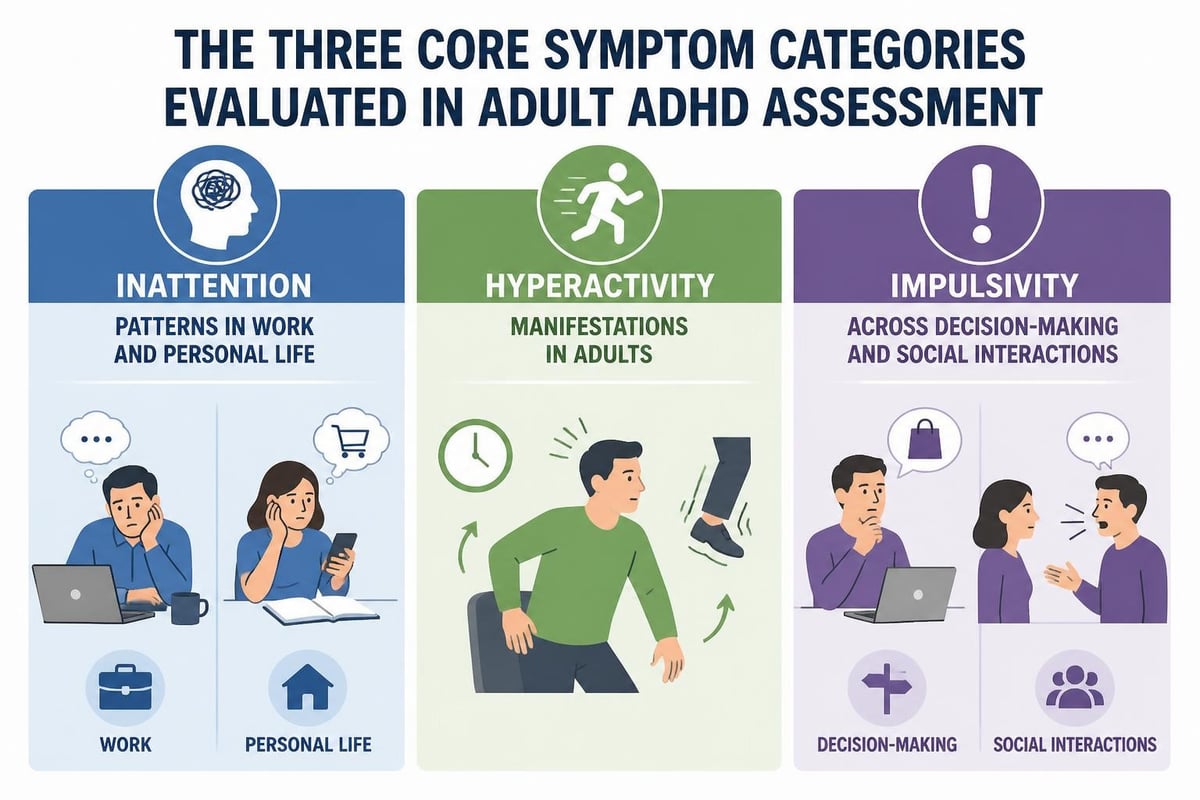
Before seeking an adhd evaluation for adults, most people notice patterns that disrupt their daily lives:
- Chronic procrastination despite good intentions
- Difficulty staying organized, even with planners and apps
- Forgetting important tasks or losing essential items regularly
- Trouble completing projects you've started
- Feeling restless or constantly "on the go"
- Interrupting others or struggling with impulsive decisions
These symptoms can seriously impact your work performance, relationships, and overall well-being. At Théla Psychotherapy Clinic, we understand how frustrating it feels when your brain seems to work against you, which is why comprehensive assessment matters so much.
What Happens During an ADHD Evaluation
The evaluation process involves way more than just a quick questionnaire. A thorough adhd evaluation for adults typically includes several components to ensure accuracy.
Clinical Interview and History
Your evaluator will want to understand your whole story. They'll ask about:
- Childhood experiences – ADHD symptoms must have been present before age 12, even if they weren't diagnosed
- Current challenges – How symptoms affect your work, relationships, and daily functioning
- Family history – ADHD often runs in families
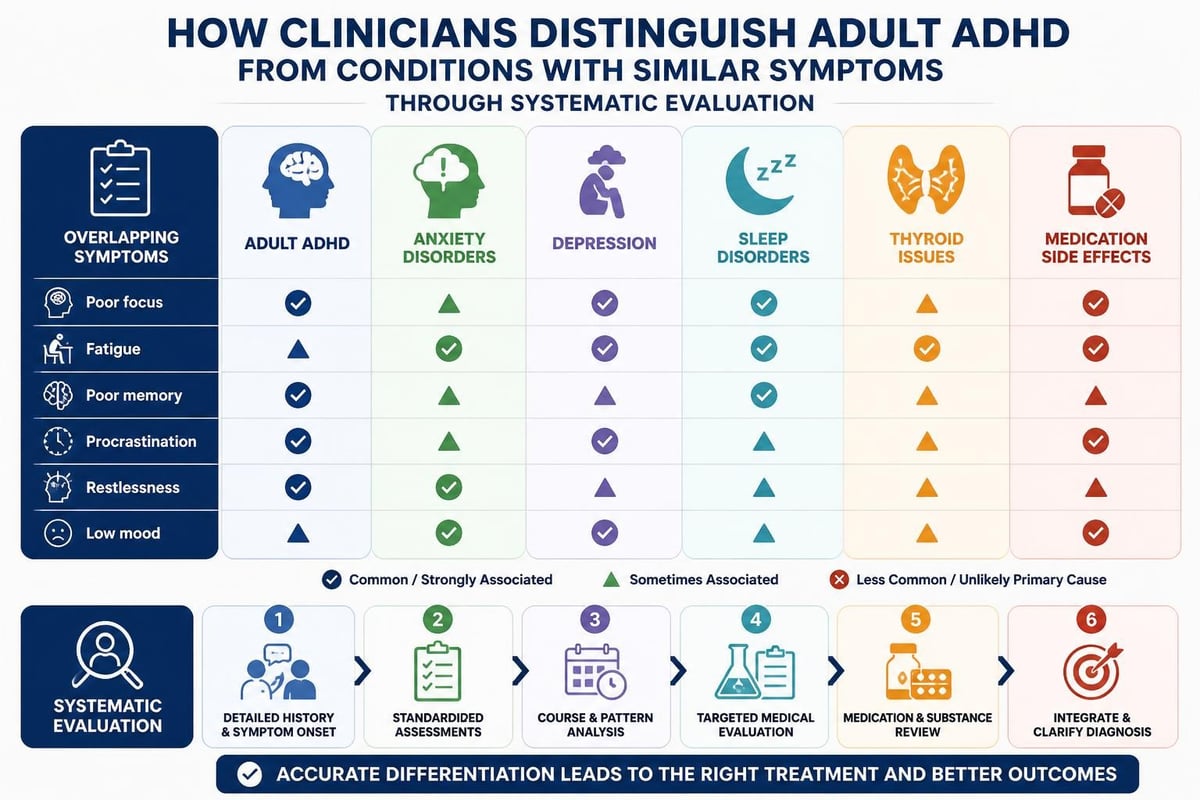
- Medical background – Ruling out other conditions that might mimic ADHD
- Previous diagnoses – Understanding any other mental health conditions
This conversation usually takes an hour or more. Your clinician might ask to speak with family members or review old report cards to confirm childhood symptoms.
Standardized Assessment Tools
Various rating scales help clinicians measure the severity and frequency of ADHD symptoms. These evidence-based instruments provide objective data to support or rule out a diagnosis.
| Assessment Tool | Purpose | Time Required |
|---|---|---|
| ASRS-v1.1 | Self-report screening for symptoms | 5-10 minutes |
| CAARS | Comprehensive symptom assessment | 20-30 minutes |
| Brown ADD Scales | Executive function evaluation | 15-20 minutes |
| DIVA-5 | Structured diagnostic interview | 60-90 minutes |
You might complete some of these before your appointment, while others happen during your session. The Adult ADHD Self-Report Scale is often used as an initial screening tool.
Understanding Different Assessment Approaches
Not all adhd evaluation for adults processes look the same. Different clinics and practitioners use various methods based on their training and the gold-standard assessment tools available.
Comprehensive vs. Screening Evaluations
Screening evaluations are quicker and less expensive. They typically involve questionnaires and a brief clinical interview. These can indicate whether a full evaluation is necessary.
Comprehensive evaluations dig much deeper. They might include:
- Neuropsychological testing to assess cognitive function
- Computer-based continuous performance tests
- Multiple rating scales from different perspectives
- Detailed developmental history review
- Assessment of co-occurring conditions
The comprehensive approach takes longer (sometimes 3-4 hours across multiple appointments) but provides a clearer picture of what's happening in your brain.
What About Online Assessments?
You've probably seen ads for online ADHD tests. While tools like the free ADHD self-assessment can be helpful starting points, they shouldn't replace professional evaluation. These screeners can indicate whether you should seek professional help, but they can't provide an official diagnosis.
Research on adult ADHD diagnosis emphasizes the importance of clinical expertise in interpreting assessment results. Context matters, and a qualified professional can distinguish between ADHD and other conditions with similar symptoms.
Preparing for Your Evaluation Appointment
Getting ready for an adhd evaluation for adults helps you get the most accurate results. Here's what you can do:
Gather relevant documents before your appointment. Old report cards, previous psychological evaluations, and work performance reviews can provide valuable historical context.
Track your symptoms for a week or two. Notice when you struggle most with focus, organization, or impulse control. Bring specific examples to your appointment.
List your medications and supplements because some substances can affect ADHD symptoms or mimic them.
Prepare questions you want answered. This might include treatment options, how diagnosis might affect your work, or what accommodations you might qualify for.
If you're exploring therapeutic approaches for mental health concerns, understanding whether ADHD plays a role can significantly inform your treatment plan.
After the Evaluation: Next Steps
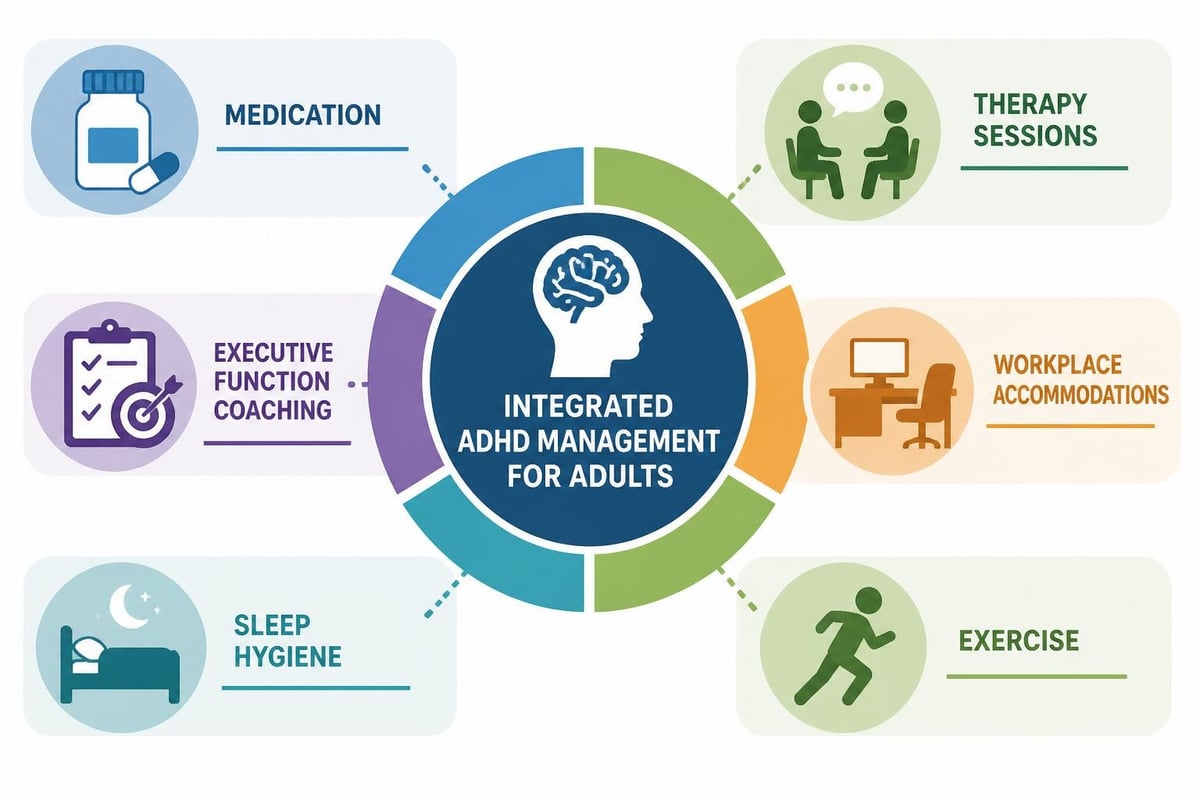
Once your adhd evaluation for adults is complete, your clinician will review the results with you. If you receive an ADHD diagnosis, you'll discuss treatment options that might include:
- Medication management – Stimulant or non-stimulant medications
- Therapy approaches – CBT strategies specifically adapted for ADHD
- Lifestyle modifications – Sleep, exercise, and organizational systems
- Workplace accommodations – Legal protections under disability laws
Many adults find that ADHD coaching complements their treatment plan beautifully, providing practical strategies for daily challenges.
If ADHD isn't the issue, your evaluation might reveal other conditions like anxiety, depression, or sleep disorders. Either way, you'll have clearer direction for getting the help you need.
Working with Your Healthcare Team
Your ADHD diagnosis doesn't end with the evaluation. Ongoing monitoring helps ensure your treatment plan works effectively. Regular check-ins with your therapist or psychiatrist allow for adjustments as your life circumstances change.
At Théla's services, we understand that ADHD often coexists with other mental health concerns. Our trauma-informed, evidence-based approaches can address the whole picture of your mental health, not just isolated symptoms.
Insurance and Cost Considerations
Let's talk about the practical stuff. An adhd evaluation for adults can cost anywhere from $500 to $2,500 depending on how comprehensive it is and where you live. Some extended health insurance plans cover psychological assessments, but coverage varies widely.
Before scheduling, check whether your insurance includes psychological testing coverage. Some plans require pre-authorization for assessments.
If cost is a barrier, ask about:
- Sliding scale fees based on income
- Payment plans that spread the cost over several months
- Affordable therapy programs that might include reduced-cost assessments
Many adults find that the clarity and treatment access gained from proper diagnosis is worth the investment. Understanding your brain helps you stop blaming yourself for things that are actually neurological differences.
Understanding whether you have ADHD can be life-changing, opening doors to effective strategies and self-compassion. If you're in Ontario and wondering whether an adhd evaluation for adults might help you finally understand your struggles, the team at Théla Psychotherapy Clinic offers trauma-informed, evidence-based assessments both in-person in Markham and online across the province. Our clinicians take the time to understand your unique experiences and provide clear, actionable recommendations that support your journey toward better mental health.

Bonny Li
Contact Me