When someone experiences pyschosis, it can feel like reality itself has shifted. You might hear voices that others don't hear, see things that aren't there, or believe things that seem completely real to you but confusing to those around you. It's scary, both for the person going through it and their loved ones. But here's something important to know: pyschosis is a treatable condition, and with the right support, people can and do recover. Understanding what's happening is the first step toward finding help and healing.
What Pyschosis Actually Means
Pyschosis isn't a diagnosis on its own. It's actually a symptom that shows up in various mental health conditions. Think of it like a fever - it tells you something's going on, but you need to figure out the underlying cause.
When someone experiences pyschosis, they're dealing with a disconnect from reality. This can show up in different ways:
- Hallucinations: Sensing things that aren't actually there (hearing voices is most common, but you might also see, smell, taste, or feel things)
- Delusions: Holding strong beliefs that don't match reality, even when shown evidence to the contrary
- Disorganized thinking: Having trouble organizing thoughts or following a logical train of thought
- Unusual behavior: Acting in ways that seem out of character or don't make sense to others
The National Institute of Mental Health provides detailed information about how these symptoms manifest and what they mean for treatment.
The Different Faces of Pyschosis
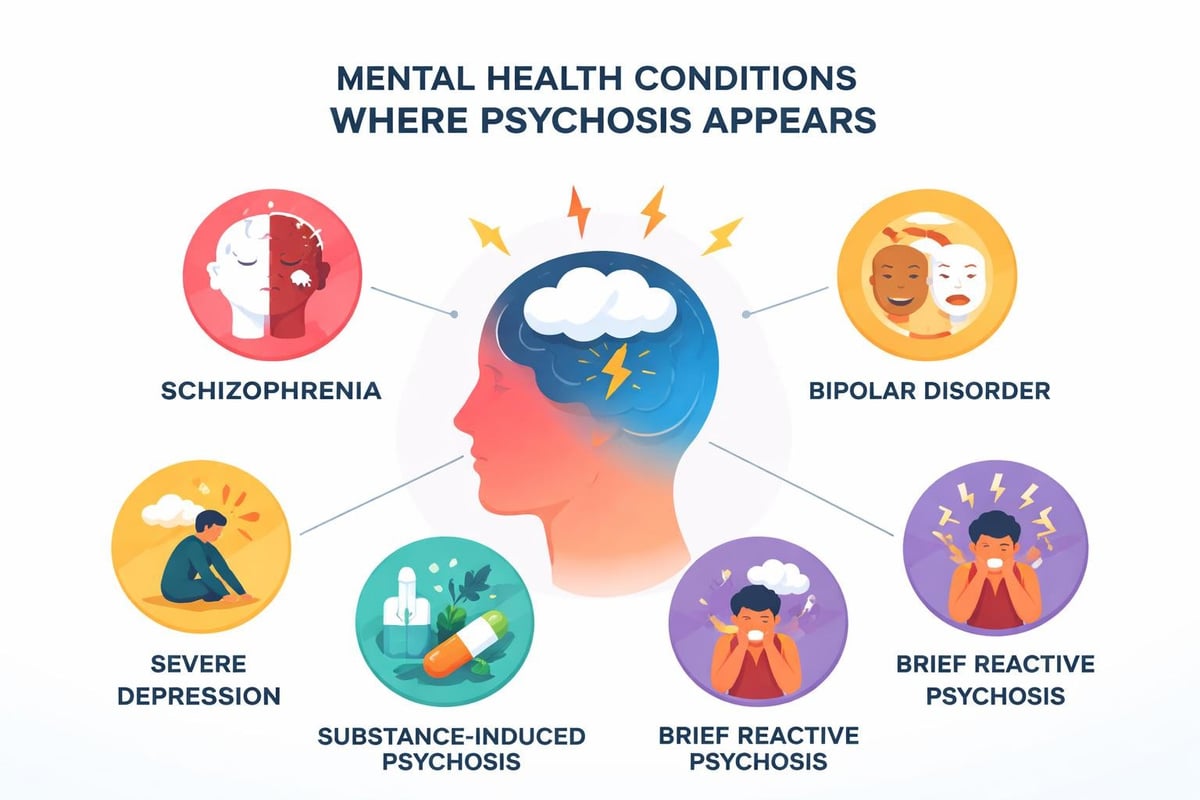
Pyschosis can occur in several mental health conditions. Schizophrenia is probably what most people think of first, but it's not the only cause. Bipolar disorder can include psychotic episodes during manic or depressive phases. Severe depression sometimes comes with psychotic features. Substance use can trigger temporary psychotic symptoms. Even extreme stress or trauma can lead to brief psychotic episodes.
Recognizing the Warning Signs
Early intervention makes a huge difference with pyschosis. The sooner someone gets help, the better their outcomes tend to be. But catching it early isn't always easy because symptoms can develop gradually.
Early Warning Signals
Watch for these changes that might indicate someone's struggling:
- Social withdrawal: Pulling away from friends and family
- Declining performance: Struggling at work or school when they previously did fine
- Unusual suspiciousness: Becoming increasingly paranoid or distrustful
- Changes in self-care: Neglecting hygiene or appearance
- Sleep disruptions: Major changes in sleep patterns
- Emotional flatness: Showing little emotion or seeming detached
Young people deserve special attention here. Research shows that psychosis in children and adolescents presents unique challenges that require specialized assessment and care approaches.
Treatment Approaches That Work
Here's the good news: pyschosis responds well to treatment. Most people see significant improvement with the right combination of therapies and support.
| Treatment Type | How It Helps | Timeline |
|---|---|---|
| Medication | Reduces hallucinations and delusions | 2-6 weeks for noticeable changes |
| CBT | Addresses thought patterns and coping strategies | Ongoing, builds over months |
| Family therapy | Supports loved ones and improves communication | Variable, often ongoing |
| Case management | Coordinates care and daily living support | Long-term support |
Cognitive Behavioral Therapy deserves special mention because it's been shown to be particularly effective. Understanding psychosis through CBT helps people develop practical strategies for managing symptoms and rebuilding their lives.
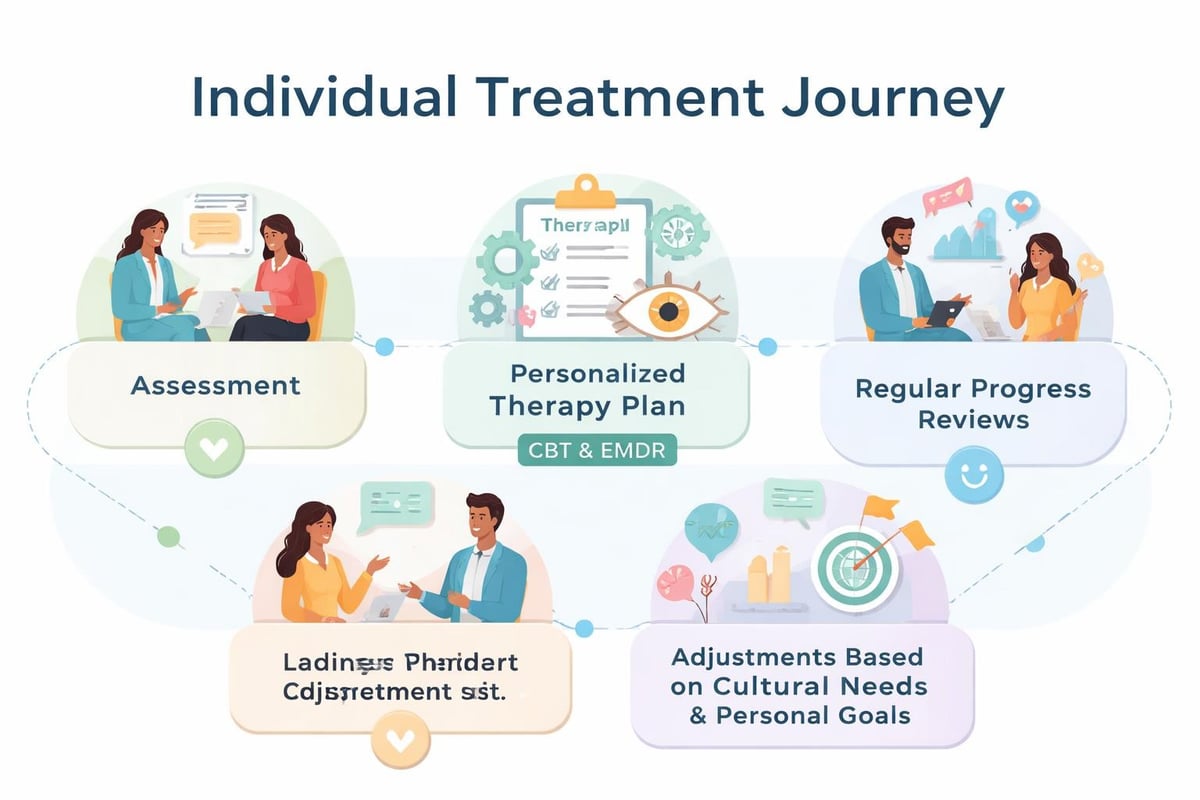
At Théla Psychotherapy Clinic, we use evidence-based approaches like CBT and EMDR to create personalized treatment plans. Our trauma-informed care recognizes that many people experiencing pyschosis have underlying trauma that needs gentle, skilled attention.
The Role of Support Systems
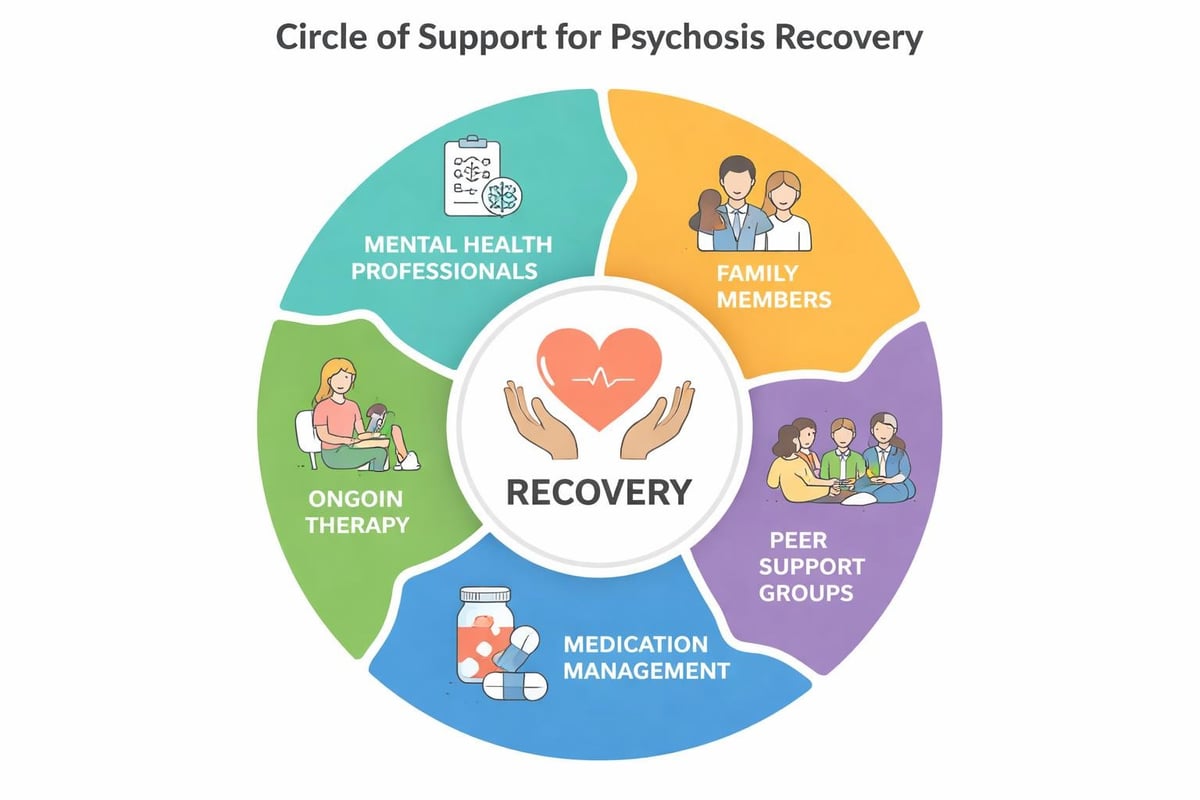
You can't talk about treating pyschosis without talking about family and community support. Recovery doesn't happen in isolation. Resources for families navigating psychosis provide crucial tools for loved ones who want to help but aren't sure how.
Parents facing their own mental health challenges need extra support. Recent research on parenting with psychotic disorders highlights how important it is to provide practical strategies and compassionate care for parents managing both their condition and their family responsibilities.
Creating Your Recovery Path
Recovery from pyschosis looks different for everyone. Some people experience a single episode and never have another. Others manage ongoing symptoms but build fulfilling lives. The key is finding what works for you.
Building a strong foundation includes:
- Working with a mental health team you trust
- Taking medication as prescribed (when recommended)
- Learning your personal warning signs
- Developing healthy coping strategies
- Maintaining regular sleep and eating patterns
- Staying connected to supportive people
Our individual therapy services are designed to meet you where you are, whether you're in the early stages of seeking help or working on long-term recovery goals.
Why Culturally Responsive Care Matters
Mental health treatment can't be one-size-fits-all, especially when dealing with something as complex as pyschosis. Cultural background shapes how we understand unusual experiences and what kind of help feels safe to seek.
At Théla, we emphasize culturally responsive care because we know that effective treatment honors your whole identity. The way someone from one cultural background experiences and talks about pyschosis might be completely different from someone else's experience, and both are valid.
Moving Forward With Hope
Living with or supporting someone through pyschosis isn't easy, but it's absolutely manageable with the right help. The mental health field has made incredible progress in understanding and treating these experiences. New research continues to improve how we transform psychosis research into practical care.
Remember that seeking help is a sign of strength, not weakness. Whether you're experiencing symptoms yourself or concerned about someone you love, reaching out to professionals who understand pyschosis is the most important step you can take. Our services include both in-person sessions in Markham and online therapy throughout Ontario, making quality care accessible when you need it.
The journey to recovery might feel overwhelming right now, but you don't have to walk it alone. With proper support, effective treatment, and time, people rebuild their lives and find stability again. That's not just hope - that's what we see happening every day in mental health care.
Understanding pyschosis and getting appropriate treatment can transform someone's life trajectory. If you or someone you care about is experiencing symptoms of pyschosis, know that compassionate, evidence-based help is available. Théla Psychotherapy Clinic offers trauma-informed, culturally responsive care tailored to your unique needs, with flexible options for in-person sessions in Markham or online therapy across Ontario. Reach out today to start your journey toward healing and recovery.

Bonny Li
Contact Me