
Imagine stepping into every room with unshakable confidence. What if you could unlock that power within yourself? Many people struggle with self-doubt, negative self-talk, or a lack of self-worth, making everyday challenges feel overwhelming.
This guide is designed to show how self esteem counselling can be a turning point. By understanding what shapes your self esteem, you can take practical steps toward lasting confidence and personal growth.
We will define self esteem, look at its effects, break down the counselling process, and share proven techniques for building confidence. Ready to take the first step? Let’s explore the path to a more confident you.
Understanding Self Esteem: Foundations and Impact
Self esteem forms the backbone of how you view yourself and interact with the world. When considering self esteem counselling, it is essential to first understand what self esteem truly means, how it shapes your life, and why some individuals may struggle with it more than others.
Defining Self Esteem
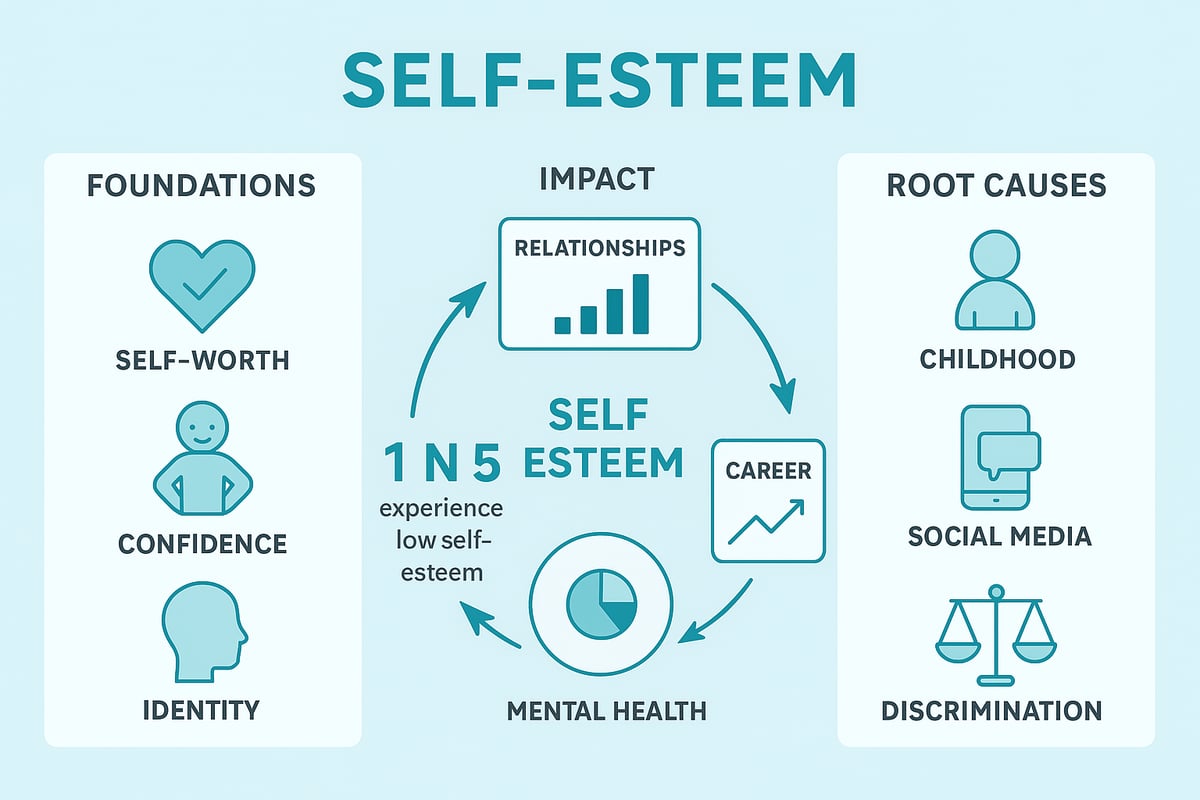
Self esteem refers to your overall sense of personal value and self-respect. It influences how you think about yourself, your abilities, and your worthiness. Healthy self esteem is marked by a balanced, realistic self-view and a sense of confidence in your decisions.
In contrast, low self esteem can manifest as persistent self-doubt, negative self-talk, and reluctance to pursue opportunities. Everyday examples include feeling proud after a job well done or, alternatively, avoiding social situations due to fear of judgment. Psychological theories, such as Maslow’s hierarchy of needs, highlight self esteem as a foundational requirement for growth, while tools like the Rosenberg Self-Esteem Scale offer practical ways to assess it. Understanding these concepts lays the groundwork for effective self esteem counselling.
The Impact of Self Esteem on Daily Life
Self esteem affects nearly every aspect of daily functioning. High self esteem supports healthy relationships, career advancement, and overall mental wellness. Individuals with strong self esteem are more likely to set boundaries, take initiative, and recover from setbacks.
Conversely, low self esteem is often linked to anxiety, depression, and social withdrawal. According to the Canadian Mental Health Association, 1 in 5 Canadians experience low self esteem, which can lead to isolation and reduced quality of life. For those seeking self esteem counselling, these impacts underscore the importance of addressing self-worth issues to foster lasting change.
Root Causes of Low Self Esteem
The origins of low self esteem are often rooted in early life experiences. Factors such as critical family dynamics, childhood bullying, or lack of positive reinforcement can shape self-perception for years. In today’s society, pressures from social media, unrealistic beauty standards, and discrimination further contribute to self esteem struggles.
Trauma and cultural factors also play significant roles, particularly for marginalized groups. Research consistently shows that early intervention and self esteem counselling can help individuals challenge these negative influences, leading to improved outcomes and more resilient self-worth.
The Role of Self Esteem Counselling: What to Expect
Stepping into self esteem counselling is a powerful decision. Many people wonder what this process involves and how it can shape their confidence journey. Let’s break down what to expect, from the first session to finding the right professional for your needs.
What is Self Esteem Counselling?
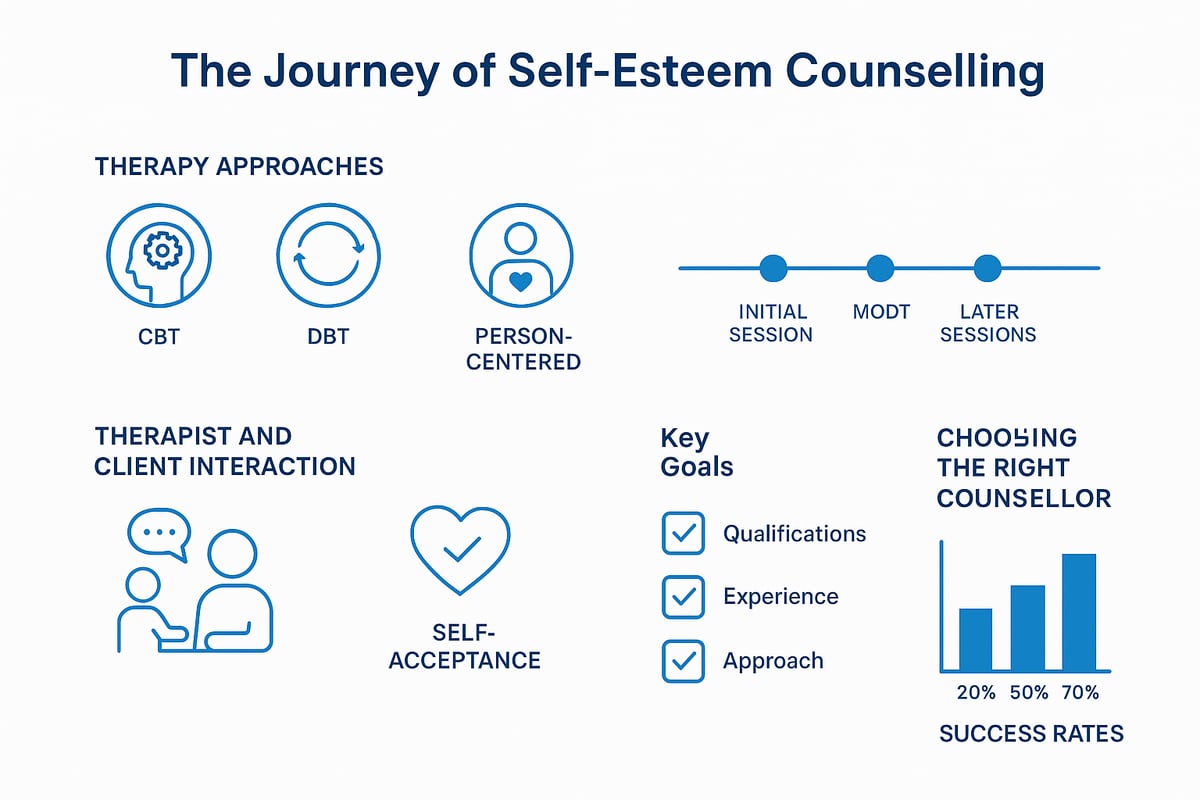
Self esteem counselling uses evidence-based approaches like CBT, DBT, and person-centered therapy to help you understand and transform your sense of self-worth. Sessions are structured around open conversations, practical exercises, and collaborative goal-setting with your therapist.
During your first meeting, expect a supportive environment where your therapist listens to your experiences and helps you clarify your goals. The therapist acts as a guide, offering both emotional support and concrete strategies. For a deeper understanding of what’s involved, explore Self Esteem and Identity Building to see how this process can empower you.
Goals and Benefits of Counselling
Setting meaningful goals is a cornerstone of self esteem counselling. Your counsellor will work with you to identify what you want to achieve, whether it’s building resilience, improving self-acceptance, or learning emotional regulation.
Research shows that many clients notice significant improvements in self esteem after eight to twelve sessions. Success stories often highlight increased confidence, better relationships, and a more positive outlook. These benefits are not just anecdotal, as they are supported by studies demonstrating measurable progress.
Choosing the Right Counsellor
Selecting a counsellor who aligns with your needs is essential for a successful self esteem counselling experience. Look for qualities such as empathy, relevant experience, and a trauma-informed approach.
It’s also important to consider cultural responsiveness and inclusivity. During initial consultations, ask about their approach, experience with self esteem issues, and how they tailor strategies for diverse backgrounds. Assess your comfort and sense of trust during early sessions, as a strong therapeutic relationship is key for lasting results.
Step-by-Step Guide to Self Esteem Counselling
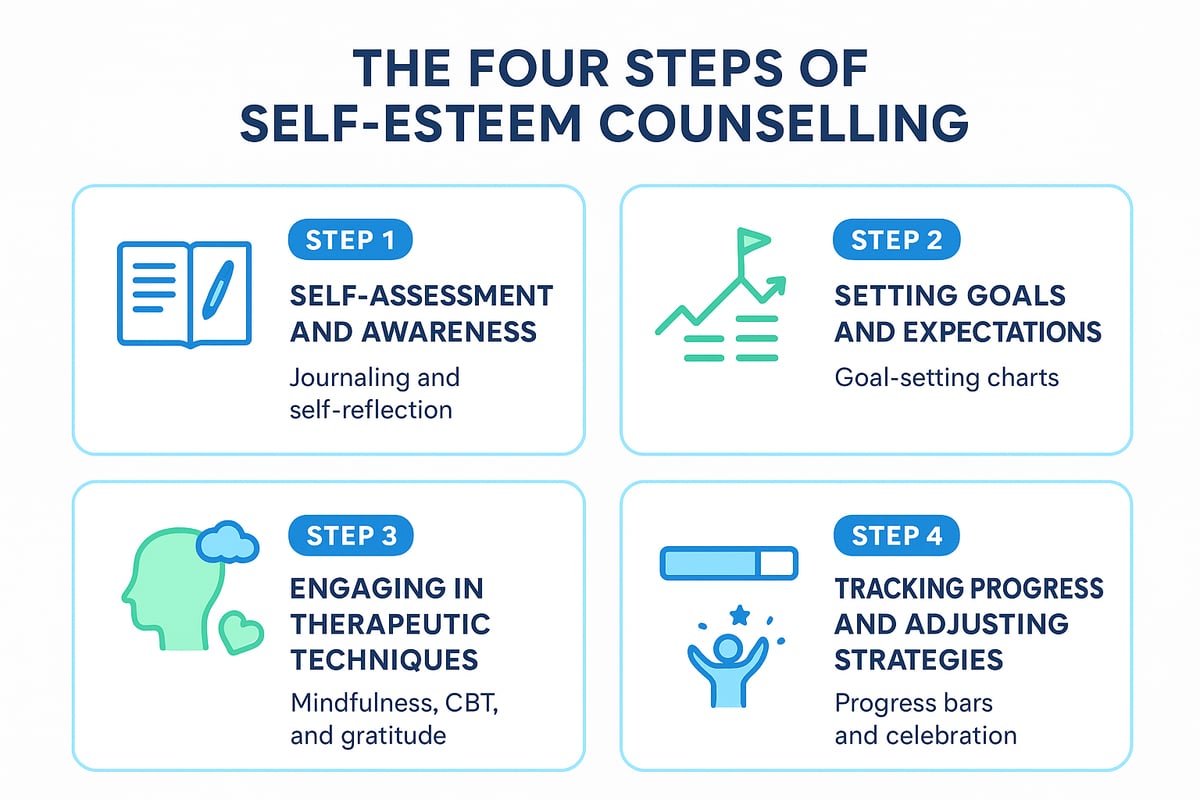
Self esteem counselling is most effective when approached with structure, clarity, and a commitment to growth. By following these four essential steps, you can maximize the benefits of your journey and develop lasting self-worth.
Step 1: Self-Assessment and Awareness
The first step in self esteem counselling is honest self-reflection. Begin by exploring your thoughts, feelings, and behaviors through journaling or using validated self esteem scales. Seek feedback from trusted individuals who can offer supportive insights.
Pay close attention to patterns of negative self-talk or limiting beliefs. Are there recurring thoughts that hold you back or undermine your confidence? Recognizing these is crucial for change.
Try simple exercises such as listing your strengths and achievements, or tracking moments when self-doubt arises. This phase requires openness and vulnerability, setting the foundation for meaningful progress in self esteem counselling.
Step 2: Setting Goals and Expectations
Once you have a clearer self-understanding, the next phase of self esteem counselling involves setting practical and personalized goals. Work collaboratively with your counsellor to identify objectives that feel both challenging and achievable.
Balance immediate wins, like practicing assertiveness in conversations, with longer-term aspirations such as building self-compassion. Common self esteem goals include increasing positive self-talk, improving social skills, or developing healthier boundaries.
Research shows that structured goal-setting in self esteem counselling can increase therapy success rates by up to 35 percent. Clear goals provide motivation and a roadmap for your growth journey.
Step 3: Engaging in Therapeutic Techniques
This stage of self esteem counselling introduces evidence-based strategies to address negative patterns. Techniques may include cognitive restructuring to challenge distorted beliefs, behavioral experiments to test new actions, and exposure tasks to reduce avoidance.
Mindfulness and self-compassion exercises, such as guided meditations or gratitude journaling, are also widely used. For those interested in deepening these skills, Mindfulness and Emotional Regulation offers practical tools often integrated into self esteem counselling programs.
A typical example is using CBT to reframe self-critical thoughts, leading to gradual improvement in confidence and overall well-being.
Step 4: Tracking Progress and Adjusting Strategies
Ongoing evaluation is vital in self esteem counselling. Regular check-ins with your counsellor help monitor progress, offering opportunities to celebrate milestones and address challenges as they arise.
Use self-report scales, journaling, or feedback to measure changes in your thoughts and behaviors. If certain techniques are not effective, be open to adjusting your approach with your counsellor’s guidance.
Celebrating successes, no matter how small, reinforces motivation. Remember, self esteem counselling is a dynamic process that thrives on communication, flexibility, and sustained effort.
Evidence-Based Techniques for Building Self Esteem
Unlocking confidence through self esteem counselling relies on proven, research-backed methods. These techniques offer structured ways to challenge negative beliefs, develop resilience, and foster lasting self-worth. Let’s explore the most effective strategies used by professionals today.
Cognitive Behavioral Therapy (CBT) Approaches
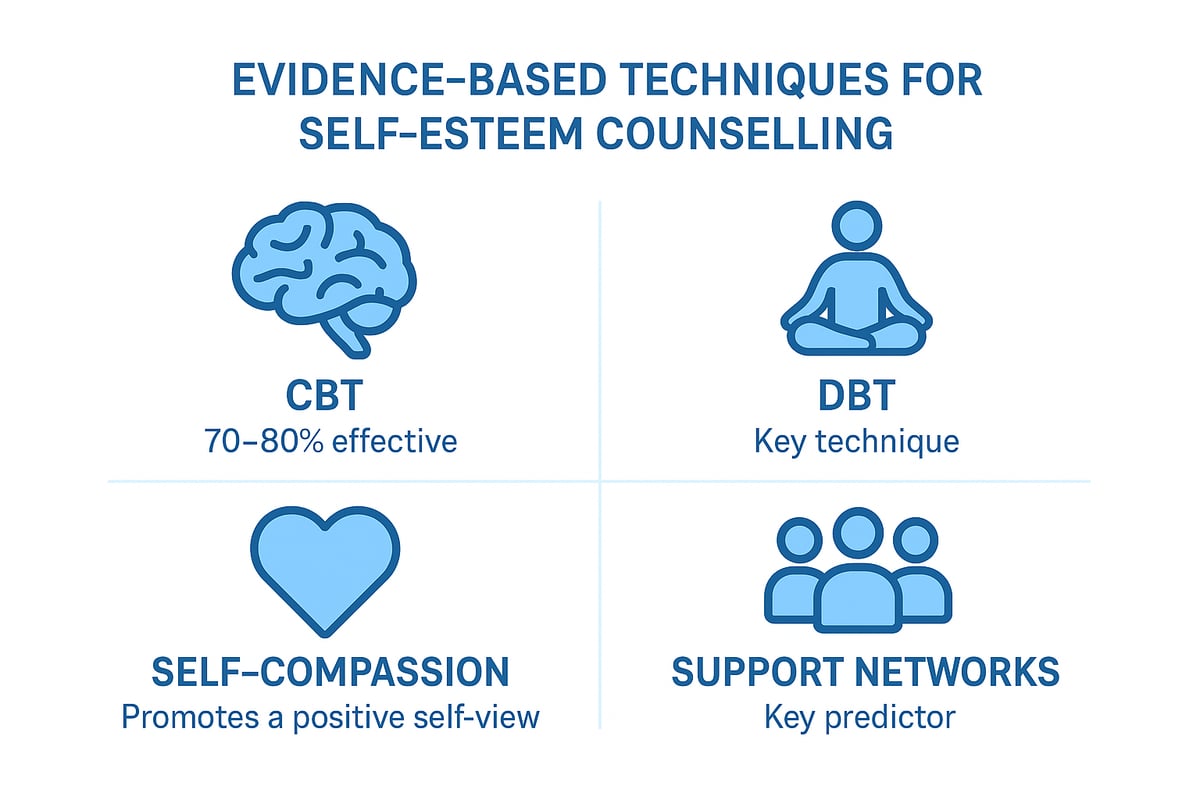
CBT is a cornerstone of self esteem counselling. This approach helps clients identify and reframe distorted thinking patterns that fuel low self-worth. In practice, you might use CBT worksheets to track negative thoughts and replace them with balanced alternatives.
A typical CBT worksheet includes:
- Identifying a negative thought
- Recording evidence for and against that thought
- Creating a more realistic, compassionate response
Research shows CBT supports 70–80% of people in improving self esteem. Regular homework assignments and real-life exercises reinforce new, healthier beliefs. With self esteem counselling, these skills become second nature and drive lasting change.
Dialectical Behavior Therapy (DBT) Skills
DBT brings powerful tools to self esteem counselling, especially for those struggling with intense emotions or self-criticism. Core DBT skills include mindfulness, emotional regulation, and interpersonal effectiveness.
One standout technique is “DEAR MAN,” a structured way to assert needs and set boundaries:
- Describe the situation
- Express feelings clearly
- Assert needs respectfully
- Reinforce positive outcomes
- Mindfully stay on topic
- Appear confident
- Negotiate if needed
Studies reveal DBT reduces self-criticism and boosts self-acceptance. To learn more about these techniques, explore Dialectical Behaviour Therapy (DBT) for additional insight into how DBT complements self esteem counselling.
Self-Compassion and Mindfulness Practices
Self esteem counselling often integrates self-compassion and mindfulness to foster self-kindness and emotional resilience. Guided meditations, positive affirmations, and daily gratitude exercises are common practices.
A simple five-minute routine might include:
- Sitting quietly and focusing on your breath
- Repeating a self-affirming statement
- Listing three things you appreciate about yourself
Research connects self-compassion with higher self esteem and emotional well-being. By weaving these techniques into your daily life, self esteem counselling helps build a foundation of self-respect and inner calm.
Building Support Networks
Support networks are vital in self esteem counselling. Friends, family, and peer groups provide encouragement and accountability, helping reinforce progress made in therapy.
Options for building support include:
- Joining peer-led self esteem workshops
- Participating in group therapy sessions
- Engaging with online forums or communities
Data shows social support is a key predictor of sustained confidence. Self esteem counselling encourages clients to nurture these connections, ensuring growth continues beyond therapy sessions.
Overcoming Challenges and Barriers in Self Esteem Counselling
Facing challenges is a natural part of self esteem counselling. Many people encounter obstacles along the way, but with the right strategies and support, these barriers can be overcome. Understanding how to address setbacks, cultural factors, and long-term maintenance is essential for lasting growth.
Common Obstacles and How to Address Them
One of the most frequent challenges in self esteem counselling is resistance to change. This resistance often stems from fear of vulnerability or anxiety about confronting long-held beliefs. It is common to experience setbacks, such as returning to negative self talk after initial progress. These moments do not signal failure, but are a normal part of the journey.
Therapists play a crucial role in helping clients navigate these barriers. Techniques from evidence-based approaches, such as Compassion-Focused Therapy Effectiveness, can support individuals in developing self-acceptance and resilience. Regular check-ins, open dialogue, and celebrating small victories help maintain motivation. If relapse occurs, your counsellor can guide you in reframing the experience as a learning opportunity.
Addressing Cultural and Social Factors
Cultural background and social identity significantly influence self esteem counselling outcomes. Systemic discrimination, cultural expectations, and experiences of marginalization all shape personal beliefs and self worth. For many, seeking support may bring unique concerns related to identity or belonging.
Culturally sensitive counselling tailors interventions to individual backgrounds. This approach recognizes that marginalized groups often report higher rates of low self esteem, and require specific strategies for healing. Research demonstrates that Self-Esteem Interventions and Suicidal Behaviors can be especially effective when they account for cultural and social context. Open conversations with your therapist about these factors lay the foundation for meaningful progress.
Sustaining Confidence Beyond Counselling
The work of self esteem counselling does not end with the final session. To maintain growth, it is important to create a long-term self care plan. Set up regular self check-ins, such as monthly reflections or journaling, to monitor your progress. Establish accountability by sharing goals with trusted friends or joining peer support groups.
Leverage community resources and continue learning through books, workshops, or online forums. Consistent practice of the techniques learned in counselling helps reinforce confidence over time. Remember, sustaining self esteem is an ongoing process, and it is normal to seek support again if new challenges arise.
Resources and Tools for Continued Growth
The journey to lasting confidence does not end with self esteem counselling sessions. To maintain and deepen your progress, a variety of reliable resources and digital tools are available. These can support your growth, encourage accountability, and help you stay connected to your goals.
Recommended Books, Apps, and Online Resources
Expanding your self esteem counselling journey with trusted resources can reinforce what you learn in therapy. Consider these top-rated options:
- Books: "The Self-Esteem Workbook" by Glenn R. Schiraldi, "Radical Acceptance" by Tara Brach, and "The Gifts of Imperfection" by Brené Brown.
- Apps: Try "Woebot" for daily cognitive support, "MoodKit" for mood tracking, and "Sanvello" for guided mindfulness.
- Online Communities: Engage in forums such as 7 Cups or Reddit’s r/selfimprovement for peer encouragement and shared experiences.
Research shows that digital tools can enhance self esteem counselling outcomes by up to 25 percent. Using these resources alongside professional guidance can help you practice skills, track your moods, and connect with others on a similar path.
When to Seek Professional Help
Sometimes, self-guided tools are not enough. If you notice persistent negative self talk, difficulty functioning at work, or strained relationships, it may be time to seek self esteem counselling from a qualified expert.
To find the right support, explore both teletherapy and in person options. During your search, review credentials, specializations, and client testimonials. You can also learn more about individual therapy approaches that often include self esteem counselling as a core service.
Taking this step is a sign of strength and self compassion. Remember, reaching out for help is the first move toward lasting confidence.
If you’re ready to put these strategies into action and start building real, lasting confidence, you don’t have to do it alone. At Théla Psychotherapy Clinic, you’ll find compassionate professionals who understand your unique journey and can help you unlock your true self-worth—whether you’re seeking in person support in Markham or prefer online sessions anywhere in Ontario. Take the first step toward a more confident you by connecting with a therapist who’s committed to your growth. Let’s work together to create the change you deserve.

Bonny Li
Contact Me
.jpg)

