In 2025, the quality of your self relationship will shape every aspect of your life, yet it is often overlooked in the rush of daily demands. Imagine how much more fulfilling your connections, work, and personal growth could be if you truly invested in the bond you have with yourself.
This article reveals eight essential, science-backed ways to nurture and strengthen your self relationship for lasting well-being. With practical tips rooted in psychology and self-compassion, you will uncover how to build self-trust, acceptance, and resilience. Ready to transform your inner world? Let’s begin your journey toward a healthier self relationship.
Why Self-Relationship Matters in 2025
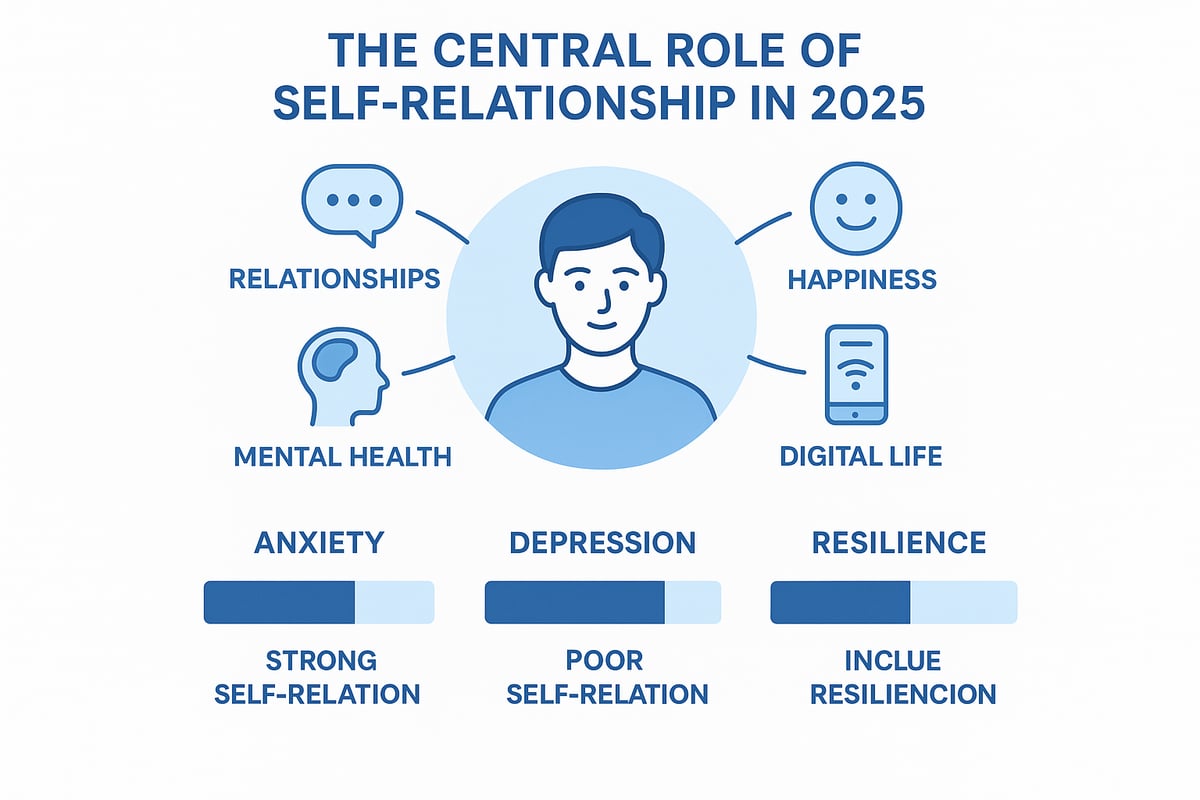
In 2025, our world is more connected and fast-paced than ever before, yet genuine self relationship remains at the heart of true well-being. With rising social pressures and digital distractions, how you relate to yourself directly influences every area of your life. Understanding the value of self relationship is not just a trend—it is essential for thriving amid change.
The Foundation of All Other Relationships
Self relationship is the cornerstone of every connection you build. The way you treat yourself sets the tone for how you interact with partners, friends, and colleagues. When your self relationship is healthy, you naturally develop empathy and establish boundaries, which are vital for mutual respect.
Insights from Psychology Today emphasize that self relationship forms the basis for understanding others’ emotions and maintaining healthy limits. Research shows that individuals with strong self relationship experience greater long-term happiness and stability in their relationships. Conversely, neglecting self relationship can result in misunderstandings, emotional dependency, and vulnerability to manipulation.
Consider how increased anxiety and depression rates are closely linked to a poor self relationship. Real-life examples reveal that people who neglect their needs often struggle with external relationships, leading to burnout and dissatisfaction. Society is now placing a growing emphasis on self-care, mental health, and self-love. According to a Self-Esteem and Self-Compassion Meta-Analysis, self relationship is empirically tied to psychological well-being and resilience.
In 2025, new societal challenges such as digital overload and shifting norms make inner resilience more important than ever. Building a strong self relationship helps you weather these changes with confidence and adaptability.
Common Barriers to a Healthy Self-Relationship
Despite its importance, many people face obstacles to developing a fulfilling self relationship. Self-criticism and perfectionism often act as major roadblocks, causing individuals to set unattainable standards for themselves. Past trauma and persistent negative self-talk can further erode self relationship, making it difficult to trust and accept oneself.
Societal myths also play a role. The belief that self-love is selfish discourages many from prioritizing their own needs. Cultural and family conditioning may reinforce patterns of self-neglect or dependency on others for validation. For example, resources from JoinOneLove highlight how relying on external approval can undermine genuine self relationship.
Common barriers include:
- Harsh inner dialogue and chronic self-blame
- Fear of appearing arrogant or self-centered
- Difficulty setting or respecting personal boundaries
- Internalizing negative messages from family or society
Recognizing these barriers is the first step toward change. By understanding the factors that hinder self relationship, you become empowered to challenge them and begin building a more compassionate, resilient foundation for personal growth.
8 Essential Ways To Improve Your Self Relationship In 2025
Building a strong self relationship is the foundation for lasting well-being in 2025. As you focus on growth and resilience, these eight actionable strategies will help you develop self-trust, acceptance, and fulfillment. Each approach below is practical, rooted in psychology, and designed for real-life impact.
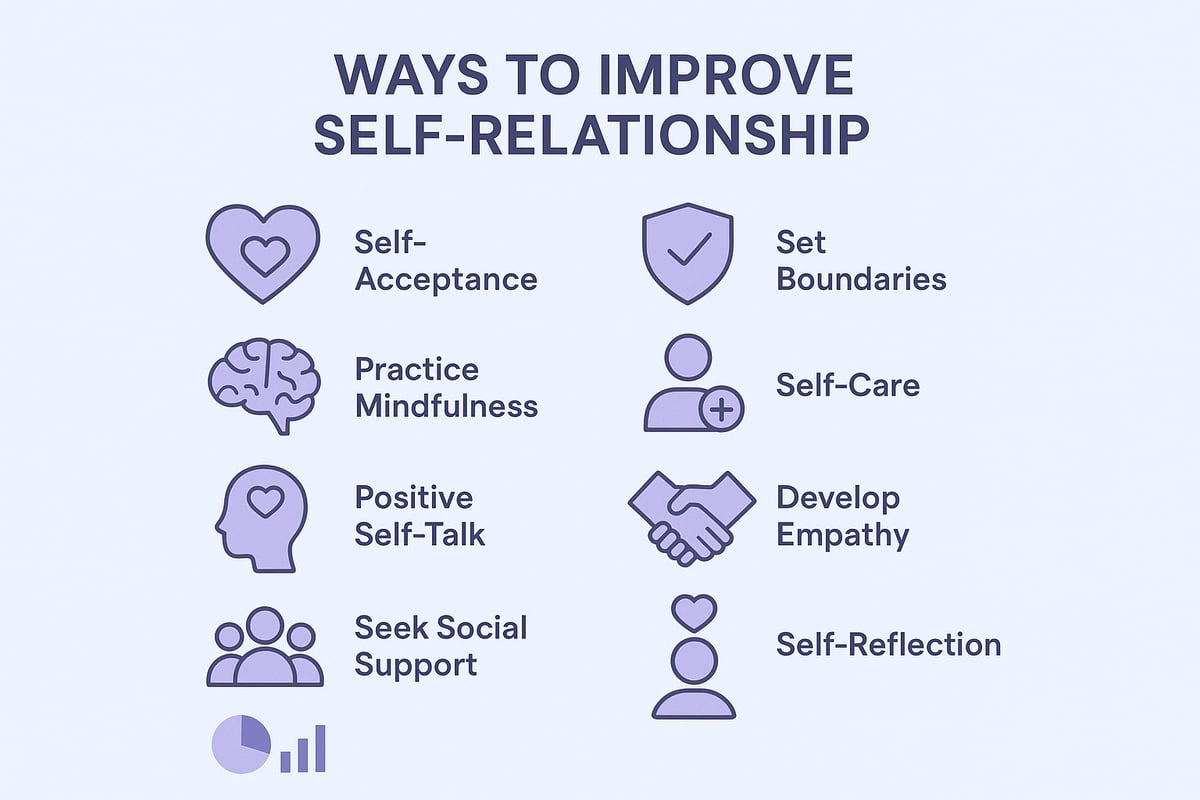
1. Practice Radical Self-Acceptance
Radical self-acceptance means embracing every part of yourself, from your strengths to your imperfections. In 2025, this is a non-negotiable for a healthy self relationship. Letting go of unrealistic standards frees you from the constant pressure to be "enough."
Many find that using daily affirmations, reflective journaling, and self-assessment exercises helps to reinforce acceptance. For example, try writing a letter to yourself highlighting both your achievements and areas for growth. Vulnerability and authenticity are key—when you show up as you are, negative self-talk can transform into genuine self-support.
Research shows that self-acceptance is associated with reduced anxiety and higher self-esteem. If you struggle with persistent self-criticism, consider exploring Acceptance and Commitment Therapy (ACT), which offers evidence-based tools for overcoming negative thinking patterns. Over time, practicing radical self-acceptance empowers your self relationship and helps you overcome the “never good enough” mindset.
2. Set Healthy Boundaries With Yourself and Others
Setting boundaries is an act of self-respect that protects your self relationship. Boundaries can be emotional, physical, digital, or related to your time. Each type helps you define what is and isn't acceptable, both from yourself and others.
To recognize your limits, notice when you feel drained, resentful, or overwhelmed. Communicate your boundaries clearly—for example, saying no to extra commitments or limiting your screen time. Use reflection prompts to identify where you need stronger boundaries in your life.
Scripts can help, such as: "I need time for myself, so I can't attend this event." Healthy boundaries reduce burnout and improve mental health. As you practice, you'll see a ripple effect: your self relationship grows stronger, and your interactions with others become more balanced and respectful.
3. Cultivate Mindful Self-Awareness
Mindful self-awareness is the art of tuning into your thoughts, emotions, and body. This practice is central to nurturing a positive self relationship in a fast-paced world. Mindfulness techniques like meditation, body scans, and mindful journaling help you notice patterns and triggers without judgment.
By pausing to observe your inner dialogue, you can interrupt cycles of self-criticism before they escalate. Psychology Today highlights that awareness is the first step to meaningful change. Regular mindfulness has been shown to reduce stress and enhance emotional regulation, making your self relationship more resilient.
To integrate mindfulness, start with short daily practices—just five minutes of breathing or a quick scan of how you feel. Overcoming resistance to self-observation takes patience, but the rewards for your self relationship are significant.
4. Prioritize Self-Compassion Over Self-Criticism
Self-compassion means treating yourself with the same kindness you would offer a friend, especially when faced with setbacks. This approach is essential for a healthy self relationship, as it replaces harsh self-judgment with understanding and patience.
Unlike self-indulgence, self-compassion encourages growth and learning. Try exercises like writing a compassionate letter to yourself, or listening to guided meditations focused on kindness. For example, shift your mindset from “I failed” to “I’m learning.” This reframing builds resilience and helps you recover from disappointments faster.
Dr. Kristin Neff’s research identifies three core elements of self-compassion: self-kindness, common humanity, and mindfulness. Studies show that self-compassion is linked to lower depression rates and greater adaptability. By prioritizing compassion over criticism, your self relationship becomes a source of strength and motivation.
5. Invest in Personal Growth and Learning
A thriving self relationship is built on continuous personal development. Lifelong learning—whether through hobbies, courses, or self-study—fosters curiosity and confidence. Setting intentional goals for short, mid, and long-term growth keeps you motivated and focused.
Examples include taking up a new language, reading for self-development, or enrolling in a skills course. Use SMART goals to ensure your objectives are Specific, Measurable, Achievable, Relevant, and Time-bound. Accountability partners and progress tracking can further reinforce your growth journey.
A growth mindset not only boosts self-esteem but also helps balance ambition with self-acceptance. As you invest in learning, you signal to yourself that your self relationship is worthy of time and energy.
6. Nurture Your Physical and Emotional Well-Being
The mind-body connection is central to a strong self relationship. Physical health routines—like getting enough sleep, eating nutritious food, and moving your body—lay the groundwork for emotional stability. Emotional self-care, such as honoring your feelings and seeking support, is equally important.
Create a personalized self-care plan for 2025. Include activities that recharge you, like nature walks, reading, or connecting with loved ones. Regular self-care is linked to lower stress and a better mood, yet many feel guilty for prioritizing themselves.
Remember, rest and play are not luxuries. By nurturing your physical and emotional well-being, you strengthen your self relationship and set the stage for long-term happiness.
7. Practice Honest Self-Reflection and Accountability
Self-reflection deepens your understanding of patterns, triggers, and progress within your self relationship. Journaling, monthly self-check-ins, or self-assessment quizzes (like self-esteem tests) can help you track your journey.
Set intentions, review your progress regularly, and seek feedback from trusted sources. Accountability is powerful—whether through a mentor, coach, or personal review sessions. Reflection helps you celebrate wins and address challenges honestly.
Research shows that regular self-reflection increases self-awareness and adaptive coping. By balancing honesty with self-compassion, you break cycles of self-sabotage and foster a more authentic self relationship.
8. Surround Yourself With Supportive Influences
Your environment and relationships have a profound impact on your self relationship. Seek out positive connections—people who encourage, affirm, and inspire you. Letting go of toxic influences or comparison traps is crucial for your well-being.
Consider joining support groups, therapy, or self-development communities. Social support is a key predictor of psychological health and personal growth. Curate your digital and real-life circles to reflect your values and aspirations.
Mentors, therapists, and role models can provide guidance and perspective as you nurture your self relationship. By surrounding yourself with supportive influences, you create an environment where you can truly thrive.
Signs Your Self-Relationship Is Improving
Not sure if your self relationship is getting stronger? There are clear signs you can look for as you grow. Increased self-trust is one of the first indicators. You may notice greater confidence in your decisions and a willingness to stand by your values, even under pressure.
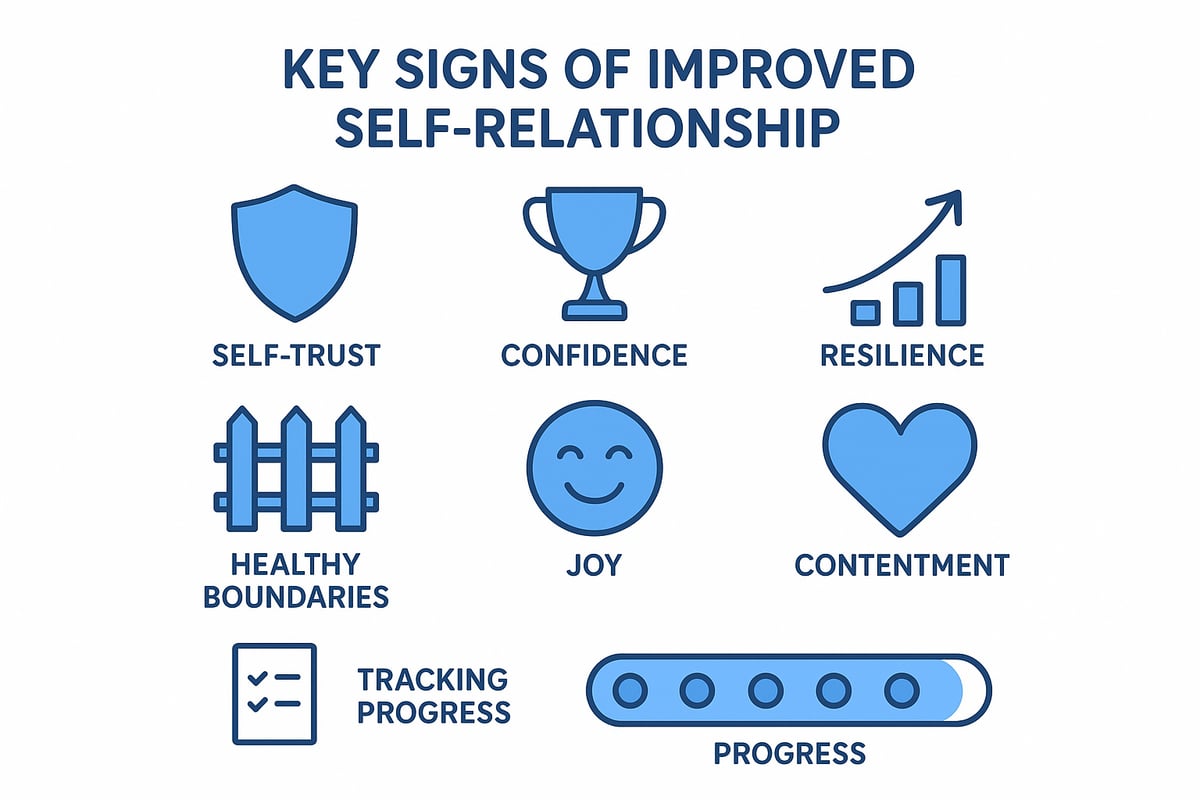
Other changes often follow. You handle setbacks with more compassion and less self-criticism. Resilience grows, and emotional ups and downs become easier to manage. You set healthier boundaries, which reduces people-pleasing and burnout.
Common signs your self relationship is improving:
- More self-trust and confidence in choices
- Better emotional resilience and adaptability
- Healthier boundaries with others
- Increased joy, contentment, and peace
- Handling mistakes with self-forgiveness
- Comfort in your own company
You may find yourself celebrating small wins and forgiving your own mistakes more often. Research highlighted by Psychology Today shows improved self relationship is linked to higher life satisfaction.
To track progress, keep a journal or use self-assessment tools. For a deeper understanding of your growth, explore Self-Esteem and Identity Building, which offers practical ways to measure changes and build a solid self relationship over time.
When to Seek Professional Support for Your Self-Relationship
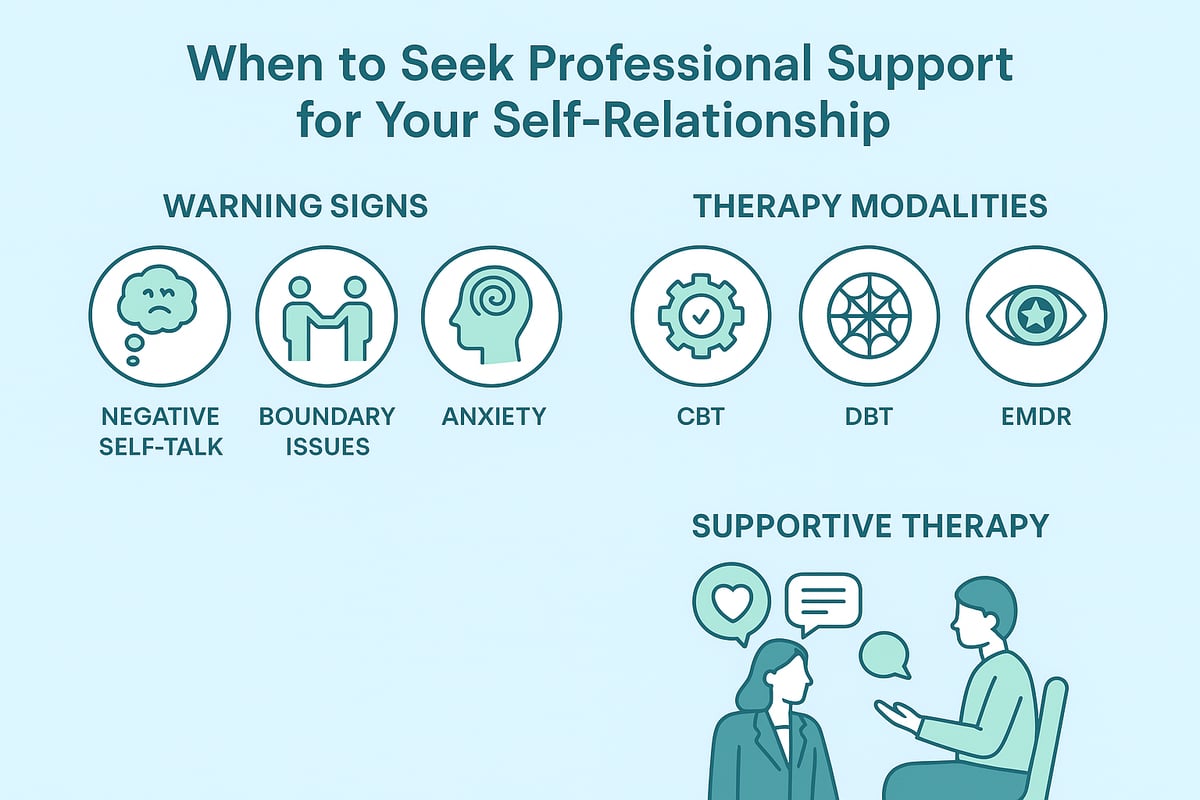
Sometimes, despite your best efforts, improving your self relationship requires more than self-help. If you notice patterns like persistent negative self-talk, difficulty setting boundaries, or overwhelming anxiety, reaching out for professional support is a wise step.
Therapists offer personalized guidance, trauma-informed care, and skill-building to help you rebuild your self relationship. Approaches such as CBT, DBT, or EMDR can be especially effective. If perfectionism or self-criticism is holding you back, evidence-based interventions like this Self-Compassion Intervention for Perfectionism can make a measurable difference.
Seeking help is a sign of self-respect. You deserve support as you strengthen your self relationship.
You’ve just explored eight powerful ways to nurture a healthier relationship with yourself in 2025—from setting clear boundaries to practicing real self-compassion. But sometimes, making lasting changes can feel overwhelming on your own. If you’re ready for extra support or want to dive deeper into your personal growth journey, you don’t have to do it alone. At Théla Psychotherapy Clinic, you’ll find compassionate, trauma-informed care tailored to your unique needs—whether in person or online. Take the next step toward a brighter, more resilient you and Book Your Free Consultation Appointment Now.

Bonny Li
Contact Me
.jpg)