In 2025, nurturing your relationship self is more essential than ever for lasting mental health and fulfillment. As life grows more complex, your connection with yourself forms the foundation for resilience, happiness, and success.
This article uncovers seven practical ways to strengthen your relationship self, supporting growth in every area of life. You will discover strategies like building self-awareness, setting boundaries, and practicing self-compassion.
Ready to unlock your best self? Explore these evidence-based tips to foster a healthier, more resilient relationship with yourself and take your well-being to the next level.
Understanding the Importance of a Healthy Relationship with Yourself
A healthy relationship self is the cornerstone of emotional well-being in today’s fast-paced world. But what does it truly mean to have a relationship self? At its core, it refers to the ongoing connection, understanding, and respect you develop with yourself. This internal relationship shapes your thoughts, choices, and ability to thrive, especially in 2025, where external pressures are greater than ever.
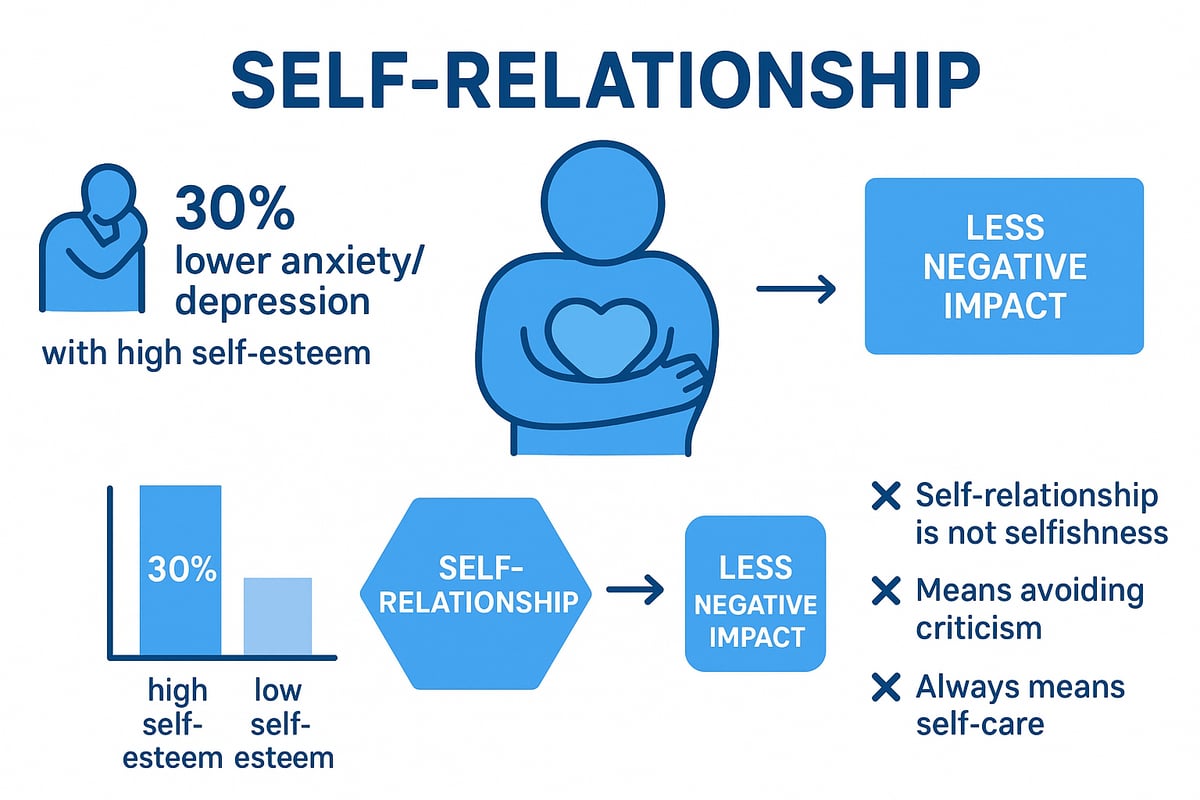
A strong relationship self plays a foundational role in mental health and resilience. It serves as your internal anchor, supporting self-love, acceptance, and positive self-regard. According to insights from Psychology Today and the One Love Foundation, nurturing self-acceptance not only reduces vulnerability to criticism but also enhances your sense of purpose and satisfaction. Research shows that individuals with high self-esteem experience 30% lower rates of anxiety and depression, highlighting the importance of building self-worth. For practical strategies on boosting self-esteem, the Self-Esteem Therapist Guide offers expert-backed advice.
The relationship self also acts as a crucial buffer against toxic dynamics and negative feedback from others. When you rely solely on external validation, you become more susceptible to unhealthy relationships and emotional instability. For example, seeking approval from others may lead to overcommitment or difficulty saying no, increasing stress and diminishing self-confidence. Cultivating a solid relationship self empowers you to set boundaries, trust your instincts, and respond constructively to challenges.
Self-acceptance is not a destination but a lifelong journey. Embracing all aspects of yourself, including imperfections, fosters lasting fulfillment and growth. It’s essential to recognize that prioritizing your relationship self is not selfishness. Rather, it forms the root of authentic connections with others. By investing in your relationship self, you lay the groundwork for healthier relationships, greater resilience, and overall well-being.
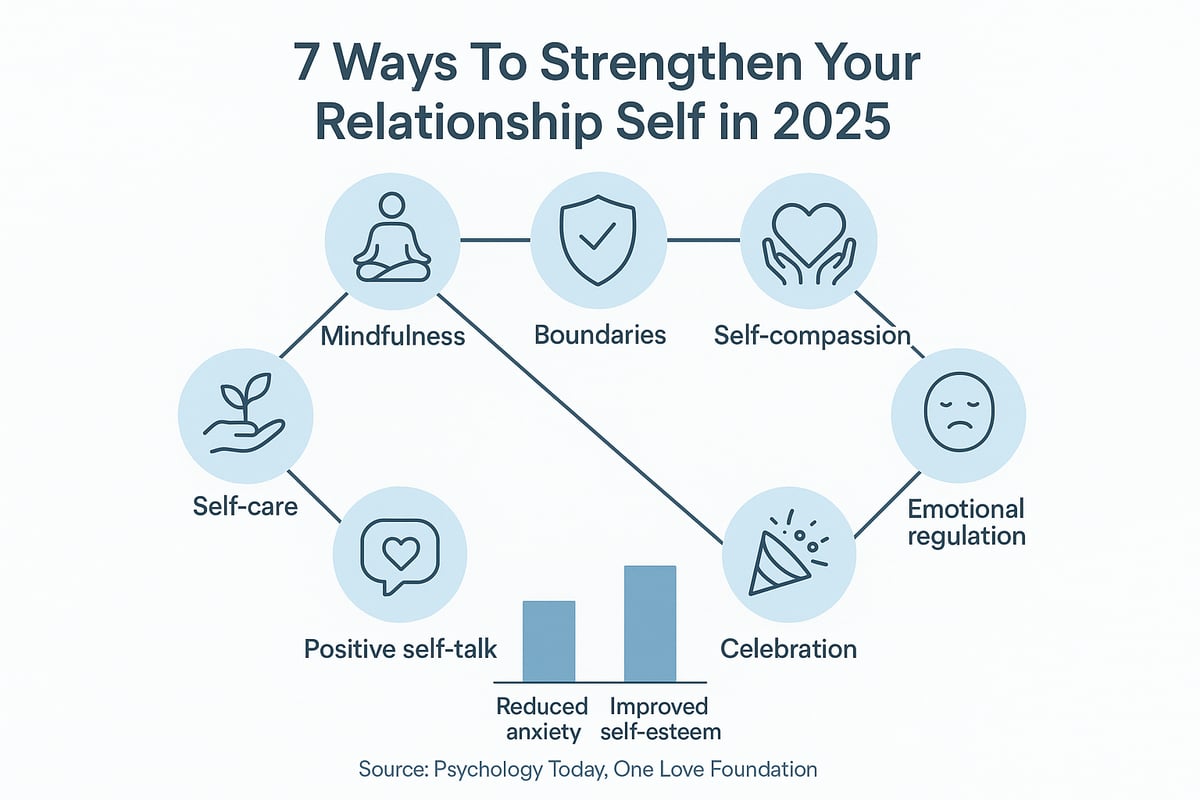
7 Ways To Strengthen Your Relationship Self In 2025
Building a strong relationship self is a transformative journey. In 2025, intentional self-growth is not just a trend but a necessity for resilience, well-being, and personal fulfillment. Below, you will discover seven practical ways to nurture your relationship self, each offering clear steps and measurable benefits.
1. Cultivate Self-Awareness
Self-awareness is the cornerstone of a healthy relationship self. It involves recognizing your thoughts, emotions, and behaviors without judgment. Begin by practicing mindfulness and scheduling regular self-reflection sessions.
Use tools such as journaling, meditation, or guided self-assessment to monitor patterns and triggers. Apps designed for mindful reflection can help you track your emotional state and set clear intentions for growth. Consider daily check-ins: ask yourself how you feel and what influenced your mood.
Here are practical steps:
-
Set aside 10 minutes each day for mindful reflection.
-
Use a journal to record thoughts and feelings.
-
Identify recurring triggers and note responses.
Self-awareness leads to better decision-making and deeper self-understanding. As you become more attuned to your needs, your relationship self strengthens, enabling you to respond thoughtfully instead of reacting impulsively.
2. Set and Maintain Healthy Boundaries
Boundaries are essential for protecting the relationship self from burnout and resentment. Healthy boundaries allow you to communicate your needs assertively, ensuring your energy and well-being are preserved.
Learn to distinguish between compromise and self-sacrifice. When you say yes to everything, you risk neglecting your own priorities. Practice saying no to tasks or relationships that drain you.
Tips for setting boundaries:
-
Clearly express your needs in personal and professional contexts.
-
Limit time spent on activities that do not align with your values.
-
Regularly review your commitments to avoid overextension.
According to the One Love Foundation, 60% of people report improved self-esteem after establishing clear boundaries. By protecting your time and emotional space, you foster respect from others and reinforce the importance of your relationship self.
3. Practice Radical Self-Compassion
Radical self-compassion transforms the relationship self by replacing harsh self-criticism with kindness. Embrace imperfections as part of your humanity and recognize that setbacks are opportunities for growth.
Adopt self-compassion exercises rooted in cognitive behavioral therapy and mindfulness. When faced with difficulty, speak to yourself as you would to a friend—encouraging and supportive, not judgmental.
Ways to cultivate self-compassion:
-
Practice self-kindness during moments of failure.
-
Use positive affirmations to reinforce your worth.
-
Reflect on what you have learned from challenges.
According to One Love Foundation, healthy self-love is honest and embraces imperfection. Building self-compassion increases resilience and emotional balance, helping your relationship self thrive.
4. Prioritize Emotional Regulation and Resilience
Emotional regulation is a vital skill for a resilient relationship self. Developing coping strategies for stress, anxiety, and emotional overwhelm empowers you to respond to challenges with clarity.
Techniques such as deep breathing, grounding, or guided imagery can quickly reduce emotional intensity. For persistent struggles, seeking support from therapy groups is recommended. Dialectical Behavior Therapy (DBT) skills, for example, are effective tools for managing strong emotions.
Research from Psychology Today shows emotional regulation is linked to a 40% higher rate of life satisfaction. To explore practical exercises that support mindfulness and emotional balance, visit Mindfulness and Emotional Regulation.
By mastering emotional regulation, you create a buffer against external criticism and toxic dynamics, further strengthening your relationship self.
5. Celebrate Your Successes and Acknowledge Growth
Recognizing your achievements, both big and small, is crucial for a positive relationship self. Regular celebration boosts self-worth and motivation, reinforcing the belief that your efforts matter.
Maintain a success journal or use positive affirmations to document progress. Avoid the habit of pairing praise with criticism; instead, focus on pure acknowledgment.
Practical strategies:
-
Reflect weekly on personal and professional milestones.
-
Share successes with trusted friends or mentors.
-
Celebrate even incremental growth.
The One Love Foundation reminds us to celebrate successes without criticism. This practice strengthens your relationship self and inspires continued growth.
6. Foster Healthy Self-Talk and Inner Dialogue
The way you speak to yourself shapes your relationship self. Identifying and challenging negative thought patterns is essential for mental well-being and self-confidence.
Use cognitive behavioral techniques to reframe self-defeating beliefs. Replace statements like "I am not good enough" with empowering alternatives such as "I am learning and growing every day."
Key steps:
-
Monitor your inner dialogue for negativity.
-
Practice positive self-talk in challenging situations.
-
Use evidence-based exercises to shift your mindset.
Psychology Today reports that positive self-talk can reduce symptoms of depression by up to 25%. By nurturing a supportive inner voice, you lay the groundwork for a healthy relationship self.
7. Invest in Self-Care and Personal Development
Prioritizing self-care is non-negotiable for a flourishing relationship self. Intentional routines that care for your physical, mental, and emotional health prevent burnout and promote fulfillment.
Incorporate activities that bring you joy and satisfaction. Whether it is yoga, creative arts, or learning a new skill, these pursuits recharge your energy and foster growth.
Actionable ideas:
-
Schedule regular downtime for relaxation.
-
Explore hobbies that stimulate curiosity.
-
Join classes or workshops to expand your horizons.
The One Love Foundation emphasizes that self-love is foundational, not a luxury. By investing in yourself, you ensure the longevity and vitality of your relationship self.
Overcoming Common Barriers to Self-Relationship Growth
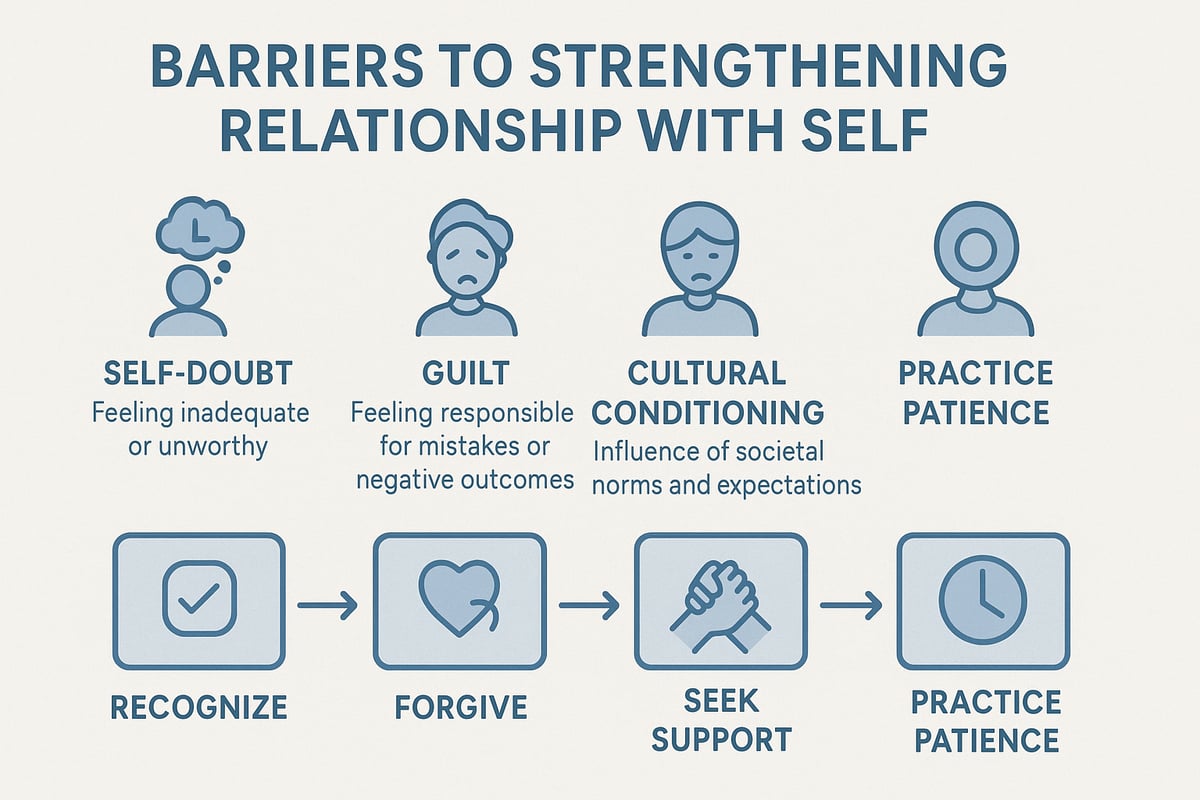
Many people encounter obstacles when trying to improve their relationship self. These barriers can make personal growth feel daunting, but recognizing them is the first step toward meaningful change.
Common challenges include self-doubt, guilt, and cultural conditioning that discourages prioritizing personal needs. For some, past trauma or negative experiences may have shaped limiting beliefs about their own worth or ability to change.
Overcoming these barriers involves a combination of gradual change and supportive resources. Start by challenging the belief that focusing on your relationship self is selfish. Instead, view self-care as foundational for healthy connections with others.
-
Embrace patience and persistence, understanding that personal growth is a journey, not a destination.
-
Practice self-forgiveness when setbacks occur.
-
Seek guidance from trusted friends, mentors, or support groups.
Professional support, such as therapy, can be invaluable for breaking old patterns. Therapists offer tailored strategies and encouragement. For self-guided options, explore Self-Directed Healing Resources to find tools that support your journey toward a stronger relationship self.
Remember, every step you take builds resilience and moves you closer to lasting self-acceptance.
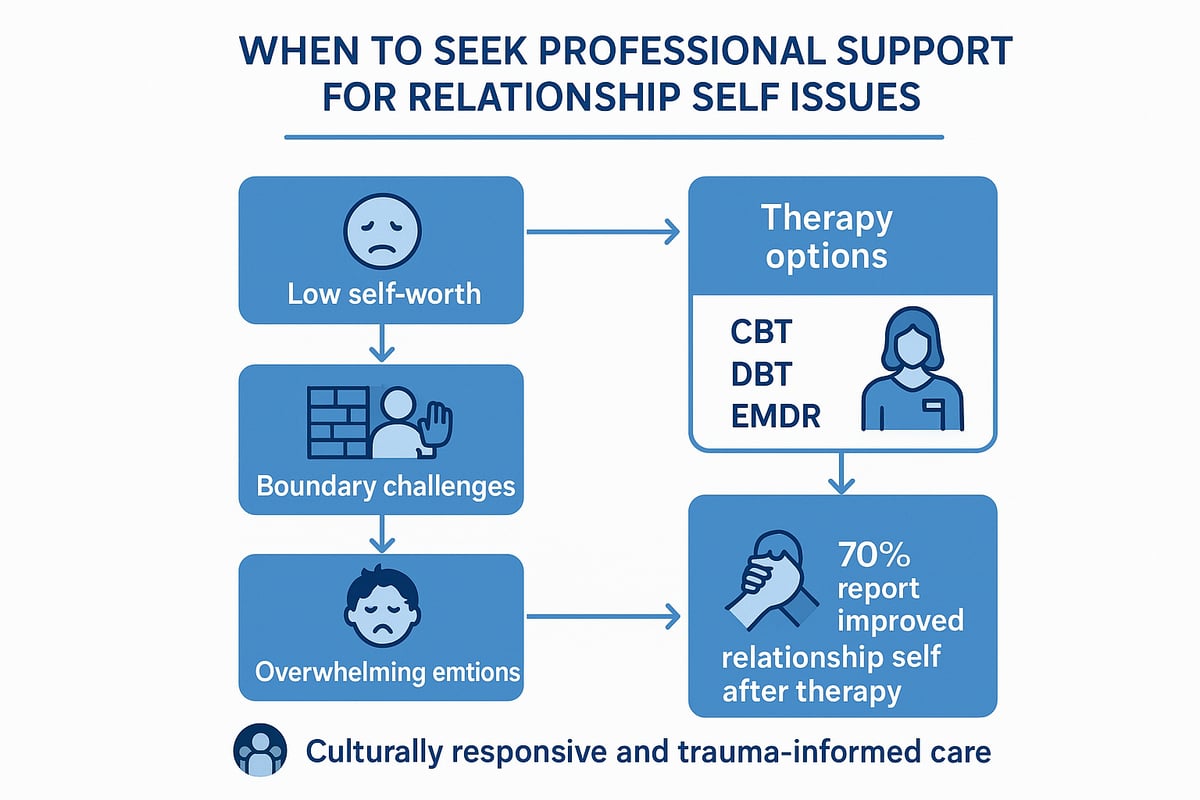
When to Seek Professional Support for Relationship Self Issues
Recognizing when to seek professional support for your relationship self is crucial for long-term well-being. Persistent feelings of low self-worth, frequent difficulty setting boundaries, or overwhelming emotions may signal that additional help is needed. If you find it challenging to assert your needs or experience constant self-doubt, reaching out to a mental health professional can offer much-needed guidance. Those struggling to establish or maintain healthy boundaries may benefit from resources such as Healthy Relationships and Boundaries, which provide actionable insights and support.
Therapy offers tailored strategies to strengthen your relationship self, fostering greater self-awareness and emotional resilience. Approaches like cognitive behavioral therapy (CBT), dialectical behavior therapy (DBT), EMDR, and trauma-informed care are especially effective for addressing deep-rooted challenges. Working with a therapist can accelerate healing and help reframe negative self-talk. According to Psychology Today, 70% of individuals report significant improvement in their relationship self after therapy. Prioritizing culturally responsive and trauma-informed care ensures that support is respectful and aligned with your unique background, making the journey toward self-acceptance more accessible and empowering.
Additional Resources and Tools for Strengthening Your Relationship Self
Building a strong relationship self requires ongoing support and practical tools. Investing in the right resources can make your journey more effective, insightful, and enjoyable.
To help you nurture your relationship self, consider these valuable categories:
Books and Podcasts
-
“The Gifts of Imperfection” by Brené Brown offers guidance on self-acceptance.
-
The “On Being” podcast explores personal growth and self-awareness.
-
“Radical Acceptance” by Tara Brach focuses on embracing yourself fully.
Online Courses and Workshops
-
Look for courses on platforms like Coursera or Udemy that cover self-love and emotional resilience.
-
Workshops from organizations such as One Love Foundation provide interactive learning on boundaries and self-compassion.
Self-Assessment Tools
-
Use self-esteem journals or gratitude apps to track your progress.
-
Try online quizzes or guided workbooks to measure growth.
-
For practical exercises, explore Self-Awareness Exercises and Tools to deepen understanding of your relationship self.
Mindfulness and Meditation Apps
-
Apps like Calm, Headspace, and Insight Timer support daily mindfulness practice.
-
Guided meditations and reflection prompts can enhance emotional regulation and self-compassion.
-
For more ideas, see Mindful Reflection Practices for Self-Awareness.
Community and Support Groups
-
Join support groups or attend workshops to share experiences and gain accountability.
-
Participating in group activities can strengthen your relationship self and foster authentic connection.
Remember, strengthening your relationship self is a continuous process. By engaging with these resources and tools, you will empower yourself to sustain growth and well-being in every aspect of your life.
If you’re ready to put these strategies into action and truly prioritize your relationship with yourself in 2025, you don’t have to do it alone. Working with a compassionate, experienced therapist can make all the difference—especially when you want support that’s both trauma informed and tailored to your unique background. At Théla Psychotherapy Clinic, we’re here to empower your journey toward self awareness, resilience, and authentic self compassion. Whether you prefer in person sessions in Markham or online support anywhere in Ontario, we invite you to take the first step.

Bonny Li
Contact Me
.jpg)