
Imagine trying to nurture genuine connection with your partner while endless notifications, work deadlines, and social feeds compete for your attention. In today's world, and especially as we look toward 2026, maintaining relationship focus can feel nearly impossible. Yet, sharpening relationship focus is not just a luxury—it is the foundation for deeper intimacy, shared growth, and lasting satisfaction.
This article will reveal seven powerful, actionable strategies that can help you and your partner strengthen your bond, communicate better, and thrive together. Ready to invest in a stronger future? Start applying these tips and watch your relationship transform.
Why Relationship Focus Matters in 2026
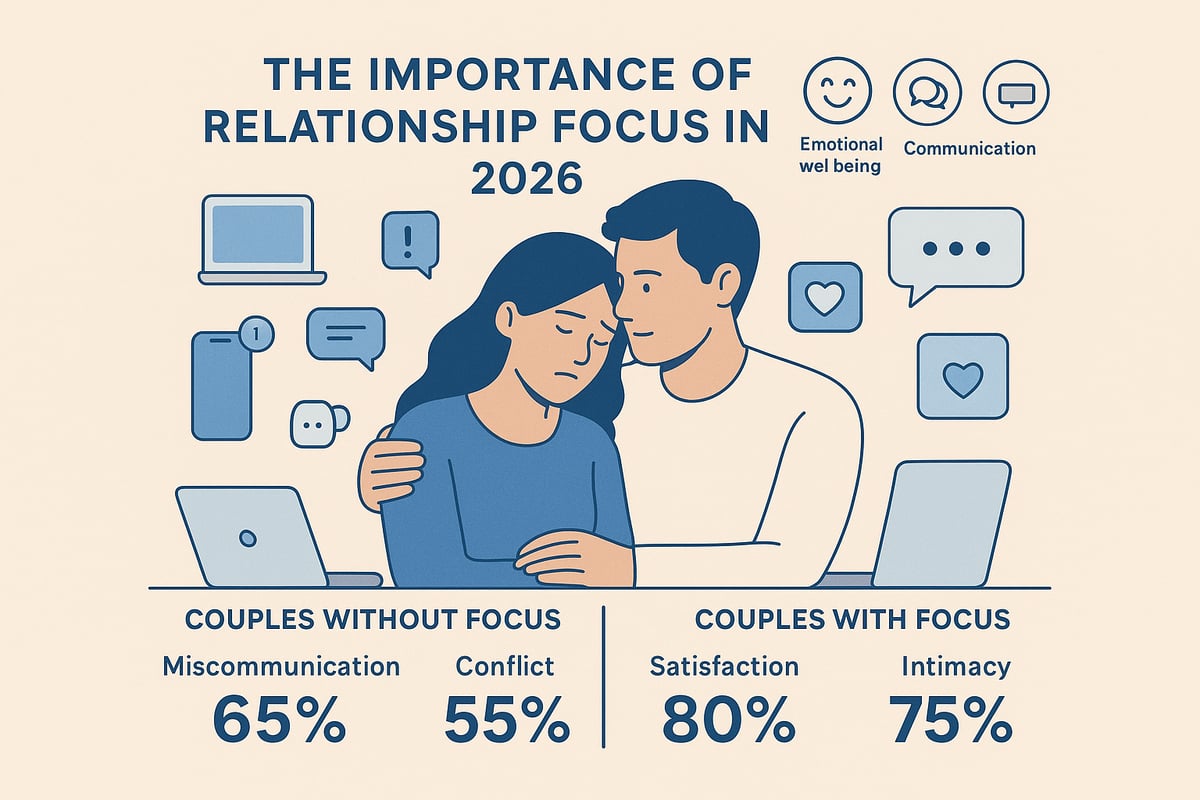
In today’s hyper-connected world, relationship focus is more essential than ever. With social media, remote work, and constant notifications, couples face unprecedented challenges to staying present with one another. As we move toward 2026, the ability to truly concentrate on your partner—free from digital noise—has become a defining factor in relationship strength.
Relationship focus refers to the intentional practice of giving your partner undivided attention, prioritizing shared moments, and nurturing meaningful connection. Recent research consistently shows that the quality of our relationships is the single strongest predictor of both happiness and longevity. According to studies, couples who actively invest in their relationship focus experience higher satisfaction and lower conflict, regardless of external stressors. In fact, findings suggest that proactive behaviors, not destiny or luck, lead to flourishing romantic partnerships, as highlighted in this Proactive behaviors lead to flourishing romances article.
Focusing on your relationship has measurable benefits for emotional well-being. Intentional connection boosts communication, increases empathy, and builds resilience during challenging times. When partners carve out time to be fully present, they are better equipped to handle stress, resolve disagreements, and support one another’s growth. This presence fosters a sense of security that strengthens the bond over time.
Modern technology and shifting societal norms can undermine relationship focus. Couples often fall into common traps such as multitasking during conversations, letting work intrude on family time, or using devices as an escape. These habits can lead to resentment, miscommunication, and emotional distance. Consider this simple comparison:
|
Without Relationship Focus |
With Relationship Focus |
|---|---|
|
Frequent misunderstandings |
Open, empathetic communication |
|
Growing emotional distance |
Increased intimacy and trust |
|
Higher conflict rates |
Lower conflict, more satisfaction |
The good news is that relationship focus is a skill anyone can develop. By making conscious choices to prioritize your partner and minimize distractions, you can transform your connection. As we look ahead to 2026, sharpening your relationship focus will be the key to a deeper, more fulfilling partnership.
7 Powerful Ways to Improve Your Relationship Focus in 2026
Strengthening your relationship focus requires deliberate, practical strategies that adapt to the realities of modern life. As you explore these seven actionable approaches, you will discover evidence-based ways to deepen your connection, boost satisfaction, and future-proof your partnership for the evolving landscape of 2026.
1. Prioritize Intentional Quality Time Together
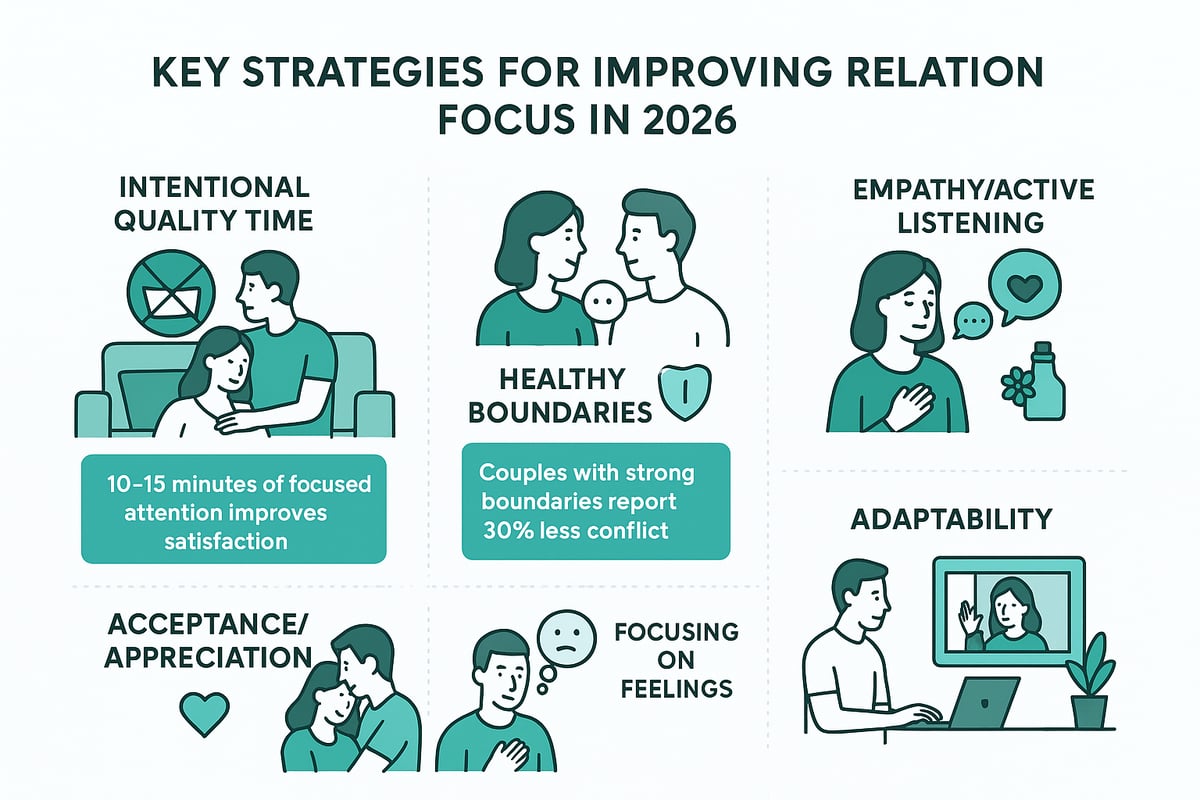
Quality time is not just about being physically present, but about bringing your full attention to your partner. In the pursuit of relationship focus, intentionality transforms routines into rituals that nurture connection. Research highlights that even short periods—just 10 to 15 minutes—of undivided attention each day can significantly enhance relationship satisfaction.
Modern distractions, especially devices and social media, often erode these moments. Couples who establish regular, device-free connection rituals, such as weekly date nights or morning check-ins, report richer conversations and increased affection. For example, creating a shared hobby or learning a new skill together can keep interactions fresh and meaningful.
A recent study on quality time and perspective-taking in conflict resolution found that couples who spend intentional time together are better equipped to understand each other's viewpoints, reducing conflict and boosting relationship focus. If busy schedules or family obligations pose barriers, remember that flexibility matters—quality time can be brief, as long as it is intentional.
Tips for success:
-
Schedule tech-free evenings.
-
Try a new activity together monthly.
-
Use calendars to protect your time.
By making intentional quality time a non-negotiable, you lay the foundation for lasting relationship focus.
2. Communicate with Empathy and Active Listening
Effective communication is the backbone of relationship focus. True connection stems from feeling heard and validated. Active listening means giving your partner your full attention, using open-ended questions, and reflecting back what you understand.
Techniques such as summarizing your partner’s words or asking, "Can you tell me more about how you feel?" foster understanding. Research shows that couples who practice active listening experience fewer misunderstandings and conflicts, leading to stronger relationship focus.
Empathy plays a crucial role in building trust and intimacy. For instance, shifting from problem-solving to simply listening during an argument can transform tension into closeness. Daily "emotion check-ins"—where you both share how you truly feel—create a habit of empathy and keep communication open.
Try these steps:
-
Make eye contact and put away distractions.
-
Reflect back what you hear before responding.
-
Practice being present, not just waiting for your turn to speak.
By embedding empathy and active listening into your daily routine, you naturally strengthen your relationship focus.
3. Set Healthy Boundaries—Individually and as a Couple
Healthy boundaries are essential for sustaining relationship focus. They protect your emotional space, time, and digital presence, ensuring both partners can thrive. Boundaries may involve saying no to overcommitment, carving out personal downtime, or managing family expectations.
Some fear that boundaries create distance, but research proves the opposite. When couples set and respect boundaries, they report lower anxiety and higher satisfaction. Boundaries are not walls—they are bridges to mutual respect.
Practical steps include:
-
Jointly discussing what boundaries matter most.
-
Revisiting and adjusting boundaries as life changes.
-
Supporting each other’s need for alone time or privacy.
Explore more about healthy boundaries in relationships to learn practical strategies that fit your unique partnership. By prioritizing boundaries, you strengthen your relationship focus and prevent resentment from building over time.
4. Practice Self-Care and Personal Growth
Personal well-being is deeply connected to relationship focus. When you feel fulfilled—physically, emotionally, mentally, and spiritually—you bring your best self to your partnership. Self-care is not selfish; it is vital.
Examples of self-care include pursuing hobbies, nurturing friendships, practicing mindfulness, and seeking therapy when needed. Studies confirm that individuals who invest in self-growth are more resilient, attractive, and supportive partners.
The myth that selflessness always benefits relationships can be harmful, often leading to resentment or loss of identity. Encourage each other’s personal journeys and set both individual and shared goals for the year ahead.
Consider:
-
Scheduling regular personal downtime.
-
Attending workshops or classes together.
-
Supporting each other’s aspirations.
By making self-care a priority, you naturally improve relationship focus and foster mutual growth.
5. Embrace Unconditional Acceptance and Appreciation
Love flourishes when paired with acceptance. Relationship focus deepens when partners feel valued for who they are, quirks and all. Acceptance does not mean tolerating harmful behavior, but rather honoring differences in habits or communication styles.
Research shows that feeling accepted is a stronger predictor of satisfaction than love alone. Build appreciation into your routine—try daily affirmations, keep a gratitude journal, or schedule weekly check-ins to express what you admire about each other.
Tips for authentic appreciation:
-
Be specific in your praise.
-
Celebrate small wins and efforts.
-
Practice gratitude aloud and in writing.
Appreciation creates a ripple effect, leading to more positive interactions and greater resilience during tough times. By choosing acceptance and appreciation, your relationship focus will naturally intensify.
6. Focus on Feelings, Not Just Facts
Disagreements are inevitable, but focusing on feelings rather than facts can transform outcomes. Relationship focus is sustained when partners prioritize emotional connection over being right.
For example, during a conflict, asking "How are you feeling right now?" shifts the conversation from blame to understanding. Emotional validation—naming your own feelings and inviting your partner to share theirs—reduces defensiveness and increases intimacy.
Techniques include:
-
Avoiding minimization or dismissal of emotions.
-
Practicing vulnerability by sharing your inner experiences.
-
Encouraging open dialogue about fears and hopes.
Emotional literacy is a cornerstone of long-term relationship focus. By making space for feelings, you resolve issues with empathy, not resentment.
7. Adapt Together: Grow with Change and Future-Proof Your Focus
Change is constant—technology, careers, and family dynamics will continue to evolve in 2026 and beyond. Couples who adapt together are best positioned to sustain relationship focus.
Regularly reviewing and realigning your goals as a team keeps you connected. Relationship check-ins to discuss new challenges, shifting dreams, or external pressures help prevent drift. Research shows that flexibility and openness to growth predict long-term success.
Strategies to future-proof your relationship focus:
-
Attend workshops or read books together.
-
Seek therapy if needed for extra support.
-
Embrace each other’s evolving identities and aspirations.
Supporting one another through change means committing to grow both individually and as a couple. By future-proofing your approach, you keep relationship focus strong no matter what the future brings.
Overcoming Common Barriers to Relationship Focus
Staying present and connected can feel nearly impossible with the constant pull of work, screens, and daily stress. For many, maintaining relationship focus is a persistent challenge, especially as modern life grows busier each year.
Some of the most common obstacles couples face include:
-
Digital distractions and device overuse
-
Work-related stress and unpredictable schedules
-
Parenting responsibilities and lack of privacy
-
Mental health struggles such as anxiety or depression
Multitasking and device addiction can erode intimacy before you realize it. Recent studies show the average couple spends less than 30 minutes per day in meaningful conversation. This lack of attention can lead to resentment, miscommunication, and emotional distance.
How can you strengthen relationship focus despite these barriers? Consider implementing these practical solutions:
-
Establish tech-free zones or times, such as during meals or before bed
-
Use shared calendars for intentional quality time
-
Practice mindfulness together to increase presence
-
Schedule regular check-ins to discuss challenges and needs
Mental health challenges can also impact your ability to connect. Research shows that positive psychology counseling improves marital satisfaction and reduces anxiety, highlighting the value of intentional support in relationships.
If obstacles feel overwhelming, seeking professional guidance can make a meaningful difference. The Intensive Couples Therapy Guide offers in-depth strategies for couples committed to rebuilding their connection.
Remember, setbacks are a normal part of the journey. With persistence, compassion, and a shared commitment to relationship focus, couples can overcome even the toughest barriers and rediscover deeper connection.
You’ve explored seven powerful ways to strengthen your relationship focus for 2026, from prioritizing intentional quality time to adapting together as life changes. But sometimes, putting these ideas into practice can feel daunting, especially with the pressures of daily life. If you’re ready to take the next step toward deeper connection and lasting growth, professional guidance can make all the difference. At Théla Psychotherapy Clinic, you’ll find trauma informed, culturally responsive support tailored to your unique needs. Why not take a moment for yourself and your relationship—Book Your Free Consultation Appointment Now?

Bonny Li
Contact Me
.jpg)

