Living with panic attacks can feel overwhelming, like you're constantly waiting for the next wave to crash over you. But here's the good news: panic disorder treatment has come a long way, and you've got more options than ever before. Whether you're experiencing your first panic attack or you've been dealing with this for years, effective help is available right here in Ontario and beyond.
Understanding Your Treatment Options
Panic disorder treatment typically falls into three main categories, and the best approach often combines multiple strategies. You don't have to choose just one path to recovery.
The main treatment approaches include:
- Psychotherapy (particularly cognitive-behavioral therapy)
- Medication management
- Lifestyle modifications and self-care strategies
- Combination approaches that blend therapy and medication
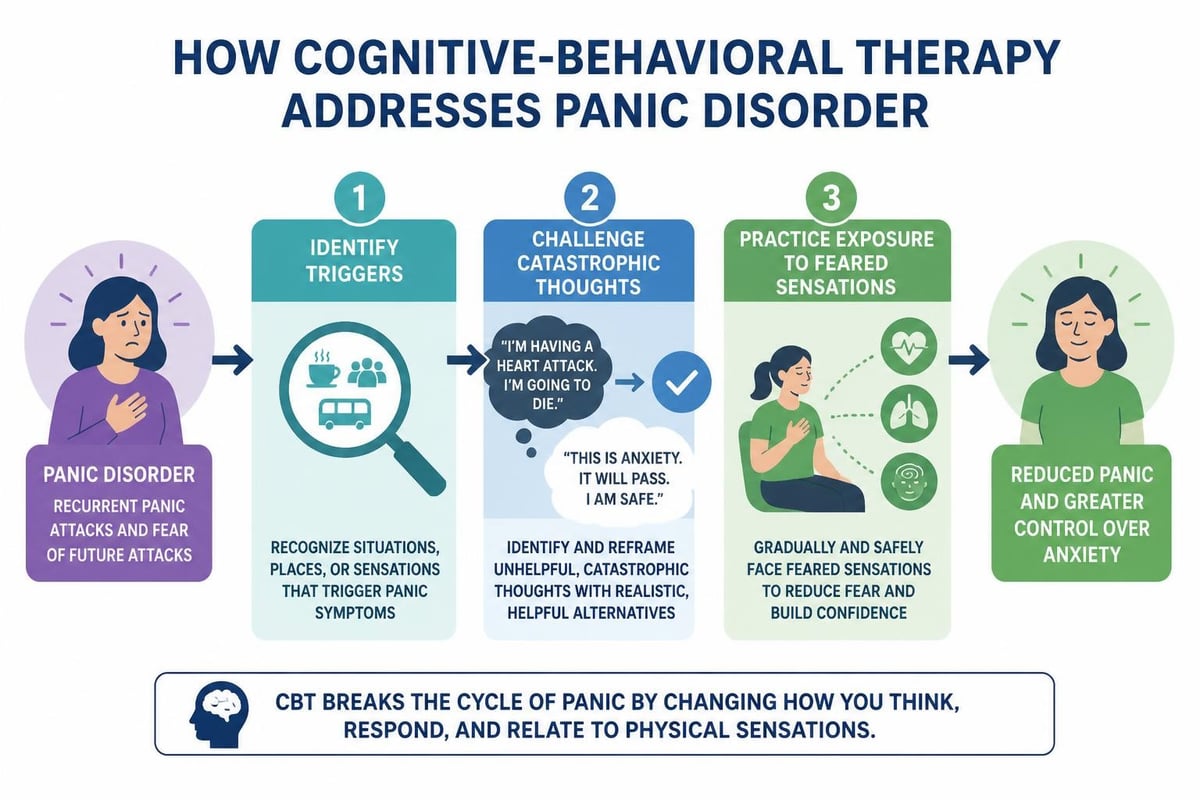
Research shows that cognitive-behavioral therapy components like interoceptive exposure work exceptionally well for panic disorder. This makes sense when you think about it: panic disorder teaches your brain to fear certain physical sensations, so therapy helps you unlearn that fear response.
How Therapy Helps You Heal
At Théla Psychotherapy Clinic, we've seen firsthand how powerful the right therapeutic approach can be. Cognitive-behavioral therapy (CBT) remains the gold standard, but it's not your only option.
Evidence-Based Approaches That Work
Different therapeutic approaches address panic disorder from various angles. Here's what you need to know:
| Therapy Type | How It Helps | Time Frame |
|---|---|---|
| CBT | Restructures panic-related thoughts and behaviors | 12-16 sessions |
| EMDR | Processes trauma that may trigger panic | 6-12 sessions |
| DBT | Builds distress tolerance and emotional regulation | Ongoing/group format |
| Exposure Therapy | Gradually reduces fear of panic sensations | 8-12 sessions |
The beauty of modern panic disorder treatment is its flexibility. According to the American Psychiatric Association's treatment guidelines, both medication and CBT work as first-line treatments. That means you can start with what feels right for you.
What Happens in Therapy Sessions
Your therapist will work with you to identify your specific panic triggers and thought patterns. You'll learn techniques like diaphragmatic breathing, cognitive restructuring, and progressive muscle relaxation. These aren't just buzzwords-they're practical tools you can use when panic strikes.
Many people worry about interoceptive exposure, which involves intentionally triggering mild panic sensations in a safe environment. Sounds scary, right? But it's actually one of the most effective components of treatment because it proves to your brain that these sensations aren't dangerous.
Medication Options and What to Expect
Sometimes therapy alone isn't enough, and that's completely okay. A network meta-analysis of pharmacological treatments shows that several medication classes effectively treat panic disorder.
Common medications include:
- SSRIs (selective serotonin reuptake inhibitors)
- SNRIs (serotonin-norepinephrine reuptake inhibitors)
- Benzodiazepines for short-term relief
- Tricyclic antidepressants (older but still effective)
Your family doctor or psychiatrist can help determine which medication might work best for your situation. Many people use medication as a bridge while they build coping skills through therapy, then gradually taper off under medical supervision.
Online and In-Person Treatment Options
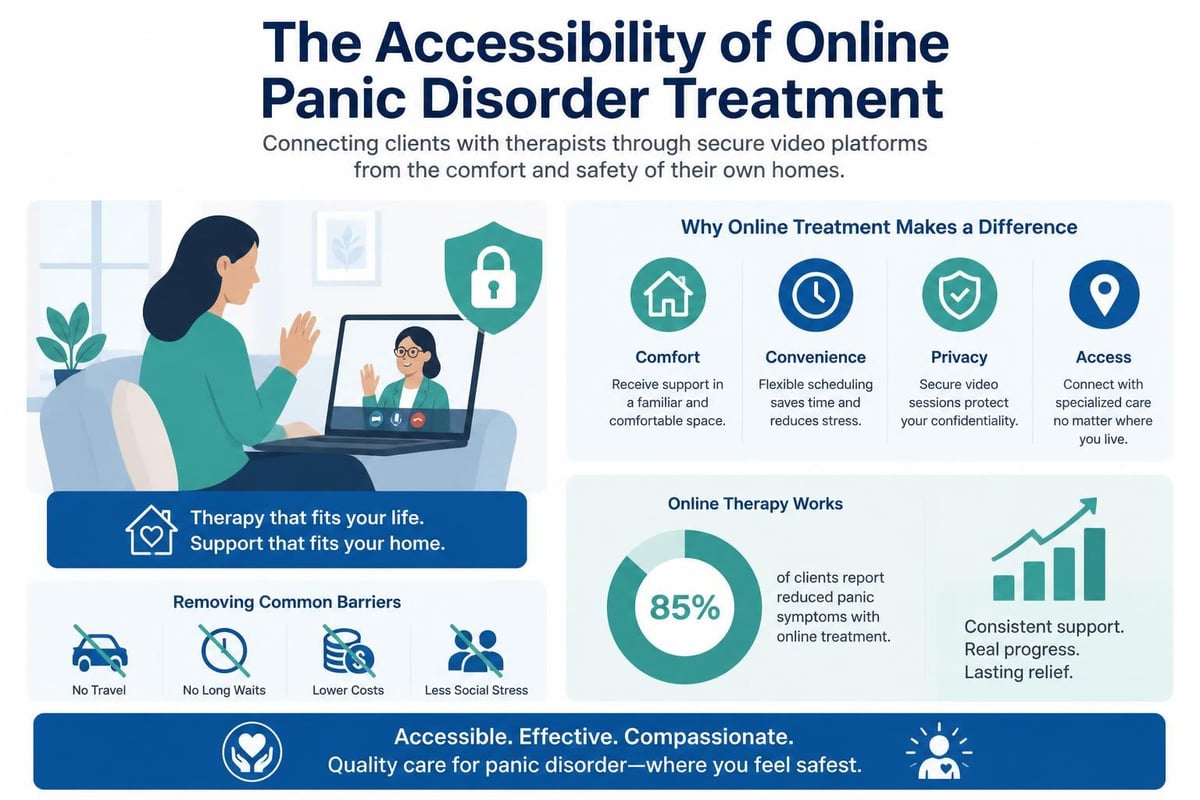
Here's something that's changed dramatically since 2020: access to quality care. Internet-based cognitive-behavioral therapy has proven just as effective as face-to-face sessions for many people with panic disorder.
At Théla, we offer both in-person sessions in Markham and online therapy across Ontario. This flexibility means you can get help even during a panic-heavy period when leaving home feels impossible.
Building Your Support System
Recovery doesn't happen in isolation. Beyond professional treatment, consider these support elements:
-
Workplace accommodations – If panic attacks affect your job, organizations like Workplace Fairness can help you understand your rights and request reasonable accommodations.
-
Family education – When your loved ones understand panic disorder, they can support your recovery better.
-
Peer support – Connecting with others who understand what you're going through reduces isolation.
-
Crisis resources – Having a plan for severe panic episodes gives you confidence and control.
Creating Your Personalized Treatment Plan
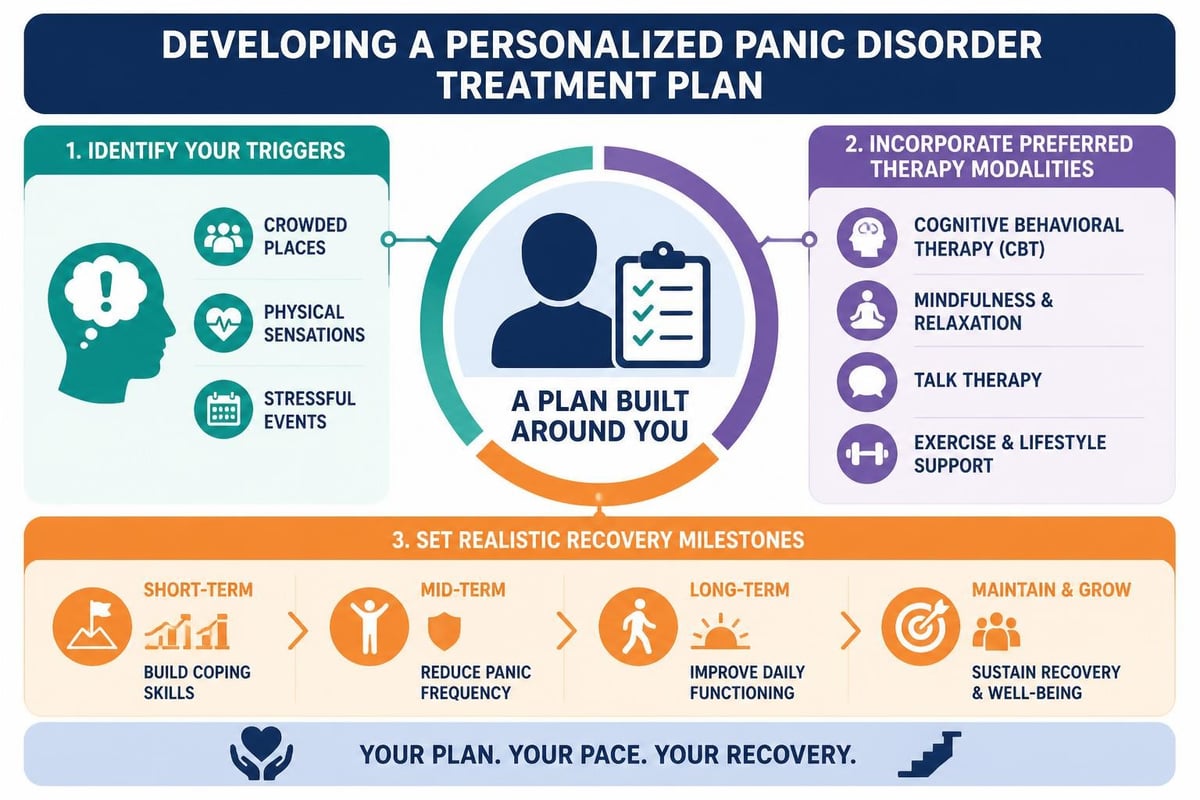
No two people experience panic disorder exactly the same way, which is why personalized care matters so much. When you contact a therapist, you'll discuss your specific symptoms, triggers, and goals.
Your treatment plan might include:
- Weekly therapy sessions focusing on CBT techniques
- Homework exercises to practice between sessions
- Gradual exposure to feared situations
- Stress management and lifestyle modifications
- Medication if recommended by your doctor
What Makes Treatment Successful
Success in panic disorder treatment isn't about never feeling anxious again. It's about building resilience and skills so panic doesn't control your life. Most people see significant improvement within three to six months of consistent treatment.
Key factors that boost treatment success include:
- Consistent attendance at therapy sessions
- Practicing skills between appointments
- Open communication with your therapist about what's working
- Patience with the process (recovery isn't linear)
- Willingness to face fears gradually
Addressing Common Treatment Concerns
You might be wondering about costs. Théla offers an affordable therapy program and direct billing options to make quality care accessible. We also provide information about insurance coverage to help you navigate your benefits.
Another common question: "How long will I need treatment?" While panic disorder treatment typically ranges from a few months to a year, everyone's journey differs. Some people benefit from ongoing support, while others graduate from therapy once they've built strong coping skills.
If you've experienced trauma that contributes to your panic symptoms, specialized approaches like EMDR can be particularly helpful. Learning how to prepare for EMDR therapy can make the process smoother and more effective.
Recovery from panic disorder is absolutely possible with the right support and evidence-based treatment. Whether you choose therapy, medication, or a combination approach, taking that first step toward help is what matters most. Théla Psychotherapy Clinic provides trauma-informed, culturally responsive panic disorder treatment both online across Ontario and in-person in Markham, using proven approaches like CBT, DBT, and EMDR tailored to your unique needs. Reach out today to start your journey toward a calmer, more confident life.

Bonny Li
Contact Me